Chimichurri


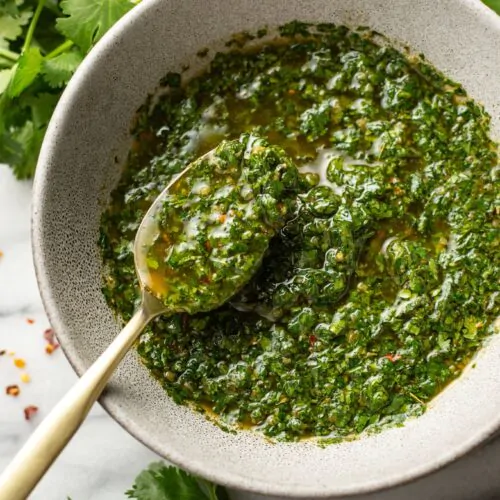
Chimichurri is a loose, spoonable herb sauce that cuts through the richness of grilled steak with red wine vinegar and raw garlic. This version pairs grassy flat-leaf parsley with citrusy cilantro and a little smoked paprika. Short pulses in the food processor leave flecks of herbs suspended in the olive oil instead of turning the sauce into a smooth purée.
It takes 15 minutes to prep, with no cooking, and makes about a cup for six servings. Make it before you start grilling so it can rest while you get dinner going. It’s just as handy for dressing up a weeknight plate of chicken and roasted vegetables.
Why This Chimichurri Recipe Works
The balance matters more than getting every fleck of parsley the same size. Here’s what keeps the sauce bright, savory, and easy to spoon.
- Parsley leads the herb blend. There’s twice as much parsley as cilantro, so the sauce tastes grassy and fresh first. The cilantro adds a citrusy edge without taking over.
- Oil and vinegar do different jobs. Olive oil carries the herbs across the surface of whatever you spoon them onto. Red wine vinegar brings enough acidity to keep that oil from tasting heavy, especially alongside a dish with plenty of fat.
- Smoke and heat stay separate. Smoked paprika gives the sauce a woodsy note without relying on chile heat for depth. Crushed red pepper flakes bring a prickle of warmth without drowning out the fresh herbs.
- A short rest rounds out the flavor. Dried oregano and pepper flakes have a chance to soften in the liquid. The garlic also has time to flavor the whole sauce instead of hitting in isolated, sharp bites.
Ingredients You’ll Need
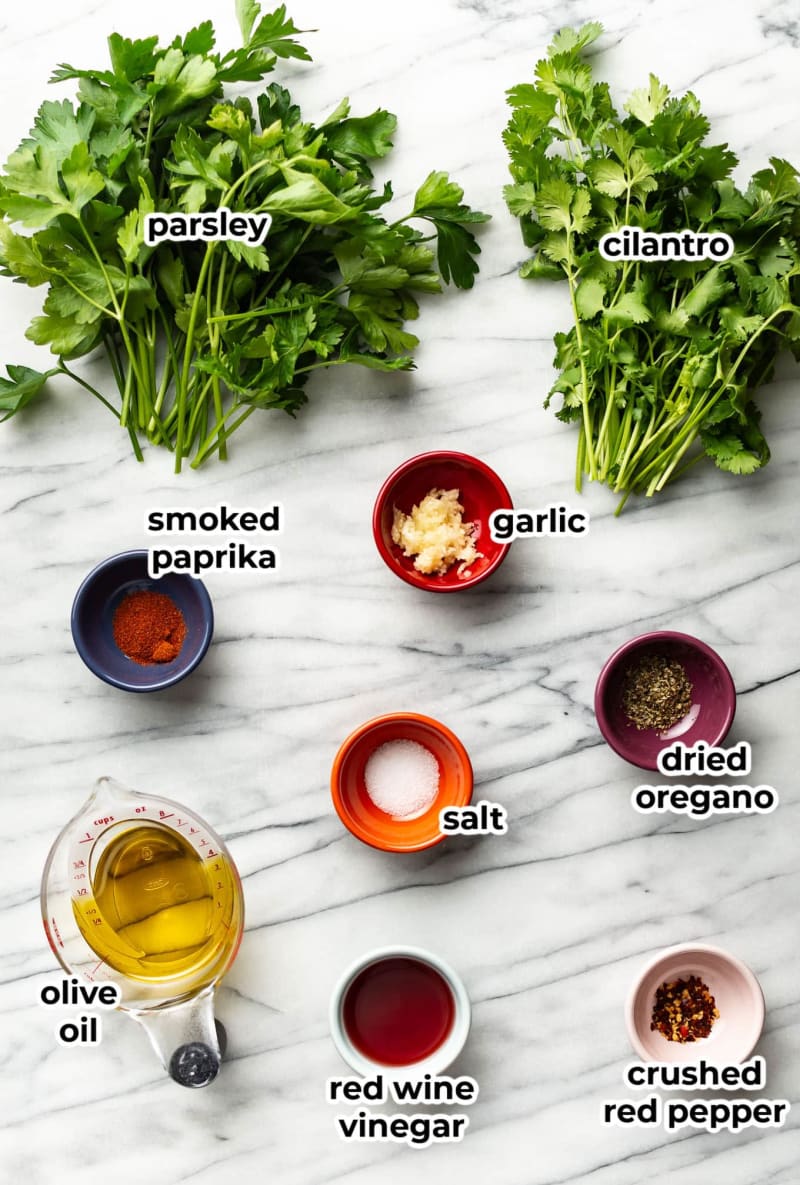
The herbs go in raw, so look for lively green bunches without yellow leaves. Measure them after removing the thick stems.
- Flat-leaf parsley: Use one firmly packed cup of fresh leaves and tender tips. Leave the stout stalks behind so the sauce doesn’t turn stringy.
- Cilantro: Pack half a cup of fresh cilantro leaves and tender stems into the measure. Discard the thick stems from the bottom of the bunch.
- Olive oil: Use half a cup. A mild extra-virgin olive oil adds fruitiness without a bitter finish.
- Red wine vinegar: Two tablespoons bring a clean, winey tang that stands up to the garlic and oil.
- Smoked paprika: Half a teaspoon gives the sauce a subtle smoky finish. Check the label for sweet or hot if you’re sensitive to spice.
- Dried oregano: Half a teaspoon brings an earthy note that balances the fresh greens.
- Salt: Start with half a teaspoon, keeping the type of salt in mind when you taste and adjust.
- Garlic: Mince two to three cloves. Fresh garlic gives this uncooked sauce its sharp, savory bite.
- Crushed red pepper flakes: A quarter teaspoon provides a mild background heat, though the strength varies by jar.
Equipment You’ll Need
- Food processor: A processor with a pulse button lets you stop with a coarse chop instead of committing to a smooth blend.
- Flexible spatula: Use it to scrape stray leaves back toward the blade and to get the chopped herbs out when you transfer the sauce.
How to Make Chimichurri
1. Prep the fresh herbs
Wash the parsley and cilantro, dry them well, and strip away the thick stems. Pack one cup of parsley and half a cup of cilantro firmly into the measuring cups, then mince two to three garlic cloves.
The greens should feel dry to the touch. If they’re still dripping, blot them before measuring so the rinse water doesn’t dilute the sauce.
2. Load the food processor
Add the herbs and garlic to the processor with half a cup of olive oil and two tablespoons of red wine vinegar. Add half a teaspoon each of smoked paprika, dried oregano, and salt, plus a quarter teaspoon of crushed red pepper flakes.
Tip the seasonings into the liquid rather than onto the dry sides of the bowl, where they can stick above the blade.
3. Pulse to your liking
Pulse in short bursts until the herbs are chopped and the ingredients are combined. Stop the machine and scrape down the bowl if whole leaves cling to the sides, then pulse again as needed.
For a coarse sauce, stop when the herbs are small enough to scoop but still clearly visible. For a finer chop, check the bowl after each additional pulse.
4. Taste and adjust
Stir the mixture before tasting so you get oil, vinegar, and herbs in the same spoonful. Adjust the seasoning a little at a time rather than trying to correct the whole batch in one go.
If the tang is right but the herbs taste flat, try a little more salt before reaching for extra vinegar.
5. Let the sauce rest
Scrape the chimichurri into a jar or bowl and let it stand at room temperature for 15 to 20 minutes before serving.
A little oil may rise to the surface as it sits. Stir from the bottom before spooning it onto the plate.
Tips and Common Mistakes
A few small choices during prep and tasting keep the sauce from coming out harsh, watery, or unevenly seasoned.
- Account for the salt grind. Fine table salt packs more tightly than coarse kosher or sea salt, so the same spoonful can taste saltier. Adjust to taste rather than assuming all salts measure alike.
- Taste the oil first. If the oil tastes aggressively bitter on its own, that bitterness will come through in the uncooked sauce. Choose a milder bottle if it overwhelms the herbs.
- Start at the low end of the garlic range. Use two cloves if they’re large or if you prefer a softer garlic bite. Raw garlic is much easier to add than to balance once there’s too much.
- Don’t pluck every leaf. Pinch off small sprigs above the woody part of the stalk. The tender stems can go in with the leaves and save you some prep.
- Taste it with dinner. Try a dab on a bite of the meat or vegetables before adjusting at the table. A sauce that tastes sharp from the spoon may be just right against a rich steak.
Substitutions and Variations
Keep the same basic method for these swaps, but expect a change in flavor rather than an exact match.
- All parsley: Replace the cilantro with the same amount of flat-leaf parsley for a grassier sauce without the citrusy note.
- White wine vinegar: Swap it in for the red wine vinegar if that’s what you have. It keeps the sauce tangy but gives it a lighter wine flavor.
- Sweet paprika: Use sweet paprika in place of smoked paprika for a mild pepper flavor without the smoky finish.
- Fresh oregano: Use finely chopped fresh oregano instead of dried. Start with a small amount and taste before adding more, since fresh oregano can have a sharp bite.
- No chile heat: Skip the pepper flakes and use sweet smoked paprika. You’ll keep the smokiness and vinegar tang without the lingering chile warmth.
What to Serve with Chimichurri
Spoon chimichurri over sliced skirt steak or flank steak so it runs into the spaces between the slices. Add crispy potatoes and grilled onions, or find another main in our beef dinner ideas.
For a lighter plate, spoon it over grilled chicken thighs and serve with charred zucchini and fluffy rice. It’s also good on a baked potato with black beans or a bowl of roasted cauliflower and chickpeas. Browse our chicken dinner recipes for more mains to pair it with.
Make-Ahead, Storage and Reheating
Make ahead: Make the sauce earlier the same day and refrigerate it until you need it. Hold off on spooning it over sliced meat or vegetables until serving so you keep the contrast between the warm food and the fresh herbs.
Storage: Refrigerate chimichurri in a covered jar or airtight container for up to 3 days. Because it contains fresh garlic in oil, don’t store it at room temperature; refrigerate any leftovers promptly after serving.
Freezing: Freeze it in small portions in an ice cube tray, then transfer the frozen cubes to a freezer bag. Thaw only what you need in the refrigerator; the herbs may lose some of their bright color.
Reheating: No reheating is needed. If the olive oil looks cloudy or firm from the fridge, let the portion you plan to serve sit briefly at room temperature, then stir once the oil flows again.
Chimichurri FAQs
Can you make chimichurri without a food processor?
Yes. Finely chop the herbs and garlic with a sharp knife, then stir them into the oil, vinegar, and seasonings. The result will be a little coarser and looser.
Is this a traditional Argentine chimichurri?
It’s a variation on the classic Argentine sauce. Parsley, garlic, oregano, oil, and vinegar form the familiar base, while cilantro and smoked paprika give this version its own flavor.
Can you use chimichurri as a marinade?
Yes. Set aside a clean portion for serving before adding any sauce to raw meat, and discard the portion that touched the raw meat.
Can you make chimichurri with dried parsley?
Not as a direct swap. Fresh parsley supplies most of the body as well as the grassy flavor, so dried parsley would leave the sauce noticeably thinner and less fresh-tasting.
What’s the difference between chimichurri and pesto?
Chimichurri is tangier and looser because it’s made with vinegar and oil. Basil pesto typically gets its thicker texture from ground nuts and cheese, neither of which is needed here.
Printable Recipe
Recipe adapted from Salt & Lavender. Photos courtesy of Salt & Lavender, used with permission.
Chimichurri
Ingredients
- 1 cup (tightly packed) fresh flat-leaf parsley thick stems removed
- 1/2 cup (tightly packed) fresh cilantro thick stems removed
- 1/2 cup olive oil
- 2 tablespoons red wine vinegar
- 1/2 teaspoon smoked paprika
- 1/2 teaspoon dried oregano
- 1/2 teaspoon salt see note
- 2-3 cloves garlic minced
- 1/4 teaspoon crushed red pepper flakes
Instructions
- Add all ingredients to a food processor and pulse until combined to your desired consistency. Taste & adjust if needed.
- Transfer to a jar or bowl. Let it sit for 15-20 minutes at room temperature prior to serving, and then store it, covered, in the fridge for up to 3 days.
Notes
- Sea salt and kosher salt are less potent than regular table salt, so keep that in mind and add salt quantities to your personal preferences.


