Gremolata


Gremolata is a fresh, uncooked herb sauce made with parsley, garlic, lemon and olive oil. Chopped parsley gives it a pleasantly coarse texture, while lemon zest and juice bring a sharp, bright finish that cuts through rich foods.
This version takes 15 minutes, makes about 1/2 cup and serves four. Spoon it over steak, roasted vegetables or beans when dinner needs a fresh, punchy finish.
Why This Gremolata Recipe Works
A few straightforward choices keep this classic condiment lively and balanced.
- Parsley is the base. Fresh flat-leaf parsley gives gremolata its green color and clean, herbal flavor. Removing the tough stems makes the finished sauce easier to chop and eat.
- Lemon adds brightness. Juice brings acidity, while zest contributes fragrant citrus oils. Using both gives the sauce a fuller lemon flavor than juice alone.
- Garlic brings savory bite. Raw minced garlic adds a sharp edge that stands up to hearty mains. Start with less if you prefer a milder sauce.
- Olive oil brings it together. Oil coats the chopped ingredients and softens their intensity. You can add a little more if you want a looser, spoonable consistency.
- No cooking keeps it fresh. Because the ingredients stay uncooked, the parsley and lemon remain vivid. Resting the mixture gives the garlic and citrus a little time to mingle.
Ingredients You’ll Need
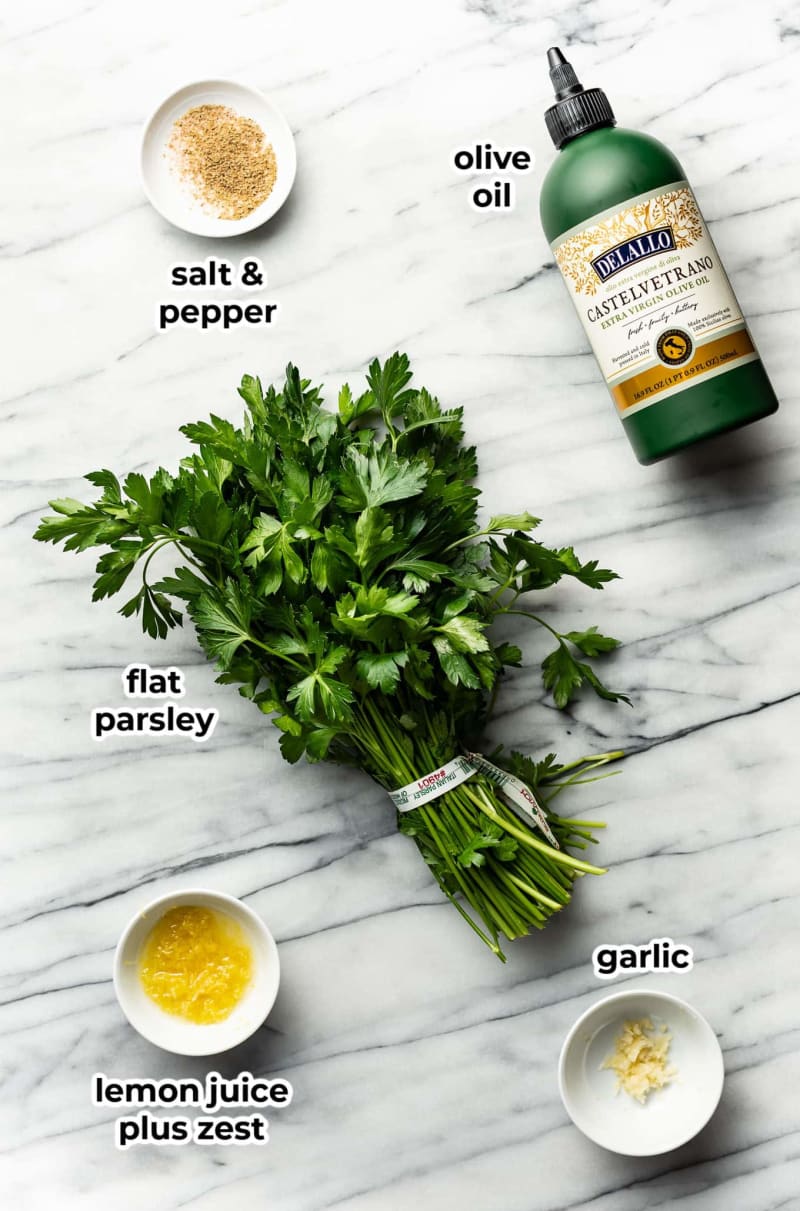
You need only a handful of fresh ingredients. Choose parsley with crisp leaves and a lemon that feels heavy for its size.
- Fresh flat-leaf parsley: One bunch, with the tough stems removed. Flat-leaf parsley is easy to chop and gives the sauce its fresh, grassy base.
- Garlic: One to two cloves, minced. Use one for a gentler flavor or two for a stronger savory bite.
- Lemon: One tablespoon of juice plus the zest of one lemon. Zest it before juicing, and avoid grating the bitter white pith.
- Salt and pepper: Season to taste. Add enough to bring out the parsley and lemon without overpowering them.
- Olive oil: One-third cup, with more if needed. A good-quality extra-virgin oil adds fruity flavor; adjust the amount to reach your preferred consistency.
How to Make Gremolata
1. Chop the parsley
Remove the parsley’s tough stems and chop the leaves to the texture you like. Transfer the chopped herbs to a small bowl.
For a rustic sauce, leave a little texture. Chop more finely if you want it to cling evenly to small bites of food.
2. Add garlic and lemon
Stir in the minced garlic, lemon juice and lemon zest. Season generously with salt and pepper, then mix to distribute everything.
The mixture should smell fresh and citrusy, with a clear garlic aroma. If using two cloves, taste with the stronger garlic flavor in mind.
3. Stir in the oil
Pour in one-third cup olive oil and stir until the parsley is coated. Add more oil if you want a looser sauce, then taste and adjust the seasoning as needed.
The oil should lightly coat the chopped herbs rather than leave them dry. Add extra gradually so the sauce does not become too oily.
4. Serve or let it rest
Use the gremolata right away, or cover it and refrigerate it for a few hours to let the flavors meld. Let it warm up a bit before serving.
Give it a stir before serving, since the oil may settle. Taste once more and adjust the seasoning if needed.
Tips and Common Mistakes
Small adjustments help keep the sauce fresh, balanced and easy to spoon.
- Chop by hand. A knife lets you control the texture and helps keep the parsley from turning into a wet paste.
- Remove tough stems. Woody pieces can make each bite fibrous. Tender upper stems are fine to include if they chop easily.
- Zest before juicing. A whole lemon is easier to zest than a squeezed one, and the zest supplies aromatic oils that juice cannot.
- Mince the garlic finely. Small pieces spread their flavor throughout the sauce. Large chunks can make an individual bite taste harsh.
- Season and taste. Parsley and lemons vary in flavor, so taste after mixing and adjust salt, pepper or lemon to suit the dish.
- Add oil gradually. Start with the listed amount, then add more only if you want a thinner consistency. Too much oil can mute the herbs and lemon.
Substitutions and Variations
Gremolata is flexible, though keeping parsley, garlic and citrus at the center preserves its familiar character.
- Curly parsley: Use it if flat-leaf parsley is unavailable. Its texture is a little firmer, so chop it finely.
- Milder garlic: Use one clove for less bite, or briefly mellow minced garlic in the lemon juice before combining it with the herbs.
- Orange zest: Replace some or all of the lemon zest with orange zest for a sweeter, more floral citrus note. Keep the lemon juice for acidity.
- Chopped capers: Add a small amount for briny, savory depth. Rinse them first and taste before adding extra salt.
- Other tender herbs: A little mint or basil can join the parsley for a different fresh flavor. Keep parsley as the main herb for a classic-style sauce.
What to Serve with Gremolata
Spoon gremolata over grilled or pan-seared steak just before serving. It also brightens roasted potatoes, white beans, fish and vegetables, especially when the rest of the plate is rich or buttery.
For more meal ideas, browse our beef recipes or chicken recipes.
Make-Ahead, Storage and Reheating
Make ahead: You can make the sauce a few hours ahead and refrigerate it so the flavors meld. Stir it and let it warm up a bit before serving.
Storage: Keep leftover gremolata covered in an airtight container in the refrigerator and use within 3 to 4 days. Refrigerate it promptly rather than leaving it at room temperature for more than 2 hours.
Freezing: Freezing is not ideal because the parsley loses its fresh texture when thawed. For the brightest flavor, make only what you expect to use within a few days.
Reheating: Do not heat gremolata; serve it at room temperature or chilled. Stir before spooning it over hot food.
Gremolata FAQs
What is gremolata usually served with?
It is often served with steak and other rich mains. Try it on roasted vegetables, potatoes, beans or fish when you want a fresh, citrusy contrast.
Can I make gremolata without a food processor?
Yes. Chop the parsley and garlic with a knife, then stir everything together in a small bowl. Hand-chopping also makes it easy to control the texture.
Can I use dried parsley?
No, fresh parsley is important for gremolata’s bright flavor and texture. Dried parsley will not give the sauce the same fresh, herbaceous character.
Why does my gremolata taste too sharp?
Raw garlic can be quite strong, especially when finely minced. Next time, use one clove, or let the finished sauce rest in the refrigerator for a few hours before serving.
Printable Recipe
Recipe adapted from Salt & Lavender. Photos courtesy of Salt & Lavender, used with permission.

Gremolata
Ingredients
- 1 bunch fresh flat-leaf parsley tough stems removed
- 1-2 cloves garlic minced
- 1 tablespoon lemon juice + zest of 1 lemon
- Salt & pepper to taste
- 1/3 cup olive oil + more if needed
Instructions
- Chop the parsley to your desired texture and add it to a small bowl. Stir in the garlic, lemon juice + zest, and be generous with the salt & pepper.
- Pour the olive oil in and give it a stir. Add more oil if desired. Taste and adjust as needed. Enjoy right away or let it sit in the fridge for a few hours for the flavors to meld more (I like to let it warm up a bit before serving, though).
Notes
- See blog post above the recipe card for more variations and serving suggestions!


