Best Coleslaw


This creamy coleslaw stays crisp under a tangy dressing made with mayonnaise, sour cream, and white vinegar. Celery salt gives it the familiar deli-style flavor, while a little Dijon and black pepper add a savory bite. Whisking the dressing separately lets you get the balance right before it goes anywhere near the cabbage.
It takes 10 minutes to put together, requires no cooking, and makes 8 side servings. Toss it just before dinner if you’re short on time, or let it chill for a few hours while you get the rest of a cookout or potluck meal ready.
Why This Coleslaw Recipe Works
The dressing has enough body to cling to the shreds, but it isn’t so thick that you lose the snap of the cabbage.
- The two creamy ingredients do different jobs. Mayonnaise gives the dressing its smooth, full-bodied base. Sour cream brings a cultured tang that keeps the dressing from tasting like straight mayo.
- Sugar rounds out the vinegar. Distilled white vinegar has a clean, sharp bite. The sugar takes the edge off without pushing the dressing into sweet territory, so it still cuts through rich barbecue or fried food.
- The seasonings work without adding bulk. Onion powder spreads throughout the dressing without leaving raw onion pieces in the salad. A little Dijon adds depth without making the whole bowl taste like mustard.
- Cabbage stands up to the dressing. Unlike tender lettuce, shredded cabbage can sit in a creamy dressing and still have some bite. A rest in the fridge takes the raw edge off the shreds and gives the flavors time to come together.
Ingredients You’ll Need
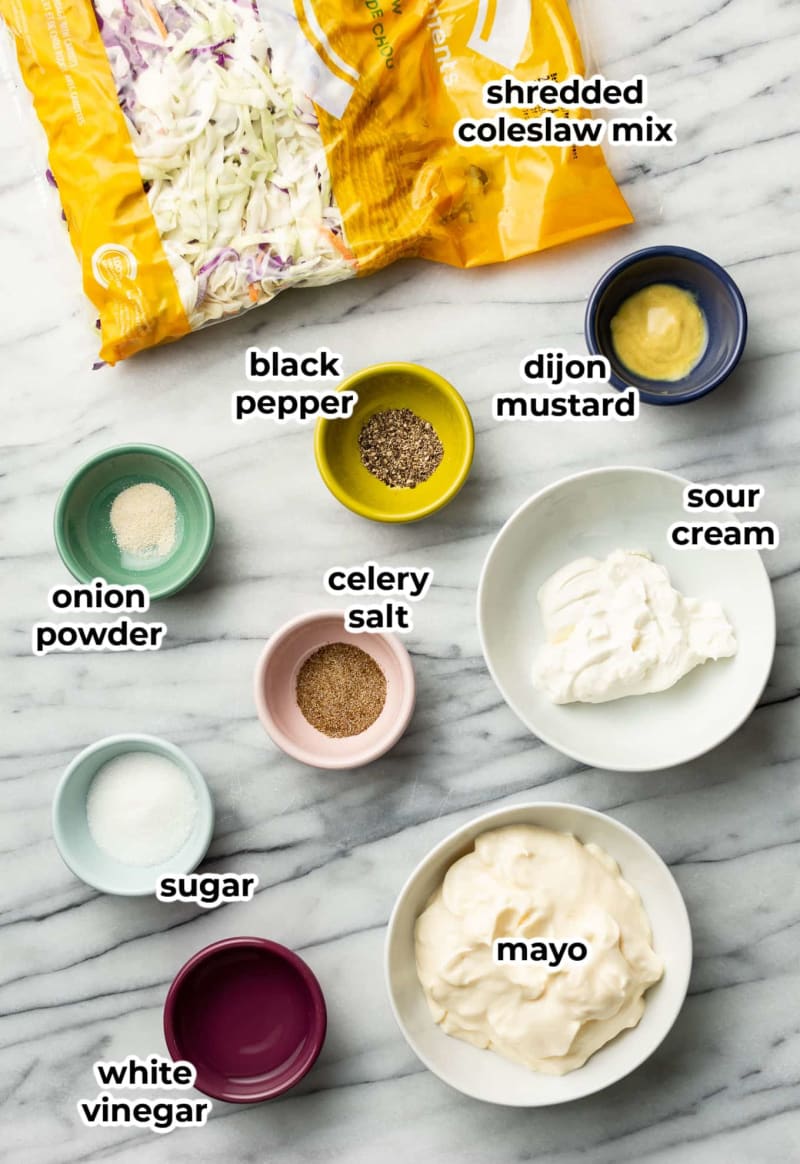
The produce aisle and a few refrigerator staples cover most of the list. Check the spice cabinet for celery salt before you shop, since it isn’t the same thing as celery seed.
- Mayonnaise: Use three-quarters of a cup. Regular mayonnaise gives the dressing body and a neutral base for the vinegar and seasonings.
- Sour cream: A quarter cup adds a gentle dairy tang. Plain, full-fat sour cream gives the dressing a thicker consistency.
- White vinegar: Use two and a half tablespoons of distilled white vinegar. Its bright, straightforward acidity is what gives this slaw its bite.
- Granulated sugar: One tablespoon mellows the sharpness of the vinegar. Plain white sugar sweetens the dressing without adding another flavor.
- Celery salt: One teaspoon seasons the dressing and gives it a distinct celery flavor. Check that the jar says celery salt, which already contains salt.
- Dijon mustard: Half a teaspoon of smooth Dijon adds a quiet mustard kick that comes through at the end of a bite.
- Onion powder: A quarter teaspoon adds a savory background note. Use onion powder rather than onion salt so the dressing doesn’t get too salty.
- Black pepper: Add it to taste. Finely ground pepper blends in evenly, while a coarse grind gives you more pronounced little bursts of pepper.
- Coleslaw mix: Use 14 to 16 ounces of plain shredded cabbage and carrots. Look for an undressed bag with crisp-looking shreds and no obvious wet spots.
How to Make Coleslaw
1. Whisk the dressing
Put the mayonnaise, sour cream, white vinegar, sugar, celery salt, Dijon, onion powder, and pepper in a medium bowl. Whisk until smooth, sweeping around the sides and along the bottom so no pockets of seasoning or thick streaks of sour cream get left behind.
The dressing should look uniform and fall from the whisk in a thick ribbon. If you can still see clumps, press them against the side of the bowl and whisk again.
2. Check the seasoning
Taste the dressing before adding it to the slaw and adjust it as needed. Try some on a cabbage shred if you’re unsure about the balance, since the dressing will taste more concentrated on a spoon than it will in the finished salad.
Look for a bright tang up front, with a little sweetness behind it. If it needs an adjustment, make a small change, stir, and taste again before adding anything more.
3. Toss with the cabbage
Empty the coleslaw mix into a large bowl and loosen any tightly packed shreds. Pour over most of the dressing, then lift the cabbage from the bottom and turn it over until evenly coated. Add more dressing to suit your taste; you may not need all of it.
Check the bottom of the bowl before adding more. The shreds should look lightly glossy, with no dry pockets or deep puddle of dressing underneath.
4. Chill or serve now
For a more blended flavor, cover the bowl and refrigerate the coleslaw for a few hours before serving. If dinner is ready now, serve it right after tossing for a slaw with a firmer bite and a more pronounced vinegar tang.
After chilling, give the salad a gentle toss from the bottom before plating so the dressing that settled there coats the top shreds again.
Tips and Common Mistakes
Pay attention to the cut of the vegetables and how much moisture goes into the bowl.
- Measure homemade slaw loosely. If you’re shredding your own cabbage and carrots, aim for about 8 cups total. Don’t press the shreds down to fit more into the measuring cup.
- Slice across the cabbage wedge. Remove the tough core, then slice across the wedge for shorter strands. They’re easier to toss and don’t pull a whole tangle of slaw off a sandwich.
- Keep the carrots fine. Use the large holes of a box grater rather than cutting thick carrot sticks. Grated carrots distribute evenly instead of collecting at the bottom.
- Dry washed vegetables well. If you wash your own cabbage, dry it thoroughly before shredding. Water caught between the leaves can thin the dressing.
- Don’t salt the cabbage first. The dressing already contains celery salt. Salting the shreds separately can pull out water and make the finished slaw saltier than intended.
Substitutions and Variations
Make one swap at a time so it’s easy to tell how it changes the dressing or the crunch.
- Greek yogurt: Use plain Greek yogurt in place of the sour cream. It gives the dressing a slightly sharper tang, especially if you choose nonfat yogurt.
- Apple cider vinegar: Swap it for the white vinegar for a fruitier, less neutral flavor. The slaw will taste a little softer around the edges.
- Yellow mustard: Use yellow mustard if Dijon isn’t on hand. It gives the dressing a milder, more familiar picnic-slaw flavor.
- Broccoli slaw: Trade the cabbage mix for plain broccoli slaw. The shredded stems are firmer than cabbage and give each forkful a stronger crunch.
- Extra heat: Whisk a pinch of cayenne into the dressing. Start small so the heat doesn’t cover up the celery and mustard.
What to Serve with Coleslaw
Pile the slaw onto pulled pork sandwiches or spoon it alongside ribs, baked beans, and corn on the cob. It also works as a burger topping: let the excess dressing drip off the spoon before you add it so the bottom bun holds up. Find more cookout mains in our beef recipes.
For a weeknight plate, pair it with oven fries and a main from our chicken recipes. The cold, tangy crunch is especially good next to hot fried chicken.
Make-Ahead, Storage and Reheating
Make ahead: Whisk the dressing up to 2 days ahead and refrigerate it in a covered container. Keep the vegetables separate until you’re ready to toss, especially if you’re making it the night before and want a firmer crunch.
Storage: Refrigerate dressed coleslaw in an airtight container for 3 to 4 days; expect it to soften over that time. Don’t leave it at room temperature for more than 2 hours, or more than 1 hour above 90°F.
Freezing: Skip the freezer. The creamy dressing can separate after thawing, and the cabbage loses much of its snap.
Reheating: Serve leftovers cold, straight from the refrigerator. If the slaw has released a lot of liquid, use a slotted spoon to lift it out without carrying the watery dressing onto the plate.
Coleslaw FAQs
Can you make this coleslaw without sugar?
Yes. Without the sugar, the vinegar will taste more assertive. Taste the dressing on a shred of cabbage before tossing the whole bowl so you can decide if you like the sharper finish.
Why did my coleslaw turn pink?
Red cabbage can tint the dressing pink or purple as it sits. That’s normal when the mix contains red cabbage; choose a green cabbage and carrot blend if you want the dressing to stay pale.
Can you make this coleslaw vegan?
Yes. Use egg-free mayonnaise and an unsweetened plant-based sour cream. Choose a thick sour cream alternative rather than a pourable one so the dressing still clings to the vegetables.
Can you double this coleslaw for a crowd?
Yes. Double the dressing and vegetable quantities, but toss the slaw in batches if the bowl is too full to turn the shreds easily. That keeps the dressing from pooling under a mound of dry cabbage.
Can you use savoy cabbage for coleslaw?
Yes. Savoy cabbage has thinner, crinkled leaves and gives you a more delicate slaw. If you want that texture without losing the familiar crunch, mix it with regular green cabbage.
Printable Recipe
Recipe adapted from Salt & Lavender. Photos courtesy of Salt & Lavender, used with permission.

Best Coleslaw
Ingredients
- 3/4 cup mayo
- 1/4 cup sour cream
- 2.5 tablespoons white vinegar
- 1 tablespoon granulated sugar
- 1 teaspoon celery salt
- 1/2 teaspoon Dijon mustard
- 1/4 teaspoon onion powder
- Pepper to taste
- 14-16 ounces coleslaw mix see note
Instructions
- Add all the ingredients except for the coleslaw mix to a medium bowl, and combine until smooth. Taste and adjust if needed.
- Add the coleslaw mix to a large bowl. Pour the dressing over and toss. Depending how creamy you want the salad, you may have a little dressing left over.
- I recommend letting the flavors meld for a few hours in the fridge prior to serving, but you could serve right away if needed.
Notes
- Coleslaw mix can vary in size depending where you buy it, but anything from 14-16 oz. will work. If you prefer, you can chop/shred your own cabbage and carrots vs. buying a conveniently prepped bag from your local grocery store. You’d want about 8 cups of shredded cabbage/carrots if you’re making the coleslaw mix yourself.


