Brown Gravy


Brown gravy should be smooth enough to pour and rich enough to give plain mashed potatoes a reason to be on the plate. This version gets a nutty backbone from flour toasted in butter, then layers in beef broth, bouillon paste and a little Worcestershire for a savory finish. You don’t need a roast or any pan drippings.
The whole batch takes 20 minutes and makes about 4 cups, enough for 8 servings. Make it on a weeknight when dinner needs a sauce, or get it out of the way before a holiday meal so there’s one less thing to cook once the roast comes out.
Why This Brown Gravy Recipe Works
This gravy builds flavor before the broth ever goes in, then thickens right in the same pan.
- The roux does two jobs. Butter coats the flour so it disperses more evenly when the liquid goes in. Cooking the mixture until it’s lightly browned also trades the raw flour smell for a toasted, nutty aroma.
- The beef flavor comes in layers. Broth gives the gravy its base, while concentrated bouillon deepens it without adding more liquid. That combination makes up for some of the savory flavor you’d otherwise get from a roasting pan.
- Worcestershire balances the richness. Its tang keeps the butter and beef from tasting heavy. The sauce adds depth without turning the gravy noticeably sour.
- The simmer finishes the texture. The flour starch swells as the liquid heats, so you can judge how much body the gravy has before deciding whether to thin it. There’s no need to make a separate slurry.
Ingredients You’ll Need
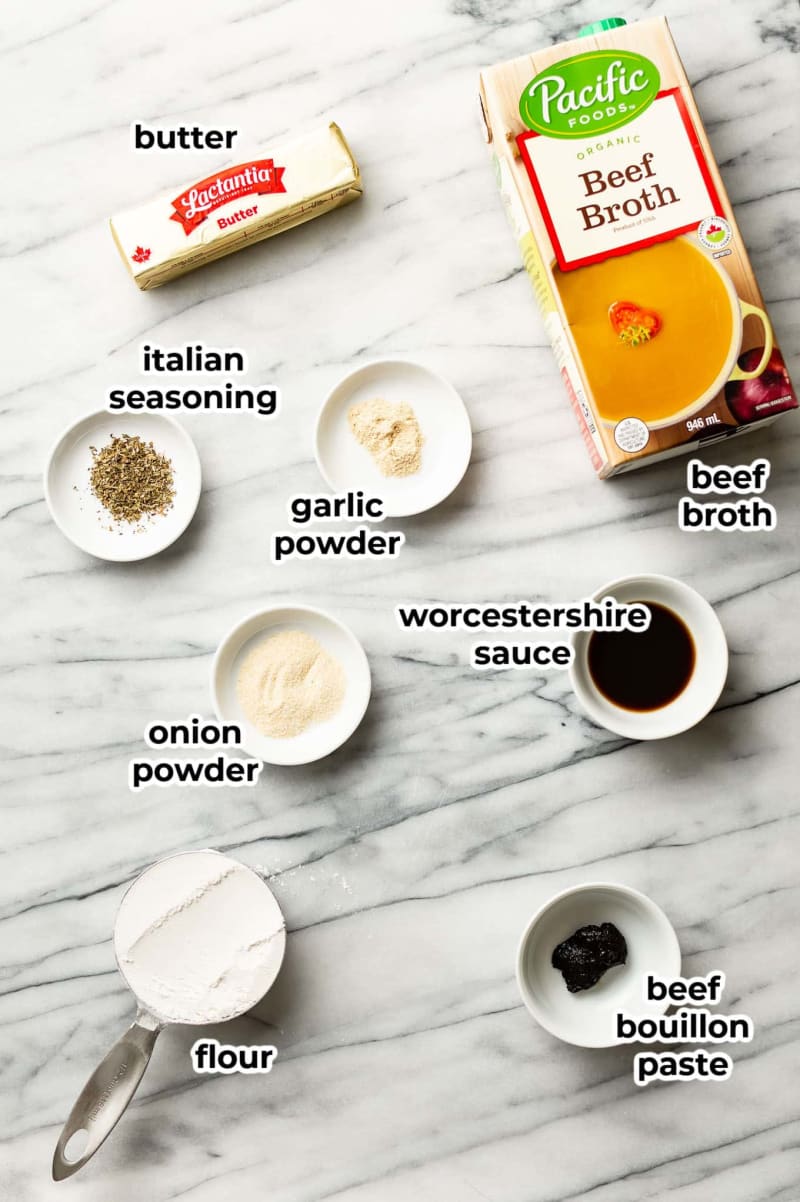
Choose a broth you’d be happy to sip on its own. It’s the main liquid, so its flavor and salt level carry through to the finished gravy.
- Butter: Half a cup makes the base of the roux. Unsalted butter gives you more control over the final seasoning, especially if your broth is already salty.
- Flour: Half a cup of all-purpose flour thickens the broth. Level it off so you don’t pack in extra and end up with a pasty gravy.
- Beef broth: Four and a half cups of beef broth or stock provide the liquid and most of the meaty flavor. A lower-sodium option gives you more room to adjust.
- Worcestershire sauce: Half a tablespoon adds a tangy, savory edge.
- Beef bouillon paste: One teaspoon boosts the beef flavor. Look for a concentrated paste rather than ready-to-use broth.
- Onion powder: One teaspoon gives the gravy a mellow onion flavor without any chopped pieces.
- Garlic powder: Half a teaspoon adds a gentle garlic note. Use powder, not garlic salt.
- Italian seasoning: Half a teaspoon of the dried blend gives the gravy a light herbal finish.
- Salt and pepper: Add both to taste, after the gravy has thickened enough to judge the seasoning.
How to Make Brown Gravy
1. Start the roux
Set a pot or large saucepan over medium heat and melt the butter. Whisk in the flour until it’s evenly moistened, working around the edges of the pan where dry flour can hide.
The mixture should look like a smooth paste with no dry white streaks. Once it’s combined, keep the whisk moving rather than leaving it to brown undisturbed.
2. Toast the flour mixture
Cook the roux for about 4 to 5 minutes, whisking almost constantly. Let it turn golden to light brown, but don’t cook it so far that it burns.
Look for an even color and a smell like toasted flour, not smoke. Flecks that turn black are a sign the roux is scorching.
3. Whisk in the broth
Add the beef broth gradually, whisking as you pour. Start with a small splash and smooth out the thick paste before adding more, then pour in the rest steadily while you whisk.
The roux can tighten up as the first splash hits it. That’s normal; keep whisking until it smooths out instead of pouring in all the broth at once.
4. Add the savory seasonings
Whisk in the Worcestershire sauce, beef bouillon paste, onion powder, garlic powder and Italian seasoning. Break up the bouillon against the side of the pan if it clings to the whisk.
The dried herbs will still be visible, but you shouldn’t see dark streaks of undissolved bouillon.
5. Simmer and adjust
Increase the heat to medium-high and cook for another 5 to 7 minutes, whisking fairly often, until the gravy is as thick as you like. If it gets too thick, whisk in a splash more broth. Taste and finish with salt and pepper.
Take the gravy off the heat while it still pours easily. It thickens as it cools and can also tighten up when reheated.
How to Tell When It’s Done
Dip a spoon into the hot gravy and lift it out. The gravy should coat the back rather than run off like plain broth, but it should still pour from the spoon. If it looks watery, let it bubble a little longer and check again before taking it off the heat.
Tips and Common Mistakes
A few small decisions at the stove can save you from restarting a batch or scrambling to fix it at the table.
- Measure before you melt the butter. Have the broth and seasonings within reach so you can stop toasting the roux as soon as it reaches the right color.
- Start over if the roux burns. A scorched roux will make the whole batch taste bitter. Wash the pan before starting again so burned bits don’t carry over.
- Strain out stubborn lumps. If whisking doesn’t smooth the finished gravy, pour it through a fine-mesh sieve into a heatproof bowl or another saucepan.
- Judge the texture, not the shade. The broth and the toasted roux both affect the color. A lighter brown gravy isn’t undercooked just because it doesn’t look as dark as a packaged mix.
- Halve the batch for a smaller table. Cut every ingredient in half rather than holding back only some of the broth, which would throw off the balance of flour, liquid and seasoning.
Substitutions and Variations
You can adapt the gravy to the meat you’re serving or make use of what you already have in the pantry.
- Roast drippings: Separate out the fat and replace an equal amount of broth with the juices. For half a cup of juices, use 4 cups of broth.
- Chicken broth: Use it in place of beef broth for a lighter-tasting gravy. Swap the beef bouillon for chicken bouillon if you want to leave out the beef entirely.
- Dairy-free butter: Use a plant-based butter stick in place of regular butter. Skip soft spreads from a tub, which can contain more water and make the roux less predictable.
- Single dried herb: Replace Italian seasoning with dried thyme for a more roast-style flavor. Thyme is more prominent on its own, so start with less.
- Darker color: Stir in a little gravy browning sauce at the end if you want a deeper shade without cooking the roux longer.
What to Serve with Brown Gravy
Spoon brown gravy over meatloaf, hamburger steaks or sliced pot roast from our beef recipes. Add mashed potatoes to catch what runs off the meat and steamed green beans or roasted carrots for a side that doesn’t need gravy of its own.
For a poultry dinner, serve it with roast chicken or pan-seared cutlets from our chicken recipes. A spoonful also works over an open-faced hot beef sandwich, where toasted bread holds up better under the sauce.
Make-Ahead, Storage and Reheating
Make ahead: Cook the gravy up to 3 days ahead and refrigerate it. Wait until you’ve reheated it to make the final consistency adjustment, since cold gravy can look much thicker than it will at the table.
Storage: Transfer leftovers to an airtight container and refrigerate within 2 hours. Use within 3 to 4 days.
Freezing: Freeze cooled gravy in airtight containers for up to 3 months, leaving room for expansion. Thaw in the refrigerator; it may look slightly separated at first but should come together as you whisk it over heat.
Reheating: Warm in a saucepan over low heat, whisking often, until the gravy reaches 165°F. Add broth a splash at a time if needed to bring it back to a pourable consistency.
Brown Gravy FAQs
Can I make brown gravy with water instead of broth?
Yes, if you first turn the water into beef broth with bouillon according to the package directions. Plain water and the small amount of bouillon called for here won’t give the gravy the same depth.
Can I leave out the Worcestershire sauce?
Yes. The gravy will still thicken the same way and taste beefy, but it will have less tang.
Why does my gravy taste floury?
The roux may not have toasted enough, or the gravy may not have come to a proper simmer after you added the broth. If the gravy is already thick, loosen it with a splash of broth before simmering it a little longer.
Can I use a silicone whisk for gravy?
Yes. A silicone-coated whisk is a good choice for a nonstick saucepan because it won’t scratch the coating. Use the whisk to sweep along the bottom as well as through the middle.
Why is there a skin on top of my gravy?
The surface dries as the gravy sits uncovered. If you’re holding it briefly while dinner comes together, cover the pan and give the gravy a whisk just before pouring.
Printable Recipe
Recipe adapted from Salt & Lavender. Photos courtesy of Salt & Lavender, used with permission.

Brown Gravy
Ingredients
- 1/2 cup butter
- 1/2 cup flour
- 4.5 cups beef broth (or stock) see note
- 1/2 tablespoon Worcestershire sauce
- 1 teaspoon beef bouillon paste I use Better Than Bouillon
- 1 teaspoon onion powder
- 1/2 teaspoon garlic powder
- 1/2 teaspoon Italian seasoning
- Salt & pepper to taste
Instructions
- Melt the butter in a pot or large saucepan over medium heat, then whisk in the flour. Cook, whisking almost constantly, for about 4-5 minutes or until the roux smells toasted and it's reached a nice golden/light brown color (but don't let it burn).
- Whisk the broth in gradually, followed by the Worcestershire sauce, bouillon paste, onion powder, garlic powder, and Italian seasoning.
- Increase the heat to medium high, then cook the gravy for another 5-7 minutes, or until it's thickened up to your liking, whisking fairly often to ensure it's smooth. If it gets too thick, add a splash more broth. Season with salt & pepper to taste. The gravy will thicken more as it cools (and when reheating if making it ahead).
Notes
- If you want to add in drippings from a roast, strain the fat out first and then replace the beef broth with the equivalent amount of juices (e.g. if using 1/2 cup of drippings, only add 4 cups broth).
- Serving size really depends on how much gravy people decide to pour on their plates.
- This recipe makes about 4 cups total of gravy, but feel free to halve every ingredient to make a half batch. The gravy will keep for a few days in the fridge, so it’s great for leftovers if you decide to make the full batch.
- The color of your gravy will vary depending on what brand of beef broth you use and how dark you cook the roux. Anything from a lighter to darker brown is fine! Add some Kitchen Bouquet to make it darker if desired.


