Creamy Maple Chicken


Creamy maple chicken starts with golden, pan-seared cutlets and ends with a silky sauce that tastes more savory than sweet. Dijon gives the cream a sharp edge, while pure maple syrup rounds it out without making the chicken taste glazed. The sauce comes together in the same skillet, picking up the browned bits left behind after searing.
This dinner serves four and takes 30 minutes, including 10 minutes of prep. It’s quick enough for a weeknight, but the glossy sauce makes it feel right for a small dinner with guests. Get your sides going before you sear the chicken so everything reaches the table hot.
Why This Creamy Maple Chicken Recipe Works
The chicken and sauce get different kinds of heat in the same skillet. That gives you a good sear without asking the cream to stand up to the same heat.
- Thin cutlets cook evenly. Splitting each breast horizontally shortens the distance heat has to travel to the center. The edges are less likely to dry out while the thickest part finishes.
- The browned bits season the sauce. Chicken leaves a savory layer on the skillet as it sears. Broth loosens that layer, giving the sauce a roasted flavor it wouldn’t have if you mixed it in a separate saucepan.
- Dijon keeps the maple in balance. Mustard brings enough sharpness that the maple reads as a background sweetness. A little lemon makes the rich sauce taste brighter without giving it a pronounced citrus flavor.
- Cream thickens without flour. As water evaporates, the cream goes from freely flowing to spoon-coating. Finishing the chicken at a gentle simmer gives the sauce time to reduce without a separate thickener.
Ingredients You’ll Need
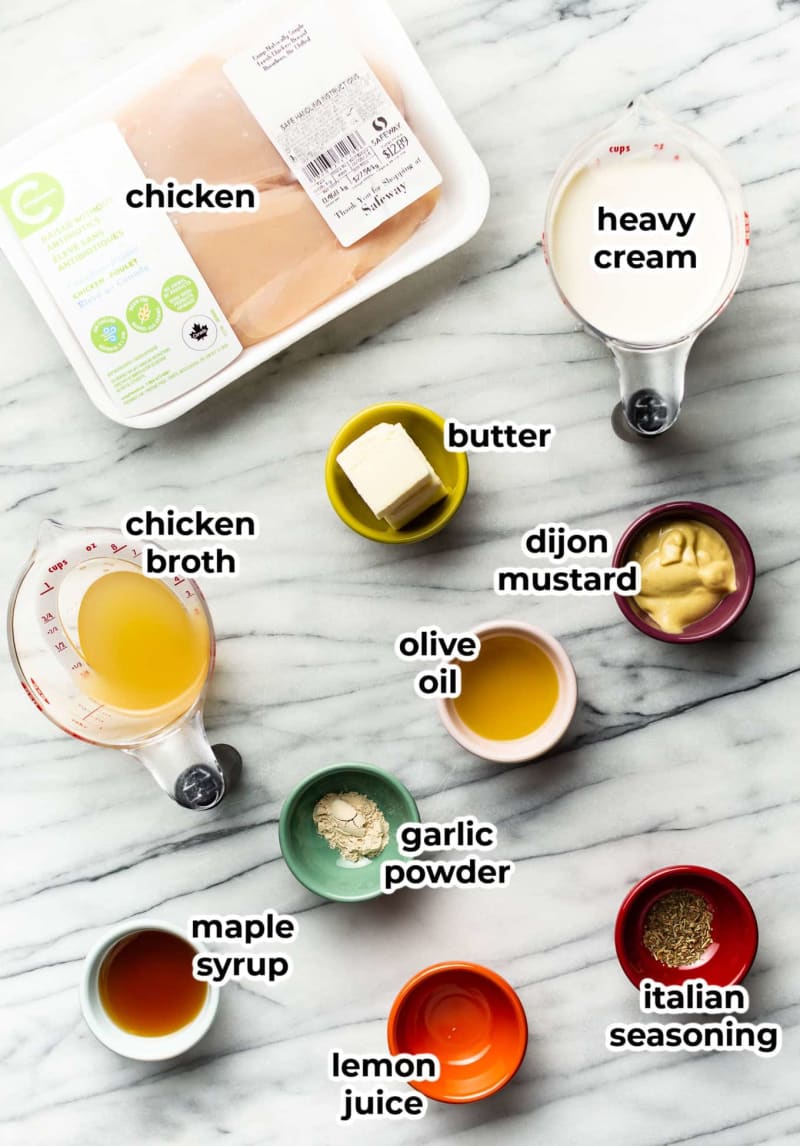
Look for pure maple syrup and a smooth Dijon you like on its own. Their flavors come through even after the cream goes in.
- Chicken breasts: Two large boneless, skinless breasts. Choose similar sizes so the four cutlets you slice from them finish close together.
- Salt and pepper: Use both to taste on the cutlets, and save some for adjusting the finished sauce.
- Garlic powder: Half a teaspoon seasons the surfaces evenly without leaving bits of fresh garlic to scorch.
- Olive oil: One tablespoon helps coat the skillet for searing.
- Butter: Three tablespoons total. Part goes into the skillet for browning, and the rest gives the sauce its buttery finish.
- Chicken broth: One-third cup loosens the drippings. Low-sodium broth gives you more control over the salt.
- Dijon mustard: One and a half tablespoons give the sauce its main tang. Smooth Dijon blends in without leaving visible seeds.
- Maple syrup: One tablespoon of pure maple syrup adds sweetness and a subtle maple flavor.
- Lemon juice: A quarter teaspoon is enough to brighten the sauce.
- Italian seasoning: A quarter teaspoon adds a quiet herbal note behind the mustard.
- Cayenne pepper: Use one tiny pinch if you want a little warmth, or leave it out.
- Heavy cream: One cup of heavy cream or whipping cream gives the sauce its body.
Equipment You’ll Need
- Sharp knife and cutting board: A sharp chef’s knife and a steady board make it easier to split the breasts horizontally without the blade drifting toward the surface.
- Large skillet: Use a skillet wide enough for the cutlets to lie flat with space between them and deep enough to hold the cream sauce.
- Tongs: Tongs let you turn the cutlets without scraping their browned surfaces.
- Instant-read thermometer: A thin probe lets you check the center of a cutlet from the side.
How to Make Creamy Maple Chicken
1. Slice and season
Lay each of the two large breasts flat and slice it in half lengthwise, holding the blade parallel to the board so you end up with four thinner cutlets. Season both sides with half a teaspoon of garlic powder total, plus salt and pepper to taste.
Aim for pieces of similar thickness, not identical outlines. Keep your free hand flat on top of the breast and out of the knife’s path.
2. Heat the skillet
Set the skillet over medium-high heat and add one tablespoon of olive oil and one tablespoon of the butter. Swirl to spread the fats over the bottom.
Add the chicken when the oil shimmers and the butter is foaming. You want an immediate sizzle, not smoke.
3. Sear the cutlets
Cook the chicken for 4 to 5 minutes per side, until golden, then transfer it to a plate. Leave the browned residue in the skillet for the sauce.
If a cutlet clings when you first try to turn it, give it a little longer within that window rather than tugging at the crust. The chicken will finish cooking in the sauce.
4. Build the sauce base
Take the skillet off the heat and add the remaining butter, one-third cup chicken broth, one and a half tablespoons Dijon, one tablespoon maple syrup, a quarter teaspoon each of lemon juice and Italian seasoning, and a tiny pinch of cayenne if using. Stir or whisk until smooth, scraping up the browned bits.
The skillet’s residual heat should melt the butter, but don’t let the liquid cook away completely.
5. Add the cream
Stir in one cup of heavy or whipping cream and put the skillet back over medium-high heat. Wait for the sauce to start bubbling again before returning the chicken to the pan.
Look for bubbles coming back through the cream; there’s no need to let it reach a rolling boil.
6. Simmer and season
Reduce the heat and simmer for 5 minutes or until the cutlets are cooked through and the sauce is as thick as you like. Season with more salt and pepper as needed.
Check for 165°F at the center of the chicken. The sauce should cling to the cutlets but still be loose enough to spoon over them.
How to Tell When It’s Done
Slide an instant-read thermometer into the thickest part of each cutlet from the side so the tip sits in the center rather than touching the hot skillet. A golden exterior tells you the sear worked, not that the meat underneath is ready.
If the chicken is ready but the sauce still runs off a spoon like broth, move the cutlets to a clean plate and keep simmering the sauce on its own. If the sauce thickens first, loosen it with a splash of broth and let the chicken finish at a gentle simmer.
Tips and Common Mistakes
Most fixes for this skillet dinner are easiest before the cream goes in.
- Blot the cutlets dry. Use paper towels before seasoning. Wet chicken cools the skillet on contact, and the surface can steam before it has a chance to brown.
- Measure the sauce ingredients first. The skillet stays hot after you take it off the burner. Having the broth ready to pour keeps you from leaving the drippings in a dry, hot pan while you measure.
- Check the drippings. Chestnut-brown bits are worth scraping up, but black specks will make the sauce bitter. Wipe out scorched residue before adding the sauce ingredients.
- Go easy on the cayenne. A tiny pinch is enough for gentle warmth. An eighth of a teaspoon can push the heat ahead of the maple and Dijon.
- Taste after reducing. Broth and Dijon already contribute salt, and their flavors concentrate as the sauce thickens. Wait until the sauce has the texture you want before making the final adjustment.
Substitutions and Variations
You can change the cut of chicken or tweak the sauce without losing its sweet-tangy balance.
- Small whole breasts: Use four small breasts and leave them whole. They may take longer to cook through than sliced cutlets.
- Boneless chicken thighs: Use boneless, skinless thighs for a richer result. Unfold them so they sit flat, and allow for different timing if they’re thicker than cutlets.
- Whole-grain mustard: Replace the Dijon with a sharp whole-grain mustard. The sauce will be speckled with seeds and a little less smooth.
- Honey: Honey can stand in for the syrup. It preserves the sweet-and-tangy contrast, but the sauce will no longer have a maple flavor.
- Single dried herb: Use dried thyme in place of the Italian seasoning for a woodsy note that goes especially well with Dijon.
What to Serve with Creamy Maple Chicken
Spoon the chicken and sauce over mashed potatoes, egg noodles or rice. Keep the starch simply seasoned so the Dijon stays noticeable, and add roasted broccoli or steamed green beans for a crisp-tender contrast.
For a lighter plate, choose a side from our fresh salad recipes and serve crusty bread for the sauce. A salad with a tart dressing works especially well against the cream. If you’re planning the rest of the week, browse our skillet-friendly chicken ideas.
Make-Ahead, Storage and Reheating
Make ahead: Slice the chicken up to a day ahead and keep it covered in the refrigerator. You can also whisk the broth, mustard, maple, lemon and seasonings together and refrigerate them separately; save the searing and cream reduction for dinner so the sauce is freshly made.
Storage: Refrigerate the cutlets with their sauce in a shallow airtight container within two hours of cooking. Use the leftovers within 3 to 4 days.
Freezing: Freezing isn’t ideal because the cream sauce can separate once thawed. If you do freeze leftovers, use an airtight freezer container and thaw them in the refrigerator before reheating.
Reheating: Warm the chicken and sauce together in a covered skillet over low heat until the chicken reaches 165°F. Stir a splash of broth into the sauce if it has thickened, and avoid a hard boil.
Creamy Maple Chicken FAQs
Can I use pancake syrup instead of pure maple syrup?
It will sweeten the sauce, but it won’t give you the same flavor. Some pancake syrups also have a thicker consistency and a stronger artificial maple taste that stands out once the sauce reduces.
Can I use half-and-half instead of heavy cream?
Yes, but expect a thinner sauce that’s more prone to separating. Keep it at a gentle simmer and don’t try to make up for the lower fat content by boiling it hard.
Can I make creamy maple chicken in a nonstick skillet?
Yes. You may get fewer browned bits than with stainless steel, but the sauce will still come together. Use a silicone spatula rather than a metal whisk to protect the coating.
Can I double this recipe?
Yes, but use two skillets or sear the chicken in batches. For the sauce, a wider pan lets the larger volume reduce more readily than a deep, narrow one.
Why did my cream sauce turn grainy?
It likely got too hot or reduced too far. Take the skillet off the burner and whisk in a small splash of cold cream; this can smooth out a sauce that’s just starting to separate.
Can I make extra maple Dijon sauce without adding more chicken?
Yes. Increase all the sauce ingredients in the same proportion so the mustard and maple stay balanced. If the cutlets finish first, take them out while the extra sauce reduces.
Printable Recipe
Recipe adapted from Salt & Lavender. Photos courtesy of Salt & Lavender, used with permission.

Creamy Maple Chicken
Ingredients
- 2 large chicken breasts
- Salt & pepper to taste
- 1/2 teaspoon garlic powder
- 1 tablespoon olive oil
- 3 tablespoons butter divided
- 1/3 cup chicken broth
- 1.5 tablespoons Dijon mustard
- 1 tablespoon maple syrup
- 1/4 teaspoon lemon juice
- 1/4 teaspoon Italian seasoning
- 1 tiny pinch cayenne pepper optional, see note
- 1 cup heavy/whipping cream
Instructions
- Slice each chicken breast in half lengthwise so you have 4 thinner cutlets. Sprinkle them all over with the garlic powder and salt & pepper.
- Heat the olive oil and one tablespoon of the butter in a skillet over medium-high heat.
- Once the pan is hot, add the chicken and cook for 4-5 minutes/side until golden. Transfer the chicken to a plate.
- Take the pan off the heat and add the rest of the butter, the chicken broth, Dijon mustard, maple syrup, lemon juice, Italian seasoning, and cayenne pepper (if using). Stir/whisk the sauce until smooth (make sure the liquid doesn't reduce completely).
- Stir in the cream and return the pan to the burner over medium-high heat. Once the sauce is bubbling again, add the chicken back in. Reduce the heat and let it simmer for 5 minutes or until the chicken is cooked through and the sauce is reduced to your liking. Season with extra salt & pepper as needed.
Notes
- If you have smaller chicken breasts, use four of them and leave them whole, but just be sure they’re properly cooked through as they may take a bit longer. Chicken is cooked through at 165F.
- Cayenne pepper can give this dish a gentle warmth. I’ve tested this with 1/8 teaspoon cayenne pepper and it’s a bit too much in my opinion, so keep that in mind when deciding how much to add.


