Easy Pasta e Fagioli


Easy pasta e fagioli is a hearty Italian-style soup with tender beans, pasta, and vegetables in a tomato-rich broth. Pancetta browns first in the pot, giving the soup a savory foundation, while reducing the tomatoes concentrates their flavor before broth goes in.
This version takes 10 minutes to prep and 40 minutes to cook, makes 6 servings, and works well for a cozy weeknight dinner or a casual meal with friends. The pasta cooks right in the soup, so dinner comes together in one pot.
Expect a thick, rustic soup rather than a clear broth. The pasta continues to absorb liquid as it sits, so have extra chicken broth ready if you prefer a looser bowl or are reheating leftovers.
Why This Easy Pasta e Fagioli Recipe Works
Layering the ingredients in the same pot builds a full, savory broth without a long simmer.
- Pancetta starts the flavor base. Cooking it until it begins to crisp releases savory fat into the pot. The vegetables then soften in those flavorful drippings.
- The vegetables soften before the broth goes in. A short sauté gives the onion, carrots, and celery time to turn tender and sweet. They add body and balance to the tomatoes and beans.
- Reduced tomatoes bring depth. Letting the tomatoes bubble until their liquid noticeably reduces concentrates their flavor. Scraping up the browned bits adds the pancetta and vegetable flavor back into the soup.
- Two kinds of beans make a hearty bowl. Kidney beans hold their shape, while cannellini beans are tender and creamy. Together they make the soup filling without needing meat in every spoonful.
Ingredients You’ll Need
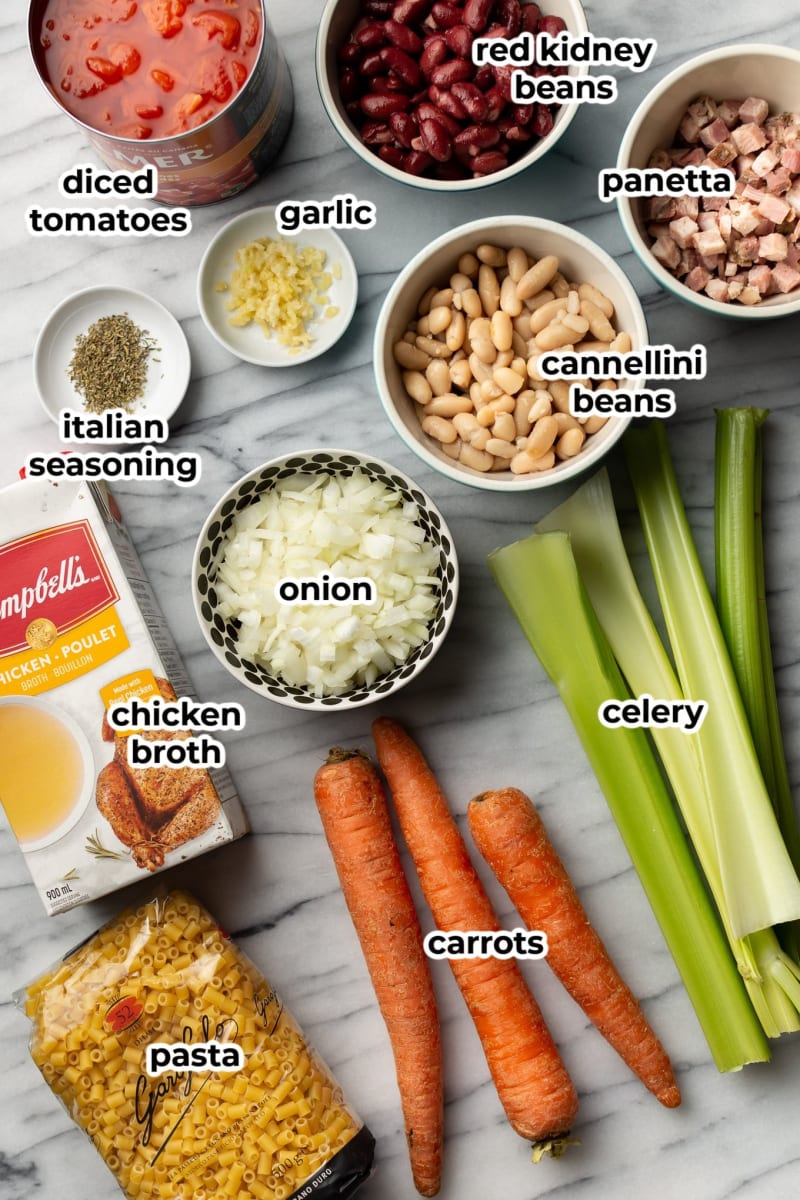
The ingredients are easy to find and build a savory, vegetable-packed soup. Use the quantities below, then adjust the final seasoning to taste.
- Diced pancetta: One 4.4-ounce package. It adds salty, savory flavor and cooking fat; packaging sizes can vary, so a close amount works.
- Onion: Half of a large onion, chopped, for sweetness and a mellow base.
- Celery: Four sticks, chopped, for a fresh, aromatic backbone and a little texture.
- Carrots: Three medium carrots, chopped or sliced. They add sweetness; cut them to a similar size so they cook evenly.
- Garlic: Four cloves, minced, for a fragrant savory note. Add it after the vegetables so it does not scorch.
- Diced tomatoes: One 28-fluid-ounce can, including its juices. The tomatoes create the soup’s rich, tangy base.
- Italian seasoning: Half a teaspoon gives the tomato broth a familiar blend of dried herbs.
- Chicken broth: Four cups, which form the soup’s cooking liquid. Choose low-sodium broth if you are sensitive to salt.
- Red kidney beans: One 15-fluid-ounce can, drained. Their firm texture holds up well through the simmer.
- Cannellini beans: One 15-fluid-ounce can, drained. These mild white beans add a softer, creamy contrast.
- Pasta: One cup of ditalini or macaroni. Small shapes are easy to scoop with the beans and vegetables.
- Salt and pepper: Season to taste at the end; pancetta and broth already contribute salt, so taste before adding much.
- Shaved parmesan: Optional, for serving. Its salty, nutty finish is especially good over the hot soup.
Equipment You’ll Need
- Large, heavy-bottomed pot: Use a pot with enough room for the vegetables, broth, beans, and pasta to simmer without crowding.
- Wooden spoon: A sturdy spoon makes it easy to stir the pasta and scrape the browned bits from the pot.
- Chef’s knife and cutting board: These make quick work of chopping the onion, celery, and carrots before or while the pancetta cooks.
How to Make Easy Pasta e Fagioli
1. Brown the pancetta
Put the pancetta in a large pot over medium-high heat. Sauté until it starts to get crispy; you can chop the vegetables while it cooks.
Look for browned edges and some rendered fat in the bottom of the pot. Keep the heat at medium-high and stir if pieces are browning unevenly.
2. Soften the vegetables
Add the onion, carrots, and celery. Sauté for 5 minutes, stirring occasionally, until they begin to soften.
The vegetables should look glossy and lose some of their raw, firm appearance, but they do not need to be completely tender yet.
3. Reduce the tomatoes
Stir in the garlic, then add the diced tomatoes and Italian seasoning. Scrape up the browned bits from the pot and let the mixture bubble until the liquid is noticeably reduced, about 8-10 minutes, stirring occasionally.
The mixture should look less watery and the tomato flavor more concentrated. Keep the bubbling steady rather than letting the bottom scorch.
4. Add broth and beans
Pour in the chicken broth and add both kinds of drained beans. Turn the heat to high and bring the soup to a boil.
Stir across the bottom once the broth is in so any remaining browned flavor is incorporated.
5. Cook the pasta
Once the soup reaches a boil, stir in the pasta. Turn the heat down just enough to keep a lively simmer going, and let it cook 15-20 minutes, until the pasta is fully tender.
Stir every few minutes so the pasta does not stick to the bottom. The soup should bubble steadily, not boil so hard that it splashes.
6. Season and serve
Taste the soup and add salt and pepper as needed. Serve hot with shaved parmesan, if desired.
The pancetta and broth may already make the soup fairly salty. Taste a spoonful with the pasta and beans before deciding whether it needs more.
How to Tell When It’s Done
The pasta should be tender all the way through, and the carrots should be easy to bite without turning mushy. The beans will be hot and soft but should mostly keep their shape.
If the pasta is still firm after the stated simmer, keep cooking at a rapid simmer and stir every few minutes until tender. If the soup has become thicker than you like, stir in more chicken broth to loosen it.
Tips and Common Mistakes
A few small choices help the soup stay flavorful and keep the pasta from turning into a solid mass.
- Cut the vegetables evenly. Similar-sized pieces soften at about the same rate, so you do not end up with hard carrot chunks and overcooked onion.
- Scrape the pot after adding tomatoes. The browned bits left by the pancetta and vegetables carry concentrated flavor. A few good strokes with a wooden spoon loosen them into the tomato mixture.
- Stir the pasta regularly. Small pasta can settle as it simmers and catch on the bottom of the pot. Stir every few minutes, especially as the soup thickens.
- Taste before salting. Pancetta and many broths are already salty. If you are salt-sensitive, start with low-sodium chicken broth and adjust only after cooking.
- Thin the soup as needed. Pasta absorbs broth as it cooks and continues to do so after cooking. Add more chicken broth if the finished soup or leftovers are thicker than you prefer.
- Use a parmesan rind if you have one. A rind can simmer with the soup and add another savory layer. Remove it before serving; it is an optional boost, not a required ingredient.
Substitutions and Variations
You can adapt the soup to what is in your pantry while keeping its rustic, bean-and-pasta character.
- Swap the beans: Use two cans of another mild, sturdy bean, such as great northern beans. The flavor will stay gentle, though the color and texture will vary.
- Choose another small pasta: Small shells or another compact shape can stand in for ditalini or macaroni. Use a shape that is easy to catch on a spoon.
- Use vegetable broth: Vegetable broth makes the soup suitable for a meat-free version only if you also leave out the pancetta. The broth will be less smoky and savory.
- Replace pancetta: Bacon can provide a similar salty, porky base, though it has a smokier flavor. Cook it until it begins to crisp, as with the pancetta.
- Add a little heat: A pinch of red pepper flakes can make the tomato broth gently spicy. Add it with the garlic so its flavor disperses through the soup.
- Try a different garnish: Grated parmesan works in place of shaved parmesan, or finish bowls with chopped parsley for a fresher, lighter note.
What to Serve with Easy Pasta e Fagioli
Serve the soup with crusty bread or garlic toast for dipping, or add a simple green salad if you want a lighter contrast to the beans and pasta. Shaved parmesan adds a salty finish, while a drizzle of olive oil gives each bowl a smooth, rich edge.
For more meal ideas, browse our soup recipes and pasta recipes.
Make-Ahead, Storage and Reheating
Make ahead: You can chop the onion, celery, and carrots ahead and refrigerate them in a covered container until cooking. For the best pasta texture, cook the soup close to serving; the pasta keeps absorbing broth as it rests.
Storage: Cool leftovers promptly and store them in an airtight container in the refrigerator for 3 to 4 days. The soup will thicken as the pasta absorbs broth, which is normal.
Freezing: Freezing is possible, but the pasta may turn softer after thawing. For better texture, freeze the soup before adding pasta, then cook fresh pasta in the reheated soup.
Reheating: Warm leftovers gently on the stovetop, stirring often, and add more chicken broth to loosen the soup as needed. You can also heat individual portions in the microwave, stirring partway through; serve once hot throughout.
Easy Pasta e Fagioli FAQs
What does pasta e fagioli mean?
It means pasta and beans in Italian. The name describes the simple, filling combination at the center of this soup.
Can I use dried beans instead of canned?
Yes, if you cook them until tender before adding them. This recipe uses drained canned beans, so dried beans need separate preparation and should not be added uncooked.
Can I make this soup in a pressure cooker?
Yes, a pressure-cooker version is possible, but use a method written for cooking pasta under pressure so it does not turn mushy. Follow your appliance’s directions for releasing pressure safely.
Can I leave out the pancetta?
Yes. The soup will still have beans, vegetables, pasta, and tomato broth, but it will lose some of the salty, savory depth that the pancetta provides.
Why is the soup so thick the next day?
The pasta absorbs broth as it sits in the refrigerator. Stir in chicken broth when reheating until the soup reaches the consistency you like.
Can I make the soup without gluten?
Yes, use a gluten-free small pasta and check that the broth and pancetta are labeled gluten-free. The pasta may cook differently, so use its texture as your guide.
Printable Recipe
Recipe adapted from Salt & Lavender. Photos courtesy of Salt & Lavender, used with permission.

Easy Pasta e Fagioli
Ingredients
- 1 (4.4 ounce) package diced pancetta
- 1/2 large onion chopped
- 4 sticks celery chopped
- 3 medium carrots chopped or sliced
- 4 cloves garlic minced
- 1 (28 fluid ounce) can diced tomatoes with juices
- 1/2 teaspoon Italian seasoning
- 4 cups chicken broth/stock
- 1 (15 fluid ounce) can red kidney beans drained
- 1 (15 fluid ounce) can cannellini beans drained
- 1 cup pasta (ditalini or macaroni)
- Salt & pepper to taste
- Shaved parmesan cheese optional, for serving
Instructions
- Add the pancetta to a large pot over medium-high heat. Sauté until it starts to get crispy. I like to prep the other veggies while doing this step.
- Add the onion, carrots, and celery, and sauté for 5 minutes, stirring occasionally.
- Stir in the garlic, followed by the diced tomatoes and Italian seasoning. Be sure to scrape up the brown bits. Let it bubble until the liquid is noticeably reduced (stir occasionally) to help concentrate the flavor. This should take 8-10 minutes or so.
- Add the chicken broth and beans to the pot. Increase the heat to high. Once the soup is boiling, add the pasta.
- Reduce the heat to a rapid simmer and cook for another 15-20 minutes or until the pasta is nice and tender. I suggest stirring every few minutes so the pasta doesn't stick the bottom of the pot.
- Season soup with salt & pepper as needed (the soup should be fairly salty already). This soup is delicious served with some shaved parmesan!
Notes
- The pasta in these types of soup tends to soak up the broth, so you may want to add more broth/stock when reheating leftovers. If the soup is too thick for you once the pasta has finished cooking, thin it out with more chicken broth if desired.
- You don’t have to be exact with the pancetta measurements… anything in the ballpark works (packaging sizes vary from place to place).
- Use low-sodium chicken broth if sensitive to salt.
- Want to kick the flavor up even more? Throw in a parmesan rind when cooking this soup.
- Try the Instant Pot version of this recipe if you wish.


