Peanut Sauce


This peanut sauce is smooth, savory, and lightly sweet, with garlic and tomato paste giving the hoisin and peanut butter a deeper, rounded flavor. A brief simmer brings everything together into a thick, glossy sauce that clings to salad rolls, noodles, and crisp vegetables.
It takes 5 minutes to prep and 15 minutes to cook, making about 1.25 cups, or 10 servings. Make it for a fresh spring roll platter, a quick noodle dinner, or a make-ahead dip for a gathering.
Why This Peanut Sauce Recipe Works
The method builds flavor in the saucepan before the ingredients are simmered together. A few small steps help the finished sauce taste balanced and turn out silky.
- Toast the tomato paste briefly. A minute or two in the hot pan deepens its flavor and blends it into the garlic. Keeping it moving prevents it from scorching while it cooks.
- Whisk the peanut butter in over high heat. Adding the liquids and peanut butter together, then stirring constantly, helps the peanut butter disperse instead of forming stubborn lumps. The brief vigorous bubble also gives the sauce a cohesive texture.
- Simmer to set the consistency. Five minutes over reduced heat lets the flavors meld and the sauce thicken. It will become thicker still as it cools, so it should look a little looser in the pan than you want it on the table.
- Season after the hoisin goes in. Hoisin sauce can contribute plenty of salt, so tasting at the end keeps the sauce from becoming too salty. Add only as much salt as the finished mixture needs.
Ingredients You’ll Need
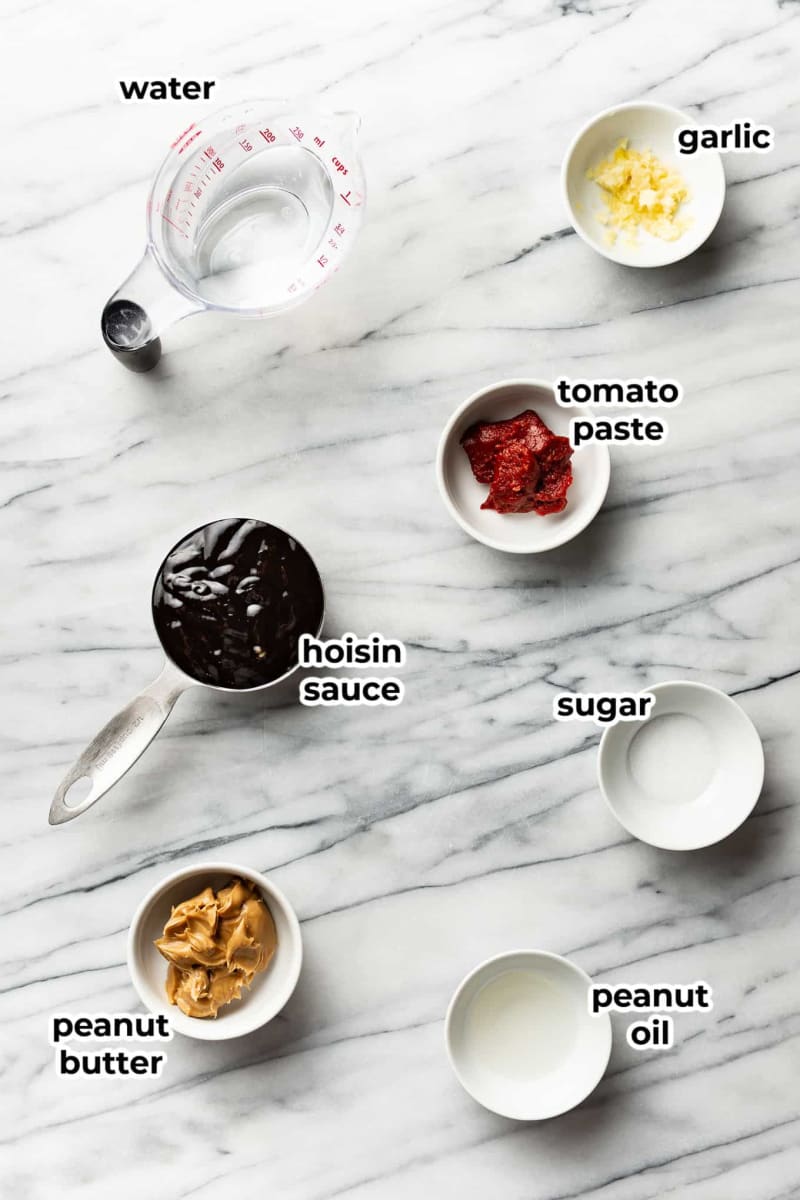
This short list makes a savory, creamy sauce with sweetness from hoisin and a little sugar. Taste before adding the final salt, since hoisin brands vary.
- Peanut oil or vegetable oil: Half a tablespoon to fry the garlic. Either neutral oil works; peanut oil adds a subtle nutty note.
- Garlic: Four cloves, minced, for a savory base. Mince it finely so it cooks evenly and blends into the sauce.
- Tomato paste: Two tablespoons of double-concentrated paste add depth and a gentle tang. Cook it briefly to bring out its richer flavor.
- Water: One cup loosens the concentrated ingredients into a pourable sauce. Add it as listed before simmering.
- Granulated sugar: One teaspoon balances the salty, savory ingredients. Hoisin and peanut butter vary in sweetness, so you can leave it out.
- Hoisin sauce: Half a cup gives the sauce its sweet-savory backbone. Choose a familiar brand and taste the sauce before adding salt.
- Creamy peanut butter: Three tablespoons make the sauce creamy and nutty. A smooth, well-stirred peanut butter incorporates more easily than a dry, stiff one.
- Salt: Add to taste at the end, if needed. Hoisin is already seasoned, so start with a small pinch.
Equipment You’ll Need
- Medium saucepan: Use it to fry the garlic, incorporate the sauce ingredients, and simmer everything without crowding the pan.
- Whisk or heatproof spoon: Stir continuously as the peanut butter melts into the liquid, scraping the bottom so nothing catches.
How to Make Peanut Sauce
1. Warm the oil
Set a medium saucepan over medium heat and add the peanut oil or vegetable oil. Once it is hot, stir in the minced garlic and cook for a few minutes, stirring often.
The garlic should be just beginning to turn golden and smell fragrant. If it browns quickly, lower the heat.
2. Cook the tomato paste
Stir the tomato paste into the garlic and oil. Cook for a minute or two, mixing frequently to keep the paste moving around the pan.
You should hear a gentle sizzle. Keep a close eye on the garlic; it should not darken or smell burnt.
3. Add the sauce ingredients
Pour in the water, then stir in the sugar, hoisin sauce, and creamy peanut butter. Turn the heat up to high and keep stirring until the peanut butter is fully incorporated and the mixture looks smooth.
Scrape the bottom and corners of the saucepan as you stir. The sauce should be even, without visible streaks or clumps of peanut butter.
4. Bubble the mixture
Let the sauce bubble vigorously for a minute or two while stirring constantly. This brings the ingredients together before the gentler simmer.
The bubbles should be active across the surface. Keep the sauce moving to prevent splattering or scorching.
5. Simmer until thickened
Reduce the heat and simmer the sauce for 5 minutes. Stir from time to time, especially along the bottom of the pan.
It should look cohesive and slightly thicker than it did at the start. Remember that it will thicken more as it cools.
6. Taste and cool
Taste the sauce and add salt if needed, then remove the saucepan from the heat. Let the sauce cool to room temperature in the pan or another container before transferring it to the fridge.
The finished sauce can be served warm or at room temperature, but chilling it before serving gives it a thicker, more dip-friendly texture.
How to Tell When It’s Done
The sauce is ready when it looks smooth and glossy, with no visible peanut butter lumps, and has thickened slightly after its 5-minute simmer. It will continue to firm up as it cools, so do not simmer it until it is as thick as a cold dip.
If the cooled sauce is thicker than you want, stir in a little water until it loosens to your preferred consistency. If it seems thin while warm, let it cool fully before deciding whether it needs more cooking.
Tips and Common Mistakes
These small adjustments help you keep the garlic fragrant, the sauce smooth, and the sweetness in balance.
- Don’t let the tomato paste scorch. Stir frequently while it cooks with the garlic. If the pan seems too hot, lower the heat before adding the liquids.
- Adjust the sugar to your hoisin. Some hoisin and peanut butter are sweeter than others. Leave out the teaspoon of sugar if you prefer a less sweet sauce.
- Wait to add salt. Hoisin contributes saltiness, and brands differ. Taste the sauce after simmering, then season only if it needs it.
- Judge thickness after cooling. The sauce thickens as it cools, so a warm saucepan sample can be misleading. Chill it before adjusting the consistency for dipping.
- Cool it before refrigerating. Let the sauce reach room temperature before putting it away, as directed. Use a clean container with a lid for storage.
Substitutions and Variations
The sauce is flexible, but swaps can change its sweetness, texture, or nutty flavor.
- Vegetable oil: Use it in place of peanut oil for a neutral flavor. It will still carry the garlic flavor through the sauce.
- Less sweetness: Omit the teaspoon of sugar if your hoisin and peanut butter taste sweet enough. The sauce will remain savory and creamy, just less sweet.
- Crunchy peanut butter: It can replace creamy peanut butter, though the finished sauce will have bits of peanut rather than a completely smooth texture.
- A thicker dip: Chill the sauce before serving to let it firm up naturally. Avoid extending the simmer just to make it thick while hot.
- More garlic flavor: Use the listed garlic and cook it until fragrant, but resist browning it deeply. Overcooked garlic can add bitterness rather than a stronger savory flavor.
What to Serve with Peanut Sauce
Serve the sauce with fresh salad rolls, rice paper rolls, or a platter of raw vegetables. It also works as a dip for cooked shrimp or as a toss-in sauce for noodles; loosen it with a little water if it is too thick to coat.
For a light meal, pair salad rolls with a crisp green salad. Explore more ideas in our salad recipes and dinner recipes.
Make-Ahead, Storage and Reheating
Make ahead: Make the sauce ahead and chill it until serving; the cooling time also helps it thicken. Stir it well before putting it out, and adjust the consistency with a little water if needed.
Storage: Cool the sauce to room temperature, transfer it to a clean airtight container, and refrigerate. Use it within 3 to 4 days, and do not leave it at room temperature for more than 2 hours.
Freezing: Freezing is not recommended because the peanut butter can separate or become grainy when thawed. It is quick to make fresh and keeps for several days in the refrigerator.
Reheating: Serve it cold, at room temperature, or warm. To warm, heat gently in a saucepan over low heat, stirring often; loosen with a little water if it has thickened in the fridge.
Peanut Sauce FAQs
Can I make this peanut sauce without sugar?
Yes. Skip the teaspoon of sugar if your hoisin and peanut butter are already sweet enough or you prefer a less sweet sauce.
Why is my peanut sauce lumpy?
The peanut butter may not have been stirred in thoroughly as the mixture heated. Warm the sauce gently and whisk until the lumps disappear, adding a little water if needed.
Can I use natural peanut butter?
Yes, provided it is well stirred before measuring. Natural peanut butter can be thinner or less sweet, so check the finished sauce and adjust its consistency or sweetness to suit.
What should I do if the sauce tastes too salty?
Stir in a little water to soften the saltiness and loosen the texture. Next time, wait until the end to season, since hoisin brands differ.
How much sauce does this recipe make?
It makes about 1.25 cups, or 20 tablespoons, which the recipe counts as 10 servings.
Printable Recipe
Recipe adapted from Salt & Lavender. Photos courtesy of Salt & Lavender, used with permission.

Peanut Sauce
Ingredients
- 1/2 tablespoon peanut oil or vegetable oil
- 4 cloves garlic minced
- 2 tablespoons tomato paste double concentrated
- 1 cup water
- 1 teaspoon granulated sugar see note
- 1/2 cup hoisin sauce
- 3 tablespoons creamy peanut butter
- Salt to taste
Instructions
- Heat the oil in a medium saucepan over medium heat. Fry the garlic for a few minutes, stirring often, until it's starting to get golden.
- Add in the tomato paste. Cook for a minute or two, stirring often. The tomato paste should be sizzling, but take care not to burn the garlic.
- Add in the water, sugar, hoisin sauce, and peanut butter. Increase the heat to high, and stir constantly until the peanut butter has been incorporated and the sauce is smooth. Let it bubble vigorously for a minute or two.
- Reduce the heat and simmer for 5 minutes. The sauce will thicken more as it cools.
- Give it a taste and season with salt if needed. Remove from the heat and let it cool to room temperature before transferring it to the fridge (either in the saucepan or in a different container). I prefer to chill the sauce before eating it, but you can eat it warm or room temperature if you prefer. It'll keep for a few days in the fridge.
Notes
- Some brands of hoisin sauce and peanut butter are sweeter than others, so you can skip the sugar if you want a less sweet sauce.
- Makes about 1.25 cups (20 tablespoons), nutrition info is for 2 tablespoons.


