Potato Vegetable Soup


Potato vegetable soup is a creamy, hearty bowl built from tender russet potatoes, soft vegetables and a lightly thickened broth. A little flour gives the soup body, while cream rounds out the savory broth without hiding the vegetables.
It takes 10 minutes to prep and 30 minutes to cook, and makes 6 servings. This meatless-friendly soup suits a weeknight dinner, a simple lunch or a make-ahead batch for chilly days.
Why This Potato Vegetable Soup Recipe Works
A simple roux and a steady simmer give this soup its comforting texture without complicated steps.
- The flour thickens the broth. Cooking it briefly with the butter and vegetables removes its raw taste. Whisking in the broth gradually helps it dissolve smoothly.
- Russets soften into the soup. Their starch helps make the broth feel hearty as the diced potatoes cook. Cutting them into similar pieces helps them become tender at the same time.
- Frozen vegetables save prep time. They go straight into the pot, so there is no need to thaw or chop them first. Their mix of colors and textures adds variety to each spoonful.
- Cream balances the savory base. Heavy cream brings richness to the broth, while the vegetables and Italian seasoning keep the flavor savory rather than overly rich.
- Seasoning at the end matters. Broth and seasoned salt vary in saltiness, so tasting after the soup simmers lets you adjust the final flavor instead of over-salting at the start.
Ingredients You’ll Need
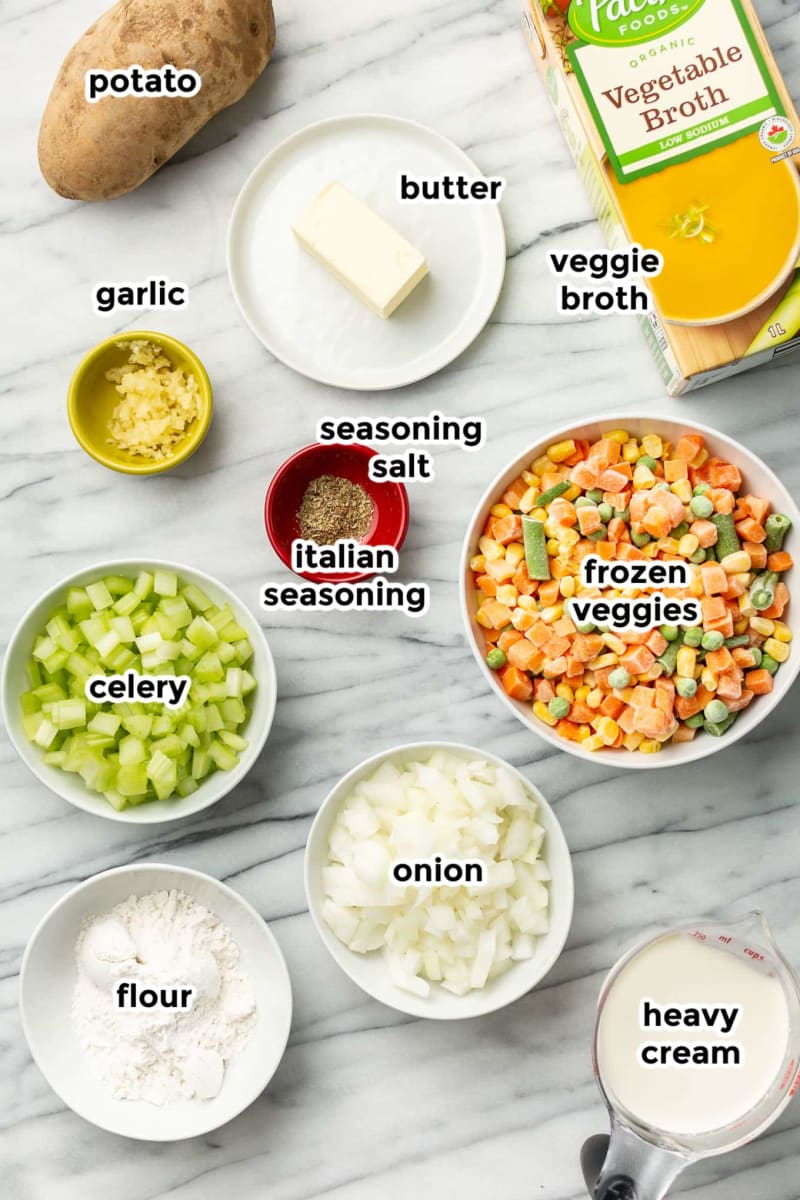
These everyday ingredients build a creamy base and plenty of vegetable texture. Keep the potato pieces fairly even so they cook through together.
- Butter: A quarter cup for sautéing the vegetables and starting the roux. Unsalted or salted butter both work.
- Onion: Half a medium onion, chopped, gives the broth a sweet, savory foundation.
- Celery: Three chopped celery sticks add a mild, aromatic flavor and a little texture.
- Garlic: Three minced cloves bring a savory note; stir them in after the onion and celery soften so they do not scorch.
- Flour: Six tablespoons thicken the soup. All-purpose flour is suitable for the roux.
- Vegetable or chicken broth: Four cups form the soup base. Choose vegetable broth to keep the dish meatless, or chicken broth for a deeper savory flavor.
- Heavy cream: One cup adds a smooth, rich finish. Look for heavy or whipping cream.
- Russet potatoes: One pound, peeled and diced, softens into a hearty base. Cut the pieces evenly for consistent cooking.
- Frozen mixed vegetables: Two and a half cups go into the pot straight from the freezer, making this a low-prep soup.
- Italian seasoning: Half a teaspoon gives the creamy broth a gentle blend of dried herbs.
- Seasoned salt and pepper: Use as needed, tasting as the soup finishes. Regular salt works too; seasoned salt adds extra savory flavor.
How to Make Potato Vegetable Soup
1. Soften the vegetables
Melt the butter in a soup pot over medium heat. Add the chopped onion and celery, then sauté for 5 minutes.
The vegetables should begin to soften without taking on much color. Stir now and then so the butter coats them evenly.
2. Cook the garlic and flour
Stir in the minced garlic and flour. Cook for another 1-2 minutes, stirring often to work the flour into the butter and vegetables.
The mixture will look thick and pasty. Keep it moving so the garlic does not brown and the flour loses its raw smell.
3. Whisk in the broth
Pour in the vegetable or chicken broth while whisking. Continue until the flour mixture has dissolved into the liquid.
Scrape around the bottom and edges of the pot as you whisk; visible flour clumps should disappear before adding the remaining ingredients.
4. Add the soup ingredients
Stir in the cream, diced potatoes, frozen mixed vegetables and Italian seasoning. Bring the soup close to a boil, then lower the heat.
Watch for small bubbles around the edge rather than letting the creamy soup boil hard.
5. Simmer until tender
Cover the pot with its lid slightly open and simmer for 15-20 minutes, stirring occasionally so nothing sticks to the bottom.
Check a potato piece with a fork: it should be tender all the way through, not firm in the center.
6. Adjust and serve
If the soup has become too thick, stir in a splash more vegetable broth. Taste, season generously with seasoned salt or regular salt and pepper as needed, then serve.
Taste a spoonful with potato and broth together; the seasoning should carry through the creamy base rather than taste flat.
Tips and Common Mistakes
A few small checks help keep the soup smooth, flavorful and easy to serve.
- Cut the potatoes evenly. Similar-sized pieces cook at a similar rate. If some pieces are much larger, the smaller ones may soften before the centers are tender.
- Stir while adding the broth. Whisking helps the flour disperse through the liquid instead of forming lumps. Take a moment to scrape the bottom of the pot, too.
- Keep the simmer gentle. A hard boil can make the creamy broth less smooth. Once the soup is almost boiling, reduce the heat and let it simmer gently.
- Stir during the simmer. Potatoes and flour can settle and catch on the bottom. Stir occasionally, especially around the base and corners of the pot.
- Season after tasting. Seasoned salt can be quite salty, and broth varies by brand. Add it gradually at the end so you can stop when the broth tastes balanced.
- Thin it only as needed. Potatoes release starch as they cook, so the soup may thicken. Add a splash of broth at a time until the consistency suits you.
Substitutions and Variations
The soup is flexible, but changing the dairy or broth will shift its richness and flavor.
- Keep it meatless: Use vegetable broth. Check that the broth and seasoning you choose fit your dietary needs.
- Use chicken broth: Chicken broth makes the soup non-vegetarian and gives it a fuller savory flavor. The quantity stays the same.
- Try half-and-half: It can replace the heavy cream for a lighter broth, though the finished soup will be less rich.
- Choose a different potato: Yukon Gold potatoes can stand in for russets. They tend to hold their shape more, so the soup may be less starchy.
- Use fresh vegetables: Chopped fresh vegetables can replace the frozen mix, but cut them into small pieces so they become tender during the simmer.
- Add a little heat: A small amount of Creole seasoning can add warmth and spice, but it is salty; taste before adding more salt.
What to Serve with Potato Vegetable Soup
Serve the soup with crusty bread, crackers or a simple green salad. A grilled cheese sandwich makes it a filling lunch, while a side of roasted vegetables rounds out dinner.
For more cozy bowls, browse our soup recipes or explore dinner recipes for a full meal.
Make-Ahead, Storage and Reheating
Make ahead: You can chop the onion, celery, garlic and potatoes ahead and refrigerate them separately in covered containers. For the best texture, cook the soup close to serving; the potatoes continue to absorb liquid as it sits.
Storage: Cool leftovers and refrigerate them in an airtight container within 2 hours. The soup keeps for 3 to 4 days; it may thicken in the fridge, so loosen it with broth when reheating.
Freezing: Freezing is not ideal because cream-based soups can separate and potatoes may become grainy after thawing. If needed, freeze portions in airtight containers and stir well after reheating.
Reheating: Warm leftovers gently in a saucepan over low to medium heat, stirring often; avoid a vigorous boil. Add a splash of broth if the soup has thickened, and heat until steaming throughout.
Potato Vegetable Soup FAQs
Can I make potato vegetable soup without cream?
Yes. Use additional broth in place of the cream, though the soup will be thinner and less rich. You can mash a few tender potatoes into the broth to add body.
How can I make the soup thicker?
Let it simmer a little longer, stirring often, or mash some of the cooked potatoes against the side of the pot. Add broth if it becomes thicker than you want.
Can I use fresh mixed vegetables instead of frozen?
Yes. Chop them into small, even pieces so they have time to soften during the simmer. Check their tenderness along with the potatoes before serving.
What if the soup tastes bland?
Taste it with a potato and broth in the same spoonful, then add seasoned salt or regular salt and pepper a little at a time. The potatoes absorb seasoning, so check the flavor again before serving.
Can this soup be made in a slow cooker?
The recipe is designed for a soup pot, where the flour cooks briefly in butter before the broth is added. A slow cooker would need a separately cooked roux and adjusted timing, so follow a slow-cooker-specific method for best results.
Printable Recipe
Recipe adapted from Salt & Lavender. Photos courtesy of Salt & Lavender, used with permission.

Potato Vegetable Soup
Ingredients
- 1/4 cup butter
- 1/2 medium onion chopped
- 3 sticks celery chopped
- 3 cloves garlic minced
- 6 tablespoons flour
- 4 cups vegetable or chicken broth
- 1 cup heavy/whipping cream
- 1 pound Russet potatoes peeled & diced
- 2.5 cups frozen mixed vegetables
- 1/2 teaspoon Italian seasoning
- seasoning salt & pepper see note
Instructions
- Melt the butter in a soup pot over medium heat, then add in the onion and celery. Sauté for 5 minutes.
- Stir in the garlic and flour and cook, stirring often, for another 1-2 minutes to get the raw flour taste out.
- Whisk in the vegetable broth until the flour has dissolved.
- Add in the cream, potatoes, frozen mixed vegetables, and Italian seasoning. When the soup is almost boiling, reduce the heat and cover the pot with the lid slightly open. Let the soup simmer for 15-20 minutes or until the potatoes are tender. Stir the soup occasionally during this time to ensure nothing is sticking to the bottom of the pot.
- If the soup becomes too thick, add a splash more vegetable broth. It's very important to season this soup generously or it'll taste bland, so taste and adjust as needed, then enjoy!
Notes
- I am partial to using Lawry’s Seasoned Salt in this recipe, or give it a little kick with Tony Chachere’s Original Creole seasoning (which is also quite salty). Regular salt will work as well, just be sure to taste and adjust as needed.