Salmon Chowder

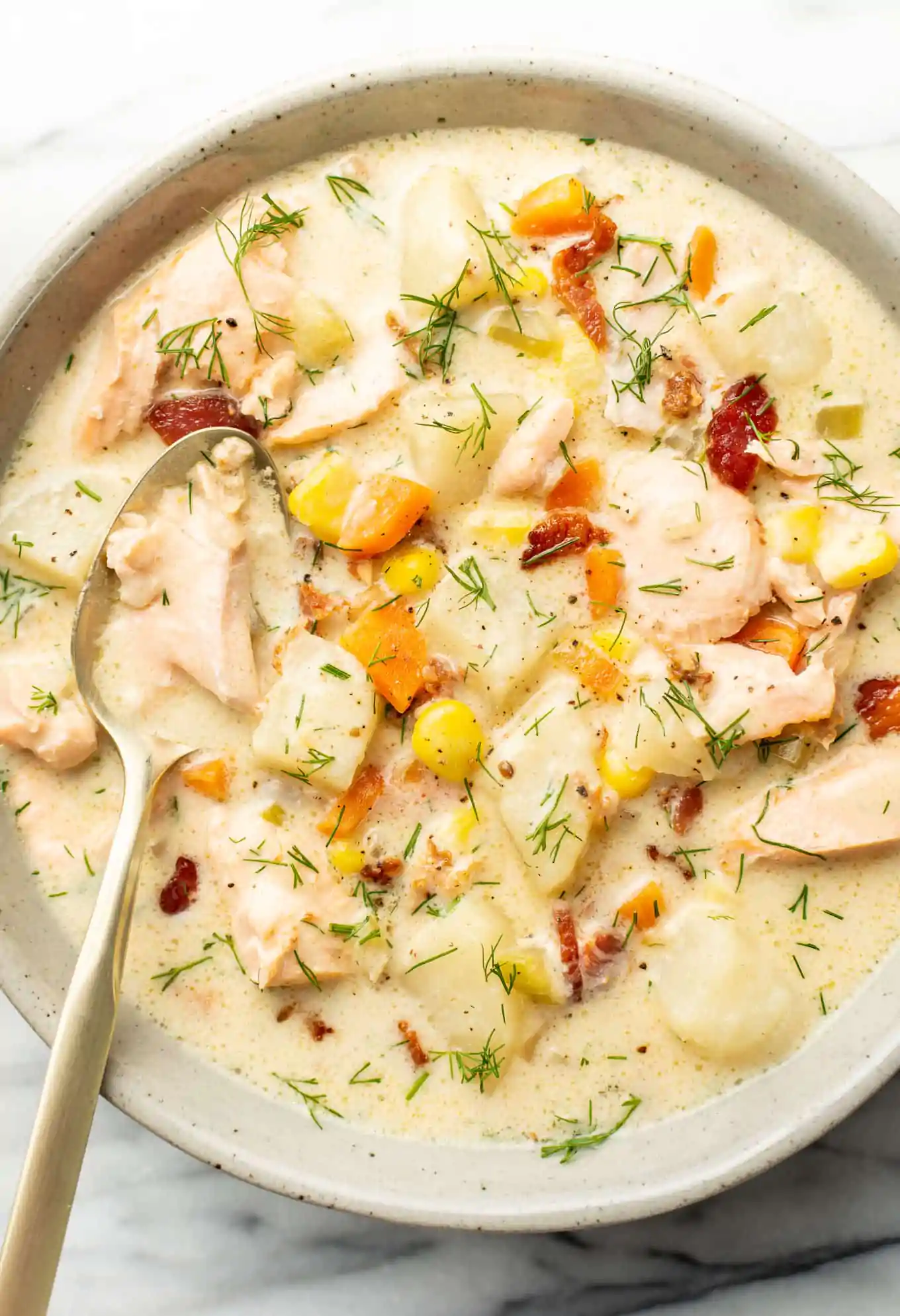
Salmon chowder is a creamy, hearty soup with tender potatoes, sweet corn, flaky salmon, and crisp bacon. This version builds its savory base in bacon fat, then uses chicken broth and clam juice for a rounded seafood flavor without needing fish stock.
The soup takes 10 minutes to prep and 40 minutes to cook, and makes 6 servings. It is a satisfying choice for a chilly weeknight, and the one-pot method keeps cleanup manageable.
Why This Salmon Chowder Recipe Works
Each step adds flavor while helping the salmon and vegetables keep their texture.
- Bacon starts the flavor base. Rendering the bacon leaves savory fat in the pot for cooking the vegetables. The crisp pieces return near the end and make a crunchy garnish.
- Salmon gets a quick sear. Briefly cooking it in the pot adds browned flavor and makes it easier to remove the skin and break the fish into pieces later.
- Flour thickens the broth. Stirring flour into the vegetables before adding liquid helps it disperse smoothly. Scraping up the browned bits adds extra flavor to the soup.
- Clam juice adds seafood depth. Combined with chicken broth, it gives the chowder a fuller seafood character without relying on fish stock.
- Salmon goes in at the end. Adding it after the potatoes are tender keeps the fish from breaking down during the simmer. The hot soup finishes cooking it gently.
Ingredients You’ll Need
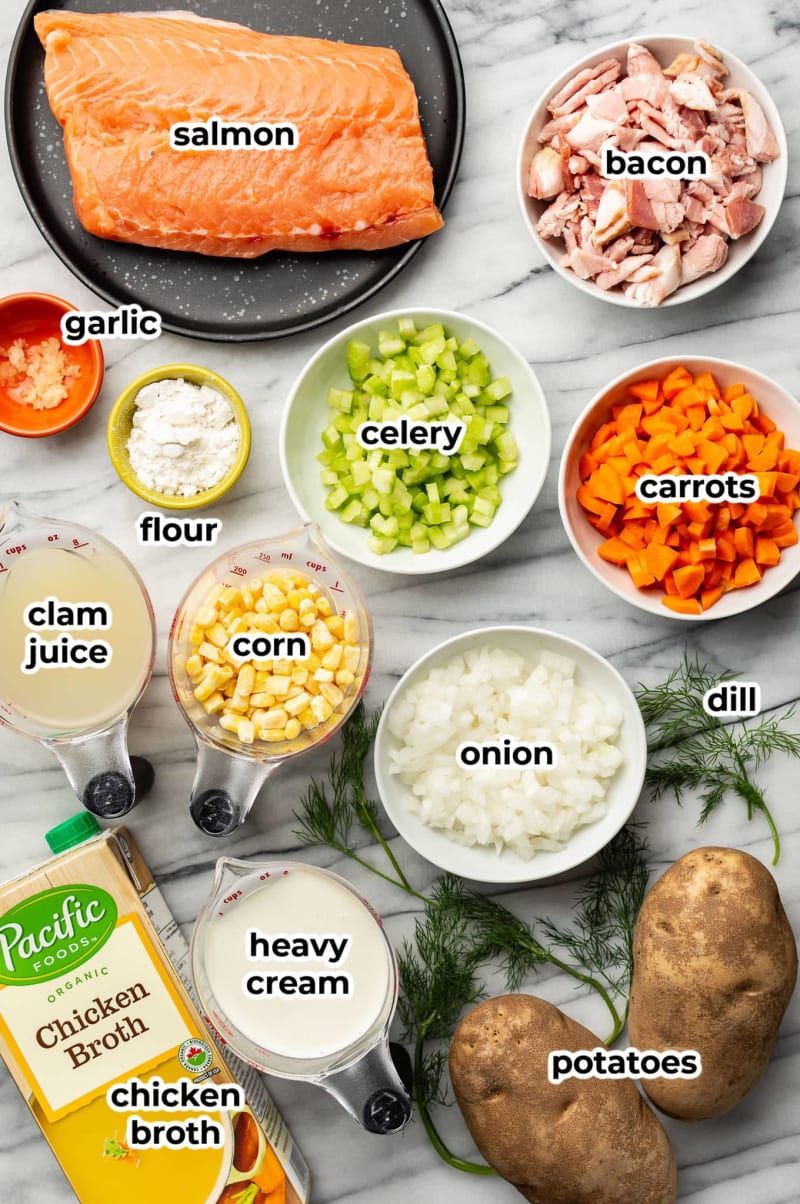
The ingredients build a creamy, savory chowder with crisp and tender textures. Chop the vegetables before you start cooking so they are ready when the bacon finishes.
- Bacon: Four strips, cut into small pieces. The rendered fat cooks the vegetables, while the crisp bacon adds a salty garnish.
- Onion: Half a medium onion, chopped small, for a sweet, savory base.
- Carrots: Two medium carrots, peeled and chopped small. They bring color and gentle sweetness.
- Celery: Two sticks, chopped small, for a fresh, savory note alongside the onion and carrots.
- Russet potatoes: Two large potatoes, peeled and diced. Their starch helps make the broth hearty.
- Fresh salmon: One pound. A skin-on piece is fine since the skin is removed after cooking.
- Garlic: One large clove, minced, for a fragrant savory layer.
- Flour: Two tablespoons thicken the broth; stir it well into the vegetables to avoid lumps.
- Chicken broth: Three cups of broth or stock form the soup base. Choose a lower-sodium option if you want more control over seasoning.
- Clam juice: One cup deepens the seafood flavor. Find it near canned fish in many grocery stores.
- Heavy cream: One cup adds richness. Avoid replacing it with milk or half-and-half, which may curdle during boiling.
- Corn: Three-quarters cup, fresh or frozen, adds sweetness and a little bite.
- Fresh dill: One tablespoon, chopped, brings a bright herbal finish to the rich soup.
- Salt and pepper: Season to taste at the end, after the bacon and broth have flavored the chowder.
Equipment You’ll Need
- Large pot: Use a roomy pot for crisping bacon, searing salmon, and simmering the chowder without crowding.
- Wooden spoon: A sturdy spoon makes it easy to stir the flour and scrape browned bits from the pot.
- Fork: Use it to break the cooked salmon into bite-size pieces before adding it to the soup.
- Paper towel-lined plate: Set the cooked bacon here so excess fat drains while you prepare the soup base.
How to Make Salmon Chowder
1. Crisp the bacon
Cut the bacon into small pieces and add them to a large pot over medium-high heat. Cook for about 10 minutes, until crisp, then transfer to a paper towel-lined plate, leaving the fat in the pot.
The pieces should be browned and crisp rather than chewy. Keep the rendered fat for the vegetables.
2. Prepare the vegetables
While the bacon cooks, chop the onion, celery, and carrots small, then peel and dice the potatoes.
Try to cut the potatoes into similar-sized pieces so they become tender at about the same time.
3. Sear the salmon
Add the salmon to the pot and cook for 2 minutes per side. Move it to a plate; it may not be cooked through yet. Use a spoon to loosen most of any skin that sticks to the pot.
This quick sear is for flavor, not doneness. The fish will finish cooking in the soup.
4. Soften the vegetables
Leave about 1 tablespoon of fat in the pot. Add the onion, carrots, and celery, then sauté for 5 minutes. Stir in the garlic and cook for 30 seconds.
The vegetables should begin to soften, and the garlic should smell fragrant without browning.
5. Cook the flour
Sprinkle in the flour and stir nearly constantly for about a minute. Pour in the chicken broth and clam juice, stirring until the flour dissolves and the browned bits lift from the bottom.
Scrape the whole base of the pot so the browned flavor gets into the broth.
6. Simmer the chowder
Add the cream, potatoes, corn, and most of the bacon, saving some for garnish. Raise the heat to high and bring the soup to a boil, then reduce it to a rapid simmer. Cook uncovered for about 15 to 20 minutes, stirring occasionally, until the potatoes are tender.
Keep the soup gently bubbling rather than at a hard boil. Check a potato with a fork; it should yield easily.
7. Finish with salmon
Use a fork to break the salmon into smaller pieces and slide off the skin; leave the skin out of the soup. Take the pot off the heat, then add the salmon and dill. Let the residual heat cook the fish through for a few minutes.
The salmon should turn opaque and flake easily. Avoid vigorous stirring, which can break it into very small pieces.
8. Season and serve
Taste the chowder and add salt and pepper as needed. Ladle into bowls and top with the reserved bacon.
Taste before salting, since the bacon and broth already contribute savory seasoning.
How to Tell When It’s Done
The potatoes are ready when a fork slides through them easily, with no firm center. The broth should look creamy and lightly thickened rather than watery.
Check that the salmon is opaque throughout and flakes into moist pieces. If the center still looks translucent, return the pot to low heat briefly and let the fish cook gently; avoid boiling it hard.
Tips and Common Mistakes
A few small choices help keep the chowder creamy and the salmon tender.
- Prep the vegetables while the bacon cooks. The bacon takes about 10 minutes, giving you time to chop the vegetables without adding extra prep time.
- Leave only about 1 tablespoon of fat. Too much bacon fat can make the broth greasy. Spoon off the excess before sautéing the vegetables.
- Stir the flour almost constantly. This helps it cook evenly and prevents it from sticking before the liquid goes in.
- Scrape up the browned bits. They carry flavor from the bacon and salmon into the broth. A wooden spoon is useful for loosening them.
- Keep the simmer gentle. A rapid simmer cooks the potatoes, but a hard boil can make the cream more likely to curdle.
- Add the salmon off the heat. The hot soup can finish cooking it in a few minutes, helping the pieces stay tender instead of overcooking.
Substitutions and Variations
You can adjust a few ingredients, but keep the cream and cooking sequence in mind for the best texture.
- Frozen salmon: Thaw it fully and pat it dry before searing. Excess surface moisture makes browning harder.
- No clam juice: Use additional chicken broth, though the finished chowder will have a milder seafood flavor.
- Fresh or frozen corn: Either works in the same quantity. Add frozen corn straight to the pot without thawing.
- Dried dill: Use a smaller amount because dried herbs are more concentrated, and add it with the broth so it has time to soften.
- Smaller potato pieces: Cutting them smaller can shorten the simmer, so begin checking for tenderness before the stated cooking window ends.
- Different salmon cut: Skinless salmon is convenient and can be seared as directed; you will simply have no skin to remove at the end.
What to Serve with Salmon Chowder
Serve the chowder with oyster crackers, crusty bread, or a simple green salad. The bread is especially useful for catching the creamy broth, while a crisp salad balances the rich bacon and cream.
For a seafood-focused meal, pair it with a light starter or explore more soup recipes and side dishes for a complete menu.
Make-Ahead, Storage and Reheating
Make ahead: Chop the onion, carrots, celery, and potatoes ahead and refrigerate them separately in covered containers. For the freshest texture, cook the chowder close to serving and add the salmon and dill at the end.
Storage: Refrigerate leftovers in a covered container within 2 hours and use within 1 to 2 days, since this soup contains seafood. Cool it promptly in a shallow container.
Freezing: Freezing is not recommended because cream-based chowder can separate and the potatoes may become mealy after thawing.
Reheating: Warm leftovers gently in a saucepan over low heat, stirring occasionally, and avoid bringing the soup to a boil. Add a small splash of broth if it has thickened in the refrigerator.
Salmon Chowder FAQs
Can I use canned salmon in salmon chowder?
Yes. Drain it well and fold it in off the heat, since canned salmon is already cooked and only needs to warm through.
Can I make salmon chowder without bacon?
Yes. Skip the bacon and sauté the vegetables in a little cooking oil or butter. The soup will lose some smoky, salty depth, so taste before serving and season accordingly.
Why is my chowder thinner than expected?
The potatoes may not have released much starch, or the flour may not have been evenly mixed in. Let the soup simmer gently a little longer before adding the salmon, stirring occasionally.
Can I use an immersion blender to thicken the soup?
You can blend a small portion of the potato-and-broth mixture before adding the salmon. Avoid blending the whole pot, since that would eliminate the chowder’s chunks and could break up the fish.
How many people does this chowder serve?
It makes 6 servings as listed, though smaller portions can stretch it further when served with bread or salad.
Can I cook the salmon separately?
Yes. Bake or pan-cook it separately, then flake it into the finished chowder. You will miss the flavor from searing the salmon in the soup pot, but the method works.
Printable Recipe
Recipe adapted from Salt & Lavender. Photos courtesy of Salt & Lavender, used with permission.

Salmon Chowder
Ingredients
- 4 strips bacon cut into small pieces
- 1/2 medium onion chopped small
- 2 medium carrots peeled & chopped small
- 2 sticks celery chopped small
- 2 large Russet potatoes peeled & diced
- 1 pound fresh salmon
- 1 large clove garlic minced
- 2 tablespoons flour
- 3 cups chicken broth or stock
- 1 cup clam juice see note
- 1 cup heavy/whipping cream
- 3/4 cup corn (frozen or fresh)
- 1 tablespoon chopped fresh dill
- Salt & pepper to taste
Instructions
- Prep your bacon (I use kitchen shears to make it easy) and add it to a large pot over medium-high heat. Cook until crispy (about 10 minutes).
- Meanwhile, prep your onion, celery, carrots, and potatoes.
- Once the bacon is crispy, take it out of the pot and transfer it to a paper towel lined plate. Leave the bacon fat in the pot.
- Add the salmon to the pot and cook for 2 minutes/side and then transfer it to a plate (the salmon probably won't be fully cooked and that's fine. This step is just to add some extra flavor and to avoid having to cut up raw salmon since that's more tedious). The salmon skin may stick to the pot a bit, but that's ok, just use your spoon to get most of it off.
- Leave about 1 tablespoon of the fat in the pot, and then add the onion, carrots, and celery. Sauté for 5 minutes.
- Stir in the garlic and cook for 30 seconds.
- Add in the flour and cook for about a minute, stirring nearly constantly.
- Add in the chicken broth and clam juice. Give it a good stir to ensure the flour has dissolved and the flavorful brown bits are scraped up from the bottom of the pot.
- Add in the cream, potatoes, corn, and most of the bacon (I reserve the rest for garnishing the bowls later on). Increase the heat to high and bring the soup to a boil. Once it's boiling, reduce the heat to a rapid simmer so it's gently boiling.
- Cook, uncovered, until the potatoes are tender (about 15-20 minutes). Stir occasionally.
- Use a fork to break the salmon into smaller pieces. The skin should slide off easily (don't add the skin to the soup unless you want to). Take the soup off the heat. Add the salmon and dill to the soup. It should only take a few minutes for the salmon to finish cooking through.
- Season the soup with salt & pepper as needed. Garnish with the rest of the bacon.
Notes
- Serves 4-6 depending on portion size.
- I don’t recommend subbing the cream for milk or half-and-half as the boiling may curdle the soup.
- The clam juice can easily be found in most grocery stores (it’s typically in the same place as canned fish like tuna etc.). Using clam juice along with chicken broth is a great way for this soup to still have that well-rounded seafood chowder taste even if you can’t easily find a good fish stock.