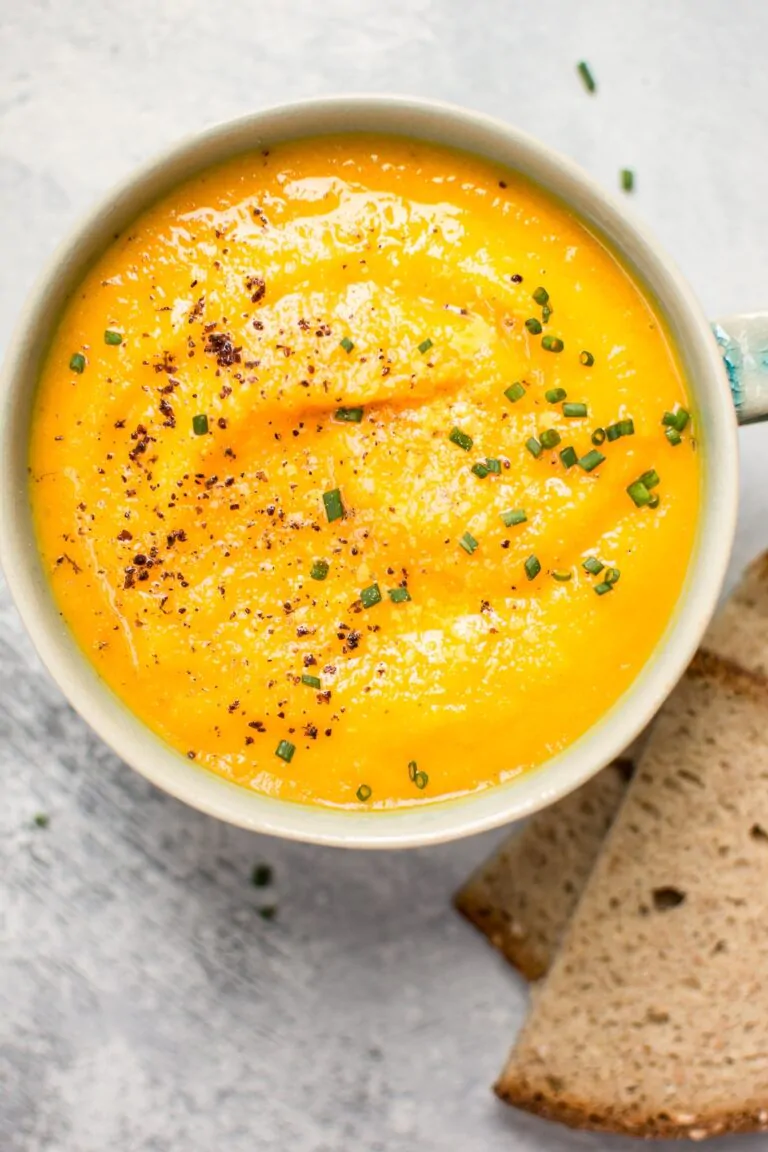
Simple Butternut Squash Soup


This butternut squash soup is smooth, thick, and gently sweet, with carrot and potato adding body and cinnamon and nutmeg bringing warm, savory spice. The vegetables simmer in one pot rather than being roasted, then coconut milk gives the blended soup a silky finish.
Plan on 20 minutes of prep and 40 minutes of cooking for six servings. It makes a comforting fall dinner, a make-ahead lunch, or an easy first course for a holiday meal.
Why This Butternut Squash Soup Recipe Works
A few practical choices help the vegetables cook evenly and give this soup its full-bodied texture.
- The vegetables simmer together. Cooking the squash, carrot, and potato in the broth lets their flavors mingle. Cutting the vegetables into similarly sized pieces helps them become tender at about the same time.
- Potato gives the soup body. Russet potato breaks down as it cooks and blends into the squash, making the soup satisfyingly thick without needing flour or cream.
- The aromatics build flavor first. Softening the onion in oil and butter starts a savory base before the vegetables go in. Adding garlic afterward helps it release its aroma without prolonged frying.
- Warm spices balance the sweetness. Cinnamon and nutmeg complement the squash and carrot, while salt and pepper keep the result from tasting one-note or dessert-like.
- Coconut milk goes in after blending. Stirring it in at the end preserves its creamy feel and subtle flavor. It also lets you judge the soup’s thickness before deciding whether to add more broth.
Ingredients You’ll Need
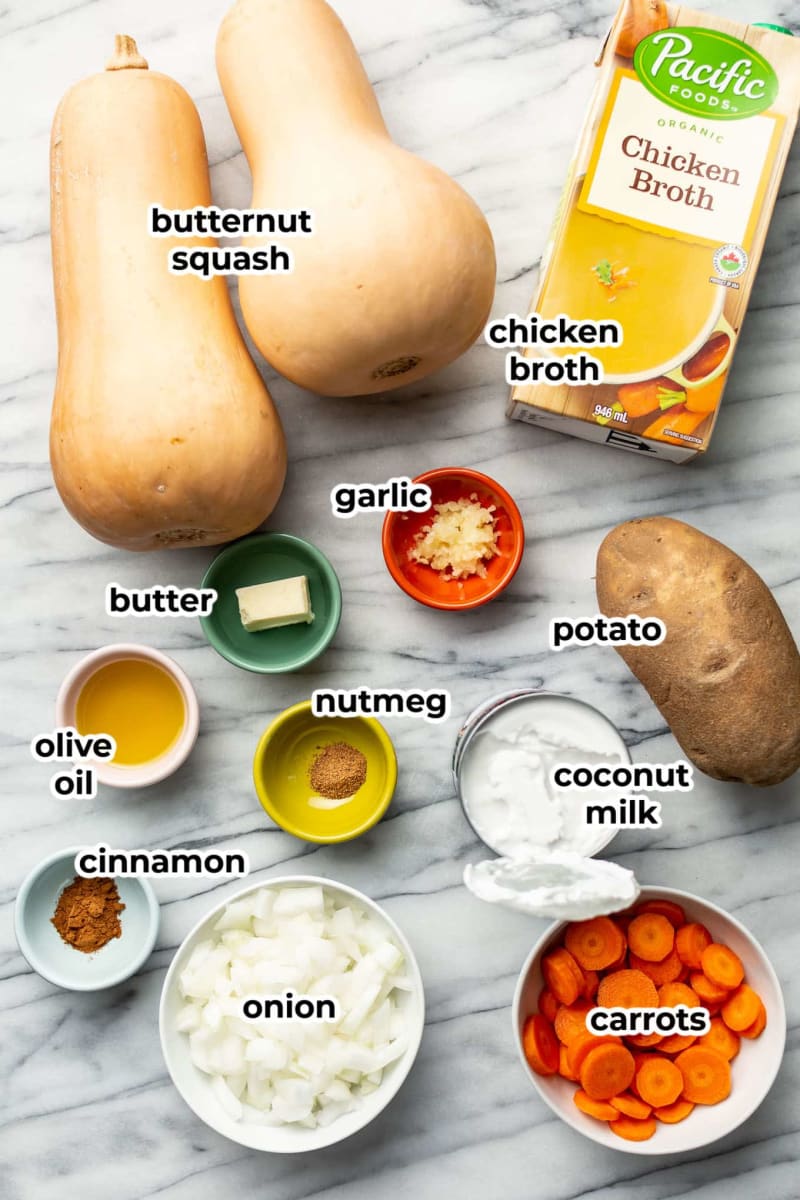
The ingredients are simple, but cutting the vegetables evenly makes the simmer and blending easier. Here is what each one contributes.
- Olive oil: One tablespoon helps soften the onion and carries its flavor into the soup.
- Butter: One tablespoon adds richness alongside the olive oil; use unsalted if you prefer to control seasoning.
- Onion: Half a medium onion, chopped, makes a mild savory foundation for the sweet vegetables.
- Garlic: Three cloves, minced, bring a fragrant savory note. Fresh garlic gives the clearest flavor.
- Butternut squash: Four pounds, peeled, seeded, and cut into 1.5-inch pieces. Two smaller squash are fine if a large one is hard to find.
- Carrot: One large carrot, peeled and sliced, reinforces the squash’s natural sweetness and blends smoothly.
- Russet potato: One large potato, peeled and diced, thickens the soup naturally as it cooks.
- Chicken or vegetable broth: Three cups, with more available if needed. Choose vegetable broth for a vegetarian soup.
- Ground cinnamon: Half a teaspoon adds gentle warmth without overpowering the squash.
- Ground nutmeg: A quarter teaspoon rounds out the spice. Freshly grated nutmeg also works.
- Full-fat coconut milk: One 13.5-ounce can makes the finish creamy and subtly coconut-scented; use less or omit it if preferred.
- Salt and pepper: Season to taste after adding the coconut milk, since broth salt levels vary.
Equipment You’ll Need
- Large soup pot with lid: A roomy pot holds the vegetables and broth, while its lid helps them soften evenly.
- Immersion blender: Blend directly in the pot for less cleanup; use a regular blender if needed.
- Chef’s knife and cutting board: A sturdy knife makes it safer to peel and cut dense squash into even pieces.
- Ladle: Use one to transfer hot soup carefully if blending in a countertop blender.
How to Make Butternut Squash Soup
1. Soften the onion
Warm the olive oil and butter in a large soup pot over medium-high heat. Add the chopped onion and sauté for 5 minutes.
The onion should look softened and smell savory, not browned or crisp.
2. Add vegetables and spices
Stir in the minced garlic, then add the squash, carrot, potato, broth, cinnamon, and nutmeg. Raise the heat to high and bring the pot to a boil.
The broth may not cover every piece of vegetable at this stage; that is expected.
3. Simmer until tender
When the soup boils, cover the pot but leave the lid slightly open. Lower the heat to a steady simmer and cook until the vegetables are soft and easy to pierce with a knife, about 20 minutes depending on their size.
The liquid should bubble gently rather than boil hard. Stir halfway through if the vegetables are cooking unevenly.
4. Blend until smooth
Turn off the heat and blend the vegetables and broth with an immersion blender. If using a countertop blender, let the soup cool for a while first and work in batches.
Move the blender through the pot until no firm chunks remain. Take care with hot liquid in a regular blender.
5. Finish and season
Stir in the coconut milk, then season with salt and pepper to taste. If the soup is thicker than you like, add more broth 1/2 cup at a time.
Taste after seasoning and check the consistency in a spoon; the soup should pour easily while still coating it.
How to Tell When It’s Done
Before blending, check the largest pieces of squash and potato with a knife. They should be soft enough for the blade to slide through easily; if they resist, keep the soup at a gentle simmer and check again.
After blending, the soup should be uniformly smooth and thick, without hard vegetable pieces. If it is too thick, stir in broth 1/2 cup at a time; if it seems thin, simmer it uncovered briefly before adding the coconut milk.
Tips and Common Mistakes
These details make prep easier and help you get the texture and seasoning you want.
- Cut the squash into even pieces. Pieces close to the specified 1.5-inch size cook at a similar pace. Oversized chunks may still be firm when the smaller vegetables are ready.
- Use a careful peeling method. Squash skin is thick and can be awkward with a peeler. Cutting the squash into quarters and trimming the peel with a sturdy knife gives you a more stable piece to handle.
- Choose two smaller squash if needed. A single squash near 4 pounds can be difficult to find. Two smaller ones work; if using pre-cut squash, aim for closer to 3 pounds than 4.
- Keep the simmer gentle. A hard boil can make the pot sputter and cook the edges unevenly. Adjust the heat after bringing it to a boil, and keep the lid slightly ajar.
- Blend with care. An immersion blender is convenient, but avoid lifting its blade above the soup while it is running. For a countertop blender, cool the soup first and blend in batches to avoid overfilling.
- Add broth gradually. The squash and potato determine how thick the finished soup is. Stir in broth in 1/2-cup additions so you can stop as soon as the consistency suits you.
- Season after the coconut milk. The creamy addition changes the balance of the soup, and broth can already contain salt. Taste the finished mixture before adding more seasoning.
Substitutions and Variations
You can adjust the broth and creamy finish to suit your pantry or the way you plan to serve the soup.
- Vegetarian broth: Use vegetable broth instead of chicken broth to keep the soup vegetarian. Choose a flavorful broth, since it forms the liquid base.
- Less coconut milk: Use half the can for a lighter coconut flavor and less richness. The soup will still be creamy from the blended potato and squash.
- No coconut milk: Leave it out if you prefer; the blended vegetables still make a thick soup. Add broth as needed to reach a spoonable consistency.
- Other potato: A Yukon Gold potato can stand in for the Russet, though the soup may be a little less fluffy and thick.
- Milder spice: Reduce the cinnamon and nutmeg to taste if you want the squash to lead. Add a small amount, blend, and taste before adjusting further.
- Dairy-free: Replace the butter with more olive oil and use vegetable broth. The coconut milk already provides a creamy, dairy-free finish.
What to Serve with Butternut Squash Soup
Serve the soup hot with crusty bread, toasted sourdough, or crackers for dipping. A crisp green salad or roasted vegetables make it a fuller meal, while a small bowl works well before a holiday main course.
For more cozy meal ideas, browse our soup recipes and dinner recipes.
Make-Ahead, Storage and Reheating
Make ahead: Peel and cut the squash, carrot, and potato ahead, then refrigerate them in a covered container until cooking. The soup can also be made fully in advance; cool and refrigerate it, then reheat gently and adjust the consistency with broth before serving.
Storage: Refrigerate cooled soup in an airtight container for 3 to 4 days. Keep it chilled rather than leaving it at room temperature for more than 2 hours.
Freezing: Freeze the blended soup in airtight, freezer-safe containers for up to 3 months, leaving room for expansion. Thaw it in the refrigerator; the texture may separate slightly, so stir well as it reheats.
Reheating: Warm the soup in a saucepan over low to medium heat, stirring occasionally until hot. Add a splash of broth if it has thickened in the refrigerator, and avoid a vigorous boil after the coconut milk is added.
Butternut Squash Soup FAQs
Can I make this butternut squash soup without coconut milk?
Yes. Omit it and add broth gradually if the blended soup is too thick; the squash and potato still give it a creamy texture.
Can I use pre-cut butternut squash?
Yes. Use closer to 3 pounds of pre-cut squash than 4 pounds, as suggested for this version. Check the pieces for size so they cook evenly.
Why is my soup too thick?
The squash and potato can absorb different amounts of liquid. Stir in more broth 1/2 cup at a time until it reaches the consistency you want.
Can I use a regular blender?
Yes. Let the soup cool for a while first, then blend it in batches rather than filling the blender with hot soup.
How do I know the vegetables are soft enough to blend?
A knife should pierce the largest squash and potato pieces easily. If they are still firm in the center, simmer longer before blending.
Can I make this soup vegan?
Yes. Use vegetable broth and replace the butter with olive oil. The coconut milk keeps the soup creamy without dairy.
Printable Recipe
Recipe adapted from Salt & Lavender. Photos courtesy of Salt & Lavender, used with permission.

Simple Butternut Squash Soup
Ingredients
- 1 tablespoon olive oil
- 1 tablespoon butter
- 1/2 medium onion chopped
- 3 cloves garlic minced
- 4 pounds butternut squash peeled, seeded, & cut into 1.5" pieces
- 1 large carrot peeled & sliced
- 1 large Russet potato peeled & diced
- 3 cups chicken or veggie broth and more if needed
- 1/2 teaspoon ground cinnamon
- 1/4 teaspoon ground nutmeg
- 1 (13.5 ounce) can full fat coconut milk see note
- Salt & pepper to taste
Instructions
- Add the oil and butter to a large soup pot over medium-high heat. Add the onion to the pot and sauté for 5 minutes.
- Stir in the garlic, followed by the squash, carrot, potato, broth, cinnamon, and nutmeg. Increase the heat to high and bring the soup to a boil. The liquid likely won't completely cover everything, and that's fine.
- Once it's boiling, cover the pot with the lid slightly open. Reduce the heat so it's simmering but not boiling furiously. Cook until the veggies are soft and easily pierced with a knife, about 20 minutes depending how large you cut everything. You may want to stir halfway through to ensure it's cooking evenly.
- Blend the soup using either an immersion blender (that's what I use) or a regular blender. You may want to let the soup cool for a while first.
- Stir in the coconut milk and season with salt & pepper to taste (I am pretty generous with both – I start with 1/2 teaspoon of salt and add more if needed). If you find the soup is still too thick after adding the coconut milk, stir in an additional 1/2 cup of broth at a time until your desired consistency is reached.
Notes
- To easily peel the squash, I cut it into quarters and carefully use a knife to cut the peel off since it’s thick, and I find potato peelers don’t do the best job.
- I add a whole can of coconut milk to this soup, but feel free to add half a can, or you can leave it out entirely if you wish. I like the added silkiness and the subtle coconut flavor.
- I usually end up buying two smaller squashes because I can’t always find one that’s around 4 pounds. If using pre-cut squash, aim for closer to 3 lbs. than 4.
- Want to make this in your Instant Pot? Here’s the recipe.
- You can also find this recipe on page 157 of the Salt & Lavender: Everyday Essentials cookbook.