Thai Turkey Soup


Thai turkey soup turns cooked turkey into a bowl of tender rice noodles, soft vegetables and a fragrant coconut curry broth. Red curry paste builds savory heat, while coconut milk rounds it out and lime keeps the finish bright.
The soup takes 10 minutes to prep and 20 minutes to cook, and the recipe lists 4 servings. It is a useful way to turn leftover turkey into a quick weeknight meal, especially when you want something warming but lighter than a creamy casserole.
Everything cooks in one soup pot, including the noodles, so the broth picks up their starch as they soften. Choose rice noodles that are sturdy enough to hold their texture in the simmering soup.
Why This Thai Turkey Soup Recipe Works
A few choices give this soup its balance of rich broth, lively aromatics and quick-cooking noodles.
- Curry paste starts the flavor base. Cooking it briefly with onion and garlic releases its aromatics before the liquid goes in. The paste also brings seasoning and chile heat, so its strength determines how spicy the finished broth will be.
- Coconut milk softens the curry. Full-fat coconut milk gives the broth a creamy texture and balances the savory curry paste. Stir it in after the soup comes to a boil so it can simmer gently rather than boil hard.
- Rice noodles cook in the broth. Adding them directly means they take on the soup’s flavor as they soften. Thicker noodles, around 3 mm, are less delicate than very fine ones and hold up better in the pot.
- Lime and herbs brighten each bowl. Lime juice cuts through the richness of coconut milk, while basil, cilantro and scallions bring fresh, contrasting flavors. Adding the herbs at the end preserves their color and aroma.
Ingredients You’ll Need
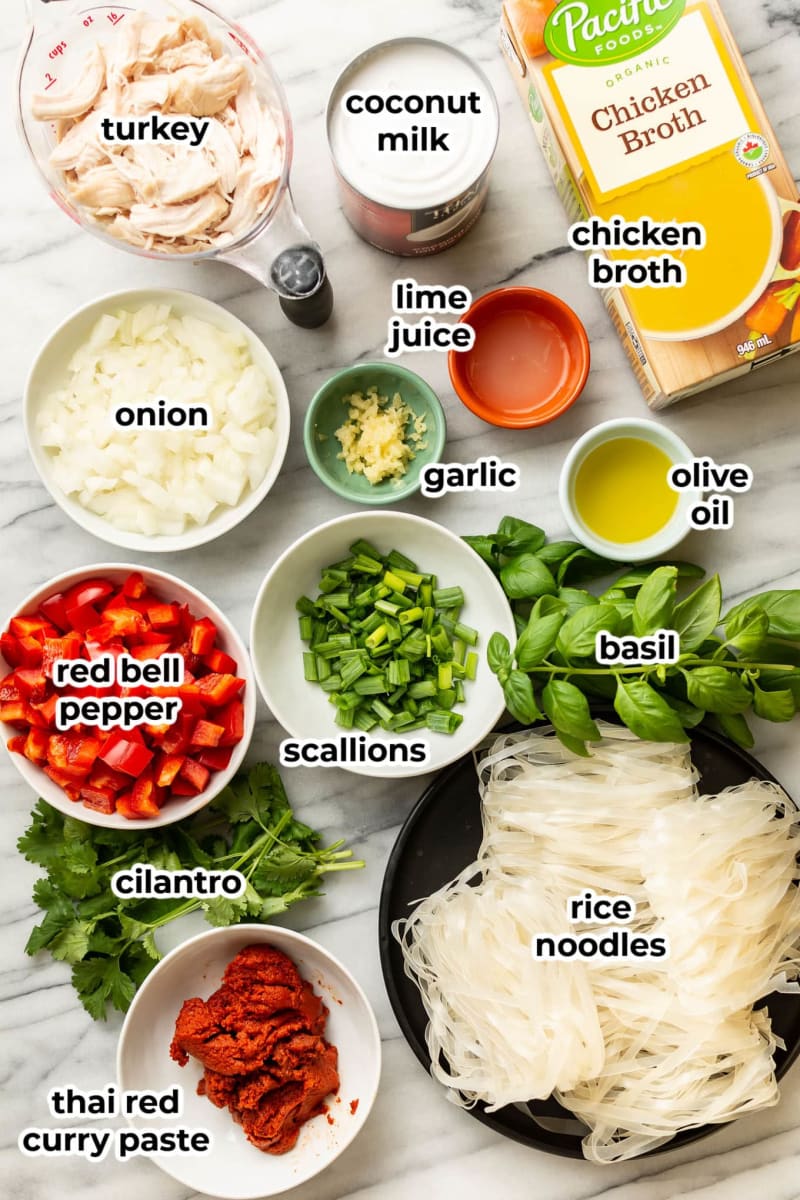
The broth is built from pantry-friendly aromatics, coconut milk and cooked turkey. Use the listed amounts as a guide, adjusting the seasoning and garnishes to taste.
- Olive oil: One tablespoon for softening the onion and helping the aromatics cook evenly.
- Onion: Half a medium onion, chopped. It makes a sweet, savory base for the curry broth.
- Garlic: Three cloves, minced so they cook quickly and distribute through the soup.
- Thai red curry paste: Three heaping tablespoons add the central curry flavor; check the package for its heat level.
- Chicken broth: Four cups make the main liquid. Use a broth whose salt level you know, then season at the end.
- Water: Two cups loosen the broth and balance the curry paste and coconut milk.
- Lime juice: Juice from half a lime gives the broth a bright, tart note.
- Cooked turkey: Two cups, shredded or chopped into spoon-friendly pieces. Leftover roasted turkey works well.
- Rice noodles: Seven ounces; thicker noodles around 3 mm tend to keep their texture better than very fine strands.
- Red bell pepper: One pepper, chopped, for sweetness, color and a tender bite in the broth.
- Full-fat coconut milk: One 13.5-ounce can gives the soup its creamy body; shake the can before opening.
- Basil: One handful, torn or chopped to taste. Add it near the end for a fresh herbal aroma.
- Cilantro: One handful, chopped to taste, brings a fresh, citrusy note to the finished soup.
- Scallions: One handful, chopped to taste, for a mild onion flavor and a crisp garnish.
- Salt and pepper: Season to taste after simmering, since broth and curry paste can vary in saltiness.
- Lime wedges: Serve alongside the soup so each person can add extra acidity at the table.
Equipment You’ll Need
- Large soup pot: Use a roomy pot to hold the broth, noodles, turkey and vegetables without crowding.
- Cutting board and knife: These make it easier to chop the onion and pepper and prepare the garlic and herbs.
- Measuring cups and spoons: They help portion the broth, water, oil and curry paste consistently.
- Ladle: A ladle makes it easier to serve broth, noodles and turkey together in each bowl.
How to Make Thai Turkey Soup
1. Soften the onion
Warm the olive oil in a large soup pot over medium-high heat. Add the chopped onion and sauté for 5 minutes.
The onion should be softened and fragrant, not deeply browned.
2. Cook the aromatics
Stir in the minced garlic and Thai red curry paste. Cook for 30 seconds, stirring so the paste and garlic do not sit in one spot.
The curry paste should smell aromatic. If it starts sticking, move straight to adding the liquids.
3. Add the soup ingredients
Pour in the chicken broth and water, then add the lime juice, cooked turkey, rice noodles and chopped red bell pepper. Turn the heat to high and bring the pot to a boil.
Stir gently as the liquid heats so the noodles begin to separate and the turkey is distributed through the pot.
4. Simmer with coconut milk
Lower the heat to medium-low and stir in the full-fat coconut milk. Let the soup simmer for 10 minutes.
Keep the soup at a gentle simmer rather than a vigorous boil. Check that the noodles are softening and the turkey is hot.
5. Finish and serve
Stir in the basil, cilantro and scallions. Taste and add salt and pepper as needed, then serve immediately with lime wedges.
The herbs should look fresh and green; adding them just before serving keeps their flavor lively.
How to Tell When It’s Done
The soup is ready when the rice noodles are tender enough to eat but still hold their shape, the red pepper has softened, and the cooked turkey is hot throughout. The broth should look creamy and unified, not separated into oily or watery layers.
Taste a noodle and a spoonful of broth before serving. If the noodles are still firm, continue simmering gently and check again; if they are already tender, serve promptly because they will keep absorbing liquid in the hot pot.
If the broth tastes too rich, squeeze in a little more lime at the table. If it tastes flat, adjust with salt and pepper before adding more curry paste, which can increase the heat quickly.
Tips and Common Mistakes
These details help you control the soup’s heat, keep the noodles pleasant and make the most of cooked turkey.
- Check the curry paste’s heat first. Red curry pastes vary considerably by brand. If yours is especially spicy, begin with less than the listed amount and add more to taste as the broth simmers.
- Keep the simmer gentle. A hard boil can make coconut milk look less smooth and can push noodles past tender. Once the coconut milk goes in, keep the pot at a steady, gentle simmer.
- Add herbs at the end. Basil, cilantro and scallions taste brighter when they are stirred in just before serving. Prolonged simmering can dull their fresh aroma and color.
- Season after the broth simmers. Curry paste and chicken broth can both contribute plenty of salt. Taste the completed broth before adding more, then adjust gradually.
- Serve the soup promptly. Rice noodles continue soaking up broth as they sit. If the soup waits in the pot, the noodles may soften further and leave less liquid for serving.
Substitutions and Variations
You can adjust the soup to suit the turkey, noodles and curry paste you have on hand.
- Cooked chicken: Use cooked chicken in place of turkey in the same way. The soup keeps its coconut curry character, with a slightly different savory flavor.
- Vegetable broth: Swap vegetable broth for the chicken broth for a meat-free broth base. The soup will still contain turkey unless you also replace it.
- A different curry paste: Another Thai red curry paste can work, but brands vary in salt and chile strength. Taste before adding extra seasoning or heat.
- Ginger or chile: Add grated ginger for a warmer aromatic note, or stir in sriracha or chili paste for more heat. Add a little at a time so the broth does not become overpowering.
- Different rice noodles: Fine rice noodles can replace thicker ones, but they soften faster and are more likely to break. Watch their texture closely during the simmer.
- Light coconut milk: A lighter version can be used, though the broth will be less rich and creamy. Full-fat coconut milk gives the soup its fullest texture.
What to Serve with Thai Turkey Soup
Serve the soup hot with lime wedges and extra chopped herbs or scallions, if available. Its noodles and turkey make it filling on its own; a crisp cucumber salad or simple steamed vegetables add freshness without competing with the curry broth.
For another meal built around poultry, browse our chicken recipes. If you are planning a larger menu, explore more dinner recipes for sides and mains.
Make-Ahead, Storage and Reheating
Make ahead: Chop the onion, garlic and pepper, and measure the broth ingredients ahead; keep the prepared ingredients covered and refrigerated. For the best noodle texture, cook the soup close to serving time rather than letting the noodles sit in the broth.
Storage: Cool leftovers promptly and refrigerate them in a covered container for 3 to 4 days. The noodles will continue to absorb broth, so the stored soup may be thicker than when freshly made.
Freezing: Freezing is not ideal because rice noodles can become very soft and coconut milk may change texture after thawing. If you do freeze it, expect a less smooth broth and softer noodles.
Reheating: Warm leftovers gently in a saucepan over low to medium-low heat, stirring occasionally, until hot throughout. Add a splash of water or broth if the noodles have absorbed too much liquid, and finish with fresh lime if needed.
Thai Turkey Soup FAQs
Can I make Thai turkey soup with leftover Thanksgiving turkey?
Yes. Cooked roasted turkey is a good fit; chop or shred it into pieces that are easy to eat with the noodles.
How spicy is Thai turkey soup?
It depends on the red curry paste you use. Some brands are mild and others are quite hot, so check the package and adjust the amount to your preference.
Can I use a full package of rice noodles?
Only if the package contains the listed 7 ounces. Rice noodle packages vary in size, and you may need only part of one.
What can I add to make the soup spicier?
Grated ginger, sriracha or chili paste can add more heat and aroma. Add them gradually and taste the broth as you go.
How many people does this soup serve?
The recipe lists 4 servings, while the accompanying serving note gives a range of 4 to 6. Portions depend on whether you serve it as a full meal or alongside other dishes.
Can I cook the noodles separately?
Yes. Cooking them separately can help prevent them from soaking up broth if you expect leftovers, though they will not simmer directly in the curry broth.
Printable Recipe
Recipe adapted from Salt & Lavender. Photos courtesy of Salt & Lavender, used with permission.

Thai Turkey Soup
Ingredients
- 1 tablespoon olive oil
- 1/2 medium onion chopped
- 3 cloves garlic minced
- 3 heaping tablespoons Thai red curry paste
- 4 cups chicken broth
- 2 cups water
- Juice of 1/2 lime
- 2 cups cooked turkey
- 7 ounces rice noodles see note
- 1 red bell pepper chopped
- 1 (13.5 ounce) can full-fat coconut milk
- 1 handful fresh basil torn/chopped, to taste
- 1 handful fresh cilantro chopped, to taste
- 1 handful chopped scallions to taste
- Salt & pepper to taste
- Lime wedges for serving
Instructions
- Sauté the onion in the olive oil in a large soup pot for 5 minutes over medium-high heat.
- Add the garlic and curry paste and cook for 30 seconds.
- Stir in the chicken broth, water, lime juice, turkey, rice noodles, and red bell pepper. Increase the heat to high and bring to a boil.
- Reduce the heat to medium-low, stir in the coconut milk, and let the soup simmer for 10 minutes.
- Stir in the basil, cilantro, and scallions. Season with salt & pepper as needed and serve immediately with lime wedges.
Notes
- Serves 4-6.
- I use Thai Kitchen red curry paste, and it isn’t particularly spicy. Some brands are spicy, however. Want to make this spicier? Add some grated ginger, sriracha, and/or chili paste.
- Rice noodles come in a variety of brands and package sizes, so you don’t have to be super precise with the weight as you may need to use only part of a package. I buy the thicker ones (3 mm) vs. the super fine ones that are almost like angel hair pasta. I like to buy Thai Kitchen’s stir fry noodles when I can find them.
- I used Thai Kitchen red curry paste and coconut milk. I recommend their coconut milk because it’s not too watery unlike some other brands I’ve tried.