Vegan Cookie Dough Frosting

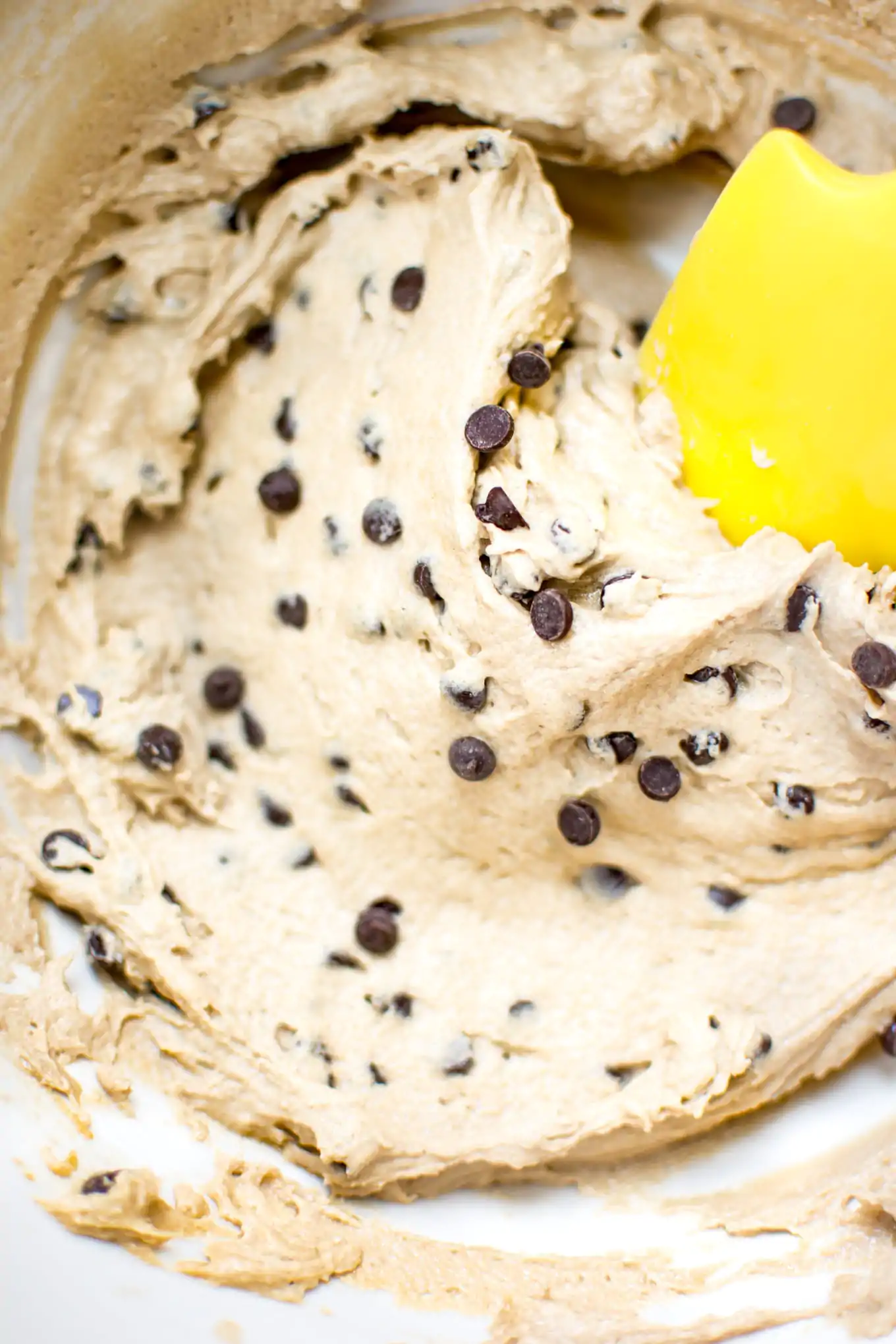
Vegan cookie dough frosting is a soft, buttery topping with the brown-sugar flavor of cookie dough and mini chocolate chips in every bite. Creaming the vegan butter and sugar first gives it a smooth base, while a little water lets you adjust it for spreading or piping.
It takes 15 minutes, makes enough for 20 cookies, and uses no cooking time. Spread it on sugar cookies or cupcakes for parties, bake sales, or a quick dessert that can be made ahead.
Why This Vegan Cookie Dough Frosting Recipe Works
A few simple choices help this frosting stay smooth, rich and easy to spread.
- Creaming builds a smooth base. Beating the softened vegan butter with packed brown sugar distributes the sugar through the fat. This makes the frosting easier to spread than simply stirring the ingredients together.
- Brown sugar brings cookie flavor. Its molasses notes give the frosting the familiar taste of cookie dough. Packing it into the measuring cup keeps the amount consistent.
- Water controls the texture. Adding it gradually gives you control over how soft the frosting becomes. Stop when it spreads easily, or add more if you prefer a looser consistency.
- Mini chips spread evenly. Their small size makes them easier to fold through the frosting and less likely to drag or tear a cookie as you spread it.
- Vanilla and salt balance the sweetness. Vanilla adds warmth, while a small pinch of salt keeps the brown sugar and chocolate from tasting one-note.
Ingredients You’ll Need
These pantry-friendly ingredients make a sweet, cookie-dough-style frosting. Measure the flour carefully so the finished texture stays light rather than dense.
- Vegan butter: Half a cup, softened. Choose a block-style vegan butter for a sturdy frosting, and let it soften enough to cream smoothly.
- Brown sugar: Three-quarters of a cup, packed. It supplies the classic cookie-dough sweetness and molasses flavor.
- Pure vanilla extract: One teaspoon adds a rounded, familiar bakery flavor. Pure or imitation vanilla both work.
- Salt: A small pinch sharpens the flavor and balances the sugar without making the frosting taste salty.
- Flour: One cup, spooned into the measuring cup and leveled rather than scooped. This keeps the frosting from becoming too heavy.
- Water: Two tablespoons, added gradually to loosen the mixture. You can use more if you want a softer consistency.
- Mini vegan chocolate chips: Half a cup gives every portion little bites of chocolate. Check the package to confirm the chips are vegan.
Equipment You’ll Need
- Medium mixing bowl: A bowl with room to beat the butter and sugar and fold in the chips without spilling.
- Electric hand mixer: It creams the butter and sugar evenly and makes a smoother base than hand mixing.
- Measuring cups and spoons: Accurate measuring helps keep the frosting spreadable, especially for the flour and water.
How to Make Vegan Cookie Dough Frosting
1. Cream butter and sugar
Put the softened vegan butter and packed brown sugar in a medium mixing bowl. Beat them with an electric hand mixer until the mixture looks smooth.
Scrape the bowl if sugar gathers around the sides. The mixture should look evenly combined, without large butter lumps.
2. Add vanilla and salt
Mix in the vanilla extract and small pinch of salt until they are distributed through the butter mixture.
The vanilla should be incorporated throughout rather than pooling in one spot.
3. Mix in the flour
Add the flour gradually, mixing after each addition until no dry patches remain. Spoon and level it when measuring instead of dipping the cup into the flour.
Pause to scrape the bowl if flour sticks to the sides. The mixture will become thicker at this stage.
4. Adjust the consistency
Pour in the water a tablespoon at a time, mixing between additions. Use more than 2 tablespoons if needed to reach your preferred frosting consistency.
For spreading, aim for a soft mixture that holds its shape but releases easily from a spatula.
5. Fold in chocolate chips
Stir the mini vegan chocolate chips through the frosting. Use it on cookies or cupcakes right away, or cover and refrigerate it until you need it.
Fold gently so the chips stay distributed instead of sinking into one area. The frosting softens as it sits out.
Tips and Common Mistakes
A few small details make the frosting easier to measure, handle and serve.
- Spoon and level the flour. Scooping packs extra flour into the cup and can leave the frosting stiff or dry. A level measure keeps the texture closer to the intended consistency.
- Start with softened butter. Butter that is soft enough to press easily creams more smoothly with the sugar. If it is still firm, the mixture may stay lumpy.
- Add water slowly. The frosting can go from thick to loose quickly. Mix in each tablespoon before deciding whether it needs more.
- Chill it if you are waiting. The frosting softens the longer it stays at room temperature. Keep it refrigerated if you are not decorating right away.
- Keep finished treats cool. This frosting can become melty in a warm room. Chill decorated cookies or cupcakes for a few hours before setting them out in a reasonably cool place.
- Use ready-to-eat flour. Uncooked flour is not treated as a ready-to-eat ingredient. Use flour that has been heat-treated according to its package directions, then let it cool fully before mixing.
Substitutions and Variations
You can adjust the flavor and finish without changing the basic mixing method.
- Different vegan butter: A tub-style spread can work, but it is often softer than block butter and may make the frosting looser. Add the water cautiously.
- Regular butter: If you do not need the frosting to be vegan, dairy butter can replace the vegan butter in the same amount. The flavor will be more buttery.
- Dark brown sugar: It gives the frosting a deeper molasses flavor and a slightly darker color. Keep it packed when measuring.
- Different chocolate chips: Use regular-size vegan chips if that is what you have. They create larger chocolate bites and can make the frosting a little harder to spread.
- A thinner frosting: Mix in additional water a little at a time. A softer finish is useful for spreading, but it may not hold piped shapes as well.
- A thicker frosting: Add a small amount of additional flour if the frosting feels too loose. Mix thoroughly and adjust gradually so it does not become pasty.
What to Serve with Vegan Cookie Dough Frosting
Spread the frosting over sugar cookies or use it on cupcakes. The batch generously covers 20 sugar cookies, or about 10 to 12 cupcakes depending on how much you put on each one.
For a dessert spread, pair frosted treats with fresh berries or plain shortbread to balance their sweetness. Browse more dessert ideas or popular recipes for additional treats.
Make-Ahead, Storage and Reheating
Make ahead: Prepare the frosting ahead and store it covered in the refrigerator until needed. If it firms up, let it soften enough to spread and stir it until smooth before decorating.
Storage: Keep the frosting or decorated treats in a covered container in the refrigerator for 3 to 4 days. Do not leave dairy-free frosting on treats at room temperature for more than 2 hours.
Freezing: Freeze the frosting in an airtight container for up to 2 months. Thaw it in the refrigerator, then stir until smooth; the texture may need a little adjustment before spreading.
Reheating: Do not heat the frosting. Let refrigerated frosting soften until spreadable, then stir it well; serve decorated cookies or cupcakes cool so the topping holds its shape.
Vegan Cookie Dough Frosting FAQs
How many cupcakes does this frosting cover?
About 10 to 12 cupcakes, depending on how generously you frost each one. A thinner spread will cover more than a tall piped swirl.
Can I pipe this frosting onto cupcakes?
Yes, if it is thick enough to hold a shape. Use less water for a firmer finish, and chill the frosting briefly if it feels too soft to pipe neatly.
Why is my frosting grainy?
Brown sugar can leave a slightly textured finish, especially if its crystals are coarse. Beat the butter and sugar until smooth before adding the other ingredients.
Can I make this without an electric mixer?
Yes. Use a sturdy spoon and a medium bowl, and work the softened butter and sugar together until well combined; it will take more effort and may be less fluffy.
Can I use this as a cake filling?
Yes, as a thin filling between cake layers. Keep the cake chilled so the frosting stays firm, and avoid spreading a very thick layer that could slide.
Printable Recipe
Recipe adapted from Salt & Lavender. Photos courtesy of Salt & Lavender, used with permission.
Vegan Cookie Dough Frosting
Ingredients
- 1/2 cup vegan butter softened
- 3/4 cup brown sugar (packed)
- 1 teaspoon pure vanilla extract
- Small pinch of salt
- 1 cup flour
- 2 tablespoons water
- 1/2 cup mini vegan chocolate chips
Instructions
- Add the vegan butter and sugar to a medium mixing bowl. Cream the butter and sugar until smooth using an electric hand mixer.
- Add the vanilla and salt and continue mixing until incorporated.
- Gradually mix in the flour until incorporated.
- Add in the water, one tablespoon at a time, until the frosting is your desired consistency (add more than 2 tbsp if you wish).
- Fold in the chocolate chips. If you're not frosting cookies/cupcakes/etc. right away, I suggest storing the icing in the fridge until needed because it will start to soften even more the longer you leave it out.
Notes
- This made more than enough to generously ice 20 sugar cookies. I would say that this would work to ice around 10-12 cupcakes, but it really depends on how much you add to each one.
- I recommend storing whatever you frost in a cool place (the fridge works) - this frosting can get quite melty like many others frostings. Once whatever you've frosted has chilled for a few hours, it can be left out in a reasonably cool place without going all melty (e.g. cookies on a plate for a party).
- Be sure to spoon and level the flour (don't scoop it) to measure it more accurately.
- Want the cookies in the photos? Here's the recipe.


