Boursin Pork Chops


These pork chops get a golden crust in a hot skillet, then finish cooking in a silky garlic and herb cheese sauce. Lightly browned onion adds sweetness, while chicken broth loosens the cheese just enough to make a sauce you can spoon over each chop.
Dinner takes 30 minutes and serves four, with one skillet for both the chops and the sauce. It’s a practical weeknight meal when you want more than a plain seared chop. Start a pot of potatoes or rice before you heat the skillet so there’s something ready to catch the sauce.
Why This Boursin Pork Chops Recipe Works
The chops and sauce cook in stages, so you can get a good sear without sacrificing tender pork or a smooth sauce.
- The chops come out after searing. Moving them to a plate gives you time to soften the onion and build the sauce without leaving the pork over direct heat the whole time.
- The browned bits season the sauce. Broth loosens the savory residue from the sear, so the sauce tastes like it was cooked with the pork rather than poured on as an afterthought.
- Soft cheese does the thickening. The garlic and herb cheese melts into the broth, adding body and seasoning in one step. There’s no need for flour or a separate thickener.
- The plate juices go back in. Pouring them into the skillet gives the sauce more pork flavor. Finishing the chops in that sauce coats their browned surfaces without needing to cut them open to see if they’re ready.
Ingredients You’ll Need
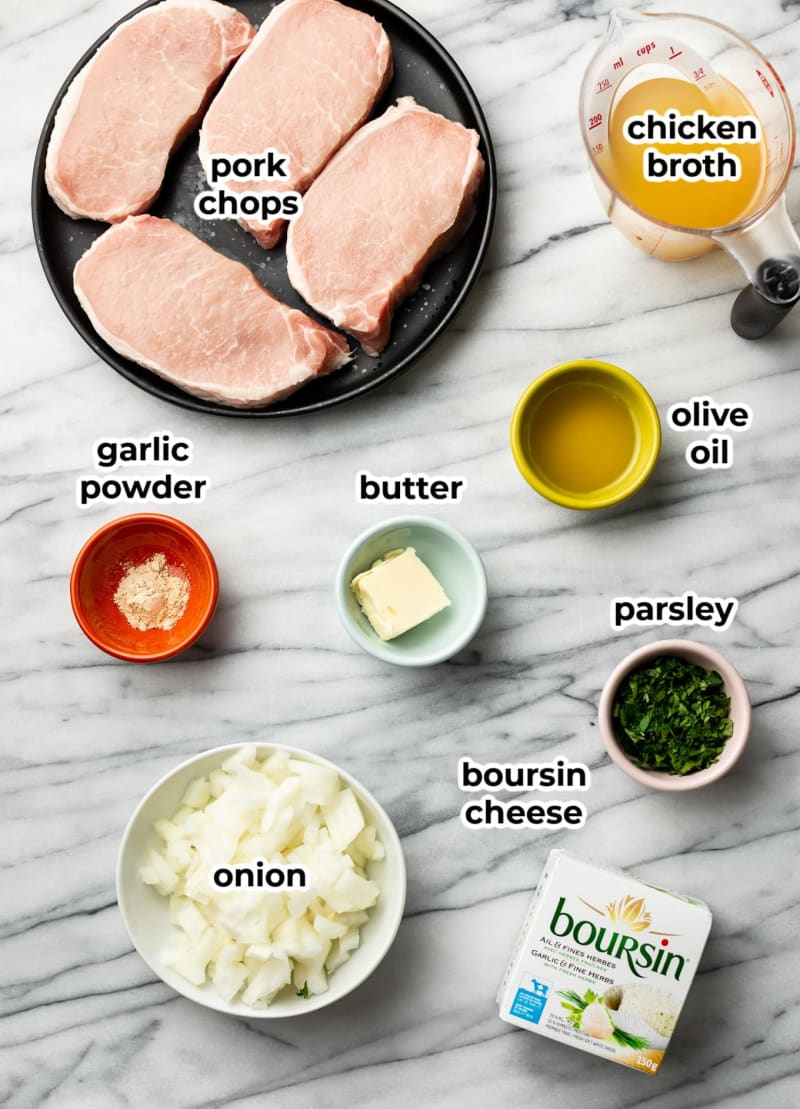
Look for soft garlic and herb cheese in the specialty cheese case. Most of the other ingredients are pantry or fridge staples.
- Pork chops: Four chops. Boneless loin chops are easy to fit in the skillet; choose pieces of similar thickness so they finish close together.
- Garlic powder: Half a teaspoon seasons the pork itself, so there’s garlic flavor under the sauce as well as in it.
- Salt and pepper: Use both to taste. Season the pork lightly at first, since the broth and cheese contribute salt to the finished dish.
- Olive oil: One tablespoon helps coat the skillet evenly for searing.
- Butter: One tablespoon adds a little richness to the sear and gives the onion flavorful fat to cook in.
- Onion: Chop half a medium onion. Small, even pieces soften evenly and distribute through the sauce.
- Chicken broth: Three-quarters of a cup is the base of the sauce. Choose low-sodium broth if you prefer to control the salt yourself.
- Soft garlic and herb cheese: Use one 5.2-ounce (150-gram) package, softened so it melts readily. Look for a spreadable cheese with garlic and fine herbs rather than a firm slicing cheese.
- Parsley: One to two tablespoons, chopped, brings a fresh flavor to the rich sauce.
Equipment You’ll Need
- Wide, heavy skillet: A roomy skillet holds the chops in one layer and gives the sauce enough surface area to reduce.
- Digital instant-read thermometer: A quick reading lets you pull each chop as soon as it reaches a safe temperature.
How to Make Boursin Pork Chops
1. Dry and season the chops
If possible, take the chops out of the refrigerator 15 to 30 minutes before you start. Blot them with paper towels, then season both sides with the garlic powder, salt and pepper.
Check the edges as well as the flat sides for moisture. A dry surface starts browning sooner because the skillet doesn’t have to boil off that moisture first.
2. Sear both sides
Heat the olive oil and butter in a skillet over medium-high heat for a few minutes. Sear the chops for 3 to 5 minutes per side, using 3 minutes for thinner chops and 5 minutes for chops up to 1 inch thick, then transfer them to a plate.
Look for a golden crust on both sides. The center doesn’t need to be cooked through at this stage.
3. Soften the onion
Add the chopped onion to the same skillet and sauté for about 5 minutes. If the pan looks dry, add a small splash of olive oil.
The onion should look soft and lightly browned, not crisp or dark around the edges.
4. Build the sauce
Add the broth and softened cheese, stirring until the cheese melts and the sauce looks smooth. Let it bubble for 4 to 5 minutes, then stir in the parsley.
Run a spoon across the bottom as you stir to lift the browned bits, and press any stubborn lumps of cheese against the side of the skillet.
5. Finish and serve
Return the chops and their plate juices to the skillet and cook for another 3 to 5 minutes, until the sauce thickens a little more and the pork reaches at least 145°F. If the sauce gets too thick, loosen it with a splash of broth, then taste for salt and pepper and serve immediately.
The sauce should coat a spoon but still pour easily. If the chops are ready before the sauce, move the meat out while the sauce finishes.
How to Tell When It’s Done
Insert the thermometer sideways into the thickest part of a chop, avoiding the bone if there is one. If it reads below 145°F, keep cooking and check again shortly. Rest the pork for at least 3 minutes before cutting; a little pink in the center is fine.
Tips and Common Mistakes
Keep an eye on the skillet between stages, especially when the pork comes out and the onion goes in.
- Leave space between chops. Crowded chops release moisture faster than it can evaporate, so they steam. Sear in batches if the pieces nearly touch.
- Let the crust release. If a chop sticks when you try to turn it, give it a little longer. A well-browned surface usually lifts more easily.
- Check the drippings. Keep brown bits, but wipe out any black, scorched residue before adding the onion. Burnt bits can make the whole sauce bitter.
- Keep the sauce bubbling gently. Turn down the heat if it boils hard. Fast evaporation can make the cheese sauce too thick before the chops finish.
- Check thinner chops first. A thin chop can overshoot its target while a thicker one is still cooking. Take each piece out as soon as it’s done.
Substitutions and Variations
You can change the cut, herbs or sauce base without changing the basic skillet method.
- Bone-in chops: These work well but often take up more skillet space. Expect the timing to vary with thickness rather than adding a fixed amount of time.
- Shallots: Use chopped shallots in place of onion for a milder, sweeter base. Watch the smaller pieces closely as they brown.
- Vegetable broth: Use it instead of chicken broth for a lighter-tasting sauce. Pick a mild one so it doesn’t compete with the herbs.
- Garlic and herb cream cheese: A full-fat spread works in a pinch. The sauce will taste tangier and may need a little extra broth to reach the same consistency.
- Fresh chives: Swap them for parsley if you want a mild onion note. Stir them in at the same point so they stay fresh tasting.
What to Serve with Boursin Pork Chops
Spoon the chops and sauce over mashed potatoes, buttered egg noodles or rice. Roasted broccoli or steamed green beans add a little crunch without needing a second sauce.
For a brighter side, try a lemon-dressed green salad or pick something crisp from our salad recipes. If you’re planning the rest of the week’s meals, browse our weeknight dinner recipes for more ideas.
Make-Ahead, Storage and Reheating
Make ahead: Chop the onion and parsley up to a day ahead and refrigerate them in separate covered containers. Leave the searing and sauce for serving time so the pork only needs to cook once.
Storage: Refrigerate the chops and sauce together in an airtight container within 2 hours of cooking. Use within 3 to 4 days.
Freezing: Freezing isn’t ideal because the cheese sauce can turn grainy or separate when thawed. If you need to freeze leftovers, thaw them in the refrigerator and stir the sauce as it reheats.
Reheating: Warm the chops and sauce gently in a covered skillet until the pork reaches 165°F. Add a splash of broth if the chilled sauce is too thick to spoon over the chops.
Boursin Pork Chops FAQs
Can I use a cast-iron skillet?
Yes. Cast iron holds heat well for searing, but it also stays hot after you take out the chops. If the onion starts browning before it softens, lower the heat.
Can I double this recipe?
Yes. Brown the chops in batches, then use a skillet wide enough to finish them in a single layer or divide the sauce and chops between two skillets.
Why does my sauce look oily?
The cheese may have separated if the sauce got too hot. Take the skillet off the heat and whisk in a small splash of broth; that can help bring it back together.
Are these pork chops gluten-free?
They can be. The sauce has no flour, but check the labels on the broth, soft cheese and seasonings if you’re cooking for someone who needs to avoid gluten.
Can I use pork chops straight from the fridge?
Yes. The time on the counter is optional. Start with a dry surface and use the thermometer to decide when the chops are ready rather than extending the sear by a set amount.
Printable Recipe
Recipe adapted from Salt & Lavender. Photos courtesy of Salt & Lavender, used with permission.

Boursin Pork Chops
Ingredients
- 4 pork chops see note
- 1/2 teaspoon garlic powder
- Salt & pepper to taste
- 1 tablespoon olive oil
- 1 tablespoon butter
- 1/2 medium onion chopped
- 3/4 cup chicken broth use low sodium if sensitive to salt
- 1 (5.2 oz/150g) package Boursin Fine Herbs & Garlic cheese softened
- 1-2 tablespoons chopped parsley
Instructions
- Take the pork chops out of the fridge 15-30 minutes prior to starting the recipe if possible. Pat them dry and season them with the garlic powder and some salt & pepper.
- Add the olive oil and butter to a skillet over medium-high heat. Let the pan heat up for a few minutes, and once it's hot, cook the pork chops for 3-5 minutes/side or until golden (3 minutes for thinner chops and 5 minutes for pork chops up to 1" thick). Once the pork chops are done searing, transfer them to a plate.
- To the skillet, add the onions and sauté for about 5 minutes or until softened and lightly browned. If the pan seems dry, add a small splash more olive oil.
- Add the chicken broth and the Boursin to the skillet. Stir until you've got a smooth sauce. Let it bubble for 4-5 minutes, then stir in the chopped parsley.
- Add the pork chops (and any plate juices) back in and cook for another 3-5 minutes or until the sauce has thickened up a bit more and the pork chops are cooked through (145F minimum). Add in another splash of chicken broth if the sauce gets too thick.
- Season with salt & pepper if needed and serve immediately.
Notes
- I used boneless pork chops. You can use bone-in, but you may need to cook them in batches as they’re typically larger.
- Pork is safe to eat at 145F (pink pork is ok!). It can go from undercooked to overcooked in a hurry, so I recommend using a digital instant read thermometer to test doneness.


