Boursin Pork Tenderloin

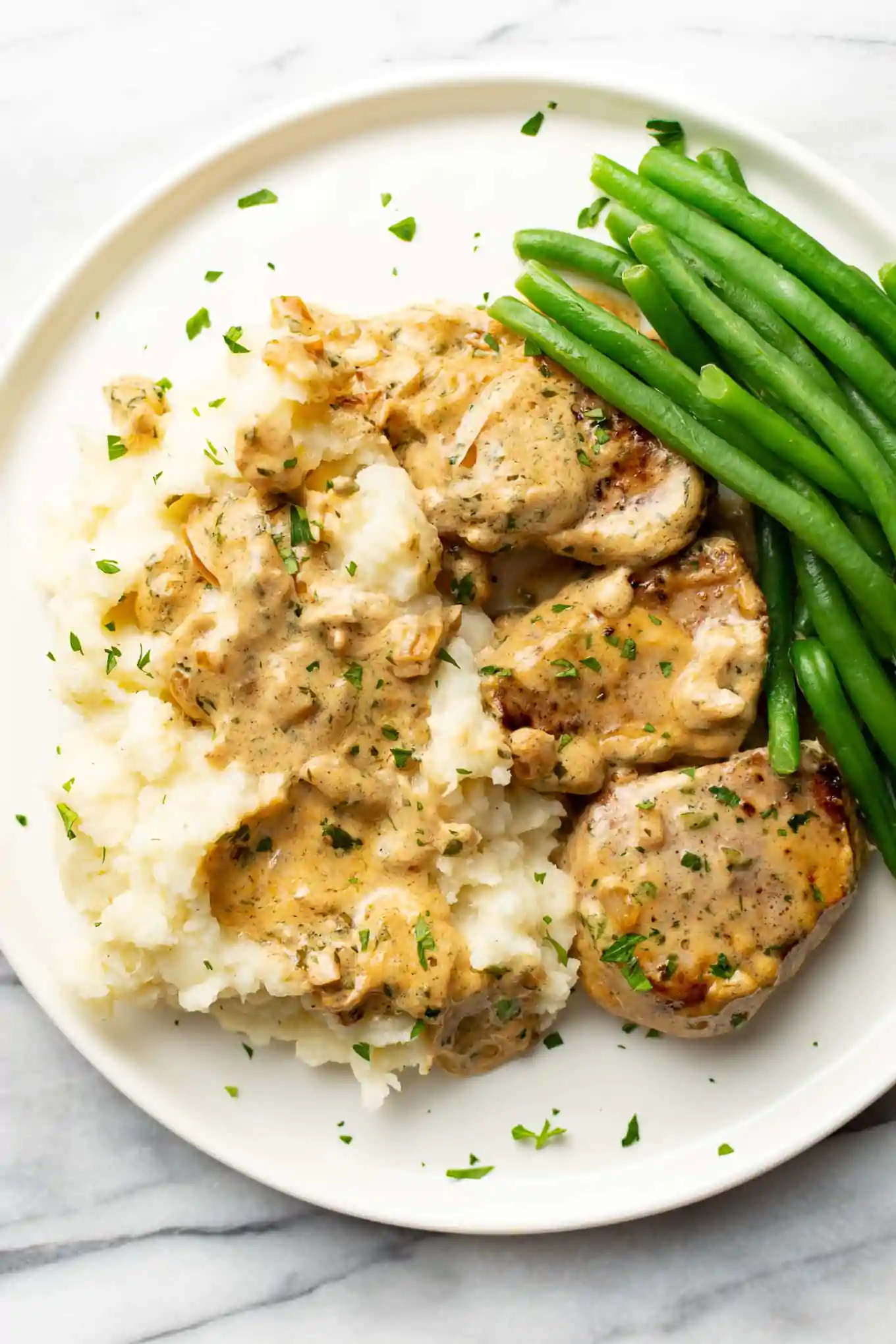
Boursin pork tenderloin starts with golden pork medallions and ends with a silky garlic-herb sauce you can spoon over every bite. The pork goes back into the skillet just long enough to finish cooking, so the centers stay tender while the sauce picks up the flavor left behind by the sear.
Dinner serves four and takes 30 minutes, including 10 minutes of prep. It’s quick enough for a weeknight but just as useful when you have company: put a bowl of mashed potatoes and something green on the table, and the skillet takes care of both the main dish and the gravy.
Why This Boursin Pork Tenderloin Recipe Works
The pork and sauce cook in stages so neither has to wait in the skillet while the other catches up.
- Medallions give you more browned surface. Cutting the tenderloin into rounds exposes two broad faces on every piece. You get more savory crust in each serving than you would from searing the outside of a whole tenderloin.
- Butter and oil do different jobs. Butter adds flavor to the lean pork, while olive oil helps the fat spread across the hot skillet so the cut sides make even contact.
- The onions build a sweeter base. Cooking the onion before adding liquid softens its bite and brings out sweetness that balances the salty cheese.
- Broth brings the browned bits into the sauce. The liquid loosens the flavorful residue stuck to the skillet. That gives the sauce a meaty backbone instead of making it taste like diluted cheese.
- Soft cheese thickens without flour. The garlic-and-herb cheese melts into the broth and gives it body as it reduces. There is no roux to make and no floury taste to cook out.
Ingredients You’ll Need
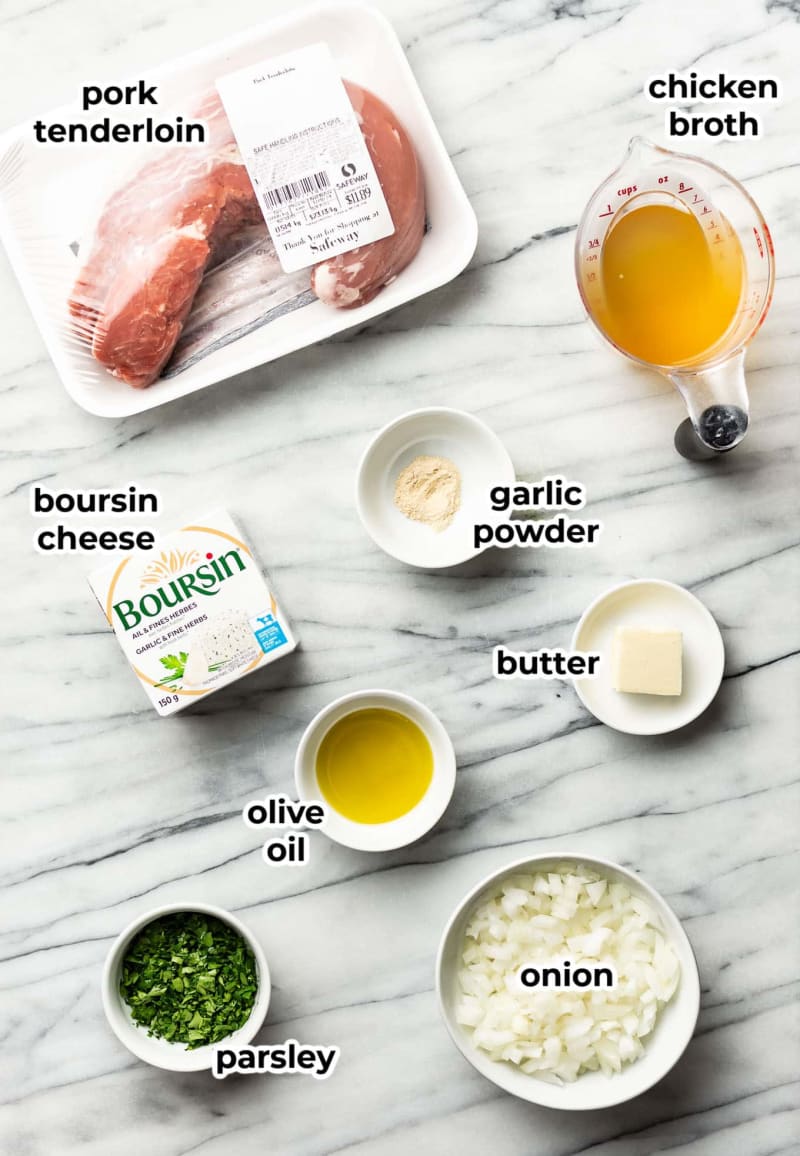
Check the cut of pork and the style of cheese when you shop. Both determine how quickly the skillet comes together.
- Pork tenderloin: One pound of plain pork tenderloin. Look for the long, narrow cut, not the broader pork loin, and skip pre-marinated packages that might compete with the sauce.
- Garlic powder: Half a teaspoon seasons the pork itself, so the meat still tastes of garlic underneath the sauce.
- Salt and pepper: Use both to taste, with a light hand on the salt at first. The broth and cheese season the pan later.
- Olive oil: One tablespoon goes into the skillet for searing. A mild olive oil lets the herbs come through.
- Butter: One tablespoon adds richness to the searing fat. Unsalted butter gives you more control over the finished seasoning.
- Onion: Chop half a medium onion. Yellow onion works well, and small pieces soften into the sauce without leaving long strands.
- Chicken broth: Three-quarters of a cup gives the cheese enough liquid to melt into a pourable sauce. Choose low-sodium broth if you’re sensitive to salt.
- Garlic-and-fine-herb cheese: Use one 5.2-ounce package of soft, crumbly garlic-and-fine-herb cheese and let it soften before cooking so it blends easily.
- Parsley: Chop one to two tablespoons of fresh parsley for a little green color and a clean, grassy finish.
Equipment You’ll Need
- Wide skillet: A wide, heavy skillet gives the medallions room to brown and leaves enough exposed surface for the sauce to reduce.
- Instant-read thermometer: A slim probe lets you check the center of a medallion without cutting it open.
How to Make Boursin Pork Tenderloin
1. Trim and season
Remove excess fat and the silverskin, then cut the tenderloin crosswise into 1-inch rounds. Season the cut faces with garlic powder, pepper, and a modest amount of salt.
The silverskin is the shiny strip that doesn’t pull apart like fat. Slip the knife under one end and angle the blade toward the strip to avoid taking meat with it.
2. Sear the pork
Heat the olive oil and butter in a skillet over medium-high heat for a few minutes. Add the pork and sear for about 3 minutes per side, until lightly golden, then move the pieces to a plate. Work in two batches if they’d crowd the pan.
The pork should sizzle as it goes in. The goal here is color, not a fully cooked center.
3. Soften the onion
Add the chopped onion to the same skillet and sauté for about 5 minutes, until soft and lightly browned. If the skillet looks dry, add a small splash of olive oil.
The onion should bend easily when you press it with a spatula, with no chalky white center.
4. Build the sauce
Pour in the chicken broth and add the softened cheese. Scrape the bottom of the pan and stir until smooth, then let the sauce bubble for 4 to 5 minutes before stirring in the parsley.
Press any chunks of cheese against the side of the skillet. Herb flecks are normal, but the sauce between them should look smooth.
5. Finish cooking the pork
Return the pork and any juices from the plate to the skillet for another 3 to 5 minutes, until the meat reaches at least 145°F and the sauce thickens a little more. Add a splash of broth if it gets too thick.
The sauce should coat a spoon but still flow easily around the pork when you tilt the skillet.
6. Taste and serve
Taste the finished sauce, add salt and pepper if needed, and serve immediately after the pork has rested.
Spoon the sauce over the medallions at the table so none of the softened onions stay behind in the skillet.
How to Tell When It’s Done
Insert the thermometer sideways into the center of the thickest round. A little pink is fine once the pork reaches 145°F; give it a 3-minute rest off the heat. If the narrow end pieces finish first, lift them out while thicker rounds catch up.
Tips and Common Mistakes
A few small adjustments help you get a good sear without letting the sauce reduce too far.
- Blot the cut faces dry. If the pork is wet from the package, pat it dry before seasoning. Surface moisture has to evaporate before the meat can brown.
- Let the pork release. If a medallion grips the pan when you try to turn it, give it a moment and try again. Pulling too soon can tear off the crust.
- Watch the color of the fond. Brown bits are worth keeping, but black bits can make the whole sauce bitter. If a little residue burns between batches, wipe it out before continuing.
- Keep the sauce at a steady bubble. If it starts boiling hard, turn down the heat. A gentler bubble gives you more control over how fast the broth evaporates.
- Fix a thin sauce without the pork. If the medallions are done before the sauce coats a spoon, lift them out and simmer the sauce on its own so the meat doesn’t dry out.
Substitutions and Variations
Keep the broth-and-soft-cheese base, or use one of these swaps to steer the flavor in a different direction.
- Plain cream cheese: Use softened full-fat cream cheese with dried chives and a little garlic powder. The sauce will have a tangier flavor and may need more seasoning.
- Shallot: Replace the onion with chopped shallot for a milder flavor. Watch the smaller pieces closely since they can brown sooner.
- Vegetable broth: A mild vegetable broth works in place of chicken broth. Skip strongly tomato-flavored versions if you want the garlic and herbs to stand out.
- Fresh chives: Use snipped chives instead of parsley for a fresh onion note. Stir them in toward the end so their flavor stays bright.
- Lemon finish: Add a small squeeze of lemon off the heat to cut the richness. Taste as you go so the sauce stays savory rather than tart.
What to Serve with Boursin Pork Tenderloin
Serve the medallions on mashed potatoes, buttered egg noodles, or rice to catch the sauce. Roasted green beans or steamed broccoli add some bite without bringing another rich sauce to the plate.
For a lighter pairing, put a crisp green salad with sharp vinaigrette on the side, or try this berry salad with lemon dressing. Browse our salad recipes for more fresh sides.
Make-Ahead, Storage and Reheating
Make ahead: Chop the onion and trim and slice the pork up to a day ahead, then refrigerate them in separate covered containers. Keep the pork on the bottom shelf and wait to season and sear it until you’re ready to cook.
Storage: Refrigerate the pork and sauce together in an airtight container for 3 to 4 days. Refrigerate leftovers within 2 hours of cooking.
Freezing: The pork can be frozen, but the dairy sauce may separate after thawing. For the best texture, freeze the cooked medallions separately in a tightly sealed container and make the sauce fresh.
Reheating: Warm the pork and sauce together in a covered skillet over low heat, adding a splash of broth if the sauce has tightened. Heat leftovers to 165°F without letting the sauce boil hard.
Boursin Pork Tenderloin FAQs
Can I double Boursin pork tenderloin?
Yes. Sear the extra medallions in batches, then finish them in a skillet big enough to hold them in a single layer. If you don’t have one that fits, divide the sauce and pork between two skillets.
Can I start with frozen pork tenderloin?
Not directly. Thaw it in the refrigerator first so it slices cleanly and the medallions cook evenly in the pan.
Can I use garlic salt instead of garlic powder?
Yes, but use it sparingly and omit the separate salt when seasoning the raw pork. Taste the finished sauce before deciding if the dish needs any more.
Why does my sauce look oily?
The fat has likely separated from the cheese. Take the skillet off the heat and whisk in a little warm broth until the sauce looks creamy again.
Do I need to pound the pork medallions flat?
No. The rounds are meant to stay thick enough to sear on both sides and still have time to finish in the sauce. Flattening them makes it easier to overcook the centers during the sear.
Printable Recipe
Recipe adapted from Salt & Lavender. Photos courtesy of Salt & Lavender, used with permission.

Boursin Pork Tenderloin
Ingredients
- 1 pound pork tenderloin
- 1/2 teaspoon garlic powder
- Salt & pepper to taste
- 1 tablespoon olive oil
- 1 tablespoon butter
- 1/2 medium onion chopped
- 3/4 cup chicken broth use low sodium if sensitive to salt
- 1 (5.2 oz/150g) package Boursin Fine Herbs & Garlic cheese softened
- 1-2 tablespoons chopped parsley
Instructions
- Trim off excess fat and silver skin and slice the pork tenderloin into 1" thick rounds. Season with the garlic powder and some salt & pepper (but go easy on the salt).
- Add the olive oil and butter to a skillet over medium-high heat. Let the pan heat up for a few minutes. Once the pan is hot, add the pork (do it in two batches if the pan will be crowded) and sear for about 3 minutes/side or until lightly golden. Transfer the pork to a plate.
- To the skillet, add the onions and sauté for about 5 minutes or until softened and lightly browned. If the pan seems dry, add a small splash more olive oil.
- Add the chicken broth and the Boursin to the skillet. Stir until you've got a smooth sauce. Let it bubble for 4-5 minutes, then stir in the chopped parsley.
- Add the pork (and any plate juices) back in and cook for another 3-5 minutes or until the sauce has thickened up a bit more and the pork is cooked through (145F minimum). Add in another splash of chicken broth if the sauce gets too thick.
- Season with extra salt & pepper if needed, and serve immediately.


