Canned Salmon Pasta


Canned salmon pasta is a quick, bright meal with tender flakes of fish, garlicky olive oil and fresh lemon clinging to strands of pasta. A little reserved pasta water helps the simple sauce coat each bite without making it heavy.
It takes 5 minutes to prep and 15 minutes to cook, and makes 2 servings. Keep it in mind for a quick lunch or a low-effort dinner when the pantry is doing most of the work.
Why This Canned Salmon Pasta Recipe Works
A few straightforward techniques bring the pantry ingredients together into a balanced pasta.
- Garlic cooks briefly. A short time in hot oil takes away its raw bite while keeping it fragrant. Longer cooking can make minced garlic bitter.
- Lemon keeps the sauce bright. Juice adds tang, while zest brings fragrant citrus oils without needing more liquid. It balances the richness of the salmon and olive oil.
- Pasta water helps the sauce cling. The starchy water loosens the oil and salmon mixture and helps it coat the pasta. Add it before tossing so the sauce stays cohesive.
- Salmon needs only warming. Canned salmon is already cooked, so it only needs to heat through in the pan. Gentle handling keeps some appealing flakes intact.
Ingredients You’ll Need
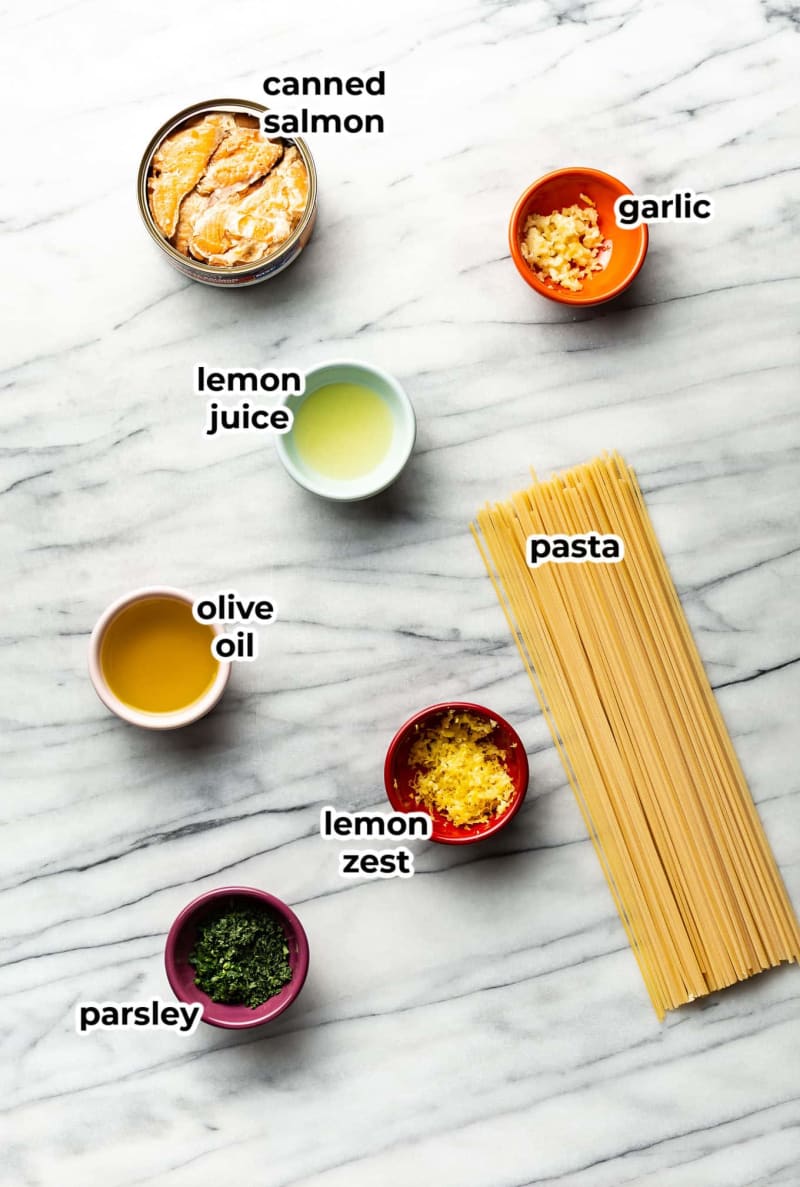
This short ingredient list relies on fresh garlic and lemon for flavor. Use any pasta shape you have, and keep a little cooking water before draining.
- Olive oil: Two tablespoons form the base of the quick sauce. Use a good everyday olive oil that you like the flavor of.
- Garlic: Two large cloves, minced, bring savory aroma. Mince them finely so they cook quickly and distribute throughout the pasta.
- Canned salmon: One 5-ounce can, pink or sockeye, boneless and skinless. Drain it, or add some canning liquid to the sauce for extra flavor.
- Lemon: One tablespoon of juice plus the zest of half a lemon gives the sauce both tartness and citrus fragrance. Zest before juicing.
- Fresh parsley: One tablespoon, chopped, adds a fresh herbal note. Flat-leaf or curly parsley both work.
- Salt and pepper: Season to taste. Salt the pasta water, then taste the finished sauce before adding more, since canned salmon can already be salty.
- Pasta: Four ounces uncooked pasta; spaghetti is a good choice, but another shape works. Cook it just to al dente so it holds up when tossed.
How to Make Canned Salmon Pasta
1. Boil the pasta
Bring a pot of salted water to a boil and cook the pasta al dente, following the package directions. While it cooks, mince the garlic, zest and juice the lemon, chop the parsley, and flake the salmon with a fork.
Before draining, save a couple tablespoons of the pasta water for the sauce.
2. Warm the garlic
As the pasta nears doneness, pour the olive oil into a small pan over medium heat. When the oil is hot, stir in the garlic and cook for 30 seconds.
The garlic should smell fragrant but should not turn dark brown; lower the heat if it starts browning quickly.
3. Add salmon and lemon
Stir in the flaked salmon, lemon juice, lemon zest and parsley. Add some of the liquid from the salmon can if you want a more pronounced salmon flavor, then let the mixture heat through.
Fold gently to keep some salmon in larger flakes rather than breaking it all into a paste.
4. Toss and season
Stir a couple tablespoons of pasta water into the salmon mixture. Drain the pasta, add it to the pan and toss until coated. Taste and adjust with salt and pepper; add grated parmesan on top if you wish.
If the pasta looks dry, add a small splash of the reserved water and toss again.
Tips and Common Mistakes
Keep the garlic gentle and the salmon in flakes for the best texture.
- Start the sauce near the end. The salmon only needs to warm through, so the pan can come together while the pasta finishes. This keeps the fish from sitting over heat too long.
- Save pasta water before draining. It is easy to forget once the pasta is ready. A little starchy water helps the oil-based sauce spread over the noodles instead of pooling.
- Keep the garlic pale. Minced garlic can go from fragrant to bitter quickly. Stay nearby and reduce the heat if it begins to brown.
- Flake, don’t mash. Break the canned salmon into bite-size pieces before adding it, then stir carefully. Larger flakes give the finished pasta a better texture.
- Taste before salting the sauce. Canned salmon and salted pasta water both contribute seasoning. Add salt only after everything is tossed together.
- Use the zest as well as the juice. The zest brings lemon aroma without adding extra acidity. Zest the lemon first, then squeeze it for the measured juice.
Substitutions and Variations
The basic method works with different pasta shapes and a few easy flavor adjustments.
- Other pasta shapes: Use short pasta such as penne or fusilli instead of spaghetti. Choose a shape that catches flakes of salmon and sauce.
- Sockeye or pink salmon: Either type works. Sockeye often has a deeper flavor, while pink salmon tends to be milder; use the one you prefer.
- Dried parsley: If fresh parsley is unavailable, use a smaller amount of dried parsley. The flavor is less fresh, so add it with the salmon to give it time to hydrate.
- Less lemon: Use less juice if you prefer a milder, less tangy sauce, but keep some zest for fragrance. Taste as you go.
- Parmesan finish: A little grated parmesan adds salty, savory flavor at the table. It makes the pasta richer, so add it only if that suits your preference.
- Add vegetables: Fold in cooked peas or wilted spinach when tossing the pasta. They add color and make the dish more substantial without changing the sauce method.
What to Serve with Canned Salmon Pasta
Serve the pasta as soon as it is tossed, with extra lemon or parmesan at the table. A crisp green salad or steamed vegetables make a simple side, while crusty bread is useful for any sauce left in the bowl.
For another easy meal, browse our chicken recipes or find more ideas in our dinner recipes.
Make-Ahead, Storage and Reheating
Make ahead: This pasta is quickest when made just before serving. You can mince the garlic, chop the parsley and zest the lemon ahead; keep them covered in the refrigerator and juice the lemon when you cook.
Storage: Refrigerate leftovers promptly in an airtight container and eat within 1 to 2 days, since the dish contains seafood. Do not leave it at room temperature for more than 2 hours.
Freezing: Freezing is not recommended; the pasta can turn soft and the salmon may become dry after thawing.
Reheating: Warm leftovers gently in a skillet with a splash of water, stirring just until hot. You can also serve them cold as a pasta salad, with a little fresh lemon if needed.
Canned Salmon Pasta FAQs
Should I drain the canned salmon?
Either way works. Drain it for a cleaner, lighter flavor, or add some of the canning liquid to the pan for a more pronounced salmon taste.
Can I use salmon with skin or bones?
Yes, if that is what you have. Pick out any skin or bones you do not want before flaking the fish into the sauce.
What does al dente mean for this pasta?
It means the pasta is cooked through but still has a slight firmness at the center. Check the package guidance and taste a strand before draining.
Can I make this without a small pan?
Yes. Use a skillet or another pan large enough to hold the salmon mixture and toss in the cooked pasta.
Can I double the recipe?
Yes. Double the listed ingredients and use a roomy pan so you can toss the pasta evenly without crushing the salmon flakes.
Printable Recipe
Recipe adapted from Salt & Lavender. Photos courtesy of Salt & Lavender, used with permission.

Canned Salmon Pasta
Ingredients
- 2 tablespoons olive oil
- 2 large cloves garlic minced
- 1 (5 ounce) can salmon (pink or sockeye, boneless/skinless)
- 1 tablespoon lemon juice + zest of 1/2 lemon
- 1 tablespoon fresh parsley chopped
- Salt & pepper to taste
- 4 ounces uncooked pasta (I used spaghetti)
Instructions
- Boil a salted pot of water for your pasta and cook it al dente according to package directions. Prep your other ingredients while it cooks.
- When the pasta is close to being ready, add the oil to a small pan over medium heat. Once the oil is hot, add the garlic and cook it for 30 seconds.
- Stir in the salmon (break it up with your fork/flake it, and if you wish, add in the juices from the can for more flavor), the lemon juice + zest, and parsley. Let it heat through.
- Once the pasta is done, add some of the pasta water (a couple tablespoons) to the sauce and then drain the pasta and toss with the sauce. Season with salt & pepper as needed. Grate some parmesan on top if you wish.
Notes
- See blog post for more suggestions for add-ins/variations.


