Coconut Lime Chicken

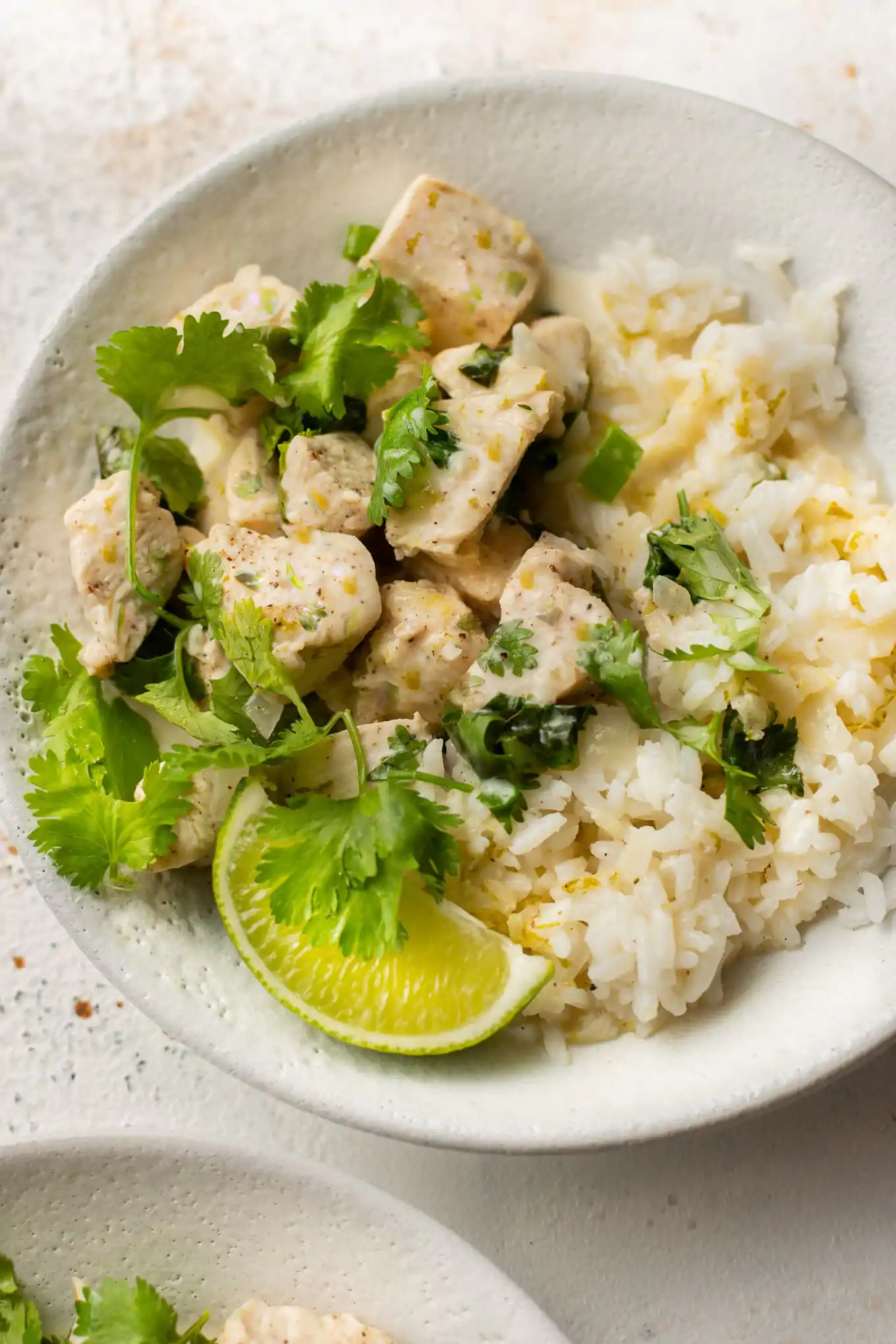
Coconut lime chicken pairs tender bites of chicken with a silky, gently reduced coconut milk sauce. Lime juice and zest cut through the richness, while garlic, ginger and fresh herbs give the sauce a bright, savory finish.
Prep takes 10 minutes and cooking takes 25 minutes, so dinner is ready in 35 minutes. The recipe serves four and is especially handy for a weeknight; spoon the sauce over rice to make a satisfying meal.
The sauce stays looser than a cream sauce, but simmering concentrates its flavor and helps it cling to the chicken. Finish with the herbs just before serving to keep their fresh character.
Why This Coconut Lime Chicken Recipe Works
This skillet dinner gets its balance from a few simple choices: browning the chicken first, reducing the coconut milk, and adding the herbs at the end.
- Chicken cooks in bite-size pieces. Cutting the breasts into 1-inch pieces gives them plenty of surface area for seasoning and makes them quick to cook. Similar-size pieces also finish more evenly.
- The chicken leaves the pan temporarily. Cooking it briefly before making the sauce starts the browning process without leaving the chicken in the skillet through the whole simmer. Returning it near the end helps prevent overcooking.
- Lime balances the coconut milk. Juice brings tartness, while zest supplies fragrant citrus oils. Using both keeps the sauce lively without relying on extra sweetness.
- Fresh herbs go in at the finish. Basil, cilantro and scallions bring different fresh, savory notes. Stirring them in right before serving preserves their color and aroma.
Ingredients You’ll Need
These ingredients build a savory, citrusy sauce with fresh herbs. Prepare the aromatics and herbs before heating the skillet so they are ready when needed.
- Chicken breasts: Two large breasts, cut into 1-inch pieces. Boneless, skinless pieces are easy to cut and cook evenly.
- Onion: Half a medium onion, chopped, softens in the oil and gives the sauce a savory base.
- Olive oil: Two tablespoons for sautéing the onion and cooking the chicken. Use regular or extra-virgin olive oil.
- Garlic powder: A quarter teaspoon seasons the chicken before it hits the pan.
- Salt and pepper: Season the chicken to taste, then adjust the finished sauce as needed.
- Garlic: Three cloves, minced, provide a fragrant savory note in the sauce.
- Fresh ginger: One teaspoon, minced, adds warm, peppery flavor. Frozen ginger is easy to grate when firm.
- Coconut milk: One 13.5-ounce can of full-fat coconut milk gives the sauce its creamy body. Shake the can before opening.
- Lime: One tablespoon of juice plus the zest of one lime adds both tartness and fragrant citrus oils.
- Brown sugar: One teaspoon rounds out the lime and savory aromatics without making the sauce taste sweet.
- Fresh basil: One small handful, chopped, adds a sweet, peppery herbal note; use more if you prefer.
- Fresh cilantro: One small handful, chopped, contributes a bright, grassy flavor. Add extra at the table if desired.
- Scallions: One small handful, chopped, brings mild onion flavor and a fresh finish.
Equipment You’ll Need
- Deep skillet: A deep skillet gives the chicken room to cook and holds the coconut milk sauce without splashing.
- Cutting board and sharp knife: Use these to cut the chicken into even pieces and prepare the onion, garlic, ginger and herbs.
- Measuring spoons: They help portion the oil, seasonings, lime juice and sugar accurately.
- Instant-read thermometer: Check the thickest chicken pieces for a safe internal temperature of 165°F.
How to Make Coconut Lime Chicken
1. Season the chicken
Cut the chicken into bite-size pieces and sprinkle with garlic powder, salt and pepper. You can season it directly on the cutting board.
Aim for pieces close to 1 inch so they cook at a similar pace.
2. Soften the onion
Chop the onion. Warm the olive oil in a deep skillet over medium-high heat, add the onion, and sauté for 5 minutes.
The onion should soften and turn translucent at the edges; stir occasionally to prevent scorching.
3. Cook the chicken briefly
Add the seasoned chicken and cook for about 5 minutes, stirring occasionally. Transfer it to a plate; it will finish cooking in the sauce.
The pieces should be lightly colored on the outside, but may not be cooked through yet.
4. Wake up the aromatics
Stir the minced garlic and ginger into the skillet. Cook for 30 seconds, stirring so they release their fragrance without burning.
The garlic should smell fragrant. If it begins to brown quickly, move straight to the coconut milk.
5. Simmer the coconut sauce
Shake the coconut milk can, then add its contents to the skillet along with the lime juice, zest and brown sugar. Lower the heat to medium and simmer for about 10-15 minutes, until the sauce has reduced somewhat.
Expect a pourable sauce, not a thick one. Gentle bubbling and a slightly silkier look signal that it is reducing.
6. Finish the chicken and herbs
Return the chicken to the skillet and cook for a few more minutes, until cooked through. Stir in the cilantro, basil and scallions just before serving, then adjust the salt and pepper.
Check a thick piece for 165°F. The herbs should look fresh and green rather than wilted from prolonged cooking.
How to Tell When It’s Done
The sauce should be gently bubbling and slightly more concentrated than when first added, though it will remain fairly loose. If it still tastes thin and the lime and aromatics seem muted, let it simmer a little longer over medium heat.
The chicken is ready when the center of the thickest piece reaches 165°F on an instant-read thermometer. Cut a large piece in half if needed; the inside should be opaque, not pink or glossy.
If the chicken reaches temperature before the sauce is reduced to your liking, lift the pieces onto a clean plate and simmer the sauce briefly on its own. Return the chicken to the skillet to warm, then stir in the herbs just before serving.
Tips and Common Mistakes
A few small details help the chicken stay tender and keep the coconut-lime sauce balanced.
- Cut the chicken evenly. Pieces of similar size cook at about the same rate. If some are much larger, the smaller ones can dry out while the thickest pieces finish.
- Shake the coconut milk can. Full-fat coconut milk can separate in the can. Shaking helps distribute the thick cream and liquid before they go into the skillet.
- Keep the sauce at a gentle simmer. A moderate bubble reduces the coconut milk steadily. If it boils hard, lower the heat to avoid reducing it too quickly or scorching the bottom.
- Taste before adding more sugar. The lime’s tartness varies, so taste the sauce after it has reduced. Add any extra sweetness gradually rather than making the sauce sugary.
- Add herbs at the end. Long cooking dulls their fresh flavor and color. Save a little chopped basil, cilantro or scallion for a bright garnish if you like.
Substitutions and Variations
You can adjust the flavors with a few practical swaps, while keeping the coconut milk and lime as the sauce’s backbone.
- Chicken thighs: Boneless, skinless thighs work in place of breasts and stay juicy. Cut them into similar-size pieces and confirm they reach 165°F.
- Add fish sauce: A small splash can deepen the savory, Southeast Asian-inspired flavor. It is salty, so taste before adding more salt.
- Bring the heat: Add a minced chili pepper or red pepper flakes with the garlic and ginger. Start with a little, since the heat will infuse the sauce as it simmers.
- Adjust the lime: For a sharper finish, add a little more lime juice or zest after simmering. Adding it at the end keeps the citrus flavor vivid.
- Use another cooking oil: A neutral oil can replace olive oil for sautéing. The finished sauce will have a less noticeable oil flavor.
- Swap the herbs: If you are short on one herb, use more of another from the recipe. The flavor will shift, but the fresh finish still works well.
- Use light coconut milk: It can replace full-fat coconut milk, but the sauce will be thinner and less rich. Simmer carefully and avoid expecting the same silky texture.
What to Serve with Coconut Lime Chicken
Serve the chicken and plenty of sauce over steamed rice, which catches the lime-coconut mixture and makes the skillet meal more filling. Add lime wedges at the table, plus extra herbs if you want a fresher finish.
For more meal ideas, browse our chicken recipes or find another easy main in our dinner recipes.
Make-Ahead, Storage and Reheating
Make ahead: Chop the onion, garlic, ginger and herbs ahead and refrigerate them in separate covered containers. For the freshest texture, cook the chicken and sauce shortly before serving, then add the herbs at the last moment.
Storage: Refrigerate leftovers in a covered airtight container within 2 hours of cooking. Keep for 3 to 4 days, storing the chicken with its sauce so it stays moist.
Freezing: Freeze cooled chicken and sauce in an airtight freezer-safe container. The sauce may separate slightly after thawing; warm it gently and stir to bring it back together.
Reheating: Warm leftovers gently in a covered skillet over medium-low heat, stirring occasionally and adding a splash of water if the sauce has thickened. You can also microwave individual portions, pausing to stir so they heat evenly.
Coconut Lime Chicken FAQs
Can I make coconut lime chicken without fresh ginger?
Yes. You can leave it out, though the sauce will lose some of its warm, peppery depth. Avoid substituting a large amount of dried ginger, which can taste sharper and more concentrated.
Why is my coconut milk sauce thin?
That is normal; this sauce is meant to stay pourable rather than become thick like gravy. Simmer it longer if you want more concentration, keeping the heat moderate.
Can I use light coconut milk?
Yes. The sauce will be less rich and may stay thinner, so the full-fat version is the better choice if you want a silkier result.
How do I keep the chicken from getting tough?
Cut the pieces evenly, avoid cooking them longer than needed, and use a thermometer to check for 165°F. Taking the chicken out while the sauce reduces also limits overcooking.
Can I serve this with something besides rice?
Yes. Spoon it over noodles or serve it with steamed vegetables and a simple grain. Choose a side that can soak up some of the loose sauce.
Can I prepare the sauce without the chicken first?
Yes. Make the sauce and refrigerate it separately, then reheat it gently and cook or rewarm the chicken before combining. Stir in the fresh herbs just before serving.
Printable Recipe
Recipe adapted from Salt & Lavender. Photos courtesy of Salt & Lavender, used with permission.

Coconut Lime Chicken
Ingredients
- 2 large chicken breasts cut into 1" pieces
- 1/2 medium onion chopped
- 2 tablespoons olive oil
- 1/4 teaspoon garlic powder
- Salt & pepper to taste
- 3 cloves garlic minced
- 1 teaspoon fresh ginger minced
- 1 (13.5 ounce) can coconut milk full fat
- 1 tablespoon lime juice + zest of 1 lime
- 1 teaspoon brown sugar
- 1 small handful fresh basil chopped (or more, to taste)
- 1 small handful fresh cilantro chopped (or more, to taste)
- 1 small handful scallions chopped (or more, to taste)
Instructions
- Cut up the chicken into bite-size pieces and sprinkle them with the garlic powder and some salt & pepper (I just do this right on the cutting board).
- Chop the onion then add it to a deep skillet over medium-high heat along with the olive oil. Sauté for 5 minutes.
- Add the chicken to the pan and cook it for about 5 minutes (stir it occasionally). Transfer chicken to a plate and set aside.
- Stir in the garlic and ginger, and cook for 30 seconds.
- Add in the coconut milk (shake the can first), lime juice + zest, and sugar. Reduce the heat to medium and let it simmer for about 10-15 minutes or until the sauce is somewhat reduced. This won't be a thick sauce, but reducing does help concentrate flavors and thicken it up a bit.
- Add the chicken back into the pan and cook for a few more minutes. Stir in the cilantro, basil, and scallions right before serving. Season with extra salt & pepper as needed. This dish goes well with rice. I serve it with extra lime wedges (and you can top each bowl with extra cilantro/basil/scallions too if you wish).
Notes
- The best trick for fresh ginger: Keep some in your freezer (I just put in a ZipLoc bag), and it's easier to grate and you will always have some on-hand.
- I recommend Thai Kitchen coconut milk. It tends to be less watery than other brands that I've tried. Feel free to use your favorite brand.
- Don't be shy to play with the ingredient quantities:
- Add more sugar, ginger, or lime to suit your tastes. If you happen to have fish sauce, add some in - it'll be delish.
- Add a chili pepper or red pepper flakes for heat.
- Nutritional information is provided as a courtesy only and should be construed as an estimate rather than a guarantee. Ingredients can vary and Salt & Lavender makes no guarantees to the accuracy of this information.


