Creamy Bacon Pork Chops

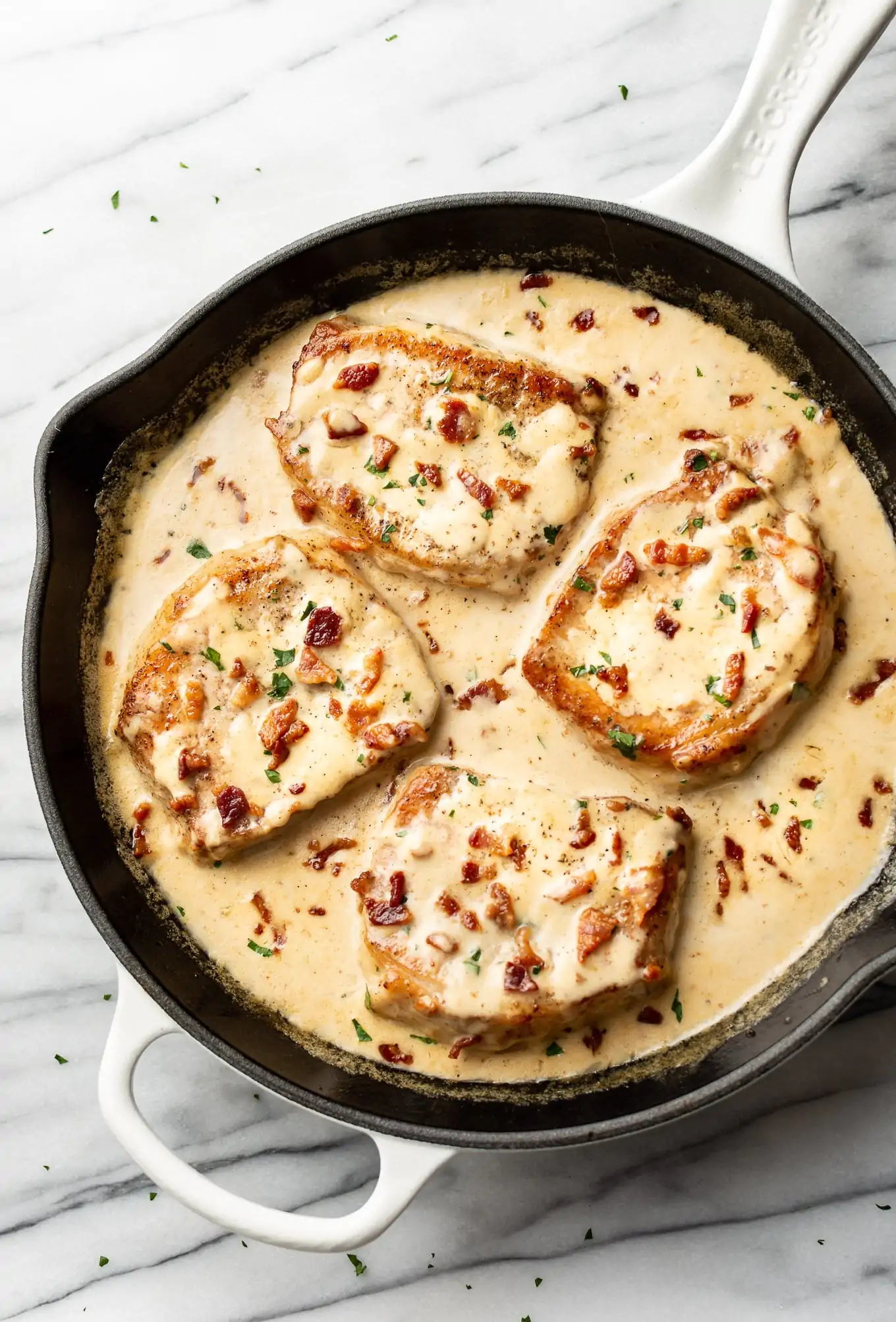
Creamy bacon pork chops pair browned, juicy pork with a silky pan sauce flavored by crisp bacon, chicken broth, and a little lemon. The chops sear in bacon fat, then finish gently in the cream sauce so they stay tender while the sauce thickens around them.
Prep takes 10 minutes and cooking takes 20 minutes, making this a 30-minute dinner for four. Serve it on a weeknight with a simple side, or make it when you want a skillet dinner that feels a little more special without requiring a long ingredient list.
Why This Creamy Bacon Pork Chops Recipe Works
A few straightforward skillet techniques build a rich sauce while keeping the pork from drying out.
- Bacon seasons the pan. Cooking the bacon first renders flavorful fat for searing the chops. Leaving about 2 tablespoons in the skillet carries that smoky, savory flavor into the sauce.
- Dry chops brown better. Blotting away surface moisture helps the pork sear instead of steam. The browned bits left in the pan also add depth to the sauce.
- Flour gives the sauce body. Stirring flour into the fat before adding liquid helps it disperse smoothly. Cooking it briefly takes away its raw taste.
- Broth and lemon balance the cream. Chicken broth loosens the flour mixture, while a small amount of lemon brings brightness to the rich cream and bacon.
Ingredients You’ll Need
These ingredients build a creamy skillet sauce around the pork. Keep the chops close to the recommended thickness so they cook in step with the sauce.
- Bacon: Six strips, cut into small pieces. Regular bacon renders enough fat to sear the chops and gives the sauce its smoky flavor.
- Pork chops: Four boneless or bone-in chops, ideally 0.75 to 1 inch thick. Similar-sized pieces cook more evenly.
- Salt and pepper: To taste, for seasoning the chops and adjusting the finished sauce. Bacon is salty, so season the sauce after tasting.
- Butter: One tablespoon, only if the skillet looks dry before the flour goes in. It supplies fat for the roux.
- Flour: One tablespoon thickens the pan sauce. All-purpose flour works well; stir it into the skillet fat until no dry pockets remain.
- Low-sodium chicken broth: Half a cup loosens the flour mixture and adds savory flavor. Low-sodium broth gives you more control over the final seasoning.
- Lemon juice: Half a teaspoon adds a little acidity to balance the cream. Use fresh juice if available.
- Garlic powder: A quarter teaspoon seasons the sauce evenly without needing to brown fresh garlic in the hot skillet.
- Heavy cream: Three-quarters of a cup makes the sauce smooth and rich. Whipping cream is also suitable.
- Fresh parsley: Chopped parsley, to taste and optional, adds a fresh finish and a little color.
Equipment You’ll Need
- Large skillet: Use a skillet large enough to sear the chops without crowding; cook them in two batches if needed.
- Instant-read thermometer: It helps you pull the pork at a safe temperature without relying on appearance alone.
- Whisk: A whisk helps blend the broth into the flour and fat without leaving lumps.
- Tongs: Use tongs to turn the chops and transfer them without piercing the meat repeatedly.
How to Make Creamy Bacon Pork Chops
1. Take the chill off
If possible, remove the pork from the refrigerator about 15-30 minutes before you begin. This gives it time to warm slightly while you prepare the other ingredients.
Keep the chops on a plate and do not leave them out longer than needed for this step.
2. Cook the bacon
Cut the bacon into small pieces and put it in a skillet over medium-high heat. Cook for about 10 minutes, until crisp, then transfer it to a paper towel-lined plate and leave about 2 tablespoons of fat in the pan.
The pieces should be browned and crisp, not merely softened. If the skillet holds much more than the stated amount of fat, carefully remove the excess.
3. Season the pork
Pat the chops dry with paper towels, then season them with salt and pepper on both sides.
Dry surfaces help the chops form a browned crust instead of releasing moisture into the skillet.
4. Sear the chops
Set the pork in the bacon fat and cook for 3-5 minutes per side: use 3 minutes for thinner chops and 5 minutes for chops up to 1 inch thick. Move the seared chops to a plate.
Work in two batches if the chops do not fit with space between them. They need not be fully cooked yet; they finish in the sauce.
5. Start the sauce
If the skillet looks fairly dry, add 1 tablespoon of butter. Otherwise, sprinkle in the flour, stir, and cook for about 30 seconds.
The flour should coat the fat and look lightly moistened, with no loose dry patches.
6. Add broth and cream
Whisk in the chicken broth, lemon juice, and garlic powder. Stir and cook for about a minute, or until noticeably reduced, then stir in the cream.
Scrape up the browned bits as you stir; they add flavor to the sauce.
7. Finish the pork
Return the bacon and pork chops to the skillet, along with any juices on the plate. Cook for another 3-5 minutes, letting the sauce bubble gently rather than boil furiously, until it thickens a bit and the pork is cooked through to at least 145°F.
Check the thickest part of a chop with an instant-read thermometer. If it is close to 145°F, take the skillet off the heat and let the pork rest; its temperature will continue to rise.
8. Season and serve
Taste the sauce and add more salt and pepper if needed. Finish with chopped parsley, if using.
Taste before salting because the bacon and broth have already contributed seasoning.
How to Tell When It’s Done
The sauce should coat the back of a spoon lightly and bubble gently around the chops. If it still looks thin, lift the pork onto a plate and let the sauce simmer briefly; avoid a hard boil, which can make a cream sauce split.
Pork is safe at 145°F, measured in the thickest part with an instant-read thermometer. A faint pink center is normal at that temperature. If a chop is below 145°F, return it to the gently bubbling sauce and check again shortly.
Tips and Common Mistakes
Good timing and moderate heat make the difference between tender chops and a sauce that feels heavy or overcooked.
- Pat the pork thoroughly dry. Moisture on the surface slows browning. Dry chops sear more effectively in the bacon fat and develop more flavor.
- Avoid crowding the skillet. If the chops touch or overlap, they are more likely to steam than brown. Sear them in two batches when necessary.
- Save only the needed bacon fat. Leaving about 2 tablespoons in the pan gives the flour enough fat without making the finished sauce greasy. Take care when removing extra hot fat.
- Use a gentle simmer. Cream sauce can separate if it boils hard. Keep the heat moderate once the cream is in and let it thicken with steady, gentle bubbles.
- Trust the thermometer. Pork can look done before it is ready, and it is easy to overcook. Check the thickest part and remove the chops at 145°F, allowing for a short rest.
Substitutions and Variations
A few practical swaps work well, though they can change the sauce or cooking time.
- Bone-in chops: Use bone-in chops in place of boneless ones. The bone may affect how quickly they cook, so check each piece with a thermometer.
- Boneless chops: Boneless pork chops work as written and are easy to portion. Watch them closely during the final simmer so they do not overcook.
- Half-and-half: You can use half-and-half instead of heavy cream, but the sauce will be thinner and more prone to separating if boiled.
- Turkey bacon: Turkey bacon can replace pork bacon, though it usually renders less fat and has a different texture. Add the butter if the pan needs more fat for the flour.
- Chicken broth: Vegetable broth can stand in for chicken broth. The sauce will have a slightly different savory flavor; choose a low-sodium option if possible.
- Fresh garlic: Use a small amount of minced garlic instead of garlic powder if desired. Cook it briefly in the pan fat before adding flour so it does not burn.
What to Serve with Creamy Bacon Pork Chops
Spoon the sauce over mashed potatoes, rice, or buttered egg noodles so none of it goes to waste. Green beans, roasted broccoli, or a crisp salad add freshness beside the rich pork.
For another hearty skillet-style dinner, browse our dinner recipes or explore chicken recipes for a different weeknight main.
Make-Ahead, Storage and Reheating
Make ahead: You can cut the bacon and measure the sauce ingredients ahead, then refrigerate them separately. For the best texture, cook the chops just before serving rather than searing them in advance.
Storage: Refrigerate leftover pork and sauce in a covered airtight container within 2 hours of cooking. Keep for 3 to 4 days.
Freezing: The pork and cream sauce can be frozen, but the sauce may separate or become grainy after thawing. Freeze airtight for up to 2 months and thaw overnight in the refrigerator.
Reheating: Warm leftovers gently in a covered skillet over low heat, adding a splash of broth if the sauce has thickened. Stir occasionally and heat until steaming; avoid a vigorous boil.
Creamy Bacon Pork Chops FAQs
Can I make creamy bacon pork chops with thick-cut chops?
Yes, but chops much thicker than 1 inch may need more cooking time than this method allows. For the most reliable result, choose chops around 0.75 to 1 inch thick.
Can I cook only two pork chops?
Yes. The sauce quantities can stay the same, so you will have extra sauce to serve over a side.
Why is my cream sauce too thin?
It may need a little more gentle simmering to reduce and thicken. Move the chops to a plate while the sauce bubbles softly, then return them when it coats a spoon.
What should I do if the sauce separates?
Take the skillet off the heat and whisk the sauce steadily. Avoid bringing it back to a hard boil, which can worsen separation.
Can I use a nonstick skillet?
Yes. A large nonstick skillet can cook the bacon and chops, though a heavier skillet may develop more browned bits for the sauce.
Can pork chops be pink in the middle?
Yes. Pork cooked to 145°F can remain slightly pink and is safe to eat; confirm the temperature in the thickest part with a thermometer.
Printable Recipe
Recipe adapted from Salt & Lavender. Photos courtesy of Salt & Lavender, used with permission.
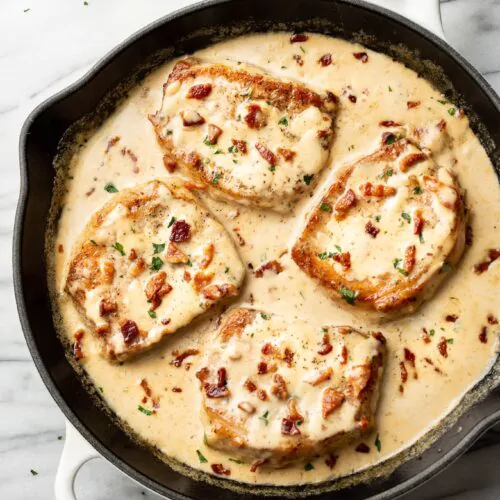
Creamy Bacon Pork Chops
Ingredients
- 6 strips bacon cut into small pieces
- 4 pork chops see notes
- Salt & pepper to taste
- 1 tablespoon butter if needed (see step 5)
- 1 tablespoon flour
- 1/2 cup low-sodium chicken broth
- 1/2 teaspoon lemon juice
- 1/4 teaspoon garlic powder
- 3/4 cup heavy/whipping cream
- Fresh parsley chopped (optional, to taste)
Instructions
- Take the pork out of the fridge about 15-30 minutes prior to starting the recipe if possible.
- Cut the bacon up and add it to a skillet (I use kitchen shears to make this fast). Cook over medium-high heat until crispy (about 10 minutes). Transfer the bacon to a paper towel lined plate, and leave about 2 tablespoons of the fat in the skillet.
- Pat the pork chops dry with paper towel and then season them with salt & pepper.
- Add the pork chops to the skillet and cook them for 3-5 minutes/side (3 minutes for thinner chops and 5 minutes for pork chops up to 1" thick). Once the pork chops are seared, transfer them to a plate.
- If the pan is looking fairly dry, add in a tablespoon of butter, but if there's still some bacon fat left in the pan, go ahead and sprinkle the flour in, stir it, and cook for about 30 seconds.
- Whisk the chicken broth, lemon juice, and garlic powder in. Stir and let it cook for about a minute or until noticeably reduced.
- Stir in the cream.
- Add the bacon and pork back in (along with any juices left on the plate) and cook for another 3-5 minutes or until the sauce has thickened up a bit (let the sauce bubble a bit but not furiously boil) and the pork chops are fully cooked through (145F minimum). Keep in mind the pork's temperature will continue to rise, so if it's close, take it off the heat and let it rest for a few minutes before serving.
- Season the sauce with extra salt & pepper if needed and top with chopped parsley if using.
Notes
- You can use boneless pork chops like I did or bone-in. Pork chops that are 0.75-1″ thick will work best for this recipe. Anything much thicker or thinner is likely to end up under or overcooked. If pork chops are large, you may need to sear them in two batches (or just cook 2-3 pork chops and keep the sauce quantity the same).
- It’s easy to overcook pork. I recommend using an instant read thermometer to test. Pork that’s 145F and pink inside is safe to consume.


