Creamy Cajun Chicken


Creamy Cajun chicken starts with thin, golden cutlets and finishes with a peppery Parmesan cream sauce studded with chewy sun-dried tomatoes. A light dusting of flour gives the chicken a delicate crust, and the browned bits left in the skillet give the sauce a savory base. The tomatoes bring a little tang to each rich bite.
Dinner takes 30 minutes and serves four, with one cutlet per plate. It’s quick enough for a weeknight but works just as well when you’re having someone over: the chicken and sauce share one skillet, and a simple side is all you need to round out the plate.
Why This Creamy Cajun Chicken Recipe Works
The trick is to brown the chicken first, then build the sauce in the same skillet while the cutlets are out of the way.
- Thin cutlets cook evenly. Splitting the breasts lengthwise reduces the difference between the thick center and the tapered edges, so the edges don’t have to dry out while you wait for the middle.
- Flour does double duty. A light coating browns readily in the hot fat, and the little bit that comes off in the pan helps give the finished sauce body.
- Broth lifts the browned bits. A splash loosens the flavorful residue before the cream goes in, so what would otherwise stick to the skillet ends up in every spoonful.
- Seasoning goes in twice. A little Cajun seasoning goes directly on the meat, while the larger share flavors the cream. That way the chicken still tastes seasoned underneath the sauce.
- Cream balances the spice. Heavy cream gives the sauce enough richness to soften the peppery edge without burying the flavor of the seasoning blend.
Ingredients You’ll Need
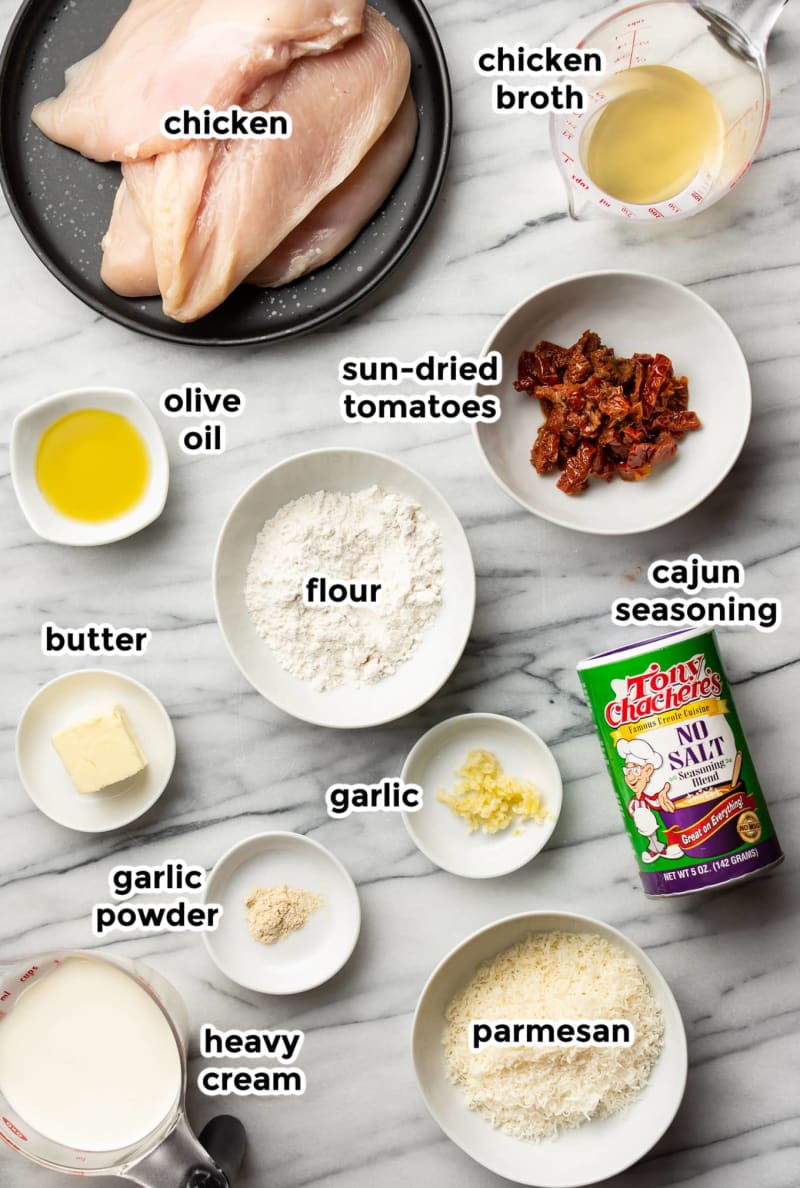
Check the Cajun seasoning label before you shop. The sauce uses enough of the blend that the difference between salted and unsalted matters.
- Chicken breasts: Start with two large boneless, skinless breasts, each big enough to split into two cutlets.
- Salt and pepper: Use both to taste, keeping a light hand with the salt until you’ve tasted the finished sauce.
- Garlic powder: A quarter teaspoon distributes garlic flavor across the cutlets without leaving fresh bits that could burn during searing.
- Cajun seasoning: Set aside half a teaspoon for the chicken and a tablespoon for the sauce. Buy a salt-free or low-salt blend.
- Flour: Use enough all-purpose flour to give each cutlet a light, even dusting.
- Butter: Two tablespoons add flavor to the browned coating and the sauce.
- Olive oil: One tablespoon helps the cooking fat spread across the skillet.
- Garlic: Mince three cloves for the sauce, where the broth keeps the garlic from frying in bare fat.
- Sun-dried tomatoes: Use a quarter cup of oil-packed tomatoes, drained, for concentrated sweet-tart flavor.
- Chicken broth: A quarter cup loosens the browned bits without putting too much liquid into the sauce.
- Heavy cream: One cup of heavy or whipping cream makes a sauce that coats the cutlets.
- Parmesan: Grate half a cup from a wedge for a nutty, savory finish.
Equipment You’ll Need
- Large skillet: Choose one with enough flat cooking surface to hold the cutlets without overlap and sides high enough to contain the cream as it bubbles.
- Sharp knife and cutting board: A sharp chef’s knife makes it easier to slice the breasts lengthwise without tearing the thin ends or leaving one side much thicker.
- Tongs: Use tongs to turn the chicken without scraping the flour coating against the skillet.
- Instant-read thermometer: A quick-reading probe lets you check thin cutlets before they overcook in the sauce.
How to Make Creamy Cajun Chicken
1. Slice the chicken
Lay each breast flat and cut it in half lengthwise, keeping the blade parallel to the board as you work. You should have four thin cutlets.
Keep your palm flat on top of the breast with your fingers clear of the blade, and guide the knife through the middle rather than angling it down.
2. Season and dredge
Season both sides of the cutlets with salt and pepper to taste, the 1/4 teaspoon garlic powder, and 1/2 teaspoon of the Cajun seasoning. Turn each piece in flour, then shake off what doesn’t cling.
You want a thin, matte coating, not white ridges of flour along the edges.
3. Sear the cutlets
Heat the butter and olive oil in the skillet over medium-high heat. Once the pan is hot, add the chicken and cook for 4 to 5 minutes per side, until golden, then transfer it to a plate.
The chicken should sizzle on contact. Give the underside time to brown before trying to turn it.
4. Deglaze the skillet
Add the minced garlic, drained sun-dried tomatoes, and chicken broth to the same skillet. Let the broth bubble for about 30 seconds while you scrape the browned bits from the bottom.
The broth will darken as the bits loosen, and the garlic should smell fragrant without turning dark.
5. Stir in the cream
Reduce the heat to medium, then stir in the cream and the remaining 1 tablespoon of Cajun seasoning. Sweep the spoon around the edges so no pockets of dry seasoning remain.
Look for small, steady bubbles rather than a hard boil.
6. Finish and serve
Return the chicken to the skillet and cook for about 5 minutes, until it’s cooked through and the sauce has thickened slightly. Sprinkle the Parmesan over the chicken or stir it into the sauce, then adjust the salt and pepper as needed and serve immediately.
The sauce should pour easily from a spoon but leave a thin coating behind.
How to Tell When It’s Done
The cutlets should be golden on both sides and feel firm in the center, but browning doesn’t tell you whether the middle is cooked. Insert an instant-read thermometer from the side into the thickest part and check for 165°F, keeping the tip away from the skillet.
If one cutlet needs longer, transfer the finished pieces to a clean plate and let the thicker one simmer until it reaches temperature. If the chicken is ready but the sauce still runs off a spoon like broth, simmer the sauce on its own briefly before adding the cheese.
Tips and Common Mistakes
Pay closest attention to the flour coating, the seasoning label, and what’s left in the pan after searing.
- Favor a salt-free blend. Regular salted blends can make the sauce too salty once the Parmesan goes in. If you use a low-salt blend, be especially conservative with the extra salt.
- Keep small breasts whole if needed. If the breasts are too small to split neatly, leave them intact. They may need longer to cook through.
- Leave space between cutlets. If all the pieces won’t fit without touching, sear in batches. Crowding traps steam and leaves the coating pale.
- Check the pan before deglazing. Keep the brown residue, but wipe out any loose flour that has gone black so it doesn’t make the sauce bitter.
- Drain the tomatoes well. Let the packing oil drip off before measuring. Extra oil can pool on top of the finished sauce.
- Give the cheese gentle heat. If you prefer to stir in the Parmesan, take the skillet off the burner first. It melts more smoothly when the sauce isn’t bubbling.
Substitutions and Variations
These swaps keep the skillet method intact, though some will change the heat, texture, or cooking time.
- Creole seasoning: A no-salt Creole blend works in place of Cajun seasoning. Depending on the blend, the sauce may taste more herbal.
- Chicken thighs: Use boneless, skinless thighs and unfold them before dredging. Thicker pieces can take longer to finish in the sauce.
- Gluten-free coating: Use a gluten-free all-purpose flour blend for dredging, and check the broth and seasoning labels if cooking for someone with celiac disease.
- Dry-packed tomatoes: Soften dry-packed sun-dried tomatoes in hot water, then drain and pat them dry. Chop larger pieces so they distribute evenly.
- Pecorino Romano: Swap it for Parmesan if you like a sharper finish. Pecorino is saltier, so taste before adding any more salt.
What to Serve with Creamy Cajun Chicken
Spoon the extra sauce over plain rice, mashed potatoes, or wide egg noodles. Keep the starch simply seasoned so the Cajun sauce can do the work, and add steamed green beans or roasted broccoli for a little crunch.
For something cool alongside the warm sauce, try this berry salad with lemon dressing or browse our salad recipes for a crisp green side. If you’re skipping the starch, put crusty bread on the table for swiping through the sauce.
Make-Ahead, Storage and Reheating
Make ahead: Slice the chicken and grate the Parmesan up to a day ahead, keeping them refrigerated in separate covered containers. Measure the seasonings and drain the tomatoes in advance if that makes dinner easier, but wait to flour the chicken until the skillet is nearly ready so the coating doesn’t get damp.
Storage: Refrigerate the chicken and sauce together in an airtight container within two hours of cooking. Use the leftovers within 3 to 4 days.
Freezing: Freezing isn’t ideal because the cream sauce may separate when thawed. If you do freeze it, pack the cooled chicken and sauce together in a freezer-safe container and thaw in the refrigerator before reheating.
Reheating: Warm the chicken and sauce gently in a covered skillet until the chicken reaches 165°F. If the refrigerated sauce has thickened, stir in a splash of broth to loosen it without bringing it to a hard boil.
Creamy Cajun Chicken FAQs
How spicy is creamy Cajun chicken?
It depends mostly on the seasoning blend. Cream softens the heat, but it won’t make a cayenne-heavy blend mild, so choose one labeled mild if you’re serving people who don’t like much heat.
Can I use half-and-half instead of heavy cream?
Heavy cream is the more reliable choice. Half-and-half gives you a thinner sauce and is more prone to curdling, especially if you try to thicken it by boiling.
Can I skip the flour?
Yes. You can sear the seasoned chicken without a coating, but the exterior won’t have the same delicate crust and the sauce will have a little less body.
Can I make extra sauce for pasta?
Yes. Scale the broth, cream, sauce seasoning, tomatoes, garlic, and cheese together rather than adding cream alone, which would dilute the flavor. Use a skillet with room for the extra liquid.
Can I leave out the sun-dried tomatoes?
Yes. The sauce still comes together without them, but it will taste richer and less tangy. There’s no need to replace the tomatoes with another liquid.
Can I add spinach to the sauce?
Yes. Stir in a handful of baby spinach near the end so it wilts without overcooking. Dry the leaves well after washing so they don’t thin the sauce.
Printable Recipe
Recipe adapted from Salt & Lavender. Photos courtesy of Salt & Lavender, used with permission.

Creamy Cajun Chicken
Ingredients
- 2 large boneless skinless chicken breasts
- Salt & pepper to taste
- 1/4 teaspoon garlic powder
- 1/2 teaspoon + 1 tablespoon Cajun seasoning use a no or low salt variety
- Flour for dredging
- 2 tablespoons butter
- 1 tablespoon olive oil
- 3 cloves garlic minced
- 1/4 cup sun-dried tomatoes
- 1/4 cup chicken broth
- 1 cup heavy/whipping cream
- 1/2 cup freshly grated parmesan cheese
Instructions
- Cut the chicken in half lengthwise so you have four thinner cutlets. Sprinkle them with salt & pepper, garlic powder, and 1/2 teaspoon of the Cajun seasoning. Coat them in flour.
- Add the butter and oil to a skillet over medium-high heat. Once the pan is hot, add the chicken. Cook it for 4-5 min/side or until it's nice and golden. Take the chicken out of the pan and set it aside.
- Add the minced garlic, sun-dried tomatoes, and chicken broth to the pan. Let it bubble for about 30 seconds or so.
- Reduce the heat to medium and stir in the cream and remaining 1 tablespoon of Cajun seasoning.
- Add the chicken back into the pan and cook for another 5 minutes or so, until the sauce is thickened a bit and the chicken is cooked through. Sprinkle the parmesan cheese over top (or stir it into the sauce). Season with salt & pepper as needed and serve immediately.
Notes
- There’s quite a bit of Cajun seasoning in this recipe, so I strongly encourage you to use one without salt because the recipe will be way too salty otherwise. I used Tony Chachere’s No Salt Creole Seasoning.
- I use oil-packed sun-dried tomatoes and drain the oil prior to adding them to the pan.
- If you have smaller chicken breasts, you can leave them whole, but you may need to cook them a little longer.


