Creamy Dijon Rosemary Chicken


Creamy Dijon rosemary chicken pairs golden-edged chicken cutlets with a silky sauce that tastes tangy first, then mellow and buttery. Fresh rosemary gives the cream a piney fragrance, and a splash of white wine lifts the browned bits from the skillet so all that savory flavor ends up in the sauce.
Dinner takes 25 minutes, including 5 minutes of prep, and makes four servings. It’s quick enough for a weeknight but feels right for a small dinner with friends, too. Put rice or potatoes on first so they’re ready to catch the sauce when the chicken comes off the stove.
Why This Creamy Dijon Rosemary Chicken Recipe Works
The skillet does double duty here: first it browns the chicken, then it turns what the chicken leaves behind into a sauce worth spooning over the whole plate.
- Thin cutlets cook evenly. Splitting each breast horizontally shortens the distance heat has to travel to the center. You don’t have to wait for a thick middle to cook while the thinner edges dry out.
- Flour helps the surface brown. A light dusting gives the chicken a golden finish without a thick breading. Some of that flour also makes its way into the sauce and helps it cling.
- Wine pulls flavor from the skillet. The liquid loosens the caramelized bits left from searing, giving the sauce a savory base before the cream goes in.
- Mustard balances the cream. Dijon brings enough acidity and bite to keep the sauce from tasting flat. Stirring it into the wine first spreads that tang evenly through the skillet.
Ingredients You’ll Need
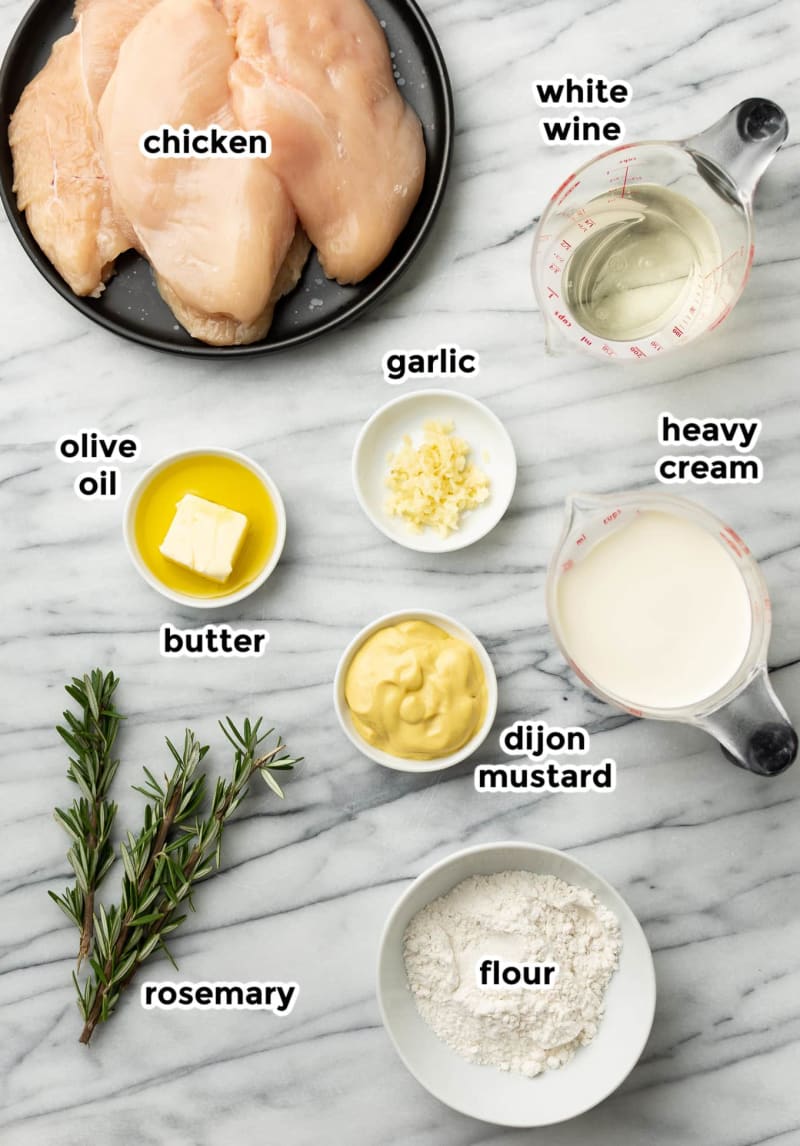
The sauce depends on the balance of sharp Dijon, dry wine and rich cream. Here’s what to look for when you shop.
- Chicken breasts: Start with two large boneless, skinless breasts. You’ll split them horizontally to make four cutlets, so look for breasts that are similar in size.
- Flour: Use enough all-purpose flour to lightly dust both sides of each cutlet. A shallow plate makes it easier to coat the chicken evenly.
- Olive oil: One tablespoon helps coat the skillet and gives the chicken good contact with the hot pan.
- Butter: One tablespoon melts into the oil and adds a buttery flavor to the chicken and the browned bits it leaves behind.
- Fresh rosemary: Three sprigs provide the sauce’s woodsy aroma. Look for supple green needles without dry, brown tips.
- White wine: Use half a cup of dry white wine, such as an unoaked Chardonnay or Pinot Grigio. Skip sweet wine, which dulls the mustard’s bite.
- Garlic: Mince three cloves so the garlic disperses throughout the sauce rather than leaving large pieces in any one bite.
- Dijon mustard: Three tablespoons of smooth Dijon give the sauce its signature tang. Choose plain Dijon rather than honey Dijon.
- Heavy cream: One cup of heavy cream or heavy whipping cream gives the sauce enough body to coat the chicken without needing a separate thickener.
- Salt and pepper: Add both to taste at the end. Dijon already brings some salt, and the sauce tastes more concentrated after simmering.
How to Make Creamy Dijon Rosemary Chicken
1. Heat the skillet
Set a large skillet over medium-high heat and add the olive oil and butter. Tilt the pan so the melted butter and oil spread across the cooking surface.
Look for melted butter that foams lightly. If it starts to smoke while you finish prepping the chicken, briefly pull the skillet off the burner.
2. Slice and flour
Lay each chicken breast flat and slice it in half lengthwise with the knife parallel to the cutting board. Dredge all four cutlets in flour, turning each one to coat both sides.
Shake off any loose flour before the chicken goes into the skillet. The surface should look lightly dusty, without thick white patches that can turn pasty in the sauce.
3. Sear the cutlets
Lay the cutlets in the skillet and fry for 5 minutes per side. Transfer them to a plate, leaving the browned bits in the pan for the sauce.
The chicken should sizzle as it goes in and turn golden where it touches the skillet. The center doesn’t need to be cooked through at this point.
4. Bloom the rosemary
Strip the rosemary needles from their woody stems and scatter the needles into the skillet. Let them cook for about a minute in the fat left from searing.
The rosemary should smell fragrant before you add the wine. Stir the needles around the pan so they don’t sit in one hot spot.
5. Build the Dijon sauce
Add the white wine, minced garlic and Dijon. Stir until the mixture is smooth, scraping the skillet bottom with a wooden spoon to release any browned bits.
Check the edges of the skillet for streaks or clumps of mustard. Once they’re stirred in, the wine mixture is ready for the cream.
6. Simmer and season
Stir in the cream and return the chicken and any juices from its plate to the skillet. Cook over medium-low heat for another 8 to 10 minutes, until the chicken is cooked through and the sauce has thickened. Finish with salt and pepper to taste.
Look for small bubbles around the edges rather than a rolling boil. A gentle simmer thickens the sauce without cooking the cutlets too aggressively.
How to Tell When It’s Done
Check the chicken and sauce separately. Slide an instant-read thermometer sideways into the thickest part of a cutlet and look for 165°F. The sauce should coat the back of a spoon. If the chicken is ready first, transfer it to a clean plate while the sauce finishes reducing.
Tips and Common Mistakes
A little care at the skillet keeps the Dijon sauce smooth and the chicken tender.
- Blot the chicken dry. Pat the cutlets with paper towels before dredging. Surface moisture turns flour gummy and makes it harder to get an even golden finish.
- Leave space between cutlets. If the pieces overlap, the covered edges steam. Use a skillet wide enough to lay the chicken flat with room to turn each piece.
- Chop tough rosemary needles. Needles from mature sprigs can stay chewy even after simmering. Give them a quick chop before they go into the hot fat.
- Keep the skillet uncovered. A lid traps steam and slows reduction. Leaving the pan open lets excess moisture escape so the sauce coats the chicken rather than pooling thinly around it.
- Serve before the sauce sits. The sauce tightens as it cools. Bring the skillet to the table while it’s still warm and loose enough to spoon easily.
Substitutions and Variations
These swaps keep the same skillet method, though some change the timing or the balance of the sauce.
- Boneless chicken thighs: Boneless, skinless thighs give the dish a richer flavor. Unfold them so they lie flat and expect thicker pieces to need longer than breast cutlets.
- No wine: Replace the wine with the same amount of low-sodium chicken broth. The sauce will be less bright, so taste it before adding salt.
- Whole-grain mustard: Swap some of the Dijon for whole-grain mustard if you like the texture of mustard seeds. Keeping some smooth Dijon preserves the sauce’s sharp base.
- Fresh thyme: Strip the leaves from fresh thyme stems and use them instead of rosemary for a softer, earthier herbal note.
- Gluten-free dredge: Use a plain gluten-free all-purpose flour blend for the light coating. If you’re cooking for someone with celiac disease, check the mustard label too.
What to Serve with Creamy Dijon Rosemary Chicken
Mashed potatoes are a natural fit for the Dijon sauce, especially with steamed green beans on the side. Buttered egg noodles or plain rice work just as well if you’d rather skip peeling potatoes.
For a lighter plate, pair the chicken with a crisp green salad dressed in a sharp vinaigrette. Browse our fresh salad recipes for more sides, or find another skillet main among our weeknight chicken recipes.
Make-Ahead, Storage and Reheating
Make ahead: Slice the chicken and strip the rosemary up to a day ahead, then refrigerate them separately in covered containers. Dredge just before searing so the coating stays dry, and make the cream sauce when you’re ready to serve.
Storage: Refrigerate the chicken and sauce together in an airtight container within 2 hours of cooking. Use the leftovers within 3 to 4 days.
Freezing: Freezing isn’t ideal because the cream sauce can separate and turn grainy when thawed. If you need to freeze leftovers, thaw them in the refrigerator and stir the sauce as it warms to help bring it back together.
Reheating: Warm the cutlets and sauce gently in a skillet over low heat until the chicken reaches 165°F. Add a splash of water if the chilled sauce is too thick to spoon, and avoid bringing it to a hard boil.
Creamy Dijon Rosemary Chicken FAQs
Can I use dried rosemary instead of fresh?
Yes. Use a small pinch to start and crush it between your fingers before adding it to the skillet. Dried rosemary is more concentrated and can stay a little firm in the finished sauce.
Can I make this with half-and-half?
It’s not a straight swap. Half-and-half makes a thinner sauce and is more likely to curdle with the wine and mustard, especially if it boils.
Can I use a cast-iron skillet?
Yes, if it’s well seasoned, though stainless steel or enameled cast iron is a safer choice for the wine-based sauce. Bare or poorly seasoned cast iron can give acidic sauces a metallic taste.
Can I add mushrooms to the sauce?
Yes. Brown sliced mushrooms in the skillet after removing the chicken, then continue with the rosemary. Let the mushroom juices cook off before adding the wine so they don’t water down the sauce.
What if the Dijon tastes too strong?
Stir in a small splash of heavy cream to soften the bite. Add it off the heat first, then taste before deciding whether the sauce needs any more.
Printable Recipe
Recipe adapted from Salt & Lavender. Photos courtesy of Salt & Lavender, used with permission.

Creamy Dijon Rosemary Chicken
Ingredients
- 2 large chicken breasts cut in half lengthwise
- Flour for dredging
- 1 tablespoon olive oil
- 1 tablespoon butter
- 3 sprigs fresh rosemary
- 1/2 cup white wine
- 3 cloves garlic minced
- 3 tablespoons Dijon mustard
- 1 cup heavy/whipping cream
- Salt & pepper to taste
Instructions
- Heat the olive oil and butter over medium-high heat in a large skillet.
- Cut the chicken breasts in half lengthwise so you’re left with four thinner cutlets. Dredge each piece in flour.
- Fry the chicken for 5 minutes per side and then remove it from the pan and set it aside.
- Remove the rosemary needles from the stems and add the needles to the pan. Let the rosemary cook for about a minute.
- Add the wine, garlic, and Dijon mustard. Stir it until you have a smooth sauce, and then add the cream and chicken back in the pan. Cook for another 8-10 minutes over medium-low heat until the chicken is cooked through and the sauce has thickened. Season with salt and pepper as desired.


