Creamy Honey Mustard Chicken


Creamy honey mustard chicken brings together golden pan-seared cutlets and a silky Dijon sauce with just enough honey to soften the mustard’s bite. The chicken finishes cooking in the sauce, so you get tender meat and a coating that clings to every slice.
Dinner takes 30 minutes from start to finish, including 10 minutes of prep, and makes four servings. It’s a practical weeknight choice when you want something saucy without dirtying a second pan. Put rice on before you start the chicken, or warm up leftover mashed potatoes while the sauce simmers.
Why This Creamy Honey Mustard Chicken Recipe Works
The chicken and sauce share a skillet, but they don’t cook over the same heat the whole time. That distinction gives you good browning and a smooth finish.
- Thin cutlets cook quickly. Slicing the breasts horizontally gives the heat a shorter path to the center, so the outside doesn’t have to spend as long in the pan.
- Flour does two jobs. A light dusting helps the chicken brown, and a little flour comes off in the skillet, giving the sauce some body as it simmers.
- The skillet seasons the sauce. Broth loosens the browned bits left behind by the chicken, putting that savory flavor back into the dish instead of leaving it stuck to the pan.
- Dijon keeps the honey in check. There’s twice as much mustard as honey, so the sauce tastes tangy first, with sweetness rounding out the finish.
Ingredients You’ll Need
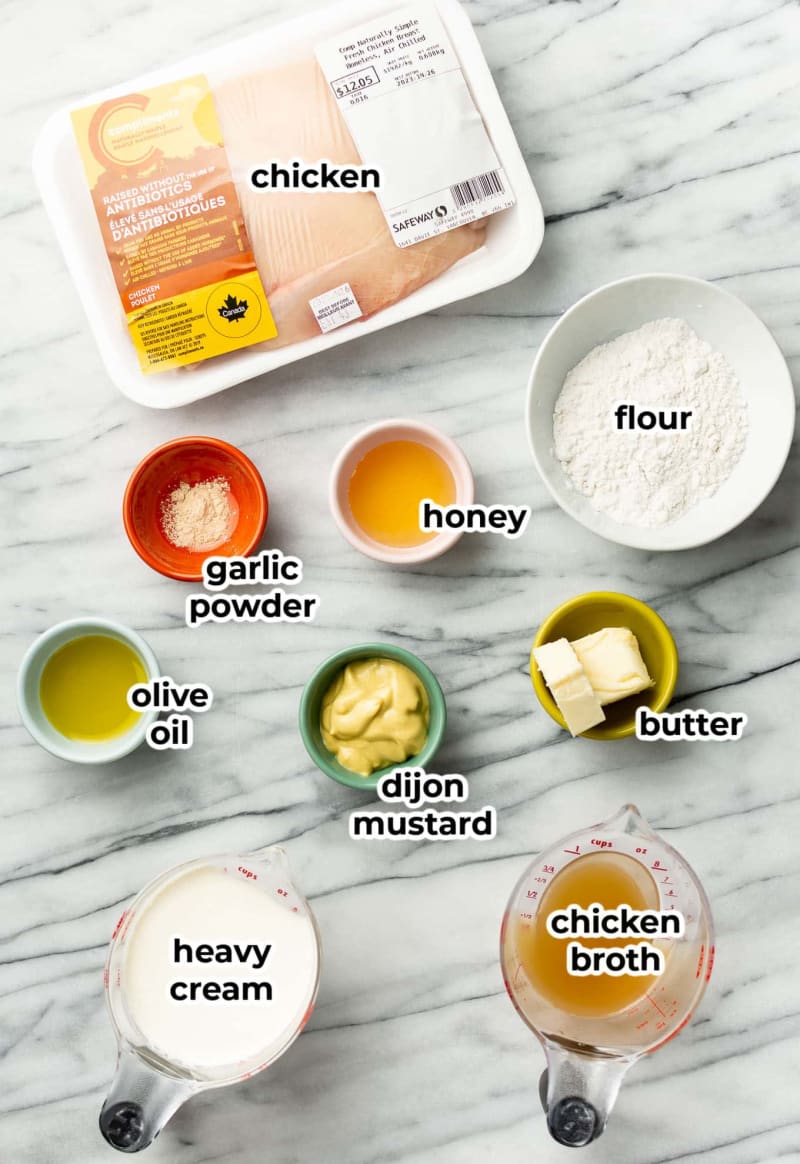
Buy plain boneless, skinless chicken and regular Dijon rather than a premixed honey mustard. Using mustard and honey separately gives the sauce its balance.
- Chicken breasts: Start with two large boneless, skinless breasts. Look for pieces of similar size so the four cutlets finish close together.
- Salt and pepper: Season to taste directly on the meat so each bite is seasoned underneath the sauce.
- Garlic powder: A quarter teaspoon adds a mellow garlic flavor without leaving bits of fresh garlic in the searing fat.
- Flour: Use enough all-purpose flour to lightly dust the cutlets on both sides.
- Olive oil: One tablespoon goes into the skillet with the first portion of butter for searing.
- Butter: Use three tablespoons total. Some flavors the chicken as it browns, and the rest adds richness to the sauce.
- Chicken broth: A third of a cup loosens the pan drippings. Low-sodium broth gives you more control over the salt.
- Dijon mustard: Two tablespoons of smooth Dijon give the sauce its sharp, tangy backbone.
- Honey: One tablespoon softens the mustard’s edge. A mild honey won’t compete with the Dijon.
- Heavy cream: One cup of heavy cream or heavy whipping cream gives the sauce enough richness to coat the cutlets.
How to Make Creamy Honey Mustard Chicken
1. Slice and coat the chicken
Cut the two breasts in half lengthwise to make four cutlets, holding your knife parallel to the cutting board. Season both sides with salt, pepper and the quarter teaspoon of garlic powder, then dredge the pieces in flour.
Tap each cutlet against the edge of the flour dish. The coating should look dusty, not thick or patchy.
2. Heat the skillet
Heat one tablespoon of olive oil and one tablespoon of butter in a skillet over medium-high heat. A 10¼-inch skillet works, but it doesn’t have to be cast iron.
Swirl the pan as the butter melts. The fat should move freely across the surface, and a cutlet should sizzle as soon as it touches the pan.
3. Brown both sides
Sear the cutlets for 4 to 5 minutes per side, until golden. Turn the heat down if the fat splatters heavily, then transfer the browned chicken to a plate.
Give the first side time to brown before trying to turn it. The center doesn’t need to be fully cooked yet.
4. Build the sauce base
Take the skillet off the heat and add the remaining two tablespoons of butter, one third cup of chicken broth, two tablespoons of Dijon and one tablespoon of honey. Return it to medium heat and stir until the mustard dissolves, scraping the browned bits into the liquid.
Stop reducing while the mixture is still fluid. You don’t want the broth to cook away before the cream goes in.
5. Simmer with the cream
Stir in one cup of heavy cream and wait for the sauce to bubble again before returning the chicken. Let it cook for 5 minutes or until the chicken reaches 165°F and the sauce is as thick as you like.
Insert an instant-read thermometer from the side into the thickest part of a cutlet. The sauce should coat a spoon but still pour easily.
How to Tell When It’s Done
Check the thinner pieces first and lift them out as they reach 165°F. If a thicker piece still needs time, leave it at a gentle simmer; if everything is done but the sauce is thin, reduce the sauce on its own.
Tips and Common Mistakes
Pay particular attention to what’s left in the skillet after searing, since it goes straight into the sauce.
- Blot the chicken before dredging. Surface moisture makes the flour gummy. Dry the meat before seasoning so the coating goes on evenly.
- Leave room around the cutlets. If the pieces touch or overlap, sear in batches. Trapped steam leaves pale patches where you want browning.
- Check the pan drippings. Brown bits are worth keeping, but blackened flour tastes bitter. If the residue has burned, wipe it out carefully before building the sauce.
- Use a gentle simmer. Small bubbles are plenty once the cream goes in. A hard boil can reduce the sauce faster than the chicken finishes.
- Taste after reducing. Broth and Dijon both bring salt, and the flavor concentrates as the sauce thickens. Wait until the end to decide if it needs more.
Substitutions and Variations
The easiest swaps change the mustard, the cut of chicken or the coating without changing how you build the sauce.
- Small chicken breasts: Use four small breasts and leave them whole. Check each at its thickest point, since whole breasts may take longer than cutlets.
- Boneless chicken thighs: Skinless thighs give the dish a richer flavor. Unfold them before dredging so they lie flat, and expect the timing to vary with thickness.
- Whole-grain mustard: Swap it for the Dijon if you like a speckled sauce with a little crunch. The tang will vary by brand.
- Gluten-free flour: Use a cup-for-cup gluten-free flour blend for the dredge. Check the broth and mustard labels if you need the whole dish to be gluten-free.
- Maple syrup: Pure maple syrup can replace the honey. It gives the sauce a warmer flavor while keeping the sweet-tangy balance.
What to Serve with Creamy Honey Mustard Chicken
Spoon the sauce over mashed potatoes, buttered egg noodles or plain rice. Keep the starch simple so the Dijon comes through, and add roasted broccoli or green beans for a side that won’t need a sauce of its own.
For a crisp contrast, browse our salad recipes for something with a bright vinaigrette. If you’re planning the rest of the week, find more skillet-friendly ideas among our chicken dinner recipes.
Make-Ahead, Storage and Reheating
Make ahead: Slice the chicken up to a day ahead and refrigerate it in a covered container on the bottom shelf. Wait to season and flour it until the skillet is nearly ready.
Storage: Refrigerate the chicken and sauce together in an airtight container within 2 hours of cooking. Use within 3 to 4 days.
Freezing: Freezing isn’t ideal because the cream sauce can separate when thawed. If you freeze leftovers, thaw them overnight in the refrigerator and stir the sauce gently as it warms.
Reheating: Warm the chicken and sauce in a covered skillet over low heat until the chicken reaches 165°F. Add a splash of broth if the sauce has thickened in the fridge, and avoid bringing it to a hard boil.
Creamy Honey Mustard Chicken FAQs
Can I use half-and-half instead of heavy cream?
Yes, but expect a thinner sauce that’s more prone to separating. Keep the heat low and don’t try to boil it down to the consistency you’d get with heavy cream.
Can I skip the flour altogether?
Yes. Sear the seasoned chicken without dredging it. You’ll lose the light browned coating, and the finished sauce may be looser even when the chicken is ready.
Can I double creamy honey mustard chicken?
Yes. Sear the chicken in batches and finish it in a wide skillet or divide it between two pans. A deep pool of sauce in a small skillet will reduce more slowly.
Can I use yellow mustard instead of Dijon?
Yes, but it’ll taste noticeably different. Yellow mustard gives the cream a brighter color and a more vinegary flavor, without the peppery bite of Dijon.
Why does my sauce look oily?
It may have gotten too hot or reduced too far. Take the skillet off the heat and whisk in a small splash of broth to see if the sauce comes back together.
Printable Recipe
Recipe adapted from Salt & Lavender. Photos courtesy of Salt & Lavender, used with permission.
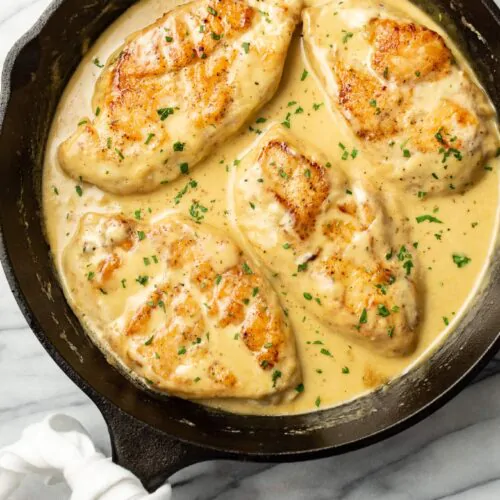
Creamy Honey Mustard Chicken
Ingredients
- 2 large chicken breasts
- Salt & pepper to taste
- 1/4 teaspoon garlic powder
- Flour for dredging
- 1 tablespoon olive oil
- 3 tablespoons butter divided
- 1/3 cup chicken broth
- 2 tablespoons Dijon mustard
- 1 tablespoon honey
- 1 cup heavy/whipping cream
Instructions
- Prepare your chicken (cut it in half lengthwise so you have 4 smaller cutlets). Sprinkle them with the garlic powder and salt & pepper and then coat them in the flour.
- Heat the olive oil and one tablespoon of the butter in a skillet over medium-high heat.
- Once the pan is hot, add the chicken pieces and cook them for 4-5 minutes/side or until they're golden. If the oil starts to splatter a lot, reduce the heat. Once the chicken is browned, take it out of the pan and set it aside.
- Take the pan off the heat and add the rest of the butter, the chicken broth, Dijon mustard, and the honey.
- Return the pan to the stove and adjust the heat to medium. Stir the sauce until the mustard has dissolved (make sure the liquid doesn't reduce completely).
- Add the cream. Once the sauce is bubbling again, add the chicken back in. Let it cook for 5 minutes or until the chicken is cooked through and the sauce is reduced to your liking.
Notes
- I used my 10-1/4″ Lodge cast iron skillet to make this recipe. Any skillet is fine, though. You don’t need to use cast iron.
- Chicken is safe to eat when it’s reached an internal temperature of 165F. Use an instant read thermometer to test for doneness.
- I suggest using fairly large boneless/skinless chicken breasts for this recipe since we’re cutting them in half lengthwise. If you have small chicken breasts, use four of them and leave them whole.
- Use low-sodium chicken broth if you have concerns with salt content.


