Creamy Tomato Basil Chicken

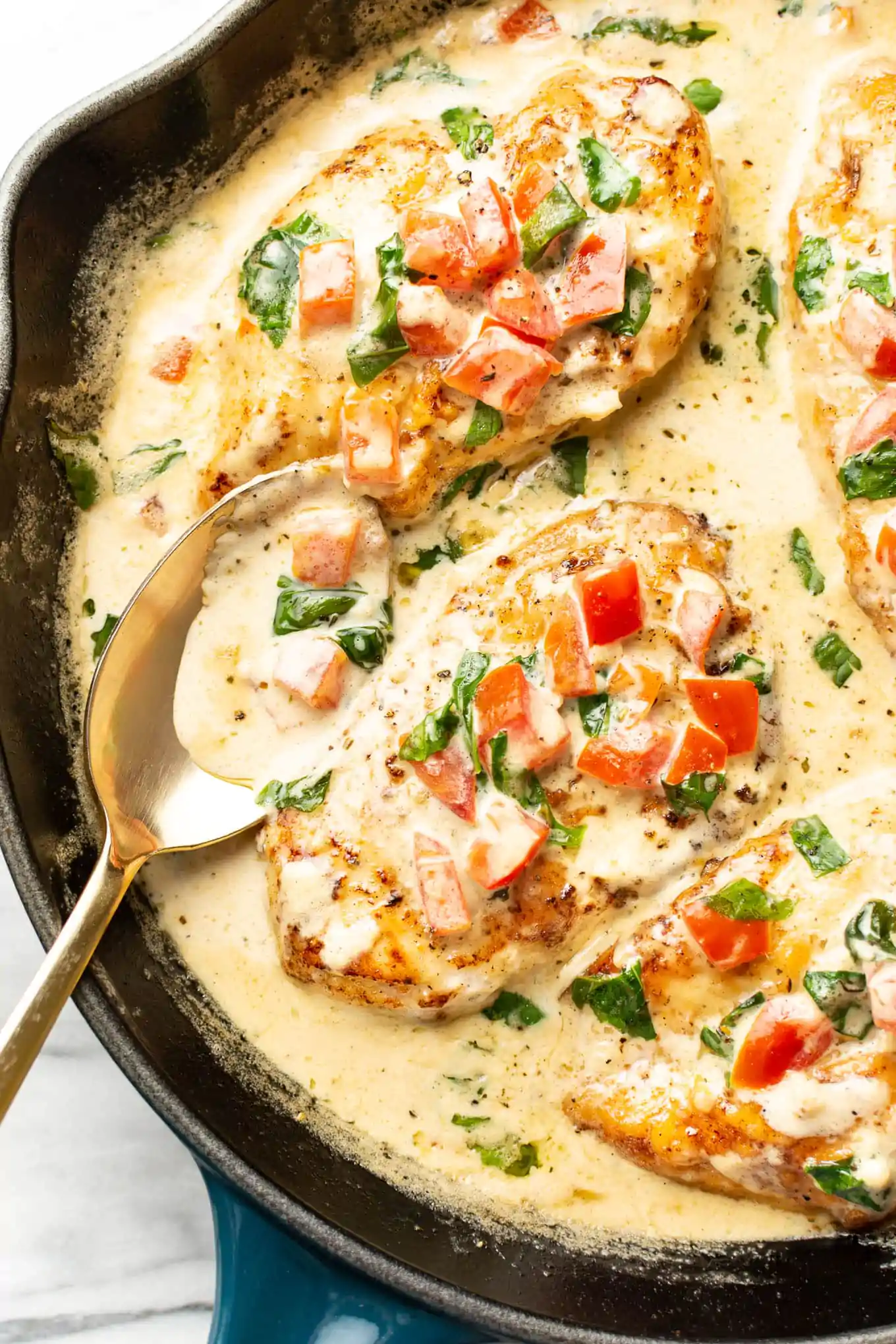
Creamy tomato basil chicken starts with golden, pan-fried cutlets and ends with a silky garlic cream sauce. Chopped fresh tomato softens just enough to give each spoonful a bright, juicy bite, while basil keeps the sauce from tasting too rich. The browned bits from searing the chicken give the cream a savory base.
Dinner serves four and is ready in about 30 minutes, with 10 minutes of prep and 20 minutes of cooking. It’s a good fit for a weeknight when you want something saucy without making a separate sauce or turning on the oven.
Why This Creamy Tomato Basil Chicken Recipe Works
Browning the chicken and finishing it in the sauce are two separate jobs. Doing them in that order gives you better flavor without making the cutlets tough.
- Thin cutlets cook evenly. Splitting each breast lengthwise reduces the distance heat has to travel to reach the center. The edges spend less time in the pan waiting for the thickest part to finish.
- Flour helps the surface brown. A light dusting encourages an even golden coating without turning the cutlets into breaded chicken. Some of that flour also helps the sauce gain a little body.
- Broth captures the browned bits. The liquid loosens the caramelized residue left by the chicken, so that flavor goes into the sauce instead of staying stuck to the skillet.
- Dijon balances the cream. A small amount adds enough tang to offset the dairy without making the finished dish taste like mustard.
- Fresh tomatoes stay distinct. Adding chopped tomato directly to the cream keeps it from cooking down into a uniform tomato sauce. You get soft pieces of tomato rather than a purée.
Ingredients You’ll Need
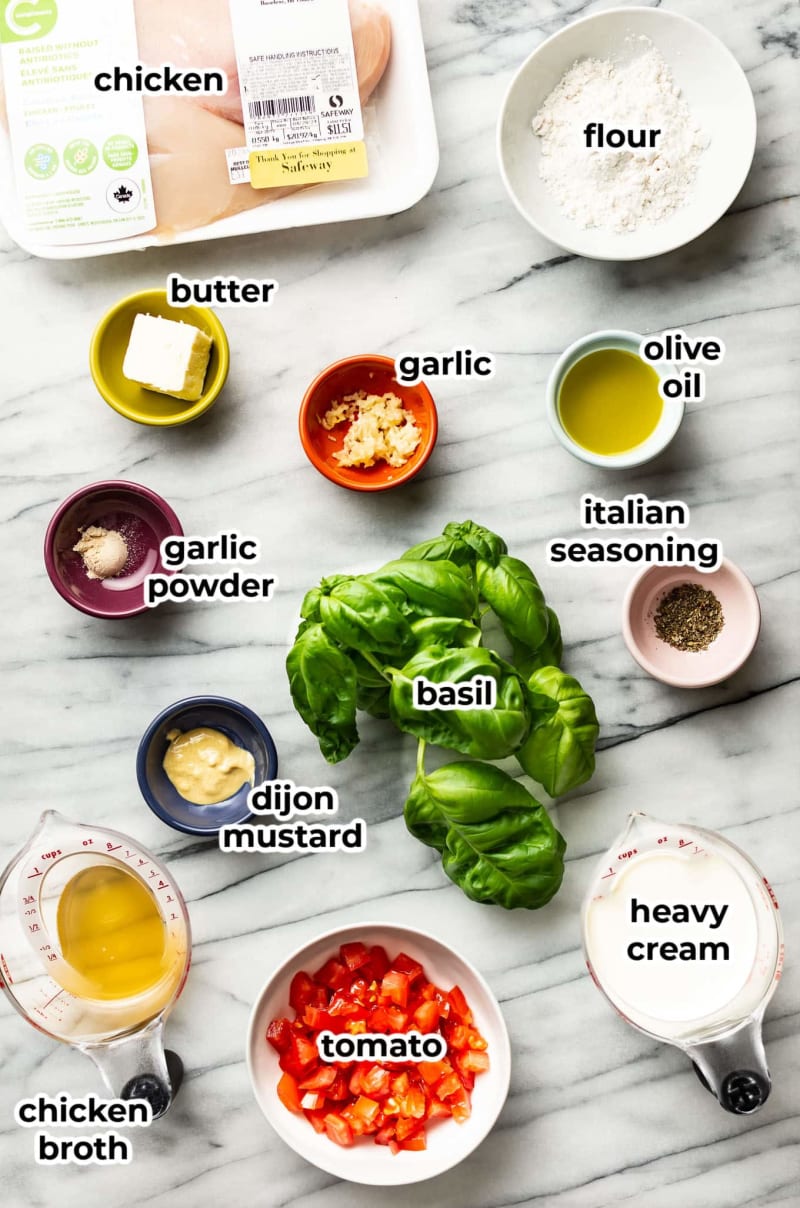
Choose a ripe tomato and fragrant basil for this skillet dinner. Both go straight into the sauce, where their flavor stays easy to pick out.
- Chicken breasts: Two large boneless, skinless breasts make four cutlets once you slice them lengthwise.
- Garlic powder: A quarter teaspoon seasons the chicken itself, so the garlic flavor isn’t limited to the sauce.
- Salt and pepper: Use both to taste on the cutlets and to adjust the finished sauce.
- Flour: Use enough all-purpose flour to lightly coat each cutlet. There’s no need to measure out a full bowl.
- Olive oil: One tablespoon combines with the butter to coat the bottom of the skillet for searing.
- Butter: One tablespoon brings a nutty flavor to the browned coating.
- Fresh garlic: Mince three cloves finely so the garlic disperses throughout the sauce.
- Chicken broth: A quarter cup loosens the skillet drippings. Low-sodium broth gives you more control over the salt.
- Dijon mustard: Half a teaspoon gives the sauce a subtle sharpness; smooth Dijon stirs in easily.
- Heavy cream: Three-quarters of a cup of heavy or heavy whipping cream makes a sauce that coats the chicken.
- Tomato: Chop one medium ripe tomato. Choose one that yields slightly when pressed but isn’t mushy.
- Italian seasoning: A quarter teaspoon adds a background note of dried herbs.
- Fresh basil: Chop or tear one small handful of leaves, leaving any tough stems behind.
Equipment You’ll Need
- Large skillet: Choose a wide skillet with enough flat cooking surface to hold the cutlets without their edges touching.
- Sharp chef’s knife: A sharp blade makes it easier to split the breasts horizontally without sawing unevenly through the meat.
- Flat-edged spatula: Use it to scrape the browned bits from the skillet and stir them into the broth.
- Instant-read thermometer: A thin probe makes it easier to check the center of a shallow cutlet.
How to Make Creamy Tomato Basil Chicken
1. Slice and season
Lay each chicken breast flat on a cutting board and slice it in half lengthwise, keeping the blade parallel to the board so you end up with four thin cutlets. Divide the quarter teaspoon of garlic powder among them, then season both sides with salt and pepper.
Aim for halves of similar thickness rather than identical outlines. If the knife starts angling upward, pause and level the blade before continuing.
2. Dust with flour
Spread flour on a shallow plate and press each cutlet into it, turning to coat the other side. Lift each piece and shake it gently before setting it down.
The coating should look like a thin veil, not a layer of breading. Check the folds near the edges for pockets of loose flour.
3. Sear the cutlets
Heat one tablespoon each of olive oil and butter in the skillet over medium-high heat. When the pan is hot, cook the chicken for about 4 to 5 minutes per side, until golden. Take the skillet off the burner and transfer the cutlets to a plate.
Listen for a steady sizzle as the chicken goes in. If a cutlet still grips the pan when you go to turn it, ease a spatula underneath rather than pulling it up.
4. Deglaze the skillet
Add the three minced garlic cloves, half a teaspoon of Dijon and a quarter cup of chicken broth to the skillet, then return it to the heat. As the liquid bubbles for about 30 seconds, scrape up the browned bits and stir to dissolve the mustard.
The broth should turn light brown as the browned bits lift, with no streaks of mustard left behind.
5. Simmer the chicken
Stir in three-quarters of a cup of cream, the chopped medium tomato, a quarter teaspoon of Italian seasoning and the small handful of basil. When the sauce starts bubbling, return the cutlets and cook for about 5 more minutes, until the chicken is cooked through and the sauce thickens slightly. Lower the heat if it boils hard, then adjust the salt and pepper.
Small bubbles around the cutlets are enough; the sauce should not churn across the whole skillet.
How to Tell When It’s Done
Check the thickest part of each cutlet with an instant-read thermometer inserted from the side so the tip reaches the center without touching the skillet. The chicken is done at 165°F. A golden exterior tells you the sear went well, not that the center is ready.
The sauce should leave a light coating on a spoon but still pour freely. If it reaches that point before the chicken is done, lower the heat and keep simmering gently. If the chicken finishes first, move it to a clean plate and let the sauce reduce on its own.
Tips and Common Mistakes
A few small adjustments at the stove keep the coating tidy and the sauce smooth.
- Blot the cutlets dry. Do this before seasoning so damp patches don’t grab extra flour and turn gummy when they hit the skillet.
- Leave space between pieces. If the cutlets won’t fit in one layer with room between them, sear in batches. Crowded chicken releases moisture faster than it can evaporate.
- Check the skillet drippings. Scrape up brown residue, but wipe out any blackened bits before adding the broth. Scorched flour will make the cream sauce taste bitter.
- Stick with heavy cream. Milk and half-and-half make a thinner sauce and are more likely to curdle when heated with acidic tomatoes.
- Chop the tomato evenly. Small, similar pieces soften at roughly the same rate. Keep the juice from the cutting board so its flavor makes it into the skillet.
- Taste after simmering. Broth and Dijon already contribute salt, and their flavor concentrates as the sauce thickens. Taste a spoonful before reaching for more.
Substitutions and Variations
Keep the cream as the base, and make changes to the chicken, dredge or seasonings instead.
- Store-bought cutlets: Use four thin chicken cutlets and skip the slicing. Check them sooner if they’re especially thin, since they may finish faster.
- Chicken thighs: Boneless, skinless thighs give the dish a richer flavor. Open them flat before dredging and allow more cooking time if they’re thicker than the cutlets.
- Gluten-free dredge: Use a gluten-free all-purpose flour blend for the dusting. If you’re avoiding gluten, check the broth and mustard labels too.
- Cherry tomatoes: Halve enough cherry tomatoes to match the volume of the chopped tomato. Expect a sweeter sauce with slightly firmer pieces.
- Vegetable broth: Use vegetable broth in place of chicken broth for a lighter savory base. Choose one without a strong sweet or earthy flavor.
- A little heat: Stir a pinch of crushed red pepper into the cream with the Italian seasoning for a mild kick.
What to Serve with Creamy Tomato Basil Chicken
Spoon the chicken and sauce over buttered orzo, mashed potatoes or plain white rice. If you’d rather keep the sauce on the plate, serve the cutlets with toasted crusty bread for scooping up the tomato pieces.
Add steamed green beans or pick something crisp and vinaigrette-dressed from our salad recipes. For more skillet mains to put in the weeknight rotation, browse our chicken dinner recipes.
Make-Ahead, Storage and Reheating
Make ahead: You can slice the chicken and chop the tomato up to a day ahead. Refrigerate them in separate covered containers, with the raw chicken on the bottom shelf. Wait to flour the cutlets and tear the basil until you’re ready to cook.
Storage: Refrigerate the cutlets with their sauce in a shallow airtight container within two hours of cooking. Eat the leftovers within 3 to 4 days.
Freezing: Skip freezing the finished dish if you can. The cream sauce can separate when thawed, and the tomatoes tend to soften further and release water.
Reheating: Warm the chicken and sauce together in a covered skillet over low heat until the chicken reaches 165°F. Turn the cutlets partway through and stir in a splash of broth if the sauce is too thick.
Creamy Tomato Basil Chicken FAQs
Can I use canned diced tomatoes?
Yes, in a pinch. Drain them well and use only enough to stand in for one medium chopped tomato, not the whole can. The sauce will have a more cooked tomato flavor.
Do I need to peel or seed the fresh tomato?
No. The skin and seeds are fine in this quick sauce. If the tomato has a tough core near the stem, trim that away before chopping.
Can I skip the Dijon mustard?
Yes. It adds tang but isn’t necessary for the sauce to thicken. Skip it rather than using an equal amount of yellow mustard, which will change the flavor more noticeably.
Can I make a double batch?
Yes. Use two skillets or cook two batches from start to finish. Doubling the sauce in one skillet makes it deeper, so it won’t reduce at the same rate.
Can I use dried basil instead of fresh?
Yes, but use a small pinch rather than matching the fresh basil by volume. Add it with the Italian seasoning so it has time to soften. The flavor will be less fresh and sweet.
Can I use garlic powder in the sauce?
Yes, if you’re out of fresh garlic. Whisk a small pinch into the broth and Dijon; the garlic flavor will be milder and less aromatic.
Printable Recipe
Recipe adapted from Salt & Lavender. Photos courtesy of Salt & Lavender, used with permission.

Creamy Tomato Basil Chicken
Ingredients
- 2 large chicken breasts
- 1/4 teaspoon garlic powder
- Salt & pepper to taste
- Flour for dredging
- 1 tablespoon olive oil
- 1 tablespoon butter
- 3 cloves garlic minced
- 1/4 cup chicken broth
- 1/2 teaspoon Dijon mustard
- 3/4 cup heavy/whipping cream
- 1 medium tomato chopped
- 1/4 teaspoon Italian seasoning
- 1 small handful fresh basil chopped/torn
Instructions
- Cut the chicken in half lengthwise so you have 4 thinner cutlets. Sprinkle them with the garlic powder and salt & pepper. Coat the chicken in flour.
- Add the oil and butter to a skillet over medium-high heat. Once the pan is hot, add the chicken and cook it for about 4-5 min/side until the chicken is nice and golden. Remove the pan from the heat, and take the chicken out of the pan and transfer to a plate.
- Add the garlic, Dijon mustard, and chicken broth to the pan and return it to the heat. Let it bubble for about 30 seconds, while stirring to scrape up the browned bits from the bottom of the pan and incorporate the mustard.
- Add in the cream, tomatoes, Italian seasoning, and basil. Once it starts to bubble, add the chicken back in and cook it for another 5 minutes or so (sauce will thicken up a bit and the chicken will cook through). You may need to reduce the heat if it's boiling too furiously. Season with extra salt & pepper as needed.
Notes
- I do not recommend subbing the heavy cream for half-and-half or milk; the sauce will end up thinner and likely curdle due to the high heat and acidity of the tomatoes.


