Creamy Tomato Basil Pasta

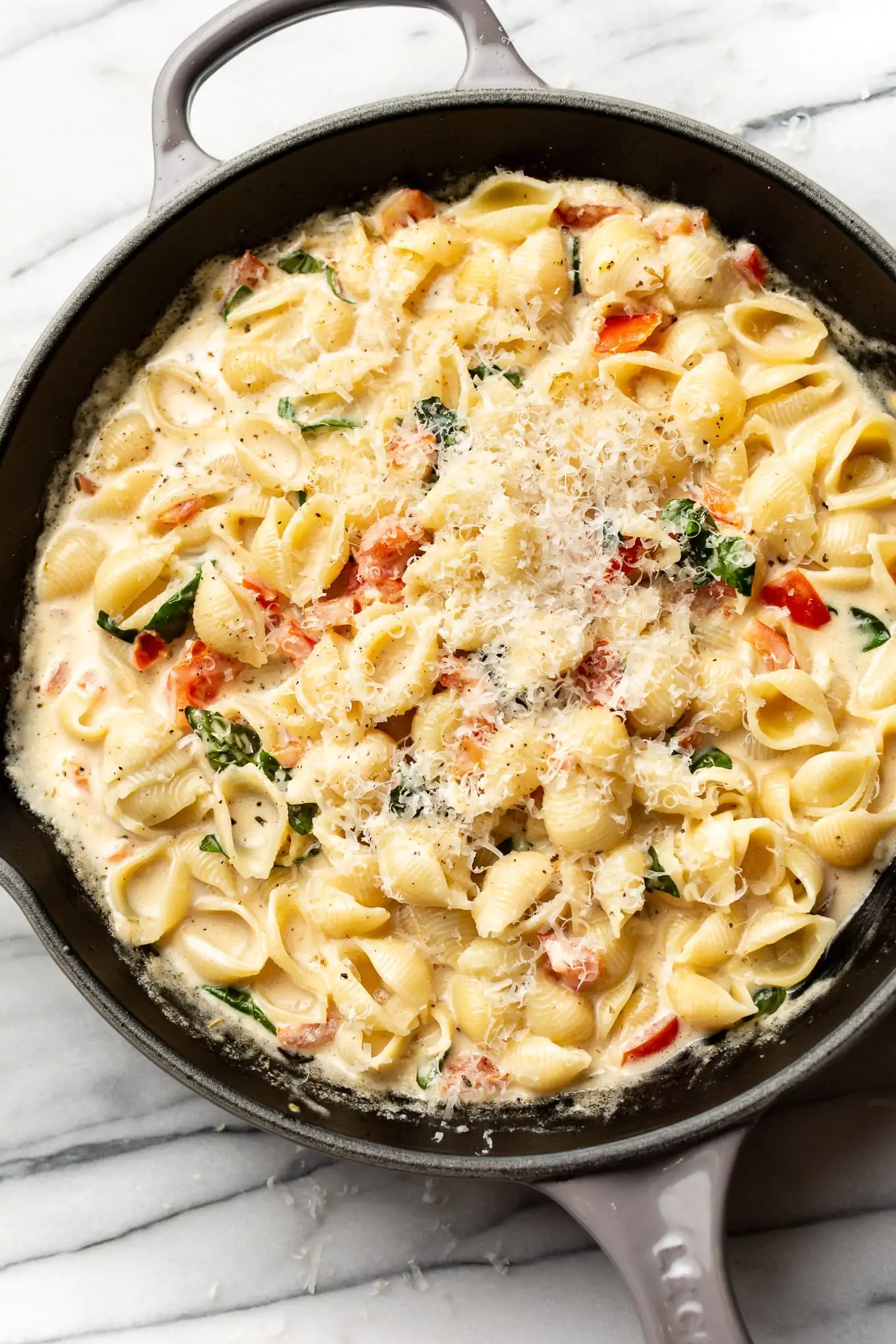
Creamy tomato basil pasta pairs tender noodles with a silky cream sauce, juicy pieces of tomato and fresh basil. A quick butter-and-flour roux gives the sauce body, while garlic and a splash of wine or broth add savory depth.
It takes 10 minutes to prep and 20 minutes to cook, making it a practical meatless dinner for four. Use ripe summer tomatoes when they are in season, or make it year-round with whatever tomatoes look good.
Why This Creamy Tomato Basil Pasta Recipe Works
A few straightforward techniques keep the sauce smooth and help the fresh ingredients shine.
- A quick roux thickens the cream. Cooking flour briefly in melted butter gives the sauce a stable base. It helps the cream cling to the pasta without needing a long simmer.
- Wine adds brightness. A short reduction concentrates the wine’s flavor before the cream goes in. Broth works too, with a more savory, less acidic result.
- Tomatoes cook just enough. A few minutes in the sauce softens their edges while keeping distinct pieces in every serving. They also bring acidity that balances the cream.
- Basil goes in off the heat. Stirring it in at the end preserves its fresh aroma and green color. Prolonged cooking can dull both.
- Pasta water helps the sauce cling. The starchy water loosens a sauce that has thickened while you drain the pasta. It helps the cream coat the noodles instead of pooling at the bottom.
Ingredients You’ll Need
These ingredients make a rich, lightly tangy sauce with fresh tomato and basil in every bite. Keep the pasta water before draining; a little can help adjust the texture.
- Pasta: Eight ounces, uncooked. Short shapes or long noodles both work; cook until al dente.
- Butter: Two tablespoons form the roux and give the sauce a rich base.
- Flour: Half a tablespoon thickens the cream. Sprinkle it evenly into the melted butter.
- Garlic: Three to four cloves, minced, add savory flavor. Mince them before starting the sauce.
- White wine or broth: A quarter cup of dry white wine or chicken or vegetable broth deglazes the skillet.
- Heavy cream: One cup gives the sauce its creamy texture. Lower-fat alternatives may not thicken as reliably.
- Dijon mustard: Half a teaspoon, optional, adds a subtle tang that supports the tomato and cream.
- Italian seasoning: A quarter teaspoon brings dried-herb flavor without competing with the fresh basil.
- Tomatoes: Two medium tomatoes, chopped. A single larger tomato is also suitable.
- Parmesan: Half a cup, freshly grated, melts into the sauce more smoothly than pre-grated cheese.
- Basil: Half a cup, torn, or more to taste. Add it at the end for fresh flavor.
- Salt and pepper: Season to taste, including the pasta water and the finished sauce.
Equipment You’ll Need
- Large pot: Use it to boil salted water and cook the pasta without crowding.
- Large skillet: A roomy skillet lets you build the sauce and toss the pasta together.
- Whisk: It breaks up flour as you add the cream, helping the sauce turn smooth.
- Colander: Drain the pasta after reserving a little cooking water for adjusting the sauce.
How to Make Creamy Tomato Basil Pasta
1. Boil the pasta
Bring a pot of salted water to a boil. Cook the pasta al dente, following the package directions.
Start the sauce when the pasta is about 10 minutes from being done so both finish close together.
2. Make the roux
When the pasta is about 10 minutes from done, melt the butter in a skillet over medium-high heat. Sprinkle in the flour and cook for about 1 minute, stirring fairly often.
The mixture should look blended and bubbly, but not browned. Keep stirring so the flour does not scorch.
3. Add garlic and liquid
Stir in the minced garlic, then pour in the wine or broth. Let it bubble until reduced by half, about 30 seconds to 1 minute.
The liquid will look less watery and the sharp smell of wine will soften. Watch closely; the small amount reduces quickly.
4. Whisk in the cream
Add the cream, Dijon mustard if using, and Italian seasoning. Whisk until the sauce is smooth and no floury lumps remain.
A steady whisk as the cream enters helps disperse the roux evenly.
5. Cook the tomatoes
Stir in the chopped tomatoes and cook the sauce for another 5 minutes, or until it has thickened a bit.
The sauce should lightly coat a spoon while the tomato pieces remain visible. Lower the heat if it begins to boil hard.
6. Finish with cheese and basil
Take the skillet off the heat. Stir in the parmesan and torn basil until the cheese melts into the sauce.
Removing the pan from the burner helps keep the cheese smooth and the basil bright.
7. Toss and serve
Drain the pasta, saving about a tablespoon or so of its cooking water if the sauce seems too thick. Add the noodles to the skillet and toss until coated; serve immediately with more freshly grated parmesan if desired.
If the sauce tightens before serving, stir in the reserved pasta water a little at a time until it clings to the noodles.
How to Tell When It’s Done
The pasta should be tender but still have a slight bite, and the sauce should cling to it in a thin, creamy layer. The tomatoes will soften, but they should not disappear into the sauce.
If the sauce looks thin after the tomatoes have cooked, give it a little more time over the heat until it thickens. If it becomes too dense while you finish the pasta, loosen it with some reserved pasta water.
Taste before serving and adjust the salt and pepper. The parmesan contributes salt, so add seasoning gradually after the cheese has melted.
Tips and Common Mistakes
These small timing and texture checks help keep the cream sauce smooth and the pasta well coated.
- Salt the pasta water. The noodles absorb seasoning as they cook, so salting only the sauce can leave the pasta tasting flat.
- Keep the roux moving. Stir the butter and flour regularly during its short cooking time. This prevents scorching and helps it blend smoothly with the liquid.
- Measure the reduction by eye. Let the wine or broth reduce by half before adding cream. That concentrates its flavor without leaving excess liquid in the sauce.
- Use full-fat cream. The recipe relies on heavy cream for its texture. Lower-fat dairy may not thicken the same way and can curdle when combined with acidic tomatoes.
- Grate the parmesan fresh. Freshly grated cheese melts readily into the warm sauce. Add it after taking the skillet off the heat to reduce the chance of a grainy texture.
- Save pasta water before draining. The sauce can thicken as it sits, and the starchy water loosens it while helping it cling to the noodles.
- Serve as soon as it is tossed. Pasta continues to absorb sauce as it stands. Have the table ready so the noodles reach the plate while the sauce is glossy.
Substitutions and Variations
A few swaps work well, though the cream and fresh herbs are central to the intended texture and flavor.
- Broth instead of wine: Use chicken or vegetable broth in the same amount. It gives the sauce savory depth without wine’s acidity.
- Half-and-half: It may work, but the sauce can be thinner and the tomatoes may cause it to curdle. The original method is most reliable with heavy cream.
- One large tomato: Use one larger tomato in place of the two medium ones. Chop it into bite-size pieces so it distributes through the sauce.
- More basil: Add extra basil to taste for a fresher, more pronounced herbal flavor. Keep it for the finish rather than simmering it.
- Different pasta shape: Swap in another pasta shape you have on hand, cooking it al dente according to its package directions. Shapes with ridges or curves catch the sauce well.
- Vegetable broth: Choose vegetable broth instead of chicken broth to keep the dish meatless. The sauce will still have a savory base.
What to Serve with Creamy Tomato Basil Pasta
Serve this pasta right away with a green salad, roasted vegetables or garlic bread to round out dinner. It is filling on its own, but a crisp side helps balance the cream.
For another meatless main, browse our dinner recipes or pair the meal with a fresh salad recipe.
Make-Ahead, Storage and Reheating
Make ahead: Chop the tomatoes, mince the garlic and grate the parmesan earlier in the day; refrigerate them separately. The sauce and pasta are best cooked just before serving because the noodles continue to absorb the cream as they sit.
Storage: Refrigerate leftovers in an airtight container within 2 hours of cooking and use within 3 to 4 days.
Freezing: Freezing is not recommended. Cream sauces can separate after thawing, and the pasta may turn soft.
Reheating: Warm leftovers gently in a skillet over low heat, stirring often. Add a splash of cream or water if the sauce has tightened; avoid high heat, which can make the sauce separate.
Creamy Tomato Basil Pasta FAQs
Can I make creamy tomato basil pasta without wine?
Yes. Use chicken or vegetable broth in its place, then reduce it by half as directed. The finished sauce will be more savory and less bright.
Can I use canned tomatoes?
Yes, but drain them well before adding so they do not introduce extra liquid. The sauce may have a softer, more cooked tomato flavor than when made with fresh tomatoes.
What pasta shape works best?
Any shape that holds a creamy sauce works. Penne, rotini and fettuccine are all practical choices; follow the package directions for al dente pasta.
Can I make this dish vegan?
Not with a simple one-for-one swap. Plant-based butter, cream and parmesan alternatives vary in how they thicken and melt, so the finished sauce may have a different texture.
How many people does this pasta serve?
It makes four servings as written, though portions can stretch to two to four people depending on appetites and side dishes.
Why did the cream sauce turn grainy?
The sauce may have gotten too hot after the cheese went in. Take the skillet off the heat before stirring in parmesan, and warm leftovers gently rather than boiling them.
Printable Recipe
Recipe adapted from Salt & Lavender. Photos courtesy of Salt & Lavender, used with permission.

Creamy Tomato Basil Pasta
Ingredients
- 8 ounces uncooked pasta
- 2 tablespoons butter
- 1/2 tablespoon flour
- 3-4 cloves garlic minced
- 1/4 cup dry white wine or chicken/veg broth
- 1 cup heavy/whipping cream
- 1/2 teaspoon Dijon mustard optional
- 1/4 teaspoon Italian seasoning
- 2 medium tomatoes chopped
- 1/2 cup freshly grated parmesan cheese
- 1/2 cup basil (tear it up) or more, to taste
- Salt & pepper to taste
Instructions
- Boil a salted pot of water for the pasta and cook it al dente according to package directions.
- When the pasta is about 10 minutes away from being done, add the butter to a skillet over medium-high heat. Once it melts, make a quick roux by sprinkling the flour in and cook for about 1 minute, stirring fairly often.
- Add in the garlic, followed by the wine (or broth). Let it bubble until it's reduced by half (approx. 30 seconds to 1 minute).
- Whisk in the cream, Dijon mustard, and Italian seasoning until you've got a smooth sauce.
- Stir in the chopped tomatoes. Cook the sauce for another 5 minutes or until the sauce has thickened up a bit.
- Take the skillet off the heat and stir in the parmesan cheese and basil.
- Add the drained pasta to the skillet and toss until coated (I usually add a tablespoon or so of the pasta water to the sauce prior to draining it, especially if it's become a tad too thick). Serve immediately with more freshly grated parmesan if desired.
Notes
- Serves 2-4 depending on how hungry people are/what else you serve it with.
- I don’t recommend subbing the cream for a lower fat alternative. It may not thicken the same, and the acidity from the tomatoes could curdle it. You could try adding more flour if you use half-and-half.
- You don’t need to be too precise with the tomato size so don’t worry about weighing them. One larger tomato will work fine.


