Creamy White Wine Pork Tenderloin

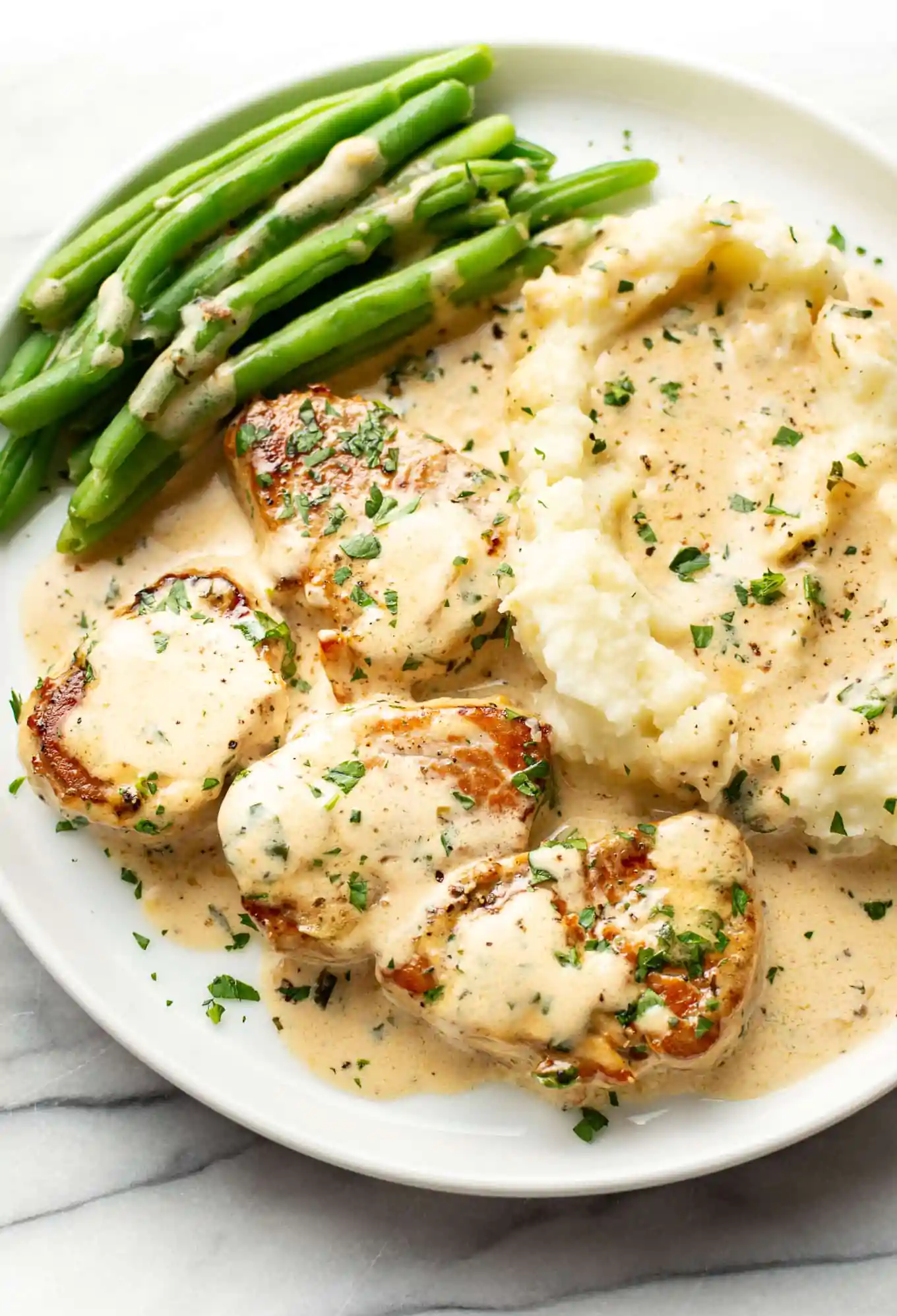
Creamy white wine pork tenderloin pairs juicy, lightly golden medallions with a silky garlic cream sauce. The sauce gets its savory depth from the browned bits left after searing the pork, while a splash of dry white wine brings enough brightness to balance the cream.
Dinner is ready in 30 minutes and serves four. It’s quick enough for a weeknight but feels right for a small dinner with friends, especially with something to soak up the sauce. Get your sides going before you sear the pork so you can serve everything while the sauce is glossy and hot.
Why This Creamy White Wine Pork Tenderloin Recipe Works
The sauce and the pork need different kinds of heat. Making them in stages gives each one what it needs without requiring a second pan.
- Medallions cook quickly. Cutting the tenderloin crosswise exposes two broad surfaces for browning and lets the centers cook through without a trip to the oven.
- Oil and butter each do a job. Olive oil helps coat the skillet evenly, while butter adds a nutty richness to the seared pork and the sauce that follows.
- The wine reduces before the cream goes in. Boiling down the wine and broth concentrates the savory base and removes excess water that would otherwise dilute the finished sauce.
- A little cornstarch gives the sauce body. The starch helps the cream cling to the medallions without a long simmer that could overcook the lean pork.
Ingredients You’ll Need
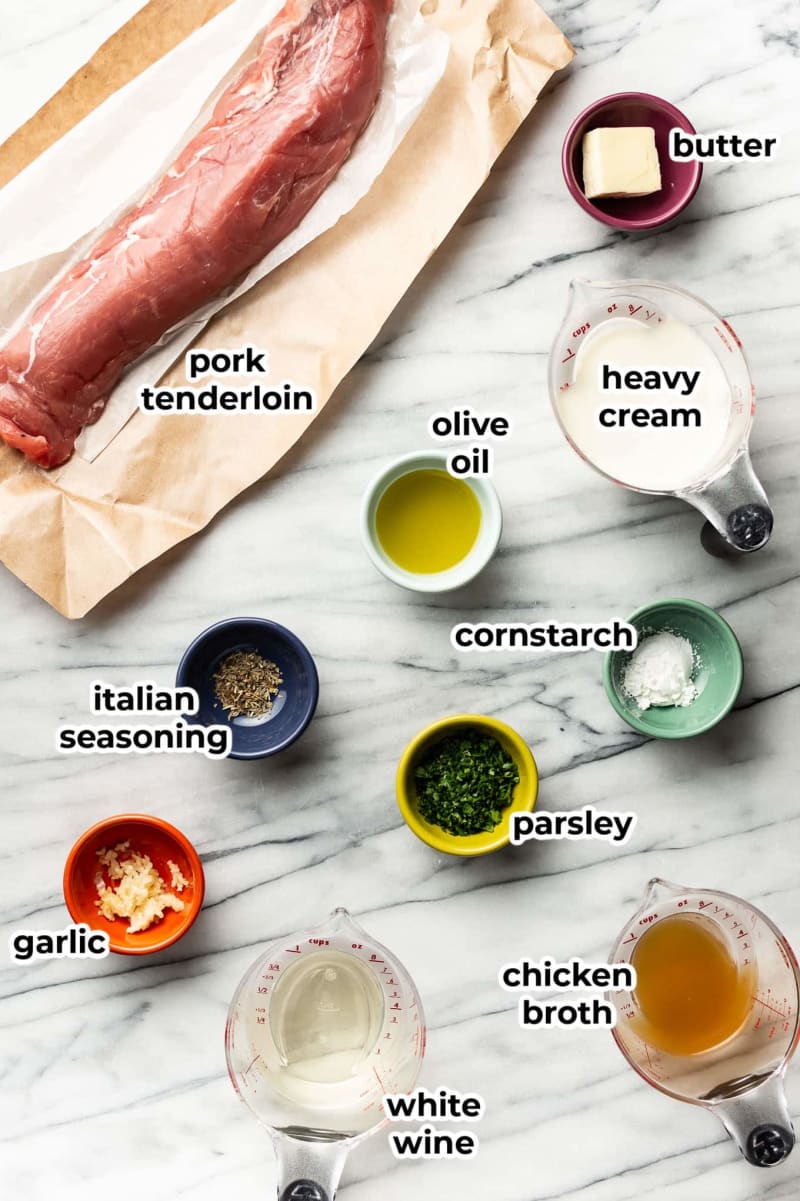
Pick a plain, unseasoned tenderloin and a dry white wine. Those two choices give you the most control over the flavor of the finished sauce.
- Pork tenderloin: Start with 1 pound of pork tenderloin, the long, narrow cut. Pork loin is wider and isn’t a direct swap.
- Salt and pepper: Use both to taste, first on the cut pork and again at the end if the sauce needs them.
- Olive oil: Use 1 tablespoon to coat the skillet for searing. Everyday olive oil is fine.
- Butter: Use 1 tablespoon for richer flavor. Unsalted butter gives you more control over the seasoning.
- Garlic: Mince 2 cloves so the garlic disperses evenly through the sauce.
- Italian seasoning: Use 1/4 teaspoon of the dried blend for a subtle herbal note.
- Dry white wine: Measure 1/2 cup. Pinot grigio or unoaked chardonnay works well.
- Chicken broth: Use 1/4 cup. Low-sodium broth is useful because the liquid reduces before you add the cream.
- Heavy cream: Use 3/4 cup of heavy cream or whipping cream for a smooth, full-bodied sauce.
- Cornstarch: Measure 1 teaspoon to thicken the sauce without making it pasty.
- Fresh parsley: Chop enough for 1 to 2 tablespoons. Its fresh flavor cuts through the richness.
How to Make Creamy White Wine Pork Tenderloin
1. Trim and slice the pork
Remove the excess fat and silver skin, then cut the tenderloin crosswise into 1-inch rounds. Season the cut faces with salt and pepper.
Silver skin is the shiny membrane that doesn’t soften during cooking. Slip the knife just beneath it and angle the blade slightly up so you leave as much meat as possible.
2. Sear the medallions
Heat the olive oil and butter in a skillet over medium-high heat for a few minutes. Sear the rounds for about 3 minutes per side, working in two batches if they’d crowd the pan, then move them to a plate.
Look for lightly golden faces, not a dark crust. The pork doesn’t need to be cooked through yet.
3. Reduce the wine and broth
Add the garlic, Italian seasoning, wine and chicken broth to the skillet, scraping up the browned bits as the liquid bubbles. Let it reduce by more than half, about 3 to 5 minutes.
The liquid should look noticeably shallower. A spatula drawn across the skillet should briefly reveal the bottom.
4. Mix the slurry
Stir the cornstarch into 2 teaspoons of cold water in a small bowl until it dissolves.
The mixture should look uniformly cloudy, with no dry pockets stuck to the bottom.
5. Stir in the cream
Turn the heat down to medium, pour in the cream and cornstarch slurry, and stir well.
Wait for gentle bubbles to return before adding the meat.
6. Finish the pork in sauce
Return the medallions to the bubbling sauce and simmer for about 3 to 5 minutes, until the pork is cooked through and the sauce has thickened slightly. Taste for salt and pepper, then scatter the chopped parsley over the skillet.
The sauce should lightly coat a spoon and still be easy to pour.
How to Tell When It’s Done
Insert an instant-read thermometer sideways into the center of a thick medallion. Pork is ready at 145°F with a 3-minute rest, even if the center is faintly pink. If smaller pieces finish first, transfer them to a clean plate while the thicker ones continue simmering.
Tips and Common Mistakes
A few small adjustments can help you get a good sear and keep the sauce smooth.
- Blot the pork dry. Surface moisture has to evaporate before the meat can brown. Pat the cut faces dry before seasoning.
- Let the first side release. If a round sticks when you try to turn it, give it a little longer rather than tugging and tearing the surface.
- Watch for scorched bits. Brown bits are worth scraping into the sauce. If you see black flecks after searing, wipe those out so the sauce doesn’t taste bitter.
- Restir the slurry before pouring. Cornstarch settles quickly, and any left in the bowl can’t thicken the sauce.
- Thin an overly thick sauce. Stir in a splash of broth if the sauce looks heavy. It will also thicken a little as it cools on the plate.
Substitutions and Variations
Keep the same sear-and-simmer method, but adjust the flavor or the cut to suit what you have.
- Without wine: Replace the wine with an equal amount of chicken broth, then add a squeeze of lemon at the end for brightness.
- Herbes de Provence: Use the same amount in place of Italian seasoning for a more floral, thyme-forward sauce.
- Fresh chives: Swap them for parsley if you’d like a mild onion note. Snip them over the skillet just before serving.
- Boneless pork chops: Choose chops about as thick as the medallions. They may cook at a different pace, so check the centers rather than relying on the same timing.
- Mushroom variation: Brown sliced cremini mushrooms after searing the pork and before adding the wine. Cook off their moisture so it doesn’t water down the sauce.
What to Serve with Creamy White Wine Pork Tenderloin
Spoon the medallions and sauce over mashed potatoes, buttered egg noodles or soft polenta. If you’d rather put the sauce on the table for passing, set out warm bread to catch what’s left on the plates.
For contrast, serve steamed green beans or a crisp side from our salad recipes. If you’re planning a meal for guests, browse our appetizer recipes for a light starter.
Make-Ahead, Storage and Reheating
Make ahead: Trim and slice the pork up to a day ahead and refrigerate it in a covered container. Measure the wine and broth ahead if you like, but wait to make the slurry and cook the pork until dinner.
Storage: Refrigerate the pork and sauce together in an airtight container within 2 hours of cooking. Use the leftovers within 3 to 4 days.
Freezing: Freezing the finished dish isn’t ideal because the cream sauce can separate as it thaws. If you’re shopping ahead, freeze the uncooked tenderloin instead and thaw it in the refrigerator before cooking.
Reheating: Warm the medallions in their sauce over low heat until heated through, turning them once. Add a splash of broth if the sauce has tightened in the fridge, and avoid a hard boil.
Creamy White Wine Pork Tenderloin FAQs
Can I use white cooking wine?
It’s better to use dry drinking wine. Bottled cooking wine is often salted, and that salt gets concentrated as the liquid reduces.
Can I double creamy white wine pork tenderloin?
Yes. Sear the meat in batches and use a wide skillet for the larger volume of sauce. Judge the reduction by how much liquid remains rather than by the clock alone.
Does all the alcohol cook off?
No. Some evaporates as the wine reduces, but the short cooking time doesn’t make the finished sauce alcohol-free.
Can I use half-and-half instead of cream?
Heavy cream is the better choice. Half-and-half makes a thinner sauce and is more likely to separate when heated with the acidic wine reduction.
Should I add the juices from the pork plate?
Yes. Pour them into the skillet when you return the pork so they simmer with the sauce instead of going to waste.
Printable Recipe
Recipe adapted from Salt & Lavender. Photos courtesy of Salt & Lavender, used with permission.
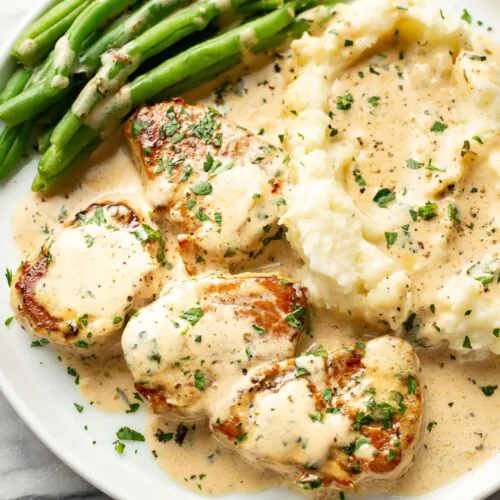
Creamy White Wine Pork Tenderloin
Ingredients
- 1 pound pork tenderloin
- Salt & pepper to taste
- 1 tablespoon olive oil
- 1 tablespoon butter
- 2 cloves garlic minced
- 1/4 teaspoon Italian seasoning or Herbs de Provence
- 1/2 cup dry white wine
- 1/4 cup chicken broth
- 3/4 cup heavy/whipping cream
- 1 teaspoon cornstarch
- 1-2 tablespoons chopped fresh parsley
Instructions
- Trim off excess fat and silver skin and slice the pork tenderloin into 1" thick rounds. Season with salt & pepper.
- Add the olive oil and butter to a skillet over medium-high heat. Let the pan heat up for a few minutes. Once the pan is hot, add the pork (do it in two batches if the pan will be crowded) and sear for about 3 minutes/side or until lightly golden. Transfer the pork to a plate.
- Add the garlic, Italian seasoning, white wine, and chicken broth to the skillet. Let it bubble until the liquid is reduced significantly (by more than half, about 3-5 minutes).
- In a small bowl, mix the cornstarch with 2 teaspoons of cold water and stir until dissolved.
- Reduce the heat to medium. Add the cream and cornstarch slurry to the pan and give it a good stir.
- Add the pork back to the skillet once the sauce starts bubbling again. Simmer for another 3-5 minutes or so until the pork is cooked through and the sauce has thickened a bit. Season with extra salt & pepper as needed (I'm generous with both) and sprinkle with the chopped parsley.


