Easy Baked Chicken Breast

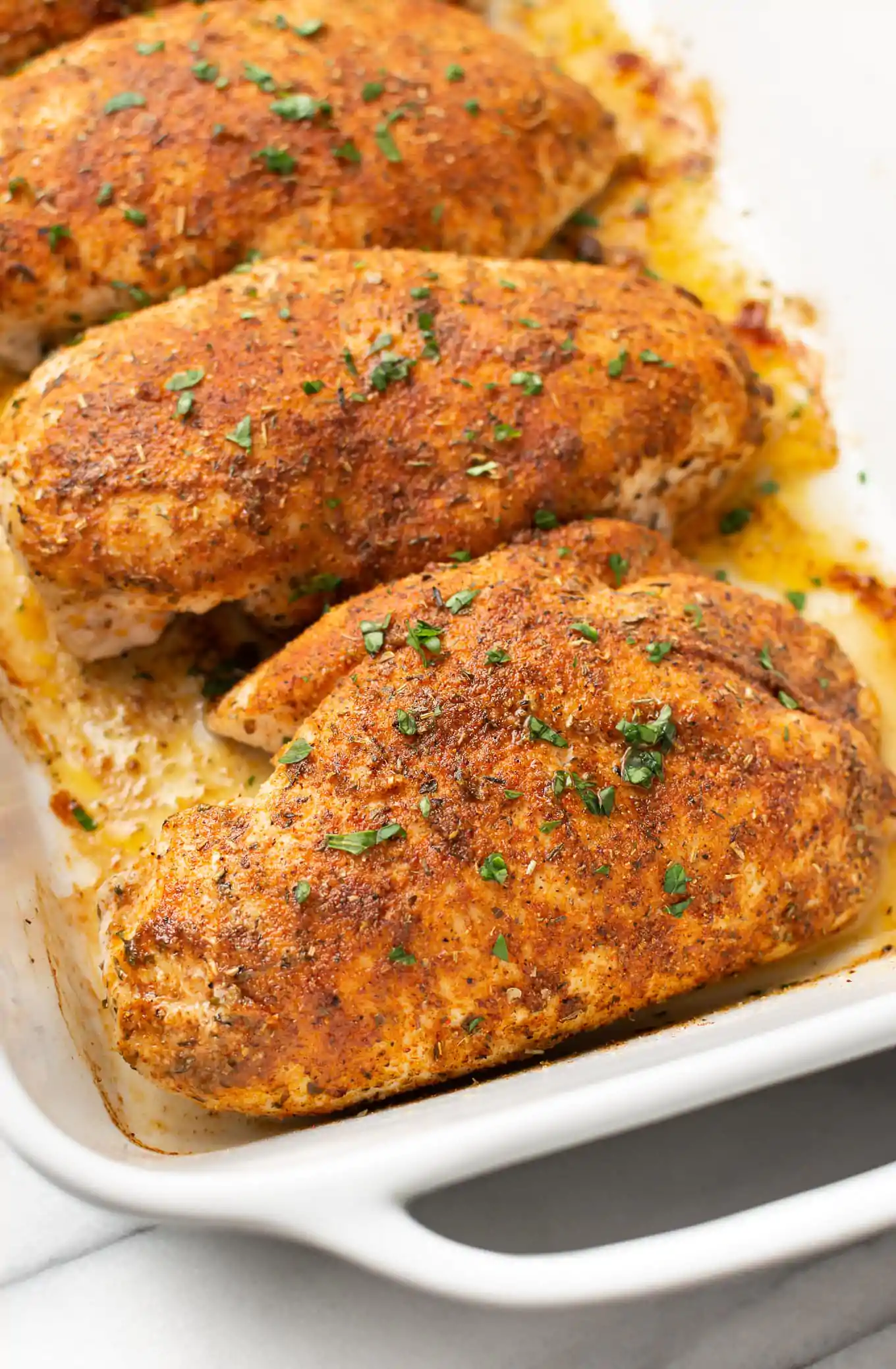
This easy baked chicken breast has a smoky, savory coating and a tender, juicy center. Smoked paprika gives the chicken a deep reddish color, while garlic powder, onion powder, and Italian herbs round out the flavor. A hot oven sets the rub without the need for a stovetop sear.
The recipe serves four and takes about 25 minutes, with just 5 minutes of prep. It works as a weeknight main with whatever vegetables you have in the fridge, and the seasoning is flexible enough that leftover slices can go into a grain bowl or a sandwich the next day.
Why This Baked Chicken Breast Recipe Works
Boneless, skinless breasts are lean, so the trick is to get plenty of flavor onto the surface without leaving the meat in the oven longer than it needs.
- High heat keeps the bake short. At 450°F, the outside can brown while the center cooks. There’s no need to wait for a pale breast to take on color after the meat is already done.
- A little oil helps the rub stick. The thin coating catches the ground spices and dried herbs, so they cling to the sides and underside instead of landing in a pile in the pan.
- Ground spices spread evenly. Garlic and onion powders season the whole surface without leaving bits of fresh garlic exposed to the heat, where they could scorch.
- The rest makes slicing easier. Giving the breasts time to settle after baking means less juice runs onto the board when you cut into them.
Ingredients You’ll Need
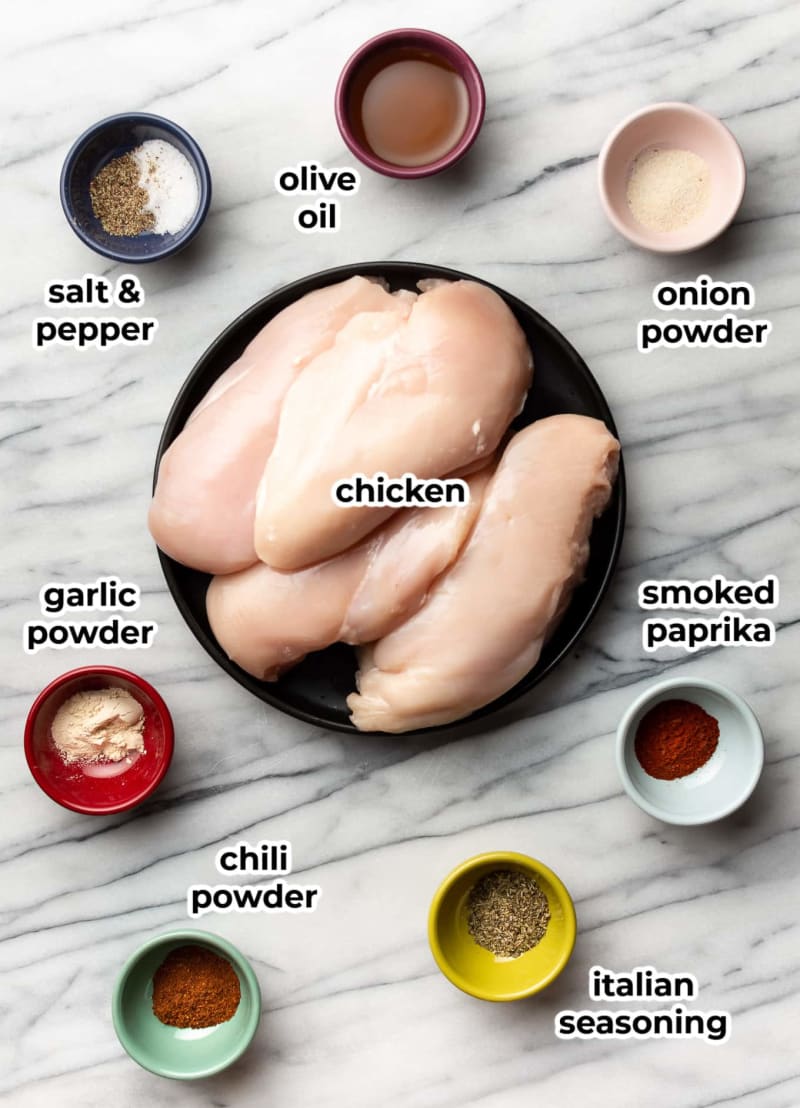
The rub comes entirely from the spice cabinet. Give the jars a quick sniff as you measure: if a spice barely smells like anything, it won’t bring much flavor to the chicken.
- Chicken breasts: Use four boneless, skinless breasts. At the store, look for pieces of similar thickness at their widest point; that matters more for even baking than matching their length.
- Olive oil: Start with two tablespoons and use what you need to coat the breasts lightly on all sides. The oil is there to bind the rub, not to pool around the chicken.
- Smoked paprika: One teaspoon gives the chicken its woodsy flavor and rusty red finish. Choose a mild smoked paprika if you don’t want extra heat.
- Garlic powder: One teaspoon gives the rub a savory base. Use garlic powder rather than garlic salt so the seasoning doesn’t end up too salty.
- Onion powder: One teaspoon adds a mellow onion flavor that fills out the rub without making it taste sharply of onion.
- Chili powder: One teaspoon of a mild American-style chili powder blend gives the coating an earthy warmth. It isn’t the same as ground cayenne.
- Italian seasoning: One teaspoon of the dried herb blend adds a fragrant note behind the smokier spices. Use a salt-free blend.
- Salt and pepper: Use one teaspoon of salt and half a teaspoon of black pepper, adjusting the pepper to taste.
Equipment You’ll Need
- Instant-read thermometer: A quick reading tells you when to stop baking before the lean meat turns rubbery.
- Baking dish or rimmed baking sheet: Choose one that holds the breasts side by side and catches the juices.
How to Make Baked Chicken Breast
1. Set up the oven
Take the chicken out of the fridge while you get set up so it can lose a little of its chill. Set a rack in the upper third of the oven and preheat to 450°F.
There’s no need to wait for the chicken to reach room temperature. Use the preheating time to mix the rub and get the pan ready.
2. Mix the spice rub
Stir the smoked paprika, garlic powder, onion powder, chili powder, Italian seasoning, salt, and pepper together in a small bowl.
Break up any clumps with the back of a spoon. The herbs should be flecked throughout the reddish mixture rather than sitting in one spot.
3. Coat the breasts
Put the chicken in a baking dish or on a foil-lined baking sheet. Use your hands to coat each breast all over with olive oil, then rub the spice mixture onto every side.
Look for a light sheen under the seasoning and an even coat along the edges. Wash your hands after handling the raw chicken.
4. Bake the chicken uncovered
Bake medium breasts for 18 to 20 minutes, using 160°F on an instant-read thermometer as the point to check for carryover cooking. Start checking small breasts at 15 minutes, and allow more time for very large ones.
Slide the probe into the thickest part from the side, aiming for the center without touching the pan.
5. Rest and check again
Rest the chicken for 5 minutes, then confirm that each breast has reached 165°F. Return any piece still below that temperature to the oven and cook it to 165°F before serving.
Serve the breasts whole or sliced. Tilt the pan to collect the seasoned juices and spoon them over the chicken if you like.
How to Tell When It’s Done
The coating takes on a deeper red-brown color and the meat feels firmer, but neither is a reliable test. If the reading changes as you move the probe, check the lowest reading in the thickest part rather than relying on the warmer edge.
Tips and Common Mistakes
A few small adjustments make it easier to get evenly seasoned chicken without overcooking the thinner pieces.
- Blot away excess moisture. If the chicken looks wet out of the package, pat it dry with paper towels so the oil and spice rub don’t slide off.
- Even out thick ends. If one end bulges sharply, gently pound just that end until the breast is more even. You don’t need to flatten the whole piece.
- Leave gaps between pieces. Breasts that touch trap moisture between them, leaving pale patches along the sides where the rub stays damp.
- Check each piece separately. An instant-read thermometer is worth using on every breast. Take finished pieces out while the thicker ones continue baking.
- Slice across the grain. Look for the direction of the muscle fibers and cut across them for shorter, more tender bites.
Substitutions and Variations
Keep the oil-and-rub method and adjust the seasoning to suit what you have on hand.
- Sweet paprika: Use sweet paprika in place of smoked for the same warm color without the smoky flavor.
- Avocado oil: Swap it for the olive oil if you’d prefer a more neutral base that lets the spices stand out.
- Dried oregano: Use oregano instead of Italian seasoning for a more distinct herbal flavor. Rub any coarse leaves between your fingers first.
- A spicier rub: Replace a small pinch of the chili powder with cayenne. Keep most of the blend so the rub stays earthy as well as hot.
- Lemon finish: Squeeze fresh lemon over the cooked chicken for brightness, especially if you’re serving it with rice or roasted vegetables.
What to Serve with Baked Chicken Breast
For an easy dinner, add fluffy rice and roasted green beans, then spoon the juices over the rice. For a richer plate, serve the chicken alongside creamy Tuscan gnocchi and let the smoky rub contrast with the buttery sauce.
For lunch, layer sliced chicken over crunchy greens with cucumbers and a sharp vinaigrette. Browse these salad recipes for more combinations.
Make-Ahead, Storage and Reheating
Make ahead: Mix the dry rub up to a week ahead and keep it sealed in the pantry. Leave the chicken refrigerated and apply the oil and rub just before baking.
Storage: Refrigerate leftovers within 2 hours in an airtight container and use them within 3 to 4 days. Store the pan juices with the chicken if you have any left.
Freezing: Freeze cooked breasts whole or sliced in a freezer bag for up to 3 months for best quality. Press out excess air before sealing and thaw in the refrigerator.
Reheating: Warm the chicken in a covered skillet over low heat with a splash of water or the saved pan juices. Heat to 165°F and take it off the heat promptly to avoid drying it out.
Baked Chicken Breast FAQs
Can I use frozen chicken breasts for this recipe?
Yes, once they’re thawed. Thaw them in the refrigerator first so the oil and rub adhere and the breasts cook on the same schedule as fresh chicken.
Can I use bone-in chicken breasts?
Yes, but they generally take longer than boneless breasts. Check for 165°F in the thickest part without letting the thermometer touch the bone.
Can I double the recipe?
Yes. Double the rub and oil along with the chicken, and use two pans if needed to give the pieces room. Check both pans individually rather than assuming they’ll finish together.
Do I need to flip the chicken while it bakes?
No. Leave the breasts undisturbed so the top stays exposed to the heat, and so you don’t dislodge the spice coating by turning them.
Why is there so much liquid in my pan?
Some breasts release more liquid than others, especially if the package says they contain added broth or a salt solution. For less liquid and better control over the seasoning, look for chicken without an added solution.
Printable Recipe
Recipe adapted from Salt & Lavender. Photos courtesy of Salt & Lavender, used with permission.
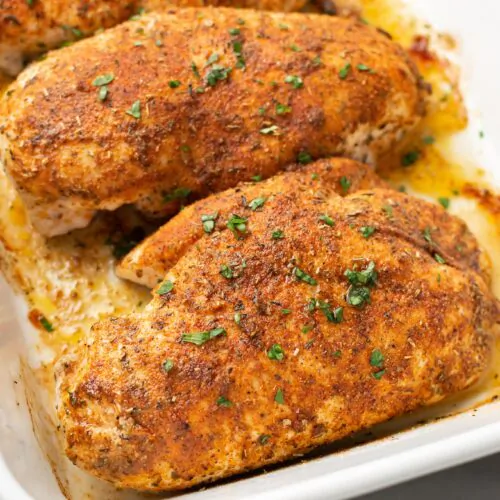
Easy Baked Chicken Breast
Ingredients
- 4 chicken breasts boneless skinless
- 2 tablespoons olive oil or as needed
- 1 teaspoon smoked paprika
- 1 teaspoon garlic powder
- 1 teaspoon onion powder
- 1 teaspoon chili powder
- 1 teaspoon Italian seasoning
- 1 teaspoon salt
- 1/2 teaspoon pepper or to taste
Instructions
- Take the chicken breasts out of the fridge (it's good to let them warm up a bit first before baking). Preheat your oven to 450F and move the rack to the top third of the oven.
- Combine the spice rub ingredients in a small bowl.
- Add the chicken breasts to a baking dish or foil-lined baking sheet and coat all over with olive oil, followed by the rub (use your hands).
- Bake, uncovered, for 18-20 minutes for medium-sized chicken breasts (try 15 minutes for small ones, and you may need longer for very large ones) or until an instant read thermometer registers 160F. Let rest for 5 minutes until juices redistribute and it comes to 165F (safe chicken temperature). Slice or serve as-is, and spoon the pan juices over top if desired.
Notes
- I highly recommend using an instant read meat thermometer for this recipe. Chicken breasts can go from tender and perfectly cooked to rubbery and overcooked quickly.


