Easy Baked Pork Chops


These easy baked pork chops come out juicy under a sweet, smoky spice coating. Brown sugar softens into the melted butter, and the smoked paprika gives the chops a woodsy flavor without a grill or a skillet sear. The drippings stay right in the baking dish, ready to spoon over each chop.
Dinner takes 30 minutes, with just 5 minutes of prep, and makes four servings. It’s a good choice for a weeknight when you want a sit-down dinner but don’t want to stand at the stove. Use boneless or bone-in chops, depending on what looks good at the store.
Why This Baked Pork Chops Recipe Works
The dry rub and butter do separate jobs: one seasons the surface, and the other turns the drippings into something worth serving.
- Brown sugar balances the smoke. Its molasses flavor rounds out the paprika and chili powder, giving the pork a sweet-savory coating rather than a sugary glaze.
- Ground spices spread evenly. Garlic powder and onion powder blend into the sugar and salt, so you get savory flavor across the whole chop without bits of fresh aromatics on the surface.
- Uncovered baking lets the edges brown. Leaving the dish open allows surface moisture to escape instead of trapping steam, which can leave the seasoning wet and pale.
- Butter makes a quick pan sauce. As the pats melt, they carry some of the rub into the drippings, making a buttery sauce without a separate stovetop step.
- A temperature check protects the center. Pork chops can look nearly identical from above but vary in thickness. Measuring the center lets you stop cooking each one before it dries out.
Ingredients You’ll Need
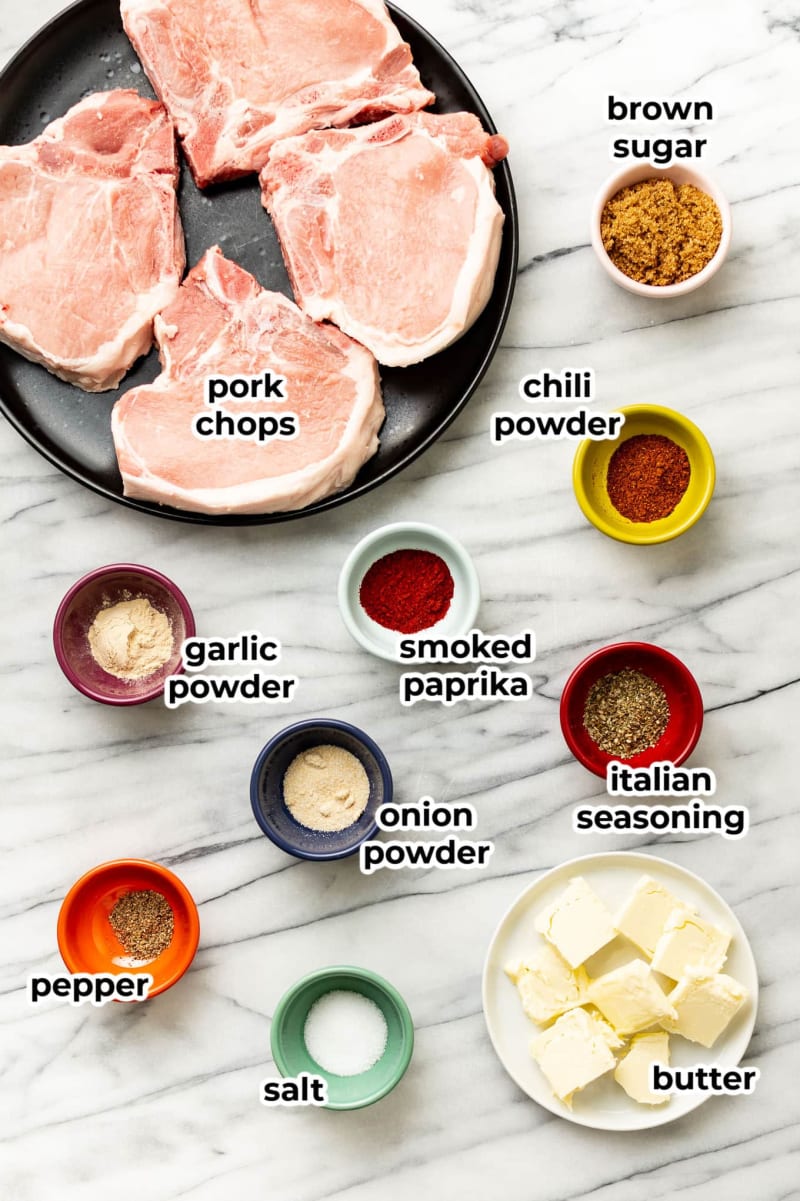
The rub uses pantry seasonings, but the chops are the ingredient to choose most carefully. Look at thickness as well as overall size.
- Pork chops: Four chops, either boneless or bone-in. Look for pieces that are similar in thickness from edge to edge so they finish close together.
- Brown sugar: Two tablespoons give the coating a subtle molasses sweetness. Light brown sugar keeps that flavor mild.
- Smoked paprika: One teaspoon adds the rub’s smoky flavor and brick-red color. Choose a mild smoked paprika if you don’t want extra heat.
- Garlic powder: One teaspoon brings a mellow garlic flavor without adding moisture to the rub.
- Onion powder: One teaspoon adds a savory base that softens the sharper edge of the chili powder.
- Chili powder: One teaspoon of an American-style chili powder blend gives the chops earthy warmth. Straight ground cayenne is much hotter.
- Italian seasoning: One teaspoon of the dried herb blend adds an herbal note that comes through in the pan juices.
- Salt and pepper: Use one teaspoon of salt to season the meat and a quarter teaspoon of pepper, or adjust the pepper to taste.
- Butter: Cut a quarter cup into pats so you can distribute it over the chops rather than letting it melt in one spot.
Equipment You’ll Need
- 9×13 baking dish: This size holds all four chops in a single layer and catches the buttery drippings.
- Meat thermometer: Use an instant-read thermometer or an oven-safe probe with an external display for hands-off monitoring.
How to Make Baked Pork Chops
1. Heat the oven
Position a rack in the center of the oven and preheat to 400°F. Use the preheating time to get the rub and baking dish ready.
Wait until the oven is fully heated before putting the pork in; the baking window assumes a hot oven.
2. Stir together the rub
In a small bowl, combine the brown sugar with the smoked paprika, garlic powder, onion powder, chili powder, Italian seasoning, salt and pepper.
Crush any lumps of brown sugar against the side of the bowl. The mixture should look evenly reddish, without pockets of plain sugar.
3. Season and butter the chops
Arrange the pork in a 9×13 baking dish and press the spice mixture onto the tops, bottoms and edges. Divide the butter pats among the chops and place them on top.
Leave a little space between the chops so they don’t touch. A thin, even layer of rub is better than a thick pile in the center.
4. Bake and check the centers
Bake uncovered for about 20–23 minutes, until the center of each chop reaches 145°F. For chops thinner than 3/4 inch, check around 18 minutes; chops thicker than 1 inch may need longer than 25 minutes.
Bone-in chops can take a little longer than boneless ones, and oven differences and altitude can shift the timing. Start with the thinnest chop when checking a mixed batch.
5. Rest and spoon the juices
Let the chops rest for 5 minutes before cutting into them so less juice runs out onto the plate. Spoon the drippings from the baking dish over the pork at serving time.
Sweep the spoon along the bottom of the dish to pick up the dissolved seasoning along with the butter.
How to Tell When It’s Done
The rub should look glossy, and the meat should feel firm with a little spring, but neither tells you the center temperature. A faint pink blush is fine at 145°F. If the center reads lower, return the chop to the oven and check again before resting.
Tips and Common Mistakes
A few details help the rub stay on the chops and make the thermometer reading more reliable.
- Blot off surface moisture. If the chops are wet from the package, pat them dry before seasoning so the sugar and spices don’t slide into the dish.
- Keep the probe away from bone. Aim for the center of the thickest part, avoiding bone and fat. On a thin chop, insert the thermometer horizontally from the side.
- Set a probe alert. If your thermometer has an oven-safe probe and an external display, set the alert to 145°F. The temperature can rise a few degrees during the rest.
- Pull finished chops first. If one chop reaches temperature early, move it to a plate to rest while the thicker ones finish.
- Check for added brine. If the package says the pork contains a salt solution, choose plain chops if available. The rub already supplies its own salt.
Substitutions and Variations
Keep the baking method and adjust the rub or fat to suit what you have.
- Dark brown sugar: Use it in place of light brown sugar for deeper molasses flavor and a darker coating.
- Sweet paprika: Swap it for smoked paprika if you want mild pepper flavor and the same reddish color without the smoke.
- Dairy-free: Use a dairy-free butter stick that you can slice into pats. The drippings will pick up the flavor of the substitute.
- More heat: Add a pinch of cayenne to the rub rather than replacing the chili powder. You’ll keep the earthy flavor of the blend.
- Single dried herb: Use dried oregano in place of Italian seasoning for a more prominent, slightly peppery herbal note.
What to Serve with Baked Pork Chops
Mashed potatoes or buttered egg noodles catch the smoky pan juices, and steamed green beans add a fresh snap. For a brighter plate, pair the chops with this berry salad with lemon dressing; the tart dressing cuts through the butter without competing with the rub.
For a more filling dinner, serve smaller portions of pork alongside creamy Tuscan gnocchi and a bowl of simply dressed greens.
Make-Ahead, Storage and Reheating
Make ahead: Mix the dry rub up to a week ahead and store it airtight in the pantry. Keep the chops refrigerated and apply the rub and butter just before baking.
Storage: Refrigerate cooked chops and any juices in a covered airtight container within 2 hours. Use them within 3 to 4 days.
Freezing: Freeze the cooled chops with their juices in a freezer-safe container for up to 3 months for best quality. Thaw overnight in the refrigerator.
Reheating: Reheat the chops in a covered baking dish with the saved juices, or a splash of water if needed. Warm gently to 165°F and take them out promptly so the edges don’t dry out.
Baked Pork Chops FAQs
Do I need to sear pork chops before baking?
No. The sugar and spices give the baked surface color and flavor on their own. The finish is softer than a skillet crust, which works well with the buttery juices.
Can I bake these pork chops from frozen?
Thaw them first for this method. The rub won’t cling well to a frosty surface, and the baking window is for thawed chops. Thaw them in the fridge, not on the counter.
Can I double this recipe?
Yes. Double the rub and butter and use two baking dishes rather than crowding everything into one. Check both dishes for doneness, since they may not finish together.
Should I trim the fat off the chops?
Not all of it. A narrow fat edge adds flavor to the drippings, but you can trim away a thick band if you don’t want a chewy edge on the finished chops.
Can I bake potatoes in the oven at the same time?
Yes. Give whole potatoes a head start because they take longer than the chops. Bake them in a separate pan so they don’t crowd the pork or soak up the drippings before serving.
Printable Recipe
Recipe adapted from Salt & Lavender. Photos courtesy of Salt & Lavender, used with permission.

Easy Baked Pork Chops
Ingredients
- 4 pork chops boneless or bone-in
- 2 tablespoons brown sugar
- 1 teaspoon smoked paprika
- 1 teaspoon garlic powder
- 1 teaspoon onion powder
- 1 teaspoon chili powder
- 1 teaspoon Italian seasoning
- 1 teaspoon salt
- 1/4 teaspoon pepper or to taste
- 1/4 cup butter cut into pats
Instructions
- Preheat your oven to 400F and move the rack to the middle position.
- Add the spice rub ingredients (brown sugar, smoked paprika, garlic powder, onion powder, chili powder, Italian seasoning, salt & pepper) to a small bowl and mix together.
- Add the pork chops to a 9×13 baking dish and coat them all over with the spice rub, then place the butter pats on top.
- Bake, uncovered, for about 20-23 minutes or until the pork chops have reached 145F. If your pork chops are thin (less than 3/4"), check around 18 minutes, and pork chops over 1" may take longer than 25 minutes. Keep in mind ovens vary and altitude can change cooking time, and bone-in pork chops can take a bit longer to cook than boneless.
- Let them rest for 5 minutes before serving so they remain juicy. Serve with the pan juices poured over top.
Notes
- For the most accurate results, use an instant read thermometer with an external probe. It has a separate attachment that goes into a pork chop while it cooks, and then the reader that sits outside your oven will beep when it reaches the temperature that you set it to (I recommend 145F and it will rise a few more degrees while it rests)! Easy peasy.
- Farming practices have changed over the years, and there is no need to overcook pork. Pork that’s 145F minimum temperature and a little pink inside is safe to eat, but this recipe does cook it a little more. If you do prefer it to have a final cooked temperature of 145F, set your meat thermometer so it alerts you at 140F.


