Easy Chicken Ramen Stir-Fry

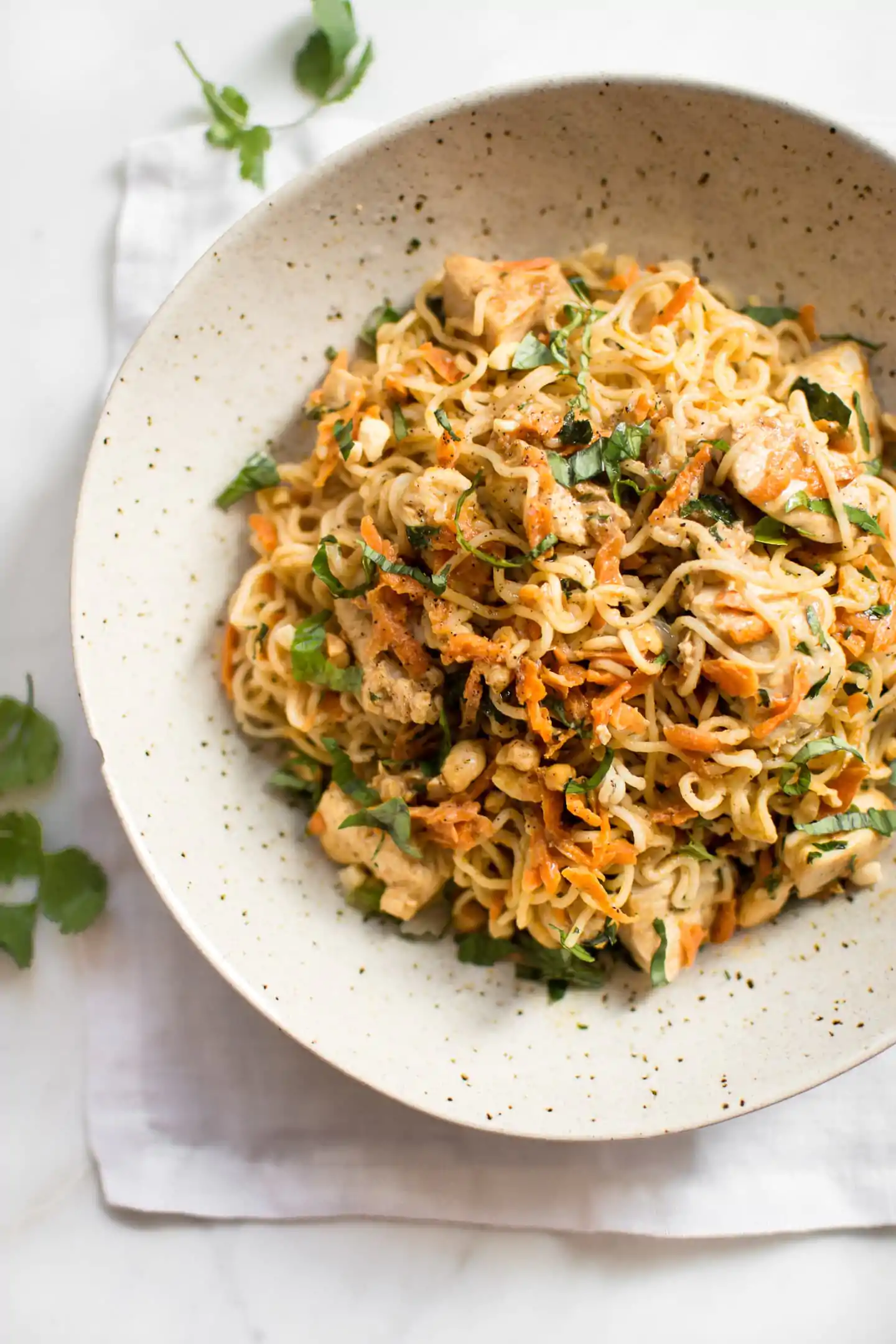
Chicken ramen stir-fry turns instant noodle bricks into springy strands coated in a sweet, tangy peanut-lime sauce. Bite-size pieces of chicken make it a meal, while grated carrot, chopped peanuts, and fresh herbs keep each forkful from tasting the same. A splash of noodle water helps the thick sauce coat the strands instead of sitting in clumps.
Dinner takes 25 minutes and serves four. It’s a good weeknight choice when you want something more substantial than a bowl of instant ramen without chopping a whole drawer of vegetables. Have everyone ready to eat when the noodles hit the skillet.
Why This Chicken Ramen Stir-Fry Recipe Works
The sauce comes together in the chicken skillet, and the vegetables and herbs need no separate cooking.
- Small pieces cook quickly. Cutting the breasts into bite-size pieces gives you more surface for the sauce to cling to and lets you cook the chicken through before adding the peanut butter.
- The sauce balances richness with tang. Hoisin brings sweetness and soy sauce supplies the salty backbone. Lime cuts through the peanut butter, and sriracha adds a little warmth without making heat the main flavor.
- Noodle water loosens the sauce. A small splash makes the warmed peanut mixture easier to distribute through three packages of noodles. The starch in the water gives the sauce body without making it soupy.
- The fresh ingredients go in last. Grated carrot is thin enough to eat without sautéing. Tossing it in with the basil, cilantro, and peanuts preserves the carrot’s snap, the herbs’ fragrance, and the nuts’ crunch.
Ingredients You’ll Need
Use the ramen for its noodles, not its seasoning. The peanut-lime sauce supplies all the flavor the packets would otherwise add.
- Olive oil: One tablespoon lightly coats the chicken pieces before they go over the heat. Regular olive oil works well here.
- Ramen noodles: Use three 3.5-ounce (100-gram) packages of instant ramen, without the flavor packets. Look for plain noodle bricks rather than noodles with seasoning already on them.
- Chicken breasts: Cut three breasts into bite-size pieces. Boneless, skinless breasts are the easiest to dice, and keeping the pieces similar in size helps them finish together.
- Carrot: Grate one large carrot. The shreds tuck into the noodles more readily than carrot coins and don’t need to be cooked first.
- Fresh basil: Chop enough leaves for one tablespoon. Basil adds a sweet, fragrant note against the salty sauce.
- Fresh cilantro: Use one tablespoon chopped. Tender upper stems are fine to include along with the leaves.
- Chopped peanuts: A quarter cup adds crunch. Unsalted roasted peanuts are a good choice because the soy sauce and hoisin already bring salt.
- For the sauce: Use three heaping tablespoons of peanut butter, one tablespoon each of soy sauce and hoisin, one teaspoon of sriracha or more to taste, the juice from half a lime, and one minced garlic clove. Smooth peanut butter is easiest to stir into an even coating.
Equipment You’ll Need
- Large pot and colander: Give the noodle bricks room to spread as they soften, and have the colander ready so you can drain them as soon as they’re cooked.
- Wide skillet: Choose a skillet with enough room to spread out the chicken and toss the full batch of noodles without spilling.
- Box grater: The coarse holes make carrot shreds that stay distinct after tossing.
- Tongs: Tongs let you lift and fold the noodles instead of pushing them into a dense pile.
How to Make Chicken Ramen Stir-Fry
1. Set up the noodle pot
Bring a large pot of salted water to a boil. The ramen needs only 3 minutes once it goes in, so start heating the water now but wait to drop the noodles until the chicken is cooked and the sauce ingredients are in the skillet.
If the water boils early, keep the noodles on the counter and bring the water back to a full boil when you’re ready.
2. Cook the chicken
Put the bite-size chicken pieces in the skillet with the olive oil and stir to coat. Turn the heat to medium-high and cook for 7 minutes, or until the chicken is cooked through, stirring occasionally.
Give the pieces contact with the skillet between stirs. If they release liquid, let it cook off before adding the sauce ingredients.
3. Prepare the fresh additions
While the chicken cooks, grate the carrot and chop the basil and cilantro. Keep them together near the stove so you can add them in one go later.
If the chicken is nearly done before you finish chopping, prioritize checking the skillet rather than trying to finish the prep first.
4. Add the sauce ingredients
Take the skillet off the burner and add the peanut butter, soy sauce, hoisin, sriracha, lime juice, and garlic directly to the chicken. Drop the ramen into the boiling water and wait until the noodles are nearly ready before putting the skillet back on the stove.
There’s no need to mix the sauce in a separate bowl; the peanut butter can sit in dollops until the skillet goes back over the heat.
5. Warm and loosen the sauce
Set the skillet over medium heat and stir until the sauce is smooth and coats the chicken. Scoop about 2 tablespoons of cooking water from the noodle pot into the skillet before you drain the ramen.
Stir across the bottom of the skillet to pick up any peanut butter that hasn’t blended in.
6. Toss and serve
Add the drained ramen, grated carrot, basil, cilantro, and chopped peanuts to the skillet. Lift and fold with tongs until everything is evenly distributed, then serve immediately with an extra squeeze of lime if you like.
Pull noodles up from the bottom of the skillet as you toss so the first serving gets as much sauce and chicken as the last.
How to Tell When It’s Done
Check the chicken before adding the sauce. Insert an instant-read thermometer into the center of one of the largest pieces; it should register 165°F. If it falls short, keep cooking and check again. Browning on the outside doesn’t tell you what’s happening in the center.
The noodles should bend freely and still have a little chew. The finished sauce should look glossy and coat the strands without leaving a puddle. If it’s too tight to toss, add a small splash of reserved noodle water and fold again rather than cooking the noodles longer.
Tips and Common Mistakes
Once the ramen goes into the water, there’s little time to stop and look for an ingredient or tool.
- Prep first if you prefer. Chopping while the chicken cooks saves time, but you can grate the carrot, chop the herbs, and measure the sauce ingredients before turning on the stove.
- Separate the noodle bricks gently. Wait until the outside strands soften, then tease them apart with tongs. Breaking the dry blocks makes short pieces that are harder to lift and toss.
- Stir natural peanut butter first. Work the separated oil back into the jar before measuring. A scoop from the oily top or dry bottom can throw off the sauce’s consistency.
- Skip the rinse. Drain the ramen without running cold water over it. Warm noodles keep the sauce loose enough to spread as you toss.
- Keep the sauce below a hard boil. Once it’s smooth, there’s nothing to reduce. Prolonged bubbling makes a peanut sauce thicker and more likely to stick to the skillet.
Substitutions and Variations
Keep the balance of creamy sauce, chewy noodles, and crisp additions as you make swaps.
- Chicken thighs: Use boneless, skinless thighs for a richer bite. The pieces may take longer to cook, so check their temperature rather than relying on the same timing.
- Rice noodles: Thin rice noodles work, but they’re more delicate than ramen. Follow their package directions and fold them into the sauce gently so they don’t break.
- Cabbage instead of carrot: Finely shredded napa cabbage gives you a milder crunch. Slice it thinly enough to wind around the noodles.
- Scallions instead of cilantro: Thinly sliced scallion greens bring a mild onion bite. Leave the basil in for a contrasting sweet note.
- Less heat: Use less sriracha or leave it out and pass it at the table. The sauce will still have plenty of flavor from the lime, hoisin, and garlic.
What to Serve with Chicken Ramen Stir-Fry
This is a full meal on its own, but chilled cucumber slices dressed with rice vinegar make a crisp, tart side for the rich sauce. Browse our salad recipes for more cold sides that can be ready before the noodles are.
For a warm side, try steamed snap peas or edamame. A small bowl of clear broth also works if you want to start with something light; find more ideas in our soup recipes.
Make-Ahead, Storage and Reheating
Make ahead: Grate the carrot and measure the sauce ingredients up to a day ahead, then refrigerate them separately in covered containers. Chop the herbs and boil the noodles just before serving.
Storage: Refrigerate leftovers in an airtight container within 2 hours and eat them within 3 to 4 days. If you know you’ll have leftovers, keep some of the peanuts separate so they stay crisp.
Freezing: Freezing the assembled stir-fry isn’t ideal. The noodles soften after thawing, and the raw carrot and herbs lose their fresh texture.
Reheating: Warm leftovers gently in a skillet with a splash of water, lifting the strands as the sauce loosens. Heat to 165°F and add any reserved peanuts after reheating.
Chicken Ramen Stir-Fry FAQs
Can I use crunchy peanut butter in ramen stir-fry?
Yes. The peanut pieces will stay visible in the sauce. You can still use the chopped peanuts at the end if you want a more pronounced crunch.
Can I use rotisserie chicken?
Yes. Pull the meat into bite-size pieces, skip the raw chicken cooking step, and warm it in the skillet before adding the sauce. Check the seasoning before adding any extra soy sauce, since rotisserie chicken is already seasoned.
Can I use bottled lime juice?
Yes, if it’s unsweetened. Add it to taste if it’s particularly sharp. Fresh lime is especially useful at the table, where its aroma comes through without cooking.
Can I double this in one skillet?
Only if the skillet has room for the noodles to move freely. In a typical home skillet, cooking and tossing two separate batches is easier than trying to coat a double batch evenly.
Why does my sauce taste sweeter than expected?
Sweetened peanut butter and a sweeter hoisin can both contribute. Taste before serving and use the optional squeeze of lime to bring back some tang.
Can I add an egg on top?
Yes. Cook it separately and set it on the plated noodles. That way it won’t interrupt the quick skillet toss or dilute the sauce.
Printable Recipe
Recipe adapted from Salt & Lavender. Photos courtesy of Salt & Lavender, used with permission.
Easy Chicken Ramen Stir-Fry
Ingredients
- 1 tablespoon olive oil
- 3 (3.5 ounce/100g) packages of ramen noodles (discard the flavor packets)
- 3 chicken breasts cut into bite-size pieces
- 1 large carrot grated
- 1 tablespoon fresh basil chopped
- 1 tablespoon fresh cilantro chopped
- 1/4 cup chopped peanuts
Sauce ingredients:
- 3 heaping tablespoons peanut butter
- 1 tablespoon soy sauce
- 1 tablespoon hoisin sauce
- 1 teaspoon sriracha sauce or more to taste
- Juice of 1/2 lime
- 1 clove garlic minced
Instructions
- Boil a large, salted pot of water for your ramen noodles. Once boiling, cook noodles for 3 minutes.
- Meanwhile, prep your chicken and add it to a skillet along with the olive oil. Coat it with the oil and turn the heat up to medium-high. Cook the chicken for 7 minutes (or until it's cooked), stirring occasionally.
- Meanwhile, chop your basil and cilantro and grate the carrot.
- Take the skillet off the heat and add the sauce ingredients to it (I just add them one by one). Hold off on returning the pan to the heat until the ramen noodles are about done.
- Add the pan back onto the stove over medium heat, and stir until you get a nice, smooth sauce that coats the chicken.
- Add about 2 tablespoons of the noodle water to the skillet prior to draining the noodles. Add the drained noodles to the skillet along with the carrot, basil, cilantro, and chopped peanuts. Toss until everything is combined (using tongs makes it easy). Serve immediately with an extra squeeze of lime if desired.
Notes
- I wrote the instructions in a way so that you can do the prep work as you go along while cooking this dish. If you prefer, you can prep everything ahead of time.
- The key to this recipe is timing it so that everything else is cooked/ready before the noodles (keep in mind they only take 3 minutes to cook).
- Nutritional information is provided as a courtesy only and should be construed as an estimate rather than a guarantee. Ingredients can vary and Salt & Lavender makes no guarantees to the accuracy of this information.


