Easy Chicken Stir Fry

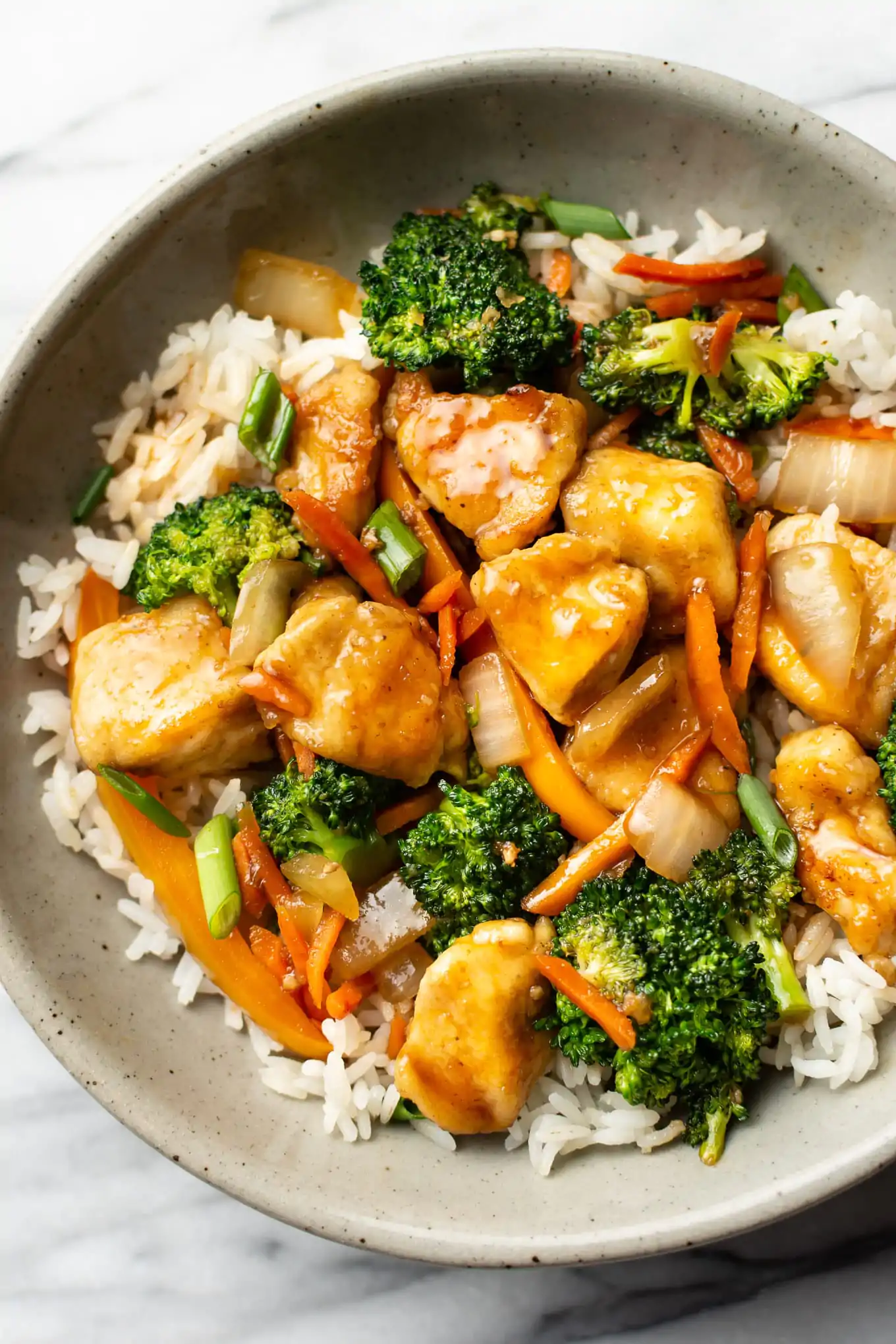
This easy chicken stir fry pairs golden bites of chicken with crisp broccoli, sweet bell pepper, and carrots in a glossy honey-soy sauce. The chicken gets a light cornstarch coating before it hits the skillet, so it has browned edges without a heavy batter. Fresh ginger and garlic give the sauce a savory bite that balances the honey.
Dinner serves four and takes 35 minutes, including 15 minutes of prep. It fits a busy weeknight when you want chicken and vegetables in the same skillet. Start the rice before you turn to the stir fry so both can go to the table hot.
Why This Chicken Stir Fry Recipe Works
The chicken, vegetables, and sauce each need something different from the skillet. Cooking them in stages lets you get each one right before tossing them together.
- A light coating browns well. Cornstarch absorbs some of the surface moisture on the chicken and sets into a thin crust in the hot oil. There’s no need for an egg wash or a separate dredging station.
- Two batches keep the skillet hot. Chicken releases moisture as it cooks. Space between the pieces gives that moisture a chance to evaporate instead of collecting under the meat.
- Small cuts even out cooking. Small broccoli florets soften by the time the matchstick carrots and bell pepper are ready. Giving the onion a head start takes the edge off its raw bite.
- Broth balances the honey and soy. It stretches the sauce without making it overly salty or sweet. A little vinegar cuts through the honey without making the sauce taste sour.
- The sauce thickens at the end. Cornstarch thickens the sauce once it bubbles, so it clings to the chicken and vegetables rather than pooling underneath them.
Ingredients You’ll Need
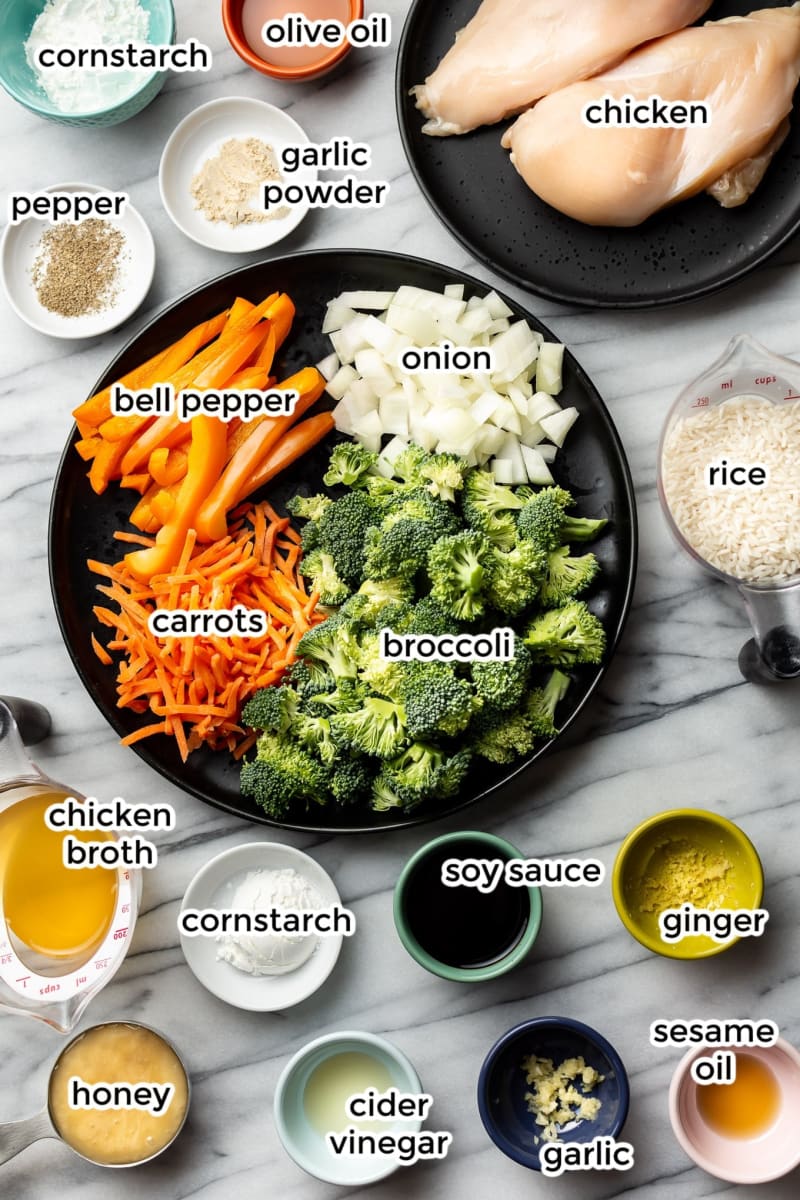
Fresh ginger and toasted sesame oil do a lot of work in the sauce. For the vegetables, focus on how you cut them rather than which color of pepper you buy.
- Chicken breasts: Two boneless, skinless breasts, cut into 1-inch pieces so they cook evenly.
- Garlic powder: Half a teaspoon seasons the chicken itself, separate from the fresh garlic in the sauce.
- Pepper: Add to taste for a little heat beneath the sweet glaze.
- Cornstarch: Three tablespoons give the chicken its light coating. Measure the sauce starch separately.
- Olive oil: Three tablespoons, divided between the chicken batches. Keep the bottle handy in case the skillet looks dry before the onion goes in.
- Onion: Half a medium onion, chopped small enough to soften quickly.
- Broccoli florets: Two cups of florets, cut small so the stems don’t stay raw.
- Bell pepper: Half a pepper, cut into small pieces or strips. Orange adds mild sweetness.
- Carrots: Half a cup of matchsticks. Precut carrots save time on prep.
- Rice: One cup uncooked is a serving suggestion for four; make more or less, or skip it.
- Scallions: Chop some to taste for an optional fresh finish.
- For the sauce: Use a quarter cup of honey, one teaspoon of grated fresh ginger, three minced garlic cloves, two tablespoons of soy sauce, one teaspoon of apple cider vinegar or rice vinegar, half a cup of chicken broth, half a teaspoon of toasted sesame oil, and one tablespoon of cornstarch.
Equipment You’ll Need
- Large, deep skillet: A broad base gives the chicken room to brown, and deep sides keep the vegetables in the pan when you toss them.
- Medium bowl and whisk: Use these to dissolve the honey and disperse the starch before the sauce goes into the skillet.
- Tongs: Tongs let you turn individual pieces without disturbing the ones that still need to brown.
- Instant-read thermometer: A thin probe fits into the center of a chicken piece.
How to Make Chicken Stir Fry
1. Prep before cooking
If you’re serving rice, get it started according to the package directions. Chop the onion and bell pepper into bite-size pieces, cut the carrots into matchsticks if needed, and divide the broccoli into especially small florets.
Split any florets with thick stems lengthwise so the stems cook along with the tops.
2. Whisk the sauce
Combine all the sauce ingredients in a medium bowl and whisk until blended.
Drag the whisk along the bottom of the bowl to pick up any honey or pockets of dry starch.
3. Season and coat
Cut the chicken into 1-inch pieces and put them in a separate bowl. Toss with the garlic powder and pepper, then add the 3 tablespoons of cornstarch and toss again.
The pieces should look lightly dusted, with no thick patches of starch.
4. Heat the skillet
Pour 2 tablespoons of olive oil into a fairly large, deep skillet and heat it over medium-high for a few minutes.
The oil should shimmer, not smoke. A piece of chicken should sizzle on contact.
5. Brown in two batches
Shake off loose starch and add the first batch in a single layer. Cook for 4 minutes, then turn the pieces with tongs and cook for about 3 to 4 minutes more, until golden and 165°F inside. Transfer to a plate, add the remaining tablespoon of oil, and repeat with the second batch.
Leave gaps between the pieces, and move each finished batch out before starting the next part.
6. Stir-fry the vegetables
If the skillet looks dry, add a teaspoon or so of olive oil. Add the onion and cook for 1 minute, stirring a few times. Add the broccoli, pepper, and carrots and stir often for 3 minutes, or a bit longer if you prefer softer vegetables.
At the tender-crisp stage, a broccoli stem should yield to a bite but still have some snap.
7. Glaze and serve
Return the chicken to the skillet and whisk the sauce again just before pouring it in. Stir constantly as it bubbles and thickens, about a minute, then take the skillet off the heat. Serve right away over rice or noodles, with chopped scallions if you like.
The sauce should leave a glossy film on the vegetables when you lift them with a spoon.
How to Tell When It’s Done
Golden edges tell you the coating has browned, not that the chicken is cooked through. Insert the thermometer sideways into the center of one of the largest pieces, keeping the probe off the pan. If it reads below 165°F, keep cooking and check again before transferring the chicken to the plate.
If the vegetables are still too firm, give them more time before adding the chicken and sauce. Once the sauce bubbles and coats the ingredients, take the pan off the heat rather than reducing it to a sticky syrup.
Tips and Common Mistakes
A few details make the difference between a stir fry that sears and one that steams.
- Dry the vegetables after washing. Shake the broccoli well and blot it if water is still caught in the florets. Water hitting the oil makes it spatter and cools the skillet.
- Leave the chicken alone at first. Pushing the pieces around as soon as they hit the skillet can pull off the coating before it sets.
- Use a clean plate. Set it beside the stove before cooking so you have somewhere to put each batch that hasn’t touched raw chicken.
- Grate the ginger from frozen. Frozen fresh ginger is firm and easy to grate on a fine zester. There’s no need to thaw the whole knob.
- Check the browned bits. Leave golden bits in the skillet for the sauce to pick up. If loose starch has turned black, remove it before adding the onion so it doesn’t turn the glaze bitter.
Substitutions and Variations
Use what you have, but choose swaps that preserve the quick cooking and the balance of the sauce.
- Chicken thighs: Boneless, skinless thighs work in place of breasts and stay juicy if they cook a little longer. Check the temperature rather than assuming they’ll be ready at the same time.
- Snap peas: Use trimmed snap peas in place of the bell pepper for a greener flavor and a more pronounced crunch.
- Vegetable broth: It can replace the chicken broth without changing how the sauce thickens, though the glaze will have less chicken flavor.
- Gluten-free tamari: Use tamari labeled gluten-free in place of soy sauce, and check the broth label too if you need the dish to be gluten-free.
- Red pepper flakes: Whisk a pinch into the sauce for gentle heat, or put them on the table so everyone can season their own bowl.
What to Serve with Chicken Stir Fry
Steamed jasmine rice catches the extra glaze without competing with the ginger and sesame. If you’d rather have noodles, spoon the stir fry over plain cooked lo mein noodles instead of tossing them in the skillet, where they would soak up much of the sauce.
A chilled cucumber salad makes a crisp contrast, or you can start with a small bowl of egg drop soup. Browse our fresh salad ideas for another cool side or our soup recipes for dinner for a warm starter.
Make-Ahead, Storage and Reheating
Make ahead: Chop the vegetables and whisk the sauce up to a day ahead, then refrigerate them in separate covered containers. Wait until you’re ready to cook to coat the chicken so the starch doesn’t turn pasty.
Storage: Refrigerate leftovers in airtight containers within 2 hours and use them within 3 to 4 days. Store rice separately so it doesn’t absorb the glaze overnight.
Freezing: Freeze cooled stir fry in airtight portions for up to 3 months. Thaw in the refrigerator; the vegetables will be softer and the sauce may need stirring to come back together.
Reheating: Warm leftovers in a skillet, stirring gently, until they reach 165°F. Add a splash of water if the chilled glaze is too thick to coat the chicken evenly.
Chicken Stir Fry FAQs
Can you make chicken stir fry in a wok?
Yes. Use a wok that sits securely on your burner, and let the chicken sear against the hot bottom before tossing it. If the bottom is narrow, cook in smaller batches rather than piling pieces up the sides.
Can frozen broccoli go straight into the skillet?
Yes, but thawing and draining it first gives you more control. Frozen florets cool the skillet and can release enough water to dilute the sauce, especially if they’re coated in ice.
Can you double the sauce?
Yes. Double every sauce ingredient, including the cornstarch, to keep the same balance. If you only want extra for the rice, simmer the extra portion separately so the stir fry doesn’t have to sit in the pan while it thickens.
How do you make the sauce less sweet?
Start with a little less honey. Taste the whisked sauce before it touches the chicken, and resist the urge to compensate with extra soy sauce unless it also needs more salt.
What if you forget to add cornstarch to the sauce?
Mix the missing cornstarch with a little cold water before adding it to the skillet, then stir until the sauce bubbles. Dry starch added directly to hot liquid tends to clump.
Can you use low-sodium soy sauce?
Yes. Use the same amount; the sauce will taste a little milder. This is useful if your chicken broth is already quite salty.
Printable Recipe
Recipe adapted from Salt & Lavender. Photos courtesy of Salt & Lavender, used with permission.
Easy Chicken Stir Fry
Ingredients
- 2 chicken breasts
- 1/2 teaspoon garlic powder
- Pepper to taste
- 3 tablespoons cornstarch
- 3 tablespoons olive oil divided
- 1/2 medium onion chopped into fairly small pieces
- 2 cups broccoli florets cut into fairly small pieces
- 1/2 bell pepper (I used orange) cut into fairly small pieces or strips
- 1/2 cup matchstick cut carrots
- 1 cup uncooked rice for serving (optional)
- Chopped scallions for serving optional, to taste
Sauce:
- 1/4 cup honey
- 1 teaspoon grated fresh ginger
- 3 cloves garlic minced
- 2 tablespoons soy sauce
- 1 teaspoon apple cider vinegar (or rice vinegar)
- 1/2 cup chicken broth
- 1/2 teaspoon toasted sesame oil
- 1 tablespoon cornstarch
Instructions
- I recommend prepping your ingredients before you start cooking – once the recipe is started, it goes quite fast. Be sure to cut the veggies into pieces that are bite-size (make sure that the broccoli is cut quite small) so they cook at a similar rate. If serving with rice, I recommend getting it going prior to starting the recipe. Cook rice according to package directions.
- Add the sauce ingredients to a medium bowl and whisk together.
- Cut the chicken into 1" pieces and add to a bowl. Sprinkle with the garlic powder and some pepper. Stir to combine. Add the cornstarch and stir/toss until the chicken is coated.
- In a skillet (use a fairly large/deep one if possible), over medium-high heat, add 2 tablespoons of the oil. Let the pan heat up for a few minutes.
- Add the chicken pieces to the skillet (shake off the excess cornstarch prior to adding it to the pan). Don't crowd the pan – I recommend doing 2 batches for best browning. Cook for 4 minutes and then flip and cook another 3-4 minutes or so (I flip using tongs to make it easy). Chicken should be golden and cooked through (165F). For the second batch, add another tablespoon of olive oil to the pan. Transfer each batch of the chicken to a plate once it's done.
- If the pan looks dry, add a small splash of olive oil (a teaspoon or so), and then add the onions. Cook for 1 minute, stirring a few times.
- Add in the broccoli, peppers, and carrots, and cook for 3 minutes, stirring often. Veggies will be tender-crisp. Cook for a bit longer if you want them softer.
- Add the chicken back to the pan and stir in the sauce (whisk it again quickly prior to pouring it in). Let it bubble until thickened (about a minute), stirring constantly so everything gets coated. Take the pan off the heat. Serve immediately over rice or noodles with scallions sprinkled over top if desired.
Notes
- The rice quantity is my suggestion for 4 people, but feel free to make more/less or whatever you usually make for 4 people.
- Fresh ginger is much easier to grate when frozen! I always keep some fresh ginger in the freezer and I use my Microplane grater/zester to easily grate it.
- See blog post for more tips for stir fry success!
- Nutrition info does NOT include rice.


