Easy Garlic Chicken Pasta

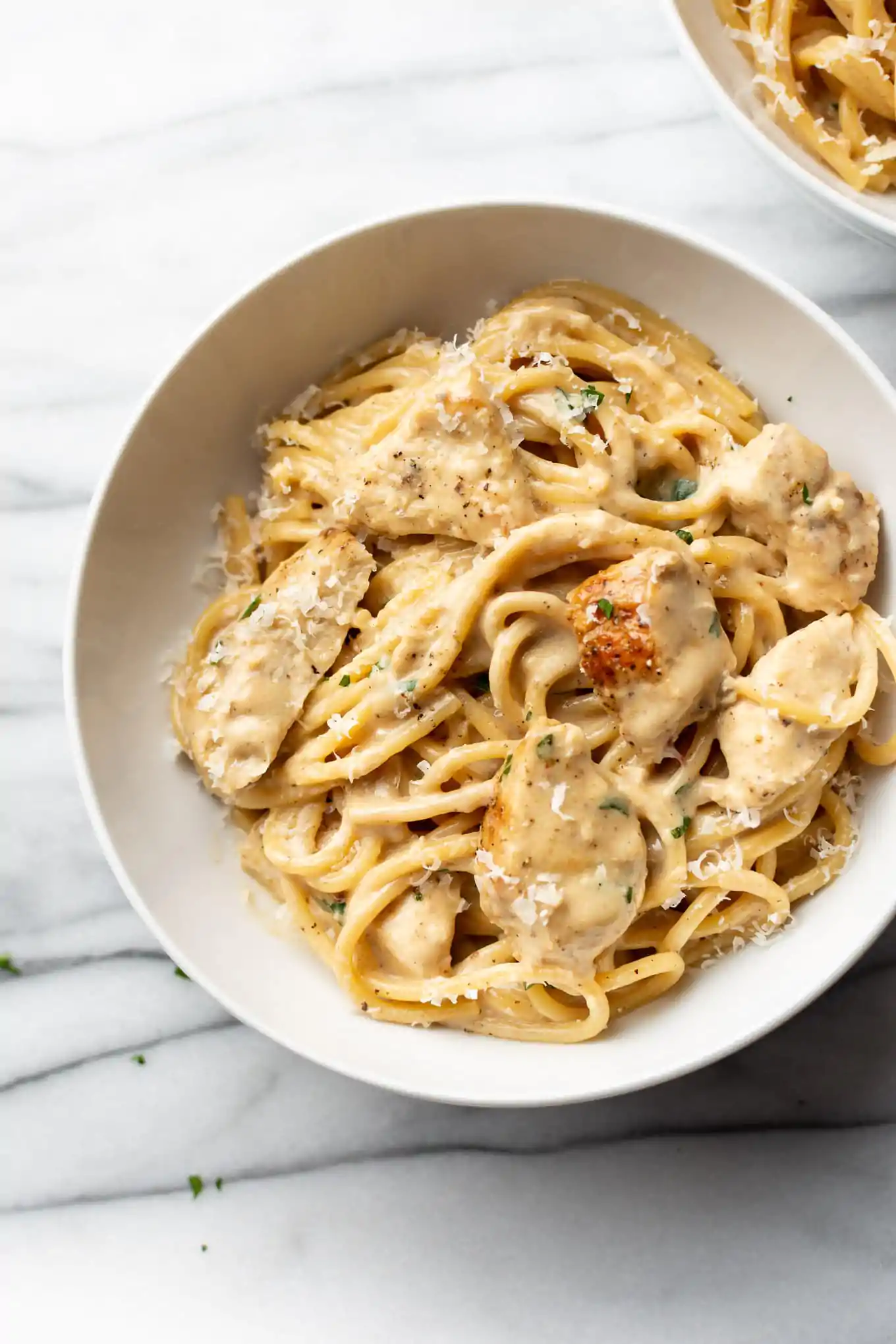
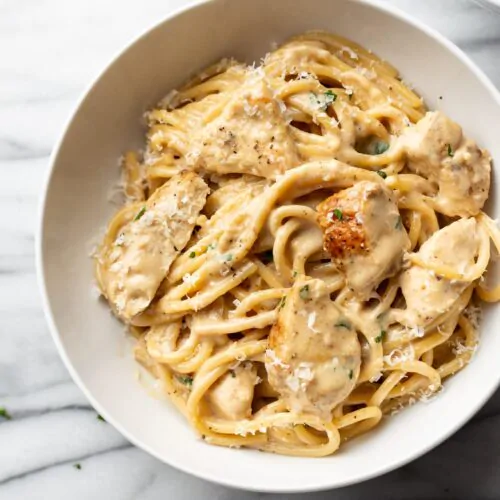
Garlic chicken pasta pairs golden, pan-seared chicken with a silky parmesan cream sauce that clings to every bite. The sauce starts in the skillet where you sear the chicken, so the browned bits give the cream a savory base. Fresh garlic adds fragrance, and a small squeeze of lemon cuts through the richness without making the sauce taste lemony.
Dinner serves four and takes about 30 minutes, with the pasta boiling while the chicken cooks. It’s a good weeknight choice when you want something more substantial than buttered noodles but don’t want to turn on the oven.
Why This Garlic Chicken Pasta Recipe Works
The chicken and sauce share a skillet, but they don’t need the same heat or cooking time. Making them in stages gives you control over both.
- Thin cutlets cook evenly. Slicing the breasts horizontally gets the thick centers closer in size to the edges. The outside can brown without drying out while you wait for the middle to cook.
- The skillet holds onto flavor. Broth or wine loosens the browned bits left by the chicken and carries them into the sauce. That’s what gives a short-simmered cream sauce the depth of a pan gravy.
- A little flour is enough. Flour adds just enough body to help the cream coat the pasta. Briefly stirring it into melted butter disperses it before the liquid goes in, which makes lumps less likely.
- The cheese goes in late. The cream thickens first, so the parmesan only needs to melt. It doesn’t have to sit through a simmer that could make it grainy.
Ingredients You’ll Need
Set out the sauce ingredients before you start; once the chicken leaves the skillet, the garlic and flour cook quickly.
- Pasta: Use 8 ounces of dry pasta. Penne catches sauce inside its tubes, while fettuccine gives you long strands that are easy to twirl.
- Chicken breasts: Start with two boneless, skinless breasts and split each horizontally into thin cutlets.
- Garlic powder: Half a teaspoon seasons the chicken without leaving bits of fresh garlic to scorch during the sear.
- Salt and pepper: Use both to taste on the chicken, then check the finished pasta before adding more.
- Olive oil: One tablespoon helps coat the skillet for searing.
- Butter: Divide 2 tablespoons between the sear and the flour mixture.
- Fresh garlic: Finely mince three cloves so they soften quickly.
- Flour: Half a tablespoon of all-purpose flour lightly thickens the sauce.
- Chicken broth or dry white wine: Use half a cup of either for deglazing; broth is savory, while wine tastes brighter.
- Lemon juice: Half a teaspoon balances the cream and cheese.
- Heavy cream: One cup of heavy or whipping cream makes the sauce rich and full-bodied.
- Parmesan: Grate half a cup from a wedge for a smooth melt.
Equipment You’ll Need
- Pasta pot: Choose a pot with enough room to stir the pasta freely so pieces don’t stick together as the water returns to a boil.
- Wide skillet: You’ll need space to brown the cutlets without overlap and toss the cooked pasta without spilling.
- Whisk: A whisk helps blend the broth or wine into the flour mixture.
- Instant-read thermometer: Use it to check each cutlet without slicing it open.
How to Make Garlic Chicken Pasta
1. Start the pasta
Bring a pot of salted water to a boil and cook the pasta to al dente, using the package directions as your guide.
If the pasta finishes before the sauce, save a little of the cooking water before draining it so you can still adjust the sauce later.
2. Slice and season
While the pasta cooks, slice each breast in half lengthwise to make four thin cutlets. Season them with the garlic powder, salt and pepper.
Hold your knife parallel to the board so you make two broad, flat pieces rather than two narrow strips.
3. Sear the cutlets
Warm the olive oil and 1 tablespoon of butter in the skillet over medium-high heat for a few minutes. Sear the cutlets for 5 to 6 minutes per side, until golden and cooked through to 165°F, then move them to a plate.
Look for a steady sizzle as the chicken hits the skillet.
4. Cook garlic and flour
Melt the rest of the butter in the same skillet, then stir in the garlic and flour for about 30 seconds.
The garlic should smell fragrant and still look pale.
5. Deglaze the skillet
Whisk in the broth or wine and the lemon juice, scraping up the browned bits as you go. Let the liquid bubble for about a minute.
Check the edges of the pan for any browned bits the whisk missed.
6. Simmer the cream
Pour in the cream and cook for about 4 to 5 minutes more, until it thickens slightly. Turn down the heat if the sauce starts bubbling hard.
Look for small, steady bubbles rather than a rolling boil.
7. Finish and toss
Cut the cooked chicken into bite-size pieces while the cream simmers. Stir the parmesan into the sauce, then toss in the chicken and drained pasta. If the sauce is too thick, stir in about a tablespoon of pasta water before draining; taste for salt and pepper and serve right away.
The pasta should look glossy and move freely as you toss it.
How to Tell When It’s Done
A golden crust doesn’t tell you what’s happening inside the chicken. Slide the thermometer in from the side so the tip reaches the center of the thickest part without touching the skillet. If a cutlet reads below 165°F, keep cooking it and recheck before taking it out.
Before you add the cheese, the cream should leave a thin film on the back of a spoon but still pour easily. If it runs off like milk, simmer it a bit longer. Stop short of gravy thickness: the parmesan and pasta will give it more body.
Tips and Common Mistakes
A few choices at the stove make the difference between a smooth sauce and one you have to rescue.
- Keep the chicken in one layer. Leave space between cutlets so moisture can escape instead of collecting around the meat. Work in batches if your skillet won’t comfortably fit them.
- Let the first side release. If the chicken clings when you try to turn it, give the crust a little longer to set rather than pulling it up and tearing it.
- Use the resting juices. Tip any juices from the plate back into the skillet with the sliced chicken. They taste like the sear and keep that flavor in the dish.
- Grate the parmesan finely. Fluffy shreds melt faster than long, thick ones. Dry shaker parmesan can leave the sauce gritty.
- Season after adding cheese. Broth and parmesan both bring salt, and reducing the broth concentrates it. Taste a coated piece of pasta before adjusting.
Substitutions and Variations
Keep the cream and reduction method as written for the same consistency, and adjust the meat, pasta or seasonings to suit your pantry.
- Chicken thighs: Boneless, skinless thighs give the dish a richer flavor. Thickness varies, so use the thermometer rather than the cutlet timing.
- Pecorino Romano: Swap some of the parmesan for finely grated pecorino for a sharper, saltier finish.
- Baby spinach: Fold it into the hot sauce before tossing in the pasta. Let it wilt so the leaves distribute evenly instead of bunching up.
- Red pepper flakes: Stir a pinch into the liquid after deglazing for a gentle heat that carries through the cream.
- Lemon zest: Grate a little over the finished pasta for a brighter citrus aroma without adding more liquid.
What to Serve with Garlic Chicken Pasta
Pair the pasta with an arugula and cucumber salad dressed in a tart vinaigrette, or browse our crisp salad ideas for another fresh side. Roasted broccoli with browned edges or steamed green beans also work well when you want something warm.
If you’re serving guests, start with olives or a small plate of marinated vegetables from our easy appetizer ideas. Keep the starter light so the creamy pasta can be the focus.
Make-Ahead, Storage and Reheating
Make ahead: Slice the raw chicken into cutlets and grate the parmesan up to a day ahead. Refrigerate them in separate covered containers, with the chicken on the bottom shelf. Wait to cook the pasta and make the sauce until dinner so the noodles don’t sit and absorb the cream.
Storage: Refrigerate leftovers in an airtight container for 3 to 4 days. Get them into the fridge within 2 hours of cooking.
Freezing: Skip freezing the finished pasta if texture matters. The sauce can separate during thawing, and the noodles tend to soften.
Reheating: Warm leftovers gently in a skillet with a splash of broth or water, stirring to loosen the sauce. Heat to 165°F without letting the sauce boil hard.
Garlic Chicken Pasta FAQs
Can I use rotisserie chicken in garlic chicken pasta?
Yes. Skip the sear and fold bite-size pieces into the finished sauce, heating them through before serving. The sauce will be milder without the browned bits, so broth is a good choice for the liquid.
Can I use half-and-half instead of heavy cream?
Not as a direct swap if you want the same consistency. Half-and-half makes a thinner sauce and is more likely to separate as it simmers with the lemon juice.
Can I cook the pasta directly in the sauce?
No. There isn’t enough liquid to cook dry pasta in the skillet, and adding enough would change the balance of the sauce. Boiling it separately also lets you control the texture before tossing.
What if I forgot to save pasta water?
Use a small splash of warm broth or plain water instead. Add just enough to loosen the sauce; plain water is handy if the sauce is already salty.
Can I double garlic chicken pasta?
Yes. Use a larger pasta pot, sear the chicken in batches, and plan to toss everything in the pot if the skillet is too full. Judge the sauce by how it coats a spoon, not just by the clock.
Do I have to rinse the pasta after draining?
No. Rinsing cools the noodles and washes away surface starch that helps the sauce cling. Drain them well and transfer them straight to the skillet.
Printable Recipe
Recipe adapted from Salt & Lavender. Photos courtesy of Salt & Lavender, used with permission.
Easy Garlic Chicken Pasta
Ingredients
- 8 ounces uncooked pasta
- 2 chicken breasts cut in half lengthwise
- 1/2 teaspoon garlic powder
- Salt & pepper to taste
- 1 tablespoon olive oil
- 2 tablespoons butter divided
- 3 cloves garlic minced
- 1/2 tablespoon flour
- 1/2 cup chicken broth or dry white wine
- 1/2 teaspoon lemon juice
- 1 cup heavy/whipping cream
- 1/2 cup freshly grated parmesan cheese
Instructions
- Boil a salted pot of water and cook pasta al dente according to package directions.
- Meanwhile, cut the chicken breasts in half lengthwise so you have 4 thinner pieces. Sprinkle them with the garlic powder and some salt & pepper.
- Add the olive oil and 1 tablespoon of the butter to a skillet over medium-high heat. Let the pan heat up for a few minutes. Cook the chicken for 5-6 minutes/side or until golden and cooked through (165F). Transfer to a plate.
- To the same skillet, add the remaining butter. Once it melts, stir in the garlic and flour and cook for 30 seconds or so.
- Whisk in the chicken broth and lemon juice (and scrape up any brown bits from the bottom of the skillet). Let it bubble for about a minute.
- Add in the cream and let it cook for another 4-5 minutes or so until it thickens up a bit (turn down the heat if it starts bubbling like crazy).
- Meanwhile, cut up the cooked chicken into bite-size pieces.
- Stir the parmesan into the sauce.
- Add the chicken and the drained pasta to the skillet and toss until coated (I add a tablespoon or so of the pasta water to the sauce prior to draining it, especially if it's become a tad too thick). Serve immediately with extra salt & pepper if needed.


