Easy Hamburger Gravy

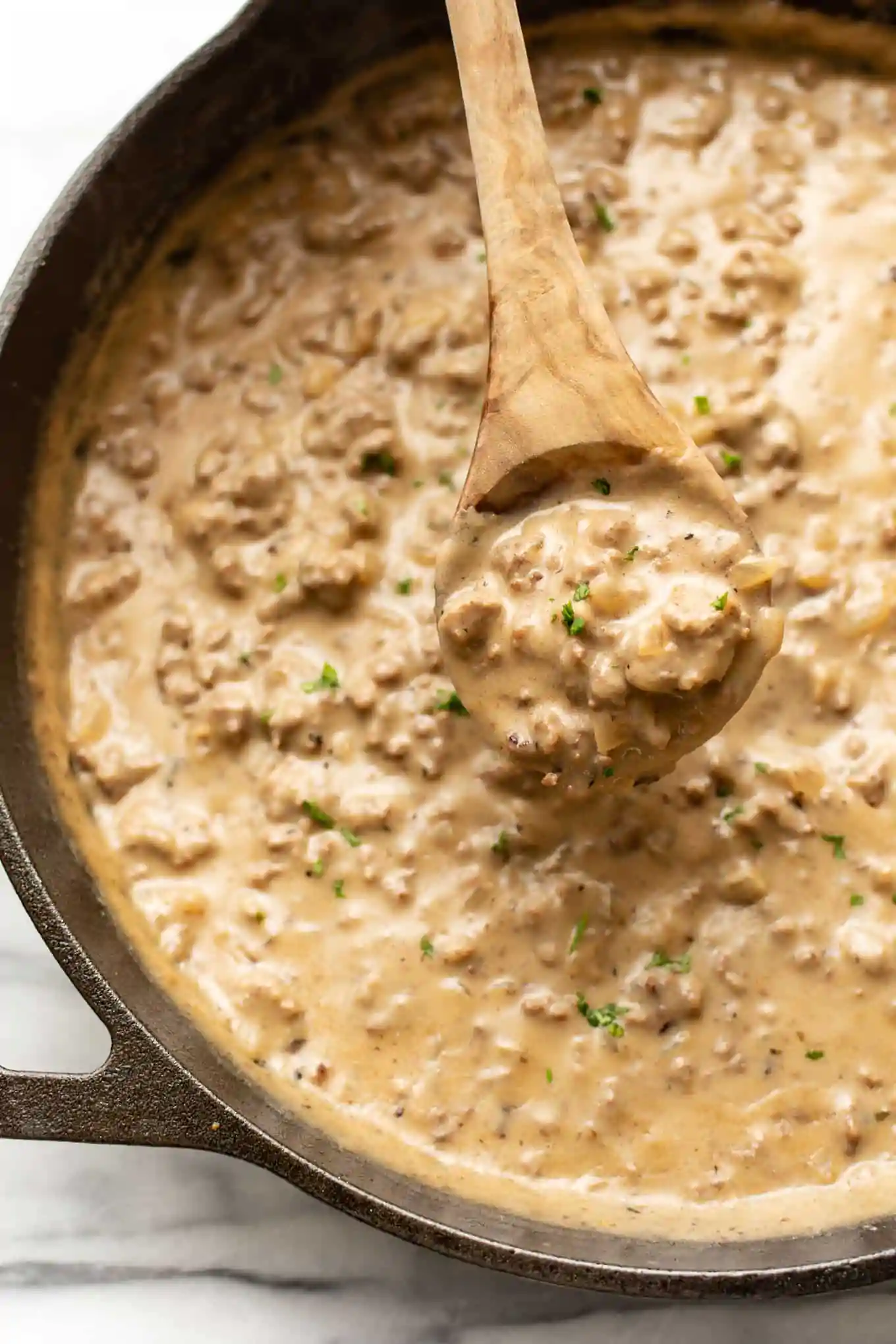
Hamburger gravy is a skillet dinner of browned beef crumbles and tender onion in a creamy milk gravy. The flour goes right into the seasoned beef, so there’s no separate sauce to make. Worcestershire and a little Dijon give the gravy a savory edge without making it taste sharply of mustard.
The recipe serves four and takes 30 minutes from start to finish, including 10 minutes of prep. It’s a good weeknight choice when you have a pound of ground beef but don’t want to shape patties or simmer a pot of sauce. Get your side going first and the gravy can go from skillet to plate while it’s still silky.
Why This Hamburger Gravy Recipe Works
This gravy gets its flavor and thickness in the same skillet. Each addition builds on what’s already in the pan.
- Browning builds a savory base. Medium-high heat helps moisture evaporate so the beef can brown rather than simply turn gray. Those browned bits season the milk once you scrape them up.
- Fresh and dried onion do different jobs. The chopped onion softens into sweet little pieces among the beef crumbles. Onion powder disperses through the liquid so the gravy itself tastes seasoned.
- The beef drippings help disperse the flour. Stirring the flour through the beef and its fat before adding milk spreads it across the skillet instead of leaving it in clumps on the surface.
- Bouillon adds depth without extra liquid. The concentrated paste gives the sauce a beefy backbone while letting milk supply the liquid. Worcestershire adds tang so the finished gravy doesn’t taste flat.
- A simmer sets the consistency. The flour swells as the milk heats, turning a loose mixture into a gravy that clings to the crumbles instead of running off the spoon.
Ingredients You’ll Need
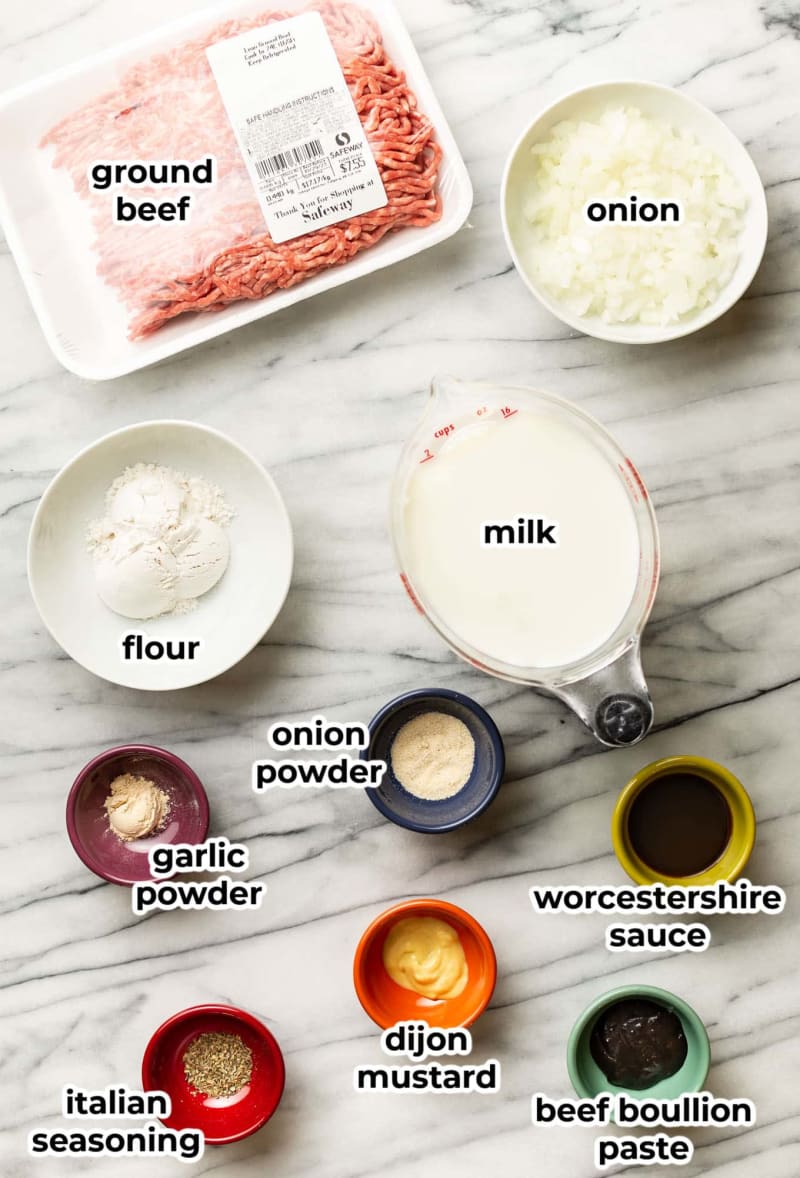
Measure the seasonings before you start browning the beef. They go into the skillet together, and having them ready means you won’t leave the beef cooking while you hunt for the Dijon.
- Lean ground beef: One pound forms the base. Choose lean beef so you can generally use the drippings without having to drain the skillet.
- Onion: Half of a medium onion, finely diced so the pieces soften as the beef browns.
- Onion powder: Half a teaspoon seasons the milk gravy without adding more pieces of onion.
- Garlic powder: Half a teaspoon gives the sauce a mellow garlic flavor.
- Italian seasoning: A quarter teaspoon of the dried herb blend adds a subtle herbal note.
- Beef bouillon paste: Two teaspoons give the gravy a concentrated beef flavor. Look for a paste rather than ready-to-use broth.
- Worcestershire sauce: One tablespoon gives the creamy sauce a tangy, savory finish.
- Dijon mustard: Half a teaspoon adds just enough sharpness to balance the milk.
- Flour: Three tablespoons of all-purpose flour thicken the gravy.
- Whole milk: Two cups make a creamy sauce without the weight of heavy cream.
- Salt and pepper: Add both to taste at the end, once you know how salty the bouillon has made the gravy.
- Fresh parsley: Chop as much as you like for an optional fresh finish.
Equipment You’ll Need
- Wide skillet: Choose one with enough room to spread out the beef and sides high enough to stir the milk in without sloshing it over the rim.
- Flat-edged spoon or spatula: A sturdy edge breaks up the ground beef and reaches the bottom corners where flour and gravy can collect.
- Liquid measuring cup: A spout makes it easier to pour a little milk at a time while you stir.
How to Make Hamburger Gravy
1. Brown the beef and onion
Put the lean ground beef and finely chopped onion in a skillet over medium-high heat. Break the beef apart with a spoon as it cooks, and give it about 8 minutes to brown. Keep the drippings from lean beef; if your beef is fattier, spoon off the excess but leave some behind.
Look for brown patches on the crumbles and softened onion. If the beef gives off water first, wait for the sound to shift from bubbling to sizzling.
2. Stir in the seasonings
Add the onion powder, garlic powder, Italian seasoning, beef bouillon paste, Worcestershire sauce and Dijon. Stir them through the hot beef and onion.
Press any little blobs of bouillon against the skillet with the back of your spoon so nobody gets a concentrated salty bite.
3. Coat the beef with flour
Turn the heat down to medium. Scatter the flour over the beef and stir until the crumbles are evenly coated.
Check around the sides and bottom of the skillet for dry white pockets before you pour in the milk.
4. Pour in the milk
Add the whole milk slowly as you stir, working the first splash into the beef mixture before adding more. Keep stirring until the flour is fully incorporated and the liquid is smooth around the beef.
The first splash may make the mixture look pasty. Keep stirring as you add more milk and it will loosen.
5. Simmer until thickened
When the gravy begins to bubble, cook it for about 5 to 10 minutes, stirring occasionally, until it’s as thick as you like.
Sweep your spoon across the bottom when you stir. The sauce at the base thickens first and can stick if you only stir the surface.
6. Taste and finish
Add salt and pepper as needed, and adjust the other seasonings to taste. Scatter chopped fresh parsley over the gravy just before serving if you like.
Taste the gravy and beef together. The liquid can taste more strongly seasoned on its own than it does with a spoonful of crumbles.
How to Tell When It’s Done
Ground beef should reach 160°F; brown color alone isn’t a reliable safety check. Before adding the milk, gather a small mound of crumbles and insert an instant-read thermometer into the center without touching the skillet. If it reads low, keep cooking the beef before continuing.
The gravy is ready when it coats the back of a spoon but still pours easily. If it runs off like milk, let it simmer a little longer. If it mounds instead of flowing, take the pan off the heat and stir in a splash of milk.
Tips and Common Mistakes
A few small decisions at the skillet make the difference between a smooth, beefy gravy and one that’s greasy or heavy.
- Give the beef room to brown. Spread it out after breaking it up, then let it make contact with the skillet between stirs. Constant stirring keeps any one surface from browning well.
- Spoon off pooled grease. With fattier beef, tilt the pan and spoon off the puddle rather than pouring out all the drippings. Leave a light coating to help incorporate the flour.
- Crush bouillon cubes first. One or two beef bouillon cubes can stand in for the paste, depending on their strength. Crumble them finely so they disperse instead of staying in hard chunks.
- Keep the simmer gentle. A rolling boil can scorch the milk on the bottom before the rest of the sauce thickens. Aim for small bubbles rather than a constantly churning surface.
- Break up flour lumps early. Press a stubborn lump against the side of the skillet with the spoon. It’s easier to work it smooth before the gravy thickens around it.
- Stop just shy of your ideal thickness. The gravy firms up as it cools, especially if it sits in the skillet while you finish a side.
Substitutions and Variations
These swaps preserve the basic skillet method, though some change the richness or the balance of the seasonings.
- Two percent milk: Use it in place of whole milk for a lighter gravy. The flour still thickens it, but the sauce won’t feel as rich.
- Unsweetened soy milk: Plain, unsweetened soy milk works in place of dairy milk. Check for vanilla or added sugar, both of which stand out in a savory gravy.
- Shallot: Finely chopped shallot can replace the onion for a milder flavor. Add it with the beef as you would the onion.
- Yellow mustard: Use it in place of Dijon if that’s what you have. The gravy will have a slightly brighter, more vinegary finish.
- Dried thyme: Use a small pinch in place of the Italian seasoning for a more traditional gravy flavor without the oregano note.
- Gluten-free flour blend: A cup-for-cup blend labeled for sauces can replace the flour. Check the bouillon and Worcestershire labels too if the meal needs to be gluten-free.
What to Serve with Hamburger Gravy
Spoon hamburger gravy over mashed potatoes for a dinner that catches every bit of sauce. Split biscuits, buttered egg noodles or steamed rice work well too. For more skillet dinner ideas, browse our ground beef dinner ideas.
Add steamed green beans or roasted broccoli for a side that holds its texture next to the gravy. If you’re serving it over biscuits, something crisp and tangy from our salads for dinner makes a good contrast.
Make-Ahead, Storage and Reheating
Make ahead: Chop the onion up to a day ahead and refrigerate it in a covered container. Measure the dry seasonings into a separate covered dish, but wait to chop the parsley until serving so the cut leaves stay fresh.
Storage: Transfer leftovers to a shallow airtight container and refrigerate within 2 hours. Use within 3 to 4 days, and store the gravy separately from biscuits or noodles so they don’t soak up the sauce.
Freezing: Freeze cooled gravy in airtight portions for up to 2 months for best quality. Thaw it in the refrigerator; the milk gravy may separate a little, but stirring as you reheat can help bring it together.
Reheating: Warm the gravy in a skillet over medium-low heat, stirring and adding a splash of milk as needed to loosen it. Reheat leftovers to 165°F, then take the skillet off the heat to avoid reducing the sauce further.
Hamburger Gravy FAQs
Is hamburger gravy the same as Salisbury steak gravy?
No. Here the ground beef stays in crumbles and the sauce is milk-based. Salisbury steak is served as shaped beef patties, typically with a brown gravy.
Can I make hamburger gravy with frozen ground beef?
Yes, but thaw it in the refrigerator first. A thawed block breaks up evenly in the skillet, so you can brown the crumbles and soften the onion at the same time.
Can I double this hamburger gravy?
Yes. Brown the beef and onion in batches if they won’t fit in a single layer, then bring the batches together in a wide pot before you add the seasonings and make the gravy.
Can I leave out the Worcestershire sauce?
Yes. The gravy will be milder and less tangy, but the bouillon and browned beef will still give it a savory base.
Why are there brown flecks in my gravy?
Small brown flecks are usually bits of browned beef or dried herbs, and they’re normal. Black flecks paired with a bitter taste can mean the bottom scorched.
Can I add mushrooms to hamburger gravy?
Yes. Brown sliced mushrooms separately and fold them into the finished gravy. Cooking them separately keeps the water they release from diluting the sauce.
Printable Recipe
Recipe adapted from Salt & Lavender. Photos courtesy of Salt & Lavender, used with permission.
Easy Hamburger Gravy
Ingredients
- 1 pound lean ground beef
- 1/2 medium onion chopped finely
- 1/2 teaspoon onion powder
- 1/2 teaspoon garlic powder
- 1/4 teaspoon Italian seasoning
- 2 teaspoons beef bouillon paste I used Better Than Bouillon
- 1 tablespoon Worcestershire sauce
- 1/2 teaspoon Dijon mustard
- 3 tablespoons flour
- 2 cups whole milk
- Salt & pepper to taste
- Chopped fresh parsley optional, to taste
Instructions
- Add the beef and onion to a skillet over medium-high heat. Cook it until browned, breaking up the meat with your spoon as you go along (about 8 minutes). Don't drain the fat unless you're not using lean ground beef (then drain a bit but still leave some in).
- Stir in the onion powder, garlic powder, Italian seasoning, bouillon paste, Worcestershire sauce, and Dijon mustard.
- Reduce the heat to medium, then stir in the flour.
- Stir in the milk slowly until the flour has dissolved.
- Once it starts to bubble, let it cook until it's thickened up to your liking, stirring occasionally (about 5-10 minutes).
- Season as needed with salt & pepper and adjust other ingredients to taste if needed. Serve with fresh parsley sprinkled over top if you wish.
Notes
- Use a beef bouillon cube or two if you don’t have the paste (but Better Than Bouillon is easy to find in most grocery stores and delicious for enhancing many recipes).


