Easy Pink Sauce Pasta

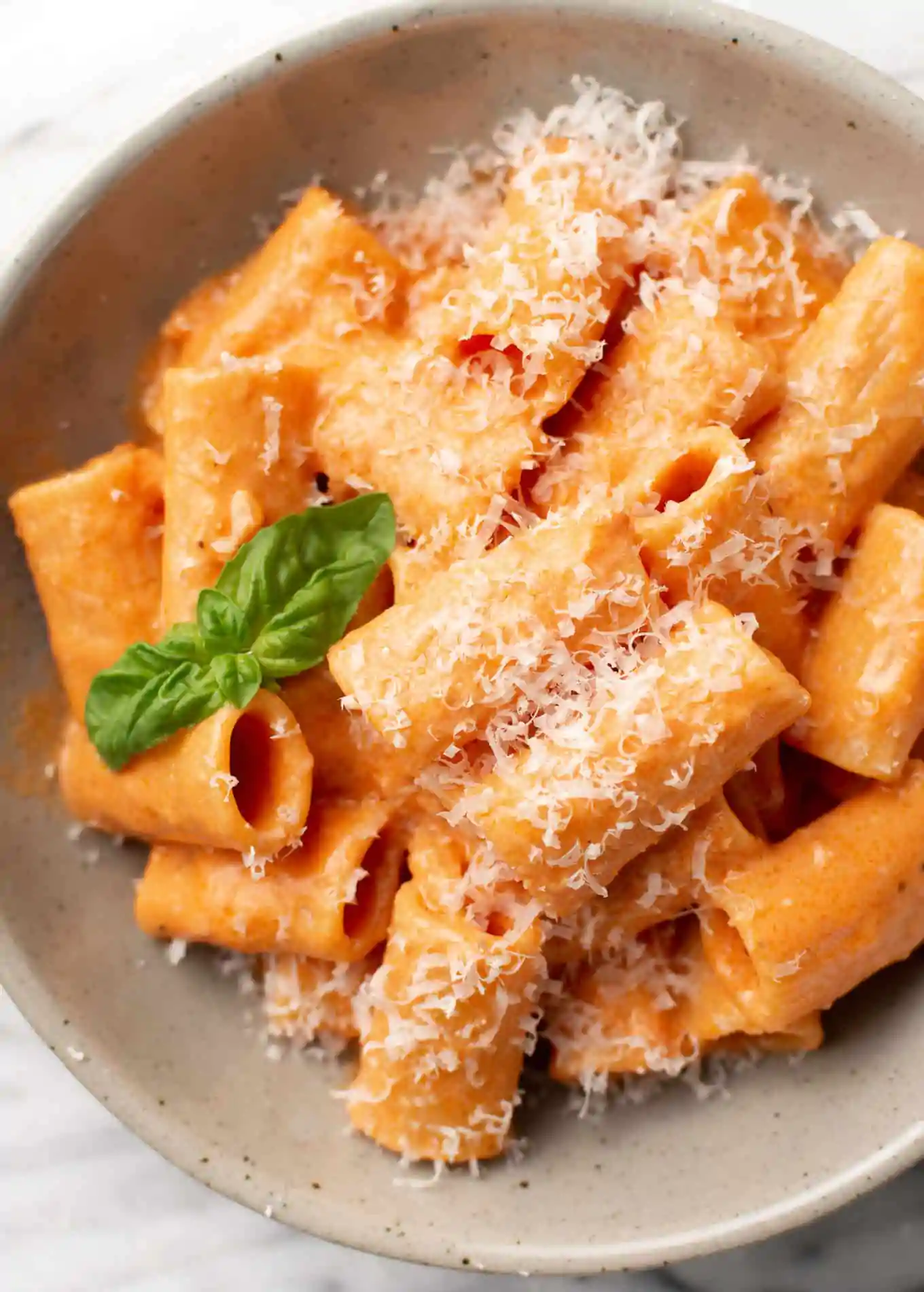
Pink sauce pasta coats each piece of rigatoni or penne in a silky tomato cream sauce that tastes tangy, buttery, and pleasantly salty from Parmesan. Tomato paste gives the sauce its flavor and rosy color without a long simmer, and stirring in the cheese off the heat keeps the finish smooth.
Dinner takes 30 minutes, with the sauce cooking while the pasta boils. The recipe makes four modest servings, just right for a weeknight meal with a crisp salad or a vegetable on the side. It’s also a good choice for company when you’d rather spend less time at the stove.
Why This Pink Sauce Pasta Recipe Works
This sauce gets its body from concentrated tomato paste, heavy cream, and a short simmer rather than flour or a long reduction.
- Tomato paste brings concentrated flavor. With less water than crushed tomatoes or tomato sauce, paste gives the cream a pronounced tomato flavor without making you boil away a lot of extra liquid.
- Butter and olive oil round out the base. Butter lends richness to the onion, while olive oil adds a fruity note. The onion softens in the fat and brings a gentle sweetness that balances the tomato.
- Dry wine brightens the sauce. A short bubble loosens the browned onion bits from the skillet so they flavor the whole sauce. The wine also adds a little acidity to balance the cream.
- Short pasta holds the sauce. Rigatoni and penne catch the cream sauce inside their hollow centers. Ridged versions hold even more on the outside, so the sauce doesn’t all run to the bottom of the bowl.
Ingredients You’ll Need
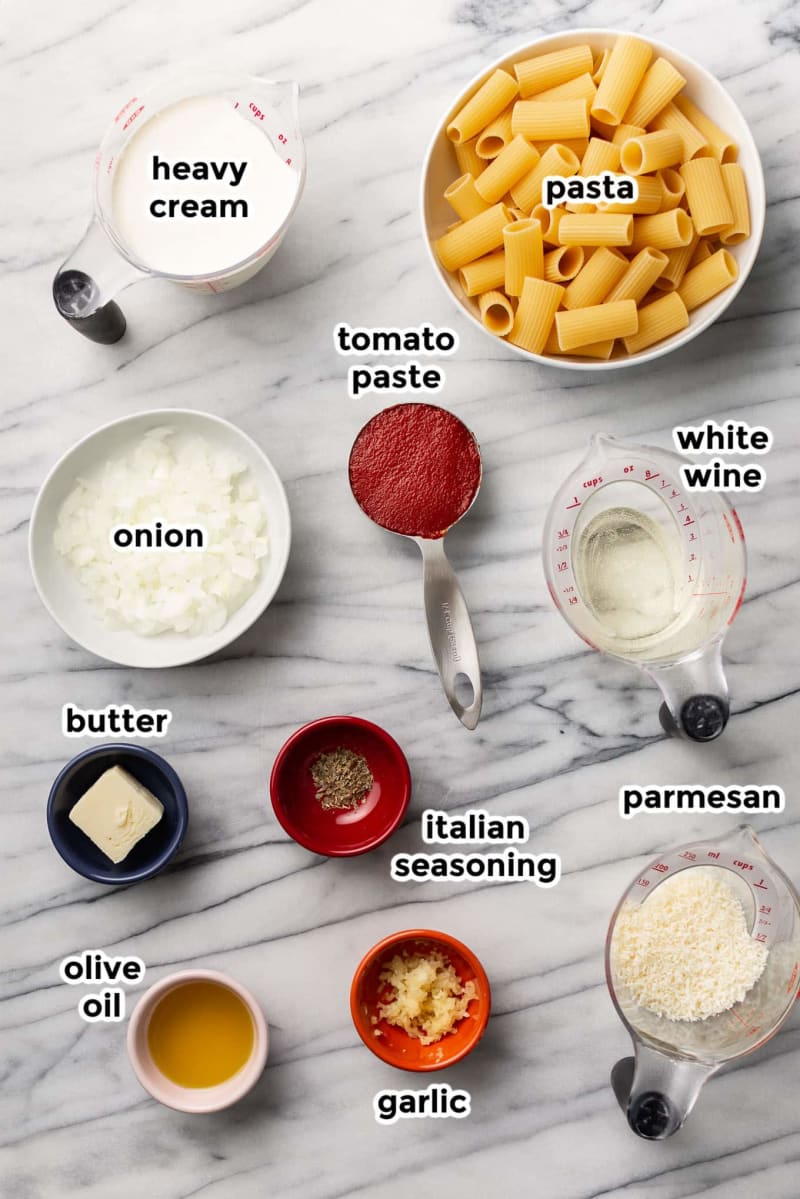
The sauce gets its flavor from a few concentrated ingredients. Choose a good tomato paste, a dry wine, and a wedge of Parmesan.
- Pasta: Start with 8 ounces of dry pasta. Rigatoni gives you a wider tube and a substantial bite; penne makes for smaller forkfuls.
- Olive oil: Use 1 tablespoon to sauté the onion. Regular or extra-virgin olive oil works here.
- Butter: Use 2 tablespoons for a richer base. Unsalted butter gives you more control over the final seasoning.
- Onion: Finely chop half a small onion. Small pieces soften evenly and won’t interrupt the smooth texture of the sauce.
- Italian seasoning: Use 1/4 teaspoon of the dried herb blend for a subtle herbal note behind the tomato and cream.
- Garlic: Mince 2 to 3 cloves, using the higher end if you like a more noticeable garlic flavor.
- Dry white wine: Pour 1/4 cup of an unoaked dry white, such as Pinot Grigio. Avoid sweet wine, which can make the sauce taste sugary.
- Tomato paste: Measure 1/4 cup. A good-quality tubed paste is convenient because you can squeeze out just what you need and recap it.
- Heavy cream: Use 1 cup of heavy cream or heavy whipping cream for a sauce that clings to the pasta.
- Parmesan: Grate enough Parmesan from a wedge to make 1/2 cup. Fine shreds melt readily in the warm sauce.
- Salt and pepper: Use both to taste. Parmesan adds salt of its own, so save the final adjustment for the end.
How to Make Pink Sauce Pasta
1. Boil the pasta
Bring a large pot of salted water to a boil. Add the pasta and follow the package directions for al dente, starting the sauce while it cooks.
Taste a piece before draining. It should be tender enough to chew easily but still firm at the center, without a hard, chalky core.
2. Soften the onion
Warm the olive oil and butter in a skillet over medium heat. When the butter melts, add the onion and Italian seasoning and sauté for 5 to 7 minutes, until the onion is soft and lightly browned.
Look for pale gold edges and pieces that yield easily under the spoon. The goal is a soft, sweet onion, not a deeply browned one.
3. Add garlic and wine
Stir the garlic into the onions, then pour in the wine. Allow it to bubble for about 30 seconds, stirring to lift any browned bits from the skillet.
Have the wine measured before the garlic goes in so you can add it promptly rather than letting the garlic sit in the hot fat.
4. Simmer the pink sauce
Add the tomato paste and cream, stirring until the color is even and no streaks of paste remain. Let the sauce bubble gently for about 5 minutes, until it thickens slightly.
Press any lumps of paste against the side of the skillet with your spoon. Stop when the sauce lightly coats the spoon; it will gain more body once the cheese goes in.
5. Melt in the Parmesan
Move the skillet off the burner and stir in the Parmesan. Keep stirring so the residual heat melts it throughout the sauce.
The sauce should look glossy rather than stringy. If you’re using an electric stove, move the skillet to a cool burner instead of simply switching the heat off.
6. Toss and serve
If the sauce looks too thick, stir in a little hot pasta water before draining the pasta. Drain, add the pasta to the skillet, and toss until coated. Taste for salt and pepper and serve right away.
The sauce should slide around the pan easily as you toss, leaving an even coating on the pasta rather than sitting in heavy clumps.
Tips and Common Mistakes
A few small decisions before you cook will make it easier to finish the pasta and sauce together.
- Keep the cream full-fat. Milk and half-and-half make a thinner sauce and are more likely to curdle when heated with acidic tomato paste.
- Skip the shelf-stable grated cheese. The powdery kind can leave the sauce grainy. Grate your Parmesan before you start so it’s ready when the skillet comes off the heat.
- Keep a mug by the colander. It’s an easy reminder to scoop out pasta water before you drain. Add it a splash at a time so you don’t overshoot and make the sauce watery.
- Double it for hearty appetites. The standard batch gives each of four diners 2 ounces of dry pasta. Double the whole recipe, not just the noodles, if pasta is the only thing on the table.
- Don’t rinse the pasta. Rinsing cools the noodles and washes away the surface starch that helps the sauce cling.
Substitutions and Variations
Keep the tomato paste and cream as the base, then adjust the pasta, aromatics, or seasonings to suit what you have.
- No wine: Use an equal amount of low-sodium vegetable broth. It will loosen the browned bits, though the sauce will taste a little less bright.
- Shallot: Use finely chopped shallot instead of onion for a milder, sweeter base. Watch for the same soft texture and light browning.
- Gluten-free pasta: Choose a sturdy gluten-free penne and follow its package directions. Toss gently, since some brands break more readily than wheat pasta.
- A little heat: Add a pinch of crushed red pepper with the Italian seasoning for gentle warmth that carries through the creamy sauce.
- Pecorino Romano: Swap in finely grated Pecorino for a sharper finish. It’s saltier than Parmesan, so taste before adding any salt.
What to Serve with Pink Sauce Pasta
Pair the pasta with an arugula salad and a lemon vinaigrette to cut through the cream, or look through these fresh salad ideas for a side with some crunch. Roasted broccoli with browned edges works well if you’d rather serve a warm vegetable.
To make the pasta a side, serve it alongside sliced grilled chicken or choose a simply seasoned main from these easy chicken dishes.
Make-Ahead, Storage and Reheating
Make ahead: Chop the onion and grate the Parmesan up to a day ahead, storing them separately in covered containers in the refrigerator. Boil the pasta and finish the sauce just before serving so the noodles don’t soak up the sauce while they sit.
Storage: Refrigerate leftovers in an airtight container within 2 hours of cooking and use them within 3 to 4 days.
Freezing: Skip freezing the finished pasta if texture matters. The cream sauce can separate after thawing, and the pasta may turn soft.
Reheating: Warm leftovers in a skillet over low heat with a splash of water or cream. Stir gently as the sauce loosens, and heat through without letting it come to a hard boil.
Pink Sauce Pasta FAQs
Is pink sauce the same as vodka sauce?
Not quite. Pink sauce is a broad name for tomato sauce lightened with cream. Vodka sauce is one type, but this version uses dry white wine instead of vodka.
Why does my pink sauce look orange?
A peach or salmon shade is normal. The exact color depends on how dark your tomato paste is, so use the sauce’s texture, not the shade, to judge when it’s ready.
Can I use tomato paste left over from a can?
Yes, as long as it was stored properly and you have enough for the recipe. Frozen leftover paste works too; thaw it in the refrigerator so it’s easy to measure and stir into the cream.
Can I add spinach to pink sauce pasta?
Yes. Stir a handful of baby spinach into the simmering sauce near the end and let it wilt before you take the skillet off the heat.
Is pink sauce pasta vegetarian?
Not necessarily. Traditional Parmesan is made with animal rennet, so choose a Parmesan-style cheese labeled vegetarian if that matters for your table.
Printable Recipe
Recipe adapted from Salt & Lavender. Photos courtesy of Salt & Lavender, used with permission.
Easy Pink Sauce Pasta
Ingredients
- 8 ounces uncooked pasta rigatoni or penne preferred
- 1 tablespoon olive oil
- 2 tablespoons butter
- 1/2 small onion chopped finely
- 1/4 teaspoon Italian seasoning
- 2-3 cloves garlic minced
- 1/4 cup dry white wine
- 1/4 cup tomato paste see note
- 1 cup heavy/whipping cream
- 1/2 cup freshly grated parmesan cheese
- Salt & pepper to taste
Instructions
- Boil a large, salted pot of water and cook your pasta al dente according to package directions.
- Meanwhile, add the oil and butter to a skillet over medium heat. Once melted, add the onion and Italian seasoning. Sauté the onion for 5-7 minutes or until softened and lightly browned.
- Stir in the garlic, then add the wine and let it bubble for about 30 seconds.
- Stir in the tomato paste and cream until smooth. Let the sauce bubble for about 5 minutes or until thickened up a bit.
- Take the skillet off the heat and stir in the parmesan cheese.
- If the sauce has become too thick, thin it with a little bit of the hot pasta water prior to draining it. Drain the cooked pasta, add it to the skillet, and toss. Season with salt & pepper as needed and serve immediately.
Notes
- If you’re feeding four hungry people who will eat more than 2 oz pasta each and no side dishes, I recommend doubling the recipe.
- Use quality tomato paste! For this dish, I use the kind sold in the tubes (DeLallo and Mutti both make great ones).
- I don’t recommend subbing the cream for something lower fat as it may curdle due to the acidity of the tomatoes, and you will end up with a thinner and more watery sauce.
- You will have the best results if you buy a block of parmesan cheese and grate it yourself.


