Garlic Butter Salmon


Garlic butter salmon pairs a crisp, browned skin with tender fish and a quick pan sauce of melted butter, garlic, and lemon. Searing the salmon first builds flavor in the skillet, so the sauce picks up the savory browned bits without a separate pot.
Prep takes 10 minutes, cooking takes 20 minutes, and the recipe serves four. It is a practical weeknight dinner, but the bright, buttery sauce also makes the salmon feel at home on a dinner-party table.
Why This Garlic Butter Salmon Recipe Works
A hot skillet and a short, careful sauce step give this salmon its contrast of crisp edges and fresh, buttery flavor.
- Dry fish sears better. Patting the salmon dry helps it make direct contact with the hot pan instead of steaming in surface moisture. That gives the skin a better chance to turn crisp.
- Skin-side-down cooking protects the flesh. The skin acts as a buffer against the skillet’s heat while it browns. Starting on that side also means the fish spends most of its cooking time undisturbed.
- Lemon keeps the sauce lively. A small amount of lemon juice cuts through the richness of the butter and salmon. Extra lemon at the table lets everyone adjust the brightness to taste.
- The sauce comes together in the same skillet. The garlic and butter pick up the browned flavor left behind by the salmon. Cooking the garlic briefly over lower heat keeps it aromatic rather than bitter.
Ingredients You’ll Need
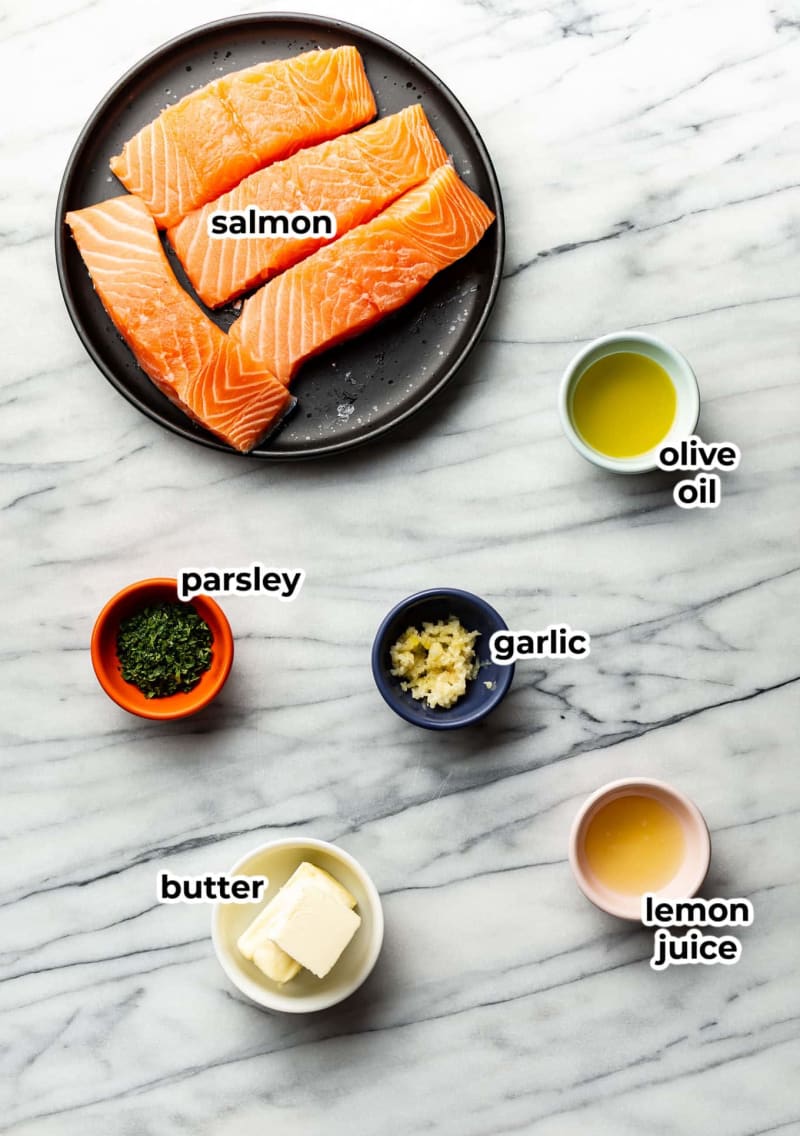
You only need a handful of everyday ingredients. Choose salmon pieces of similar thickness so they finish cooking at roughly the same time.
- Salmon: One pound, cut into 4 pieces. Atlantic salmon about 1 inch thick works well; similar-size pieces cook more evenly.
- Salt and pepper: Season to taste, using enough to bring out the salmon’s flavor without overpowering the lemon butter.
- Olive oil: One tablespoon helps the fish sear in the skillet. It also lets you use a little butter at the higher starting heat.
- Butter: Four tablespoons total, divided between searing and the sauce. Unsalted butter gives you more control over the final seasoning.
- Lemon juice: Half a tablespoon, or more to taste, brightens the sauce. Keep lemon wedges nearby if you like a sharper citrus finish.
- Garlic: Four to five cloves, minced, bring a savory aroma to the butter. Mince it before cooking so it can go straight into the pan.
- Fresh parsley: One tablespoon, chopped, is optional. It adds a fresh, lightly herbal finish and a little color.
Equipment You’ll Need
- Large skillet: Use a skillet wide enough to hold the salmon pieces without crowding, so they sear rather than steam.
- Fish spatula: A thin, flexible spatula helps you turn the salmon without breaking the pieces or damaging the skin.
How to Make Garlic Butter Salmon
1. Prepare and season the salmon
If you can, take the salmon out of the refrigerator 15-20 minutes before you begin. Cut it into 4 equal pieces, blot it thoroughly with paper towels, and season each piece generously with salt and pepper.
The surface should feel dry before it goes into the skillet; moisture makes browning harder.
2. Heat the skillet
Set a skillet over medium-high heat with the olive oil and 1 tablespoon of butter. Let the pan heat for a few minutes before adding the fish.
The fat should be hot and shimmering. If it starts smoking, lower the heat slightly before adding the salmon.
3. Sear the salmon
Place the fish in the pan skin-side down and cook for 5 minutes. Lower the heat to medium, turn the pieces, and cook the other side for another 2-4 minutes, until cooked through. Move the salmon to a plate.
The skin should release more easily once it has browned. If it sticks, give it a little more time rather than forcing it up.
4. Make the garlic butter
Reduce the heat to medium-low and add the remaining butter. Once it melts, stir in the minced garlic and lemon juice; keep stirring for about a minute, until the garlic is just cooked. Take the skillet off the heat.
The garlic should smell fragrant, not toasted or dark. It can turn bitter quickly, so remove the pan from the burner as soon as it is ready.
5. Sauce and serve
Return the salmon to the skillet and spoon the lemon garlic butter over the top. Sprinkle with parsley if using, and serve immediately with lemon wedges if you like.
The sauce should be glossy and the salmon coated. Serve soon after saucing to preserve the crisp skin.
How to Tell When It’s Done
The salmon should look opaque around the edges and separate into moist flakes when gently pressed with a fork. For a precise check, the thickest part should reach 145°F; take care not to judge only by the color of the surface.
If the center is still translucent or resists flaking, return the fish to the skillet over medium heat and cook briefly longer, checking again. Thicker pieces need more time, while skinless pieces cook faster.
Tips and Common Mistakes
A few small adjustments help keep the fish browned, moist, and full of fresh garlic flavor.
- Dry the salmon thoroughly. Blot both sides before seasoning, especially the skin. A dry surface browns more readily and is less likely to stick.
- Avoid crowding the skillet. Leave space between the pieces so the pan stays hot. If they are packed together, moisture collects and the fish will not sear as well.
- Keep the pieces close in thickness. The recipe is written for salmon about 1 inch thick. Thicker or thinner cuts need different cooking time, so watch the fish rather than relying only on the clock.
- Give the skin time to crisp. Let the salmon cook skin-side down without moving it for the full 5 minutes. If it resists when you try to turn it, it may need a little longer.
- Watch the garlic closely. The garlic cooks quickly in the melted butter. Stir continuously and remove the skillet from the heat once it is fragrant to prevent a bitter, browned sauce.
- Serve the salmon promptly. The skin is crispest straight from the skillet. If you prefer not to eat it, it is easy to peel off after cooking.
Substitutions and Variations
The basic method is flexible, though a few swaps change the flavor or how quickly the fish cooks.
- Skinless salmon: Use it if that is what you have, but expect it to cook faster than skin-on pieces. Check for doneness early.
- Other salmon varieties: Sockeye or coho can stand in for Atlantic salmon. Leaner varieties may cook more quickly and can dry out if left in the pan too long.
- Dried parsley: Use a small pinch in place of fresh parsley, or leave it out. The garnish is optional, so the sauce still works without it.
- Lime juice: A small amount can replace the lemon juice for a slightly different citrus note. Add it gradually so the sauce does not become too sharp.
- More lemon: Add extra juice at the table rather than putting in a large amount at once. That keeps the sauce balanced for anyone who prefers a milder citrus flavor.
What to Serve with Garlic Butter Salmon
Serve the salmon with rice, roasted potatoes, or buttered noodles to catch the garlic butter. Asparagus, green beans, or a crisp salad add a fresh contrast to the rich sauce.
For a fuller menu, pair it with a vegetable side and browse our chicken recipes or dinner recipes for more weeknight meal ideas.
Make-Ahead, Storage and Reheating
Make ahead: Mince the garlic and chop the parsley ahead, then refrigerate them separately in covered containers. For the best texture, cook the salmon just before serving rather than searing it in advance.
Storage: Refrigerate leftover salmon in an airtight container within 2 hours of cooking and use it within 3 to 4 days. Store any extra sauce with the fish.
Freezing: Cooked salmon can be frozen in an airtight freezer-safe container, though thawing softens the texture and skin. Thaw overnight in the refrigerator and use within 2 to 3 months for best quality.
Reheating: Warm leftovers gently in a covered skillet over low heat with a spoonful of water or extra butter to keep the fish from drying out. You can also serve cold salmon flaked over a salad.
Garlic Butter Salmon FAQs
Can I make garlic butter salmon with frozen salmon?
Yes. Thaw it completely in the refrigerator first, then pat it very dry before seasoning so excess moisture does not interfere with searing.
Can I cook this salmon without the skin?
Yes. Skinless salmon works, but it cooks faster and is more delicate when turned, so handle it gently and check it early.
Why is my salmon sticking to the skillet?
The pan may not have been hot enough, or the fish may have been moved before a crust formed. Let it sear undisturbed and use a thin spatula to release it carefully.
Can I make the garlic butter sauce without lemon?
Yes. The sauce will be richer and less bright without it; a small splash of vinegar can add some acidity if you want a similar balance.
How do I keep the salmon from drying out?
Use pieces of similar thickness and check the thickest portion as it cooks. Remove each piece from the skillet once it is cooked through rather than leaving it in the pan while the sauce is made.
Printable Recipe
Recipe adapted from Salt & Lavender. Photos courtesy of Salt & Lavender, used with permission.

Garlic Butter Salmon
Ingredients
- 1 pound salmon cut into 4 pieces
- Salt & pepper to taste
- 1 tablespoon olive oil
- 4 tablespoons butter divided
- 1/2 tablespoon lemon juice or more, to taste
- 4-5 cloves garlic minced
- 1 tablespoon chopped fresh parsley optional
Instructions
- Take the salmon out of the fridge 15-20 minutes before starting the recipe if you can. Cut the salmon into 4 equal pieces and pat it dry with paper towels. Season each piece generously with salt & pepper.
- Add the olive oil and 1 tablespoon of the butter to a skillet over medium-high heat. Allow the pan to heat up for a few minutes.
- Cook the salmon (skin-side down) for 5 minutes, then reduce the heat to medium and flip the fish over and cook for another 2-4 minutes (should be cooked through). Transfer the salmon to a plate.
- Turn the heat down to medium-low. Add the remaining butter to the pan and let it melt. Stir in the garlic and lemon juice. Continue stirring for a minute or so until the garlic is just cooked (do not let it burn or it'll taste bitter). Take the skillet off the heat once it's done.
- Add the salmon back to the skillet and spoon some sauce over top and sprinkle parsley on if using. Serve immediately. I like to add more fresh lemon juice to mine, so you may want to serve it with lemon wedges so everyone can add more as needed. The salmon skin is nice and crispy (and tasty) if you eat it right away, but you can easily peel it off once it's cooked if you prefer.
Notes
- I use Atlantic salmon that’s about 1″ thick for this recipe. If your salmon is thicker or thinner, you may need to adjust cooking time a bit. If you use skinless salmon, it’ll cook faster.
- It’s ok if you’ve got a bit over a pound of salmon, just make sure it’s not too much over or the salmon pieces will be crowded in the pan and not cook properly.


