Ground Beef and Broccoli

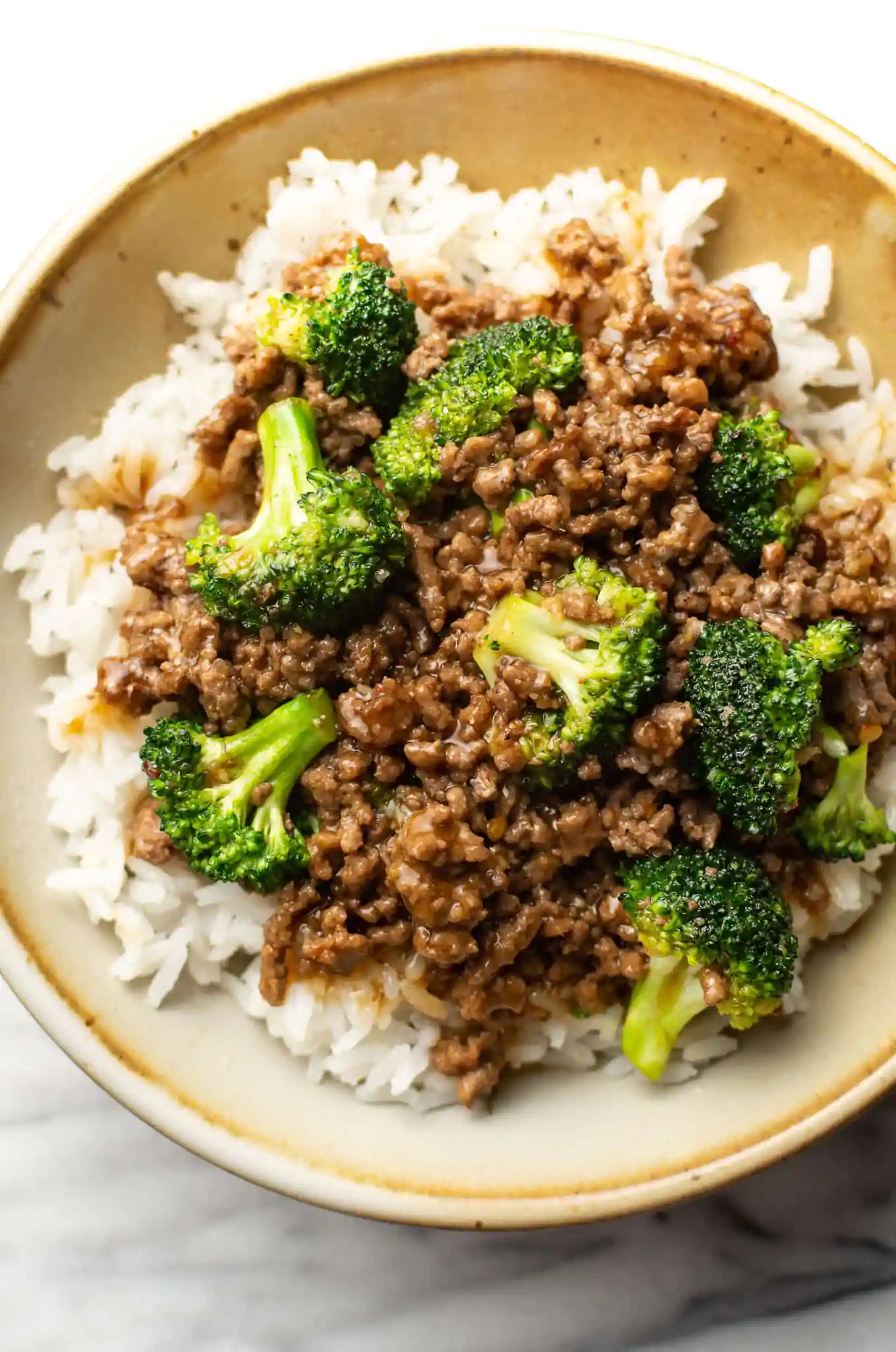
Ground beef and broccoli brings savory, garlicky sauce and tender-crisp vegetables together in one skillet. Browning the beef separately from the broccoli keeps the meat richly browned while the florets stay bright, then a quick cornstarch-thickened sauce coats everything.
The recipe takes 15 minutes to prep and 15 minutes to cook, and makes four servings. It is a practical weeknight dinner with familiar takeout-style flavors, especially served over rice to catch the extra sauce.
Measure and chop the ingredients before you heat the pan: once cooking starts, each step moves quickly.
Why This Ground Beef and Broccoli Recipe Works
This skillet meal depends on a few simple techniques that keep the vegetables lively and the sauce glossy.
- The broccoli cooks before the beef. A brief stir-fry gives the florets a head start, and taking them out of the skillet prevents them from overcooking while the meat browns. They return just long enough to heat through in the sauce.
- Small florets cook evenly. Cutting the broccoli into fairly small pieces helps it become tender-crisp in the short cooking time. Pieces of similar size are easier to cook consistently than a mix of large and tiny florets.
- The beef gets its own turn in the pan. Cooking it after the broccoli gives the meat room to brown instead of crowding it among the vegetables. Breaking it up as it cooks also creates small pieces that catch the sauce.
- Cornstarch thickens the sauce quickly. Whisking it into the liquid before it reaches the skillet helps distribute it without dry clumps. As the sauce heats, it turns glossy and clings to the beef and broccoli.
Ingredients You’ll Need
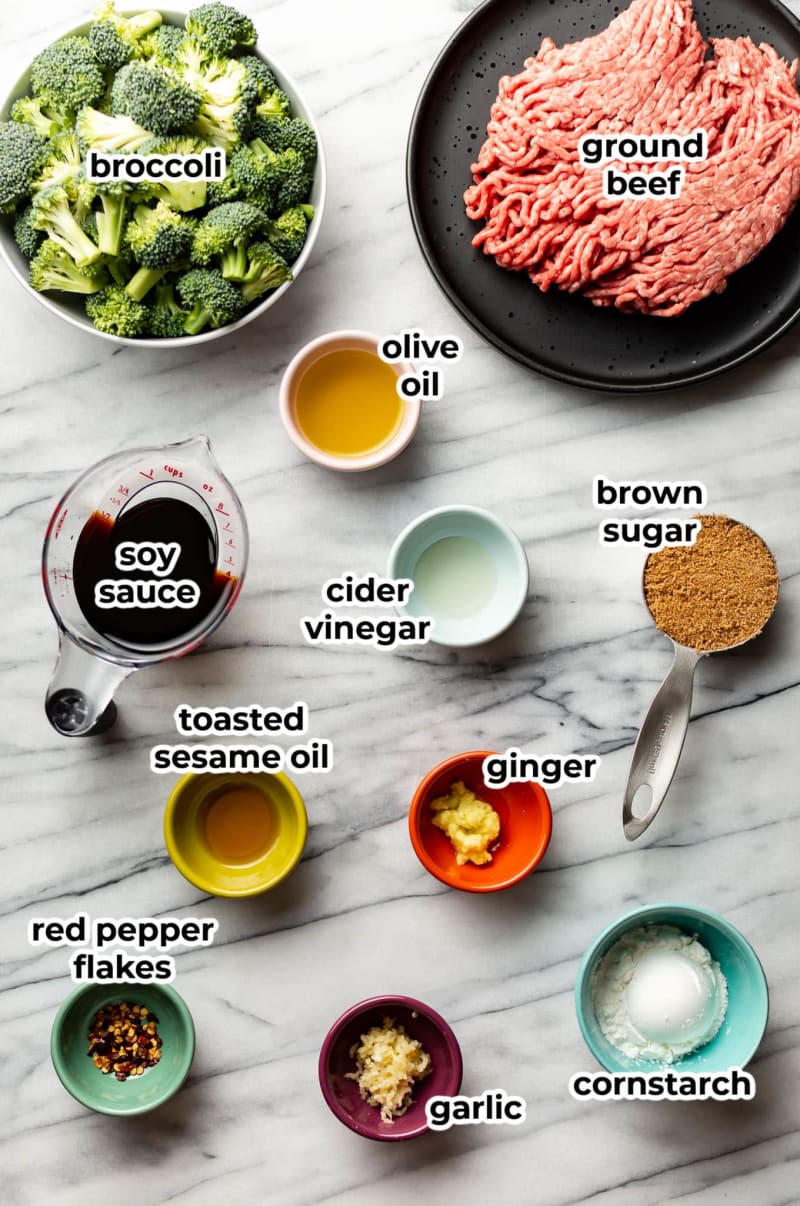
The sauce uses pantry-friendly ingredients, with fresh aromatics for a fuller flavor. Prepare everything before heating the skillet.
- Olive oil: Two tablespoons, divided between the broccoli and beef; use a neutral cooking oil if preferred.
- Broccoli florets: Three to four cups, cut fairly small for quick, even cooking; about a pound of broccoli yields this amount.
- Lean ground beef: One pound; lean beef browns well while leaving less excess fat to remove.
- For the sauce: Half a cup low-sodium soy sauce, one cup water, half a teaspoon apple cider or rice vinegar, half a teaspoon toasted sesame oil, a quarter cup packed brown sugar, three tablespoons cornstarch, one teaspoon grated fresh ginger, four minced garlic cloves, and a quarter teaspoon crushed red pepper flakes or more to taste. Toasted sesame oil is dark and strongly flavored.
Equipment You’ll Need
- Large skillet: A wide skillet gives the broccoli and beef enough room to cook and brown without excessive crowding.
- Mixing bowl: Use a bowl large enough to whisk the sauce ingredients until the cornstarch is evenly dispersed.
- Whisk: A whisk helps break up cornstarch clumps before the sauce goes into the hot skillet.
- Cutting board and knife: Use these to cut the broccoli into small florets and prepare the garlic and ginger.
How to Make Ground Beef and Broccoli
1. Prepare the sauce
Before cooking, add the soy sauce, water, vinegar, toasted sesame oil, brown sugar, cornstarch, ginger, garlic and red pepper flakes to a bowl. Whisk until the sugar dissolves and the cornstarch is no longer clumped.
Give the sauce another stir just before pouring it into the skillet, since cornstarch can settle at the bottom.
2. Heat the skillet
Set a large skillet over medium-high heat and add 1 tablespoon of the olive oil. Let it heat for a few minutes, until the oil is shimmering.
The oil should look fluid and glossy across the pan. If it is smoking, lower the heat slightly before adding the broccoli.
3. Cook the broccoli
Add the florets and cook for 4-5 minutes, tossing or stirring often. When they are tender-crisp, transfer them to a plate.
The broccoli should turn bright green and be easy to pierce, while still offering a little resistance. Keep it moving so the pieces cook evenly.
4. Brown the beef
Pour the remaining 1 tablespoon of olive oil into the skillet, then add the ground beef. Cook for about 5 minutes, breaking it into small pieces with a spoon, until browned and cooked through. Spoon off excess fat if there is a lot.
There should be no pink remaining, and the pieces should be browned rather than gray and steamed. Avoid leaving large clumps, which will not coat as evenly.
5. Finish in the sauce
Lower the heat to medium and return the broccoli to the skillet. Pour in the sauce and stir or toss until everything is coated and the sauce thickens, about 1-3 minutes.
The sauce should look glossy and cling to the beef and florets. If it becomes too thick, stir in a splash of water.
6. Serve right away
Take the skillet off the heat and serve the beef and broccoli immediately, spooning sauce over each portion.
Have any rice or other sides ready before this point; the sauce is at its loosest and glossiest straight from the pan.
How to Tell When It’s Done
The broccoli is ready when it is vivid green and tender-crisp, not limp or dull. A fork should enter a floret without much effort, but the stem should still have a little bite.
Check that the beef is browned and cooked through, with no pink pieces remaining. If uncertain, check a larger piece with an instant-read thermometer; ground beef should reach 160°F.
The sauce thickens quickly once it heats, so watch for a glossy coating rather than waiting for it to become very stiff. If it tightens too much, add a splash of water and stir; if it remains thin, keep stirring over medium heat briefly until it clings.
Tips and Common Mistakes
A little organization and attention to the pan will make the fast cooking easier to manage.
- Cut the florets small. Small, similar-sized pieces cook through in the short skillet time. Larger pieces can stay firm while smaller ones soften too much.
- Measure the sauce first. The beef and broccoli cook quickly, so having the sauce whisked and ready prevents either from sitting in a hot pan while you measure.
- Let the oil shimmer. Adding broccoli to a properly heated skillet helps it sear rather than slowly steam. Keep the heat at medium-high for this stage.
- Stir the broccoli often. Frequent tossing helps the florets cook evenly and prevents the ones touching the pan from getting too dark before the centers soften.
- Break up the beef as it cooks. Smaller pieces brown more evenly and give the sauce more surfaces to cling to. If the pan fills with excess fat, spoon some out before adding the sauce.
- Keep an eye on the sauce. Cornstarch thickens fast once the sauce is hot. Remove the skillet from the heat when it coats the ingredients, and loosen it with water if needed.
- Start the rice before cooking. Rice takes longer than the skillet portion and is especially useful for soaking up the savory-sweet sauce. Set it going first so both are ready together.
Substitutions and Variations
The sauce and vegetables can take a few practical changes while keeping the same skillet method.
- Rice vinegar: Use it instead of apple cider vinegar for a clean, mild acidity that suits the soy and sesame flavors.
- Regular soy sauce: It works in place of low-sodium soy sauce, but the finished dish will taste saltier. Avoid adding extra salt unless you taste it first.
- Ground turkey: Ground turkey can replace the beef for a milder result. It is lean, so watch closely and avoid cooking it longer than needed.
- Other vegetables: Try small cauliflower florets or thinly sliced bell pepper. Their texture and cooking time differ, so cook until just tender before transferring them out.
- Adjust the heat: Use less crushed red pepper for a gentler sauce, or add more to taste for extra warmth. Stir it into the sauce so the spice is distributed.
- Fresh ginger from frozen: Frozen fresh ginger is easy to grate directly into the sauce. It keeps the same bright, peppery flavor without needing to thaw first.
What to Serve with Ground Beef and Broccoli
Serve over steamed rice so it can catch the sweet-savory sauce; start the rice before cooking the skillet meal. A simple cucumber salad or steamed edamame makes a fresh, easy side.
For more weeknight ideas, browse our beef recipes and dinner recipes.
Make-Ahead, Storage and Reheating
Make ahead: You can cut the broccoli, mince the garlic, grate the ginger and whisk the sauce ahead, then cover and refrigerate them until cooking. Keep the sauce covered and stir it again before using; cook the broccoli and beef just before serving for the best texture.
Storage: Cool leftovers promptly and refrigerate them in an airtight container for 3 to 4 days. Store rice separately when possible so it does not absorb all the sauce.
Freezing: Freeze cooled beef and broccoli in an airtight freezer-safe container for up to 3 months. The broccoli will soften after thawing, so freeze it only if a softer texture is acceptable; thaw overnight in the refrigerator.
Reheating: Warm leftovers in a skillet over medium heat with a small splash of water, stirring until hot; this loosens the sauce and reduces drying. A microwave also works in short intervals, with a stir between each.
Ground Beef and Broccoli FAQs
Can I use frozen broccoli?
Yes. Thaw it and drain it well before cooking, since excess water can dilute the sauce and keep the florets from browning. Cook just until heated through and tender-crisp.
What can I use instead of cornstarch?
Arrowroot starch can thicken the sauce, though the finish may look slightly different. Use the package guidance for an equivalent amount, and mix it thoroughly into the cool sauce before heating.
Can I make this without a large skillet?
Yes, but use the widest heavy pan you have and cook in batches if the ingredients are crowded. Crowding traps steam and makes it harder to brown the beef.
Is toasted sesame oil the same as regular sesame oil?
No. Toasted sesame oil is darker and has a much stronger nutty aroma, while regular sesame oil is milder. Use the toasted kind for the flavor described here.
Can I double the recipe?
Yes, but cook the broccoli and beef in batches so the skillet does not become crowded. Combine them with the sauce once the batches are cooked, and allow a little extra time for the larger amount to heat and thicken.
How can I make the sauce less sweet?
You can reduce the brown sugar to suit your taste, though the sauce will be less rounded and glossy. Make a smaller adjustment first, then taste the finished sauce before changing it further.
Printable Recipe
Recipe adapted from Salt & Lavender. Photos courtesy of Salt & Lavender, used with permission.

Ground Beef and Broccoli
Ingredients
- 2 tablespoons olive oil divided
- 3-4 cups broccoli florets see note
- 1 pound lean ground beef
Sauce ingredients:
- 1/2 cup low-sodium soy sauce
- 1 cup water
- 1/2 teaspoon apple cider vinegar or rice vinegar
- 1/2 teaspoon toasted sesame oil see note
- 1/4 cup (packed) brown sugar
- 3 tablespoons cornstarch
- 1 teaspoon grated fresh ginger
- 4 cloves garlic minced
- 1/4 teaspoon crushed red pepper flakes or more, to taste
Instructions
- Prep everything ahead of time as the actual cooking part goes fast. Add the sauce ingredients to a bowl and whisk until combined.
- Add 1 tablespoon of the olive oil to a large skillet over medium-high heat. Let the pan heat up for a few minutes (the oil should be shimmering).
- Add the broccoli and cook for 4-5 minutes, tossing/stirring often (it'll be tender-crisp). Transfer it to a plate.
- Add the remaining 1 tablespoon of olive oil to the skillet, then add the beef and cook it until browned and cooked through, breaking it up with your spoon as you go along (about 5 minutes). If there's lots of excess fat, spoon some out.
- Reduce the heat to medium, then add the broccoli back to the pan and pour the sauce in. Stir/toss until coated and the sauce has thickened (about 1-3 minutes). Take the skillet off the heat and serve immediately.
Notes
- Cut the broccoli into fairly small florets so they cook fast and evenly. One pound of broccoli typically makes 3-4 cups once cut into florets.
- If the sauce gets too thick, simply add a splash of water to thin it out a bit.
- You can find toasted sesame oil in the Asian foods aisle of your grocery store ( sometimes it’s labeled as “pure” sesame oil). It’s darker in color and tastes different than regular sesame oil. It’s a flavor enhancer with quite a strong taste.
- Fresh ginger is much easier to grate when frozen! I always keep fresh ginger in the freezer (in a ZipLoc) and I use my Microplane grater/zester to effortlessly grate it.
- I love to serve this recipe with rice. I typically measure out 1 cup of uncooked rice to serve 4, but feel free to make as much rice as you normally do. Start the rice before the beef & broccoli so that it’s ready at the same time.


