Ground Turkey Pasta


Ground turkey pasta pairs tender tortiglioni with a tomato sauce that starts with finely chopped onion, celery and carrot. The vegetables soften into the sauce, while cream rounds out the tomatoes and fresh basil brings a bright finish.
This version takes 55 minutes from start to finish, including 15 minutes of prep, and serves six. It is a filling weeknight dinner, and the sauce can be made ahead or frozen separately for another meal.
Why This Ground Turkey Pasta Recipe Works
The sauce builds flavor in a few deliberate stages, so lean turkey still makes a satisfying pasta dinner.
- Turkey cooks directly in the vegetable base. Breaking it into small pieces lets the meat brown and mix evenly with the aromatics. Garlic joins during this stage, so it becomes fragrant without spending too long over the heat.
- A short simmer brings the sauce together. Tomatoes, herbs and Worcestershire sauce get time to mingle while the pot stays slightly uncovered. Occasional stirring helps prevent sticking and lets the sauce thicken gently.
- Cream balances the tomatoes. A little heavy cream softens the tomatoes’ acidity and gives the sauce a silky finish. Adding it near the end keeps its flavor fresh and prevents it from simmering for longer than needed.
- Tortiglioni holds onto the sauce. Its ridges and hollow center catch bits of turkey and tomato. Cooking it al dente also helps the pasta keep its shape when tossed with the finished sauce.
Ingredients You’ll Need
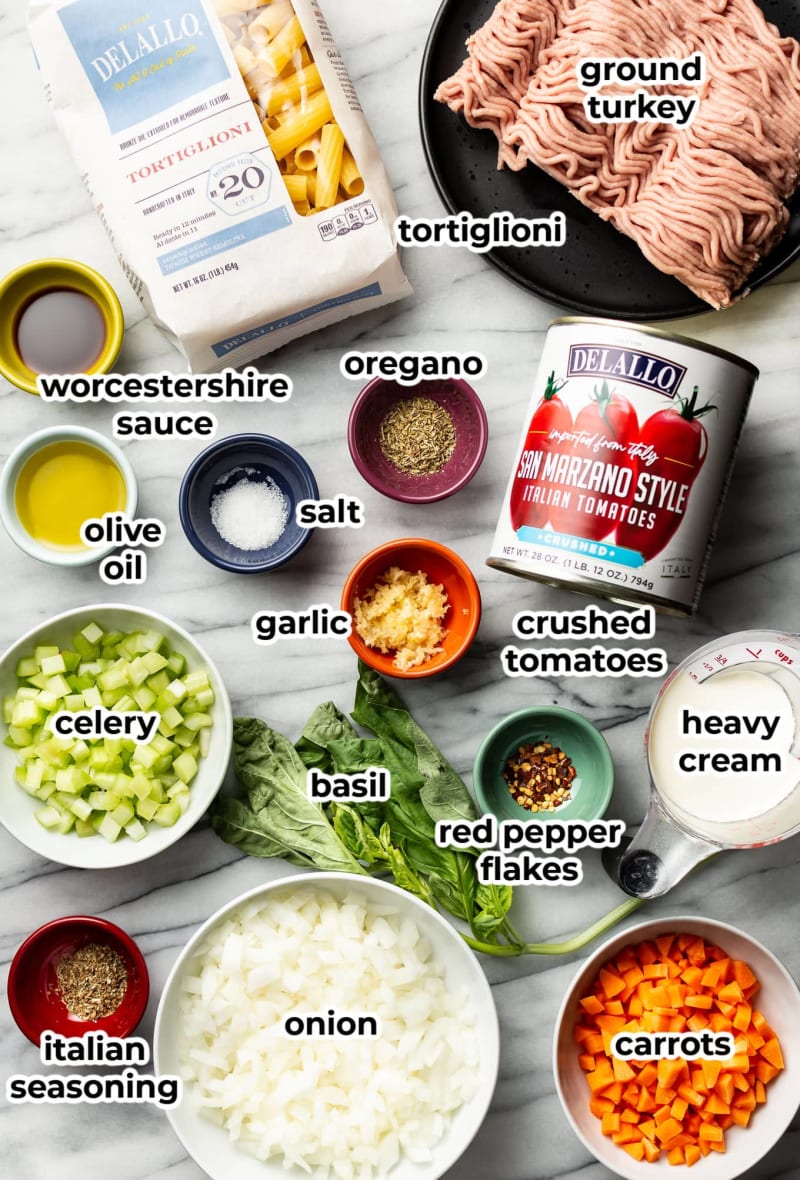
These everyday ingredients make a deeply flavored sauce. Choose the pasta shape you enjoy, but keep the sauce ingredients in proportion.
- Tortiglioni: Sixteen ounces. Ridged, hollow pasta catches the meat sauce; another sturdy short shape can work.
- Olive oil: Two tablespoons. Use it to soften the vegetables and keep them from sticking.
- Onion: One medium onion, chopped. Yellow onion is a good all-purpose choice for the sauce base.
- Celery: Two sticks, finely chopped. Small pieces soften quickly and add savory depth.
- Carrot: One large carrot, peeled and finely chopped. It adds gentle sweetness as it cooks.
- Ground turkey: One pound. Choose a lean or regular grind, depending on how rich you want the sauce.
- Garlic: Four cloves, minced. Fresh garlic gives the sauce a fragrant savory note.
- Crushed tomatoes: One 28-ounce can. Use plain crushed tomatoes; the tomato flavor forms the body of the sauce.
- Worcestershire sauce: Half a tablespoon. Its savory, tangy notes add depth to the tomato and turkey.
- Italian seasoning: Half a teaspoon. This dried herb blend gives the sauce an easy, familiar aroma.
- Dried oregano: Half a teaspoon. It reinforces the herb flavor and suits the tomato base.
- Salt: Half a teaspoon, then more if needed. The amount may depend on your salt type and preference.
- Crushed red pepper flakes: A quarter teaspoon. This adds a mild background warmth; reduce it for a gentler sauce.
- Heavy cream: Half a cup, optional but recommended. It makes the tomato sauce smoother and less sharp.
- Fresh basil: One generous handful, torn. Stir it in at the end for a fresh, fragrant finish.
- Pepper: To taste. Add it after the sauce simmers, then adjust the seasoning before serving.
- Parmesan: Freshly grated, optional and to taste. It adds a salty, nutty finish at the table.
Equipment You’ll Need
- Dutch oven or soup pot: Use a large, heavy pot to sauté the vegetables, simmer the sauce and toss the pasta.
- Large pasta pot: A roomy pot gives the tortiglioni enough water to cook evenly without crowding.
- Wooden spoon: A sturdy spoon helps break up the turkey and scrape the sauce from the pot’s bottom.
- Colander: Drain the cooked pasta before tossing it with the sauce.
How to Make Ground Turkey Pasta
1. Soften the vegetables
Add the olive oil, onion, celery and carrot to a Dutch oven or soup pot over medium-high heat. Sauté for 7-8 minutes, stirring as needed.
The vegetables should look softened and smell sweet and savory, with no dark or burnt spots.
2. Cook the turkey and garlic
Add the ground turkey and minced garlic. Cook for another 5-7 minutes, using a spoon to break the turkey into small pieces as it cooks.
The turkey should no longer look raw, and the garlic should smell fragrant rather than browned.
3. Simmer the tomato sauce
Stir in the crushed tomatoes, Worcestershire sauce, Italian seasoning, oregano, salt and red pepper flakes. Simmer for 15 minutes with the lid slightly open, stirring occasionally.
Look for a gentle, steady simmer. Stir along the bottom of the pot so the sauce does not catch as it thickens.
4. Boil the pasta
While the sauce simmers, bring a large pot of salted water to a boil. Cook the tortiglioni al dente according to the package directions, then drain it.
Taste a piece near the end of the package timing; it should be tender with a slight firmness at the center.
5. Finish the sauce
Stir the cream and torn basil into the sauce and let them warm through.
The cream should disappear into the tomatoes, leaving the sauce evenly colored and creamy. Avoid a prolonged boil after adding it.
6. Season and toss
Taste the sauce and add pepper and extra salt if needed. Toss it with the drained pasta, then serve with freshly grated parmesan if desired.
The pasta should be coated rather than swimming in sauce. If it seems too thick, toss thoroughly so sauce clinging to the pot distributes through the pasta.
How to Tell When It’s Done
The sauce is ready after its 15-minute simmer when it looks cohesive and slightly thickened, with the vegetables tender and the turkey broken into small pieces. If the sauce still seems watery, keep it at a gentle simmer and stir occasionally until it has the consistency you want.
Cook the tortiglioni until al dente, following the package directions and tasting a piece before draining. It should be cooked through but retain a little bite; soft pasta can turn mushy when stirred into the hot sauce.
Ground turkey should be cooked through, with no raw-looking pink pieces. For a precise check, use an instant-read thermometer in a larger piece and look for 165°F; if it is below that, continue cooking before adding the cream and basil.
Tips and Common Mistakes
A few small choices help the vegetables, sauce and pasta finish at the right time.
- Chop the vegetables finely. Small, even pieces soften during the sauté and become part of the sauce. Large chunks may still feel firm when the pasta is ready.
- Keep the simmer gentle. A steady, moderate simmer melds the tomato and herb flavors without scorching the sauce. Leave the lid slightly open as directed and stir occasionally.
- Salt the pasta water. Pasta absorbs some seasoning as it cooks, so salting the water helps the finished dish taste balanced. The sauce’s salt level alone will not season the pasta evenly.
- Taste before adding more salt. Saltiness varies with the salt used and the tomatoes. Adjust the sauce at the end rather than assuming the listed amount will suit every palate.
- Save the basil for the finish. Stirring it in after the simmer preserves its fresh aroma and color. Long cooking would make its flavor less distinct.
Substitutions and Variations
You can adapt the pasta shape, richness and heat without changing the basic method.
- Another short pasta: Penne, rigatoni or another ridged shape can stand in for tortiglioni. Follow that pasta’s package timing and cook it al dente.
- Ground chicken: Ground chicken works in place of turkey and keeps the sauce mild. Cook it through before adding the tomatoes.
- Ground beef: Ground beef gives the sauce a richer, beefier flavor. If it releases a lot of fat, spoon off excess before adding the tomatoes.
- Skip the cream: Leave it out for a more direct tomato flavor and a lighter sauce. The dish will be less silky but still satisfying.
- Dairy-free finish: Omit the cream and parmesan, or use an unsweetened plant-based cream and dairy-free cheese. Check that the substitute is suitable for savory cooking.
- More heat: Add extra red pepper flakes a little at a time. The sauce will taste spicier without changing its texture.
- Extra vegetables: Finely chopped mushrooms can be sautéed with the onion, celery and carrot. They add a savory note and release moisture as they cook.
What to Serve with Ground Turkey Pasta
Serve the pasta with a crisp green salad, garlic bread or roasted vegetables to balance the creamy tomato sauce. A simple salad with vinaigrette also cuts through the richness.
Finish each bowl with parmesan and extra torn basil if you have them. For more weeknight ideas, browse our chicken recipes and dinner recipes.
Make-Ahead, Storage and Reheating
Make ahead: Make the sauce ahead and refrigerate it in a covered container, then reheat it gently and cook the pasta just before serving for the best texture. You can also chop the onion, celery and carrot ahead and keep them refrigerated until cooking.
Storage: Refrigerate leftover pasta or sauce in an airtight container within 2 hours of cooking. Keep it chilled for 3 to 4 days; store sauce separately from pasta when possible to prevent the noodles from absorbing too much.
Freezing: The sauce freezes well on its own. Cool it, transfer it to a freezer-safe container and freeze; thaw it in the refrigerator before reheating. Cook fresh pasta when you are ready to serve.
Reheating: Warm the sauce in a saucepan over low to medium heat, stirring until hot; loosen it with a splash of water if it has thickened. Reheat pasta and sauce together gently, or microwave portions in short intervals, stirring between them.
Ground Turkey Pasta FAQs
Can I make the sauce without cream?
Yes. Leave out the cream for a brighter, more tomato-forward sauce; it will not have the same silky finish.
Can I use a different pasta shape?
Yes. Penne, rigatoni or another short pasta works well, especially a shape with ridges or hollows to catch the sauce.
How can I tell if the ground turkey is cooked?
It should no longer look raw, and a thermometer inserted into a larger piece should read 165°F. Check before stirring in the cream and basil.
Can I freeze the finished pasta?
You can, but the pasta may soften after thawing. For better texture, freeze the sauce by itself and cook fresh pasta when you serve it.
Why is my sauce too thick?
The pasta may have absorbed some sauce, or the sauce may have reduced further during simmering. Stir in a little water while reheating until it loosens to your liking.
Can I make this for fewer than six people?
Yes. You can cook less than the full 16 ounces of pasta and serve it with the amount of sauce you need; keep leftover sauce for another meal.
Printable Recipe
Recipe adapted from Salt & Lavender. Photos courtesy of Salt & Lavender, used with permission.

Ground Turkey Pasta
Ingredients
- 16 ounces DeLallo Tortiglioni see note
- 2 tablespoons olive oil
- 1 medium onion chopped
- 2 sticks celery chopped finely
- 1 large carrot peeled & chopped finely
- 1 pound ground turkey
- 4 cloves garlic minced
- 1 (28 ounce) can DeLallo San Marzano Style Crushed Tomatoes
- 1/2 tablespoon Worcestershire sauce
- 1/2 teaspoon Italian seasoning
- 1/2 teaspoon dried oregano
- 1/2 teaspoon salt see note
- 1/4 teaspoon crushed red pepper flakes
- 1/2 cup heavy/whipping cream optional but recommended
- 1 generous handful fresh basil torn
- Pepper to taste
- Freshly grated parmesan cheese optional, to taste
Instructions
- Add the olive oil, onions, celery, and carrots to a Dutch oven/soup pot over medium-high heat and sauté for 7-8 minutes.
- Add in the ground turkey and garlic and continue cooking for another 5-7 minutes, breaking up the meat with a spoon as you go along.
- Stir in the canned tomatoes, Worcestershire sauce, Italian seasoning, oregano, salt, and red pepper flakes, and simmer for 15 minutes with the lid slightly open, stirring occasionally.
- Meanwhile, boil a large, salted pot of water for the pasta and cook it al dente according to package directions.
- Stir in the cream and basil and let it warm through.
- Give it a taste and season with pepper and extra salt if needed and toss with the drained pasta. Serve with freshly grated parmesan if desired.
Notes
- If you’re not using sea salt or kosher salt, you may need to add less, but it really depends on your preferences. You can for sure add as much as you need “to taste”, but it needs to be sufficiently salted to bring out the flavors.
- You can definitely make less than the full 16 oz of pasta if you’re not going to feed 6 people right away – this sauce (by itself) freezes well!


