Honey Glazed Salmon


Honey glazed salmon pairs tender, flaky fish with a glossy sauce that balances honey’s sweetness against savory soy and a little lemon. Searing the salmon skin-side down gives it a crisp edge, while butter helps the sauce turn rich and cling to each piece.
The recipe serves four and takes 30 minutes from start to finish, including 10 minutes of prep and 20 minutes of cooking. It’s quick enough for a weeknight dinner, but the shiny glaze makes it feel special enough to serve to guests.
Why This Honey Glazed Salmon Recipe Works
A hot skillet and a quick pan sauce make this salmon flavorful without a long ingredient list.
- The fish cooks in portions. Cutting the salmon into four equal pieces helps it cook more evenly and makes serving straightforward. Similar thickness matters more than perfectly matching the shape.
- A hot skillet crisps the skin. Starting skin-side down gives the skin direct contact with the pan, so it can turn crisp while the flesh cooks gently above it.
- The sauce balances sweet and savory. Honey brings sweetness, while low-sodium soy sauce adds salt and savory depth. Garlic powder seasons the glaze without needing to chop fresh garlic.
- Cornstarch helps the glaze cling. Whisking it into the sauce before it hits the hot skillet helps the liquid thicken quickly and coat the salmon instead of pooling thinly.
Ingredients You’ll Need
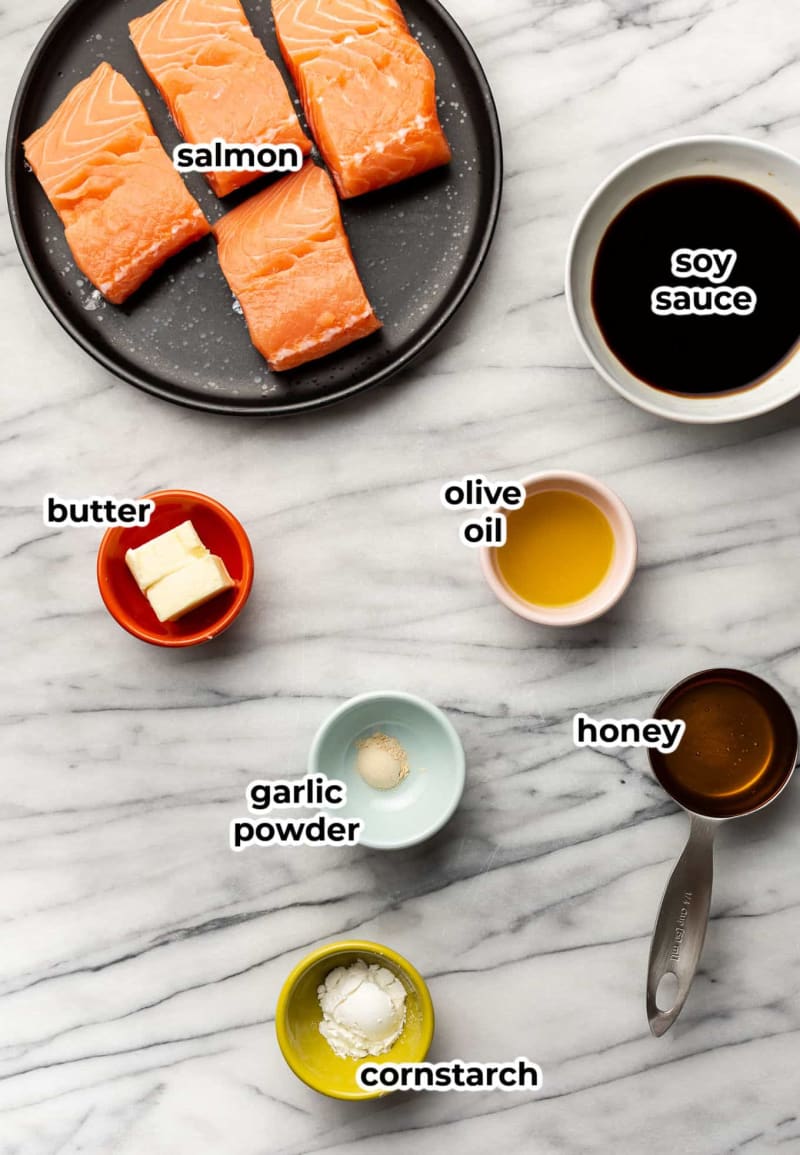
You only need a few everyday ingredients. Keep the salmon pieces close in thickness so they finish cooking at about the same time.
- Fresh salmon: One pound, cut into four equal pieces. Choose center-cut pieces of similar thickness; keep the skin on if you want it crisp.
- Salt and pepper: Season to taste. Go lightly on the salt because soy sauce adds plenty of savory seasoning to the glaze.
- Olive oil: One tablespoon for the skillet. It helps the salmon sear and keeps the butter from browning too quickly.
- Butter: Two tablespoons, divided between searing and the sauce. It adds richness and helps the glaze coat the fish.
- Fresh lemon juice: Use it to taste at the end. A squeeze brightens the sweet-salty glaze; serve extra lemon at the table if desired.
- For the sauce: Whisk together 1/4 cup low-sodium soy sauce, 1/4 cup honey, 1/2 tablespoon cornstarch and 1/4 teaspoon garlic powder.
Equipment You’ll Need
- Large skillet: Use a skillet wide enough to hold the four salmon pieces without crowding so they sear rather than steam.
- Whisk and medium bowl: Whisking the sauce in a bowl disperses the cornstarch before it goes into the hot pan.
How to Make Honey Glazed Salmon
1. Prepare the salmon
If possible, take the salmon out of the refrigerator 15-20 minutes before you start. Cut it into 4 equal pieces, pat it dry with paper towel, and season with salt and pepper.
Dry surfaces brown better than damp ones. Keep the skin on for the sear, even if you plan to remove it before eating.
2. Heat the skillet
Set a skillet over medium-high heat and add the olive oil with 1 tablespoon of the butter. Let the pan heat up for a few minutes.
The fat should be hot and fluid before the salmon goes in; avoid letting the butter smoke or darken.
3. Whisk the sauce
While the skillet heats, combine the soy sauce, honey, cornstarch and garlic powder in a medium bowl. Whisk until smooth, then set the bowl aside.
Check the bottom of the bowl for any cornstarch lumps, which can leave the finished glaze uneven.
4. Sear the salmon
Place the salmon skin-side down in the skillet and cook for 5 minutes. Reduce the heat to medium, turn the pieces over and cook for another 2-3 minutes, until they are almost cooked through.
The skin should release more easily when it has had time to crisp. If the pieces are thicker or thinner than about 1 inch, the cooking time may need to change.
5. Thicken the glaze
Add the remaining 1 tablespoon of butter and let it melt. Pour the sauce into the spaces between the salmon pieces, let it bubble and thicken for 30 seconds or so, then take the skillet off the heat.
Keep the sauce bubbling briefly, not boiling hard. The hot skillet will continue to thicken it after you remove it from the burner.
6. Coat and serve
Turn the salmon over and spoon the glaze across the pieces. Squeeze fresh lemon juice over the fish and serve immediately.
The skin is crispest right away; leave it on for a crunchy bite or peel it away if you prefer.
How to Tell When It’s Done
The salmon should look opaque around the edges and flake into moist layers when gently pressed with a fork. The center can remain slightly translucent if you prefer it less done; avoid cooking until the flesh looks dry and chalky.
For a temperature check, the FDA recommends cooking fish to 145°F at its thickest point. If the center needs more time, keep the skillet over medium heat and check again soon; thicker pieces may need longer than thinner ones.
Tips and Common Mistakes
A few small details help the fish sear cleanly and keep the honey glaze from burning.
- Dry the salmon well. Moisture on the surface interferes with browning and can make the fish stick. Blot the flesh and skin with paper towel before seasoning.
- Leave room between pieces. Crowded salmon releases steam and can cook unevenly. Use a wide skillet, or cook in batches if the pieces do not fit comfortably.
- Start skin-side down. The skin protects the flesh from direct heat and becomes crisp as it sears. Let it cook undisturbed for the full 5 minutes before turning.
- Whisk the sauce before cooking. Cornstarch can settle, so give the mixture another quick whisk just before pouring it into the skillet if it has been sitting.
- Adjust for the thickness. The salmon used here was about 1 inch thick. Thicker or thinner pieces may need a different amount of cooking time, so use the fish’s texture as well as the clock.
Substitutions and Variations
The glaze is easy to adjust, but keep its salty, sweet and thickening elements in balance.
- Maple syrup: Use it in place of honey for a woodsy sweetness. The flavor will shift slightly, but the cornstarch still helps the sauce coat the fish.
- Regular soy sauce: It can replace low-sodium soy sauce, though the glaze will taste saltier. Season the salmon sparingly and taste the sauce before adding extra salt.
- Tamari: Use tamari instead of soy sauce for a gluten-free option, checking the label to confirm it meets your needs. Its savory flavor works well with the honey.
- Lime juice: A squeeze of lime can stand in for lemon and gives the finish a slightly different citrus note. Add it after cooking so it stays bright.
- Skinless salmon: Skinless pieces work with the same sauce, but they will not have the crisp skin layer. Turn them gently, since the flesh can be more delicate.
- A little heat: Add a pinch of red pepper flakes to the sauce for a sweet-spicy glaze. Start modestly so the heat does not overwhelm the salmon.
What to Serve with Honey Glazed Salmon
Serve the salmon over steamed rice or with roasted potatoes to catch the extra glaze. Green beans, asparagus or a crisp salad add freshness alongside the rich butter and sweet sauce.
For another dinner with salmon’s bright, savory-sweet profile, browse our chicken recipes or find more ideas in our dinner recipes.
Make-Ahead, Storage and Reheating
Make ahead: Whisk the sauce a day ahead and refrigerate it covered; whisk again before cooking because the cornstarch may settle. For the best texture, cook the salmon just before serving rather than searing it in advance.
Storage: Refrigerate leftover salmon in a covered airtight container within 2 hours of cooking and use it within 3 to 4 days. Store any extra sauce with the fish.
Freezing: Cooked salmon can be frozen in an airtight freezer-safe container, though thawing softens its texture and the glaze may separate slightly. Thaw it in the refrigerator before reheating.
Reheating: Warm leftovers gently in a covered skillet over low heat with a splash of water, just until heated through; high heat can dry out the fish. You can also serve cold flakes over a salad or rice bowl.
Honey Glazed Salmon FAQs
Can I make honey glazed salmon with frozen salmon?
Yes. Thaw it fully in the refrigerator first, then pat it very dry before seasoning and searing so excess moisture does not prevent browning.
Can I use skinless salmon for this recipe?
Yes. It will still take the glaze well, but you will miss the crisp skin, and the pieces may need careful turning so they do not break.
Why is my honey soy glaze thin?
It may not have bubbled long enough to activate the cornstarch, or the cornstarch may not have been evenly mixed in. Let the sauce bubble briefly in the hot pan, then remove it from the heat as directed.
How can I tell if the salmon is overcooked?
Overcooked salmon looks dry and flakes apart very easily rather than separating into moist, tender layers. Remove each piece as soon as it reaches your preferred doneness, since thinner pieces finish first.
Can I double the recipe?
Yes, but avoid crowding the skillet. Cook the salmon in batches, then return the pieces to the pan for the sauce so they have room to sear properly.
Printable Recipe
Recipe adapted from Salt & Lavender. Photos courtesy of Salt & Lavender, used with permission.

Honey Glazed Salmon
Ingredients
- 1 pound fresh salmon
- Salt & pepper to taste
- 1 tablespoon olive oil
- 2 tablespoons butter divided
- Fresh lemon juice to taste
Sauce:
- 1/4 cup low-sodium soy sauce
- 1/4 cup honey
- 1/2 tablespoon cornstarch
- 1/4 teaspoon garlic powder
Instructions
- Take the salmon out of the fridge 15-20 minutes prior to starting the recipe if possible. Cut the salmon into 4 equal pieces and pat it dry with paper towel. Season with salt & pepper.
- Add the olive oil and 1 tablespoon of the butter to a skillet over medium-high heat. Let the pan heat up for a few minutes.
- Meanwhile, add the sauce ingredients to a medium bowl and whisk it together. Set aside.
- Cook the salmon (skin-side down) for 5 minutes, then reduce the heat to medium and flip the salmon over and cook for another 2-3 minutes (should be almost cooked through).
- Add the remaining 1 tablespoon of butter to the skillet and let it melt, then pour in the sauce (just pour it in between the salmon pieces). Let it bubble/thicken for 30 seconds or so, and then take the pan off the heat (the pan will still be hot and the sauce will continue to thicken, but this avoids burning it). Flip the salmon over & spoon the sauce over it.
- Squeeze some lemon juice over the salmon (I just use one wedge of lemon) and then serve immediately. The salmon skin goes nice and crispy and is delicious when you eat it right away, but feel free to peel it off if you prefer.
Notes
- The salmon I used in this recipe was about 1″ thick. If your salmon is thicker or thinner, you may need to adjust cooking time a bit.
- It’s ok if you’ve got a bit over a pound of salmon, just make sure it’s not too much over or the salmon pieces will be crowded in the pan and not cook properly.
- You can also find this recipe in the Salt & Lavender: Everyday Essentials cookbook.


