Peppercorn Sauce Pork Chops

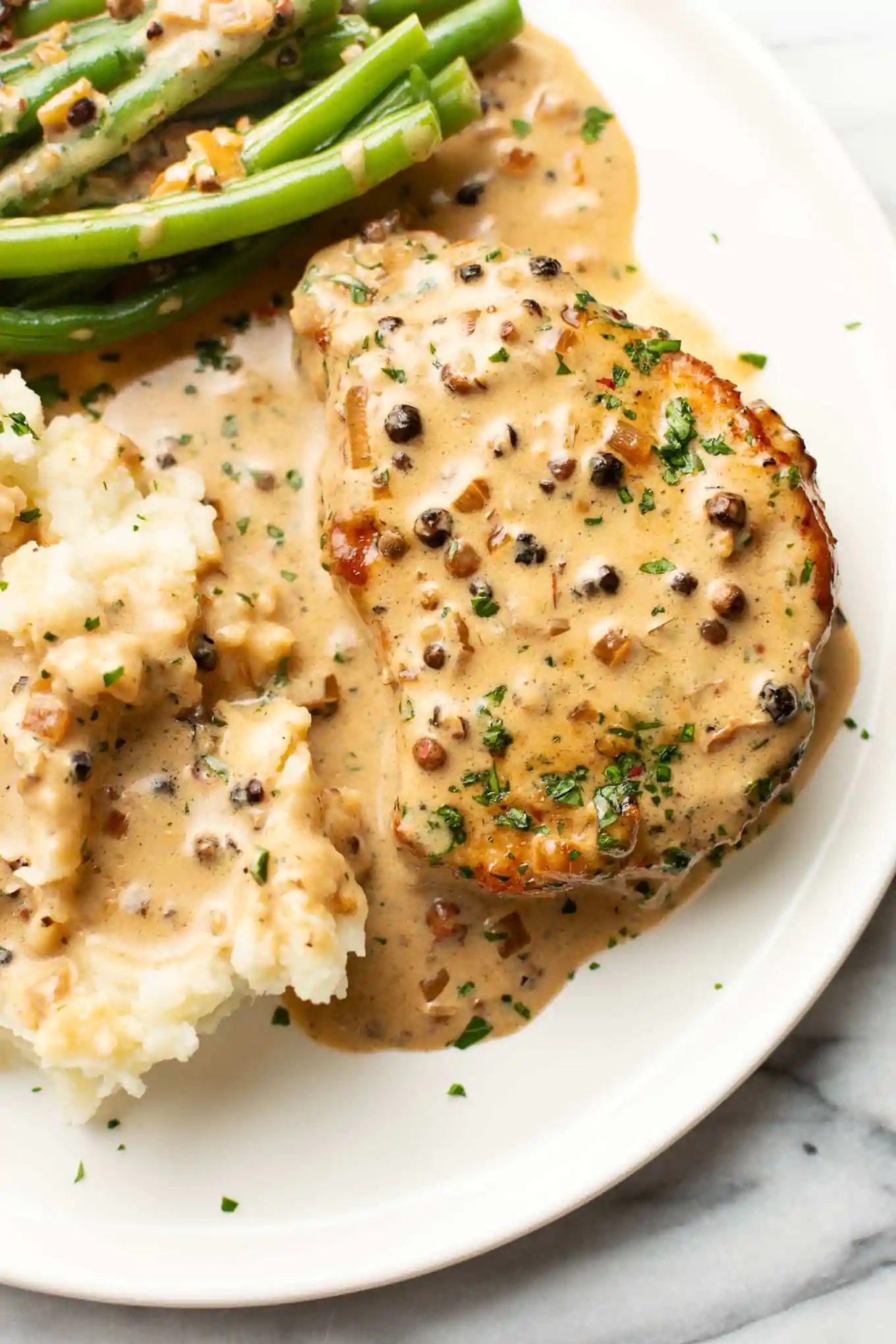
Peppercorn sauce pork chops pair golden-seared pork with a creamy brandy sauce, softened shallots, and cracked peppercorns. The sauce is rich but lively, and searing the chops first builds browned bits that deepen its flavor.
The recipe takes 10 minutes to prep and 20 minutes to cook, yielding 4 servings. It makes a special-feeling weeknight dinner without requiring a long simmer, and the sauce is just as welcome for a relaxed weekend meal.
Use boneless chops for easy cooking, or bone-in chops if you don’t mind working in batches. Either way, an instant-read thermometer helps keep the pork juicy.
Why This Peppercorn Sauce Pork Chops Recipe Works
The order of cooking builds flavor quickly while giving you control over the sauce and the pork’s doneness.
- The peppercorns stay chunky. Crushing them rather than grinding them to dust gives the sauce distinct peppery bursts. Larger pieces make the finished sauce taste more assertive.
- Brandy reduces before the cream. A short bubbling simmer concentrates the brandy’s flavor and cooks off some of its sharpness. Adding the cream afterward keeps the sauce smooth and rounded.
- A little slurry helps the sauce cling. Cornstarch mixed with cold water thickens the cream sauce as it heats. Making a slurry first helps prevent dry clumps from forming in the skillet.
- The chops finish in the sauce. Returning the pork to the skillet lets it finish cooking gently while the sauce thickens. Adding the plate juices brings back the savory liquid released during searing.
Ingredients You’ll Need
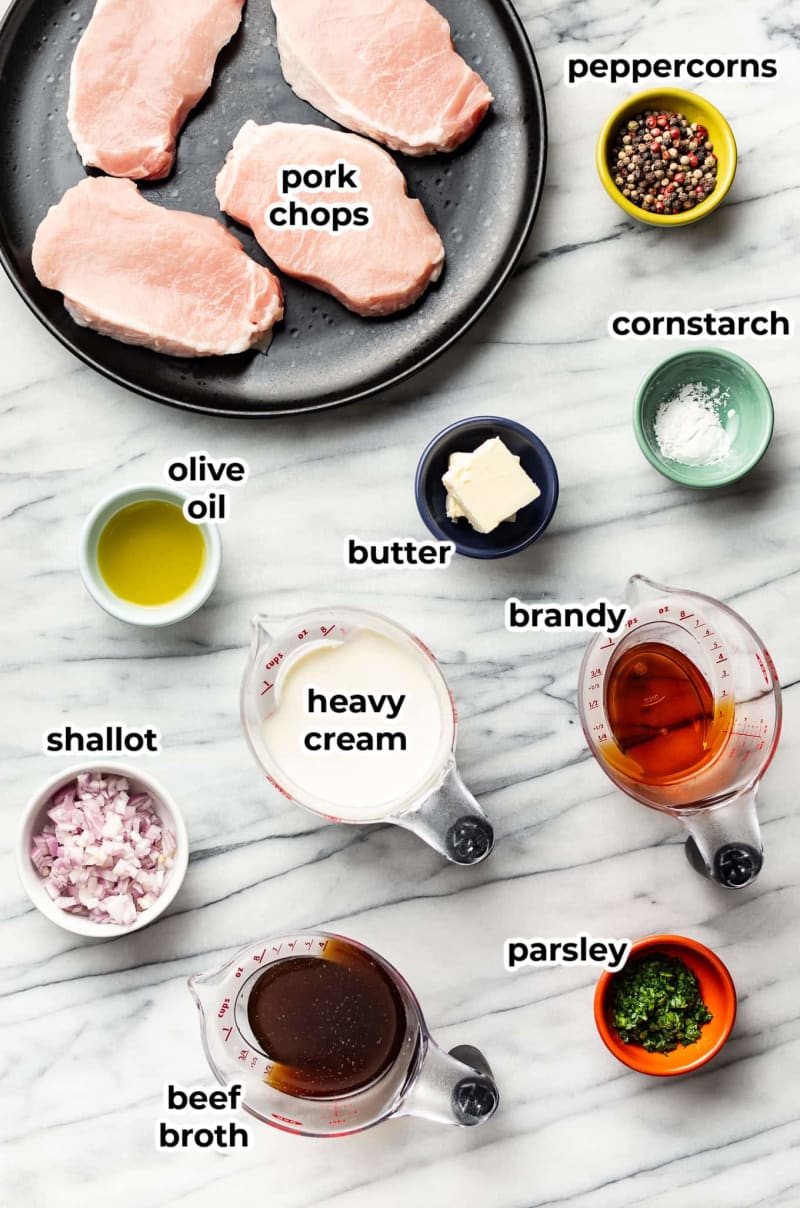
The ingredients make a fast pan sauce with a balance of pepper, cream, and savory broth. Choose the peppercorn amount to suit your preferred level of heat.
- Pork chops: Four chops; boneless ones are easy to handle, while bone-in chops may need to be seared in batches.
- Salt and pepper: Season the chops to taste before searing, then adjust the finished sauce carefully.
- Peppercorns: One to two tablespoons, crushed roughly. Mixed peppercorns add color and variety; black ones have a stronger bite.
- Olive oil: One tablespoon helps the chops brown in the hot skillet.
- Butter: Three tablespoons total, divided between searing and softening the shallots.
- Shallot: One, finely chopped, softens quickly and gives the sauce a mild onion-like sweetness.
- Brandy: A quarter cup adds a warm, aromatic note; let it reduce before adding the broth.
- Beef broth or stock: Half a cup brings savory depth. Choose a lower-sodium option if available so you can season at the end.
- Heavy cream: Three-quarters of a cup makes the sauce rich and smooth; whipping cream works too.
- Cornstarch: One teaspoon thickens the sauce when mixed with cold water before it goes into the skillet.
- Fresh parsley: One tablespoon, chopped, adds a fresh, herbal finish over the creamy sauce.
Equipment You’ll Need
- Large skillet: A wide skillet gives the chops room to brown and leaves space to finish them in the sauce.
- Instant-read thermometer: Use it to check the thickest part of each chop and avoid overcooking.
- Small bowl: Combine the cornstarch and cold water here so the slurry is smooth before adding it.
- Rolling pin or meat mallet: Either can crack peppercorns in a sturdy bag without grinding them into powder.
How to Make Peppercorn Sauce Pork Chops
1. Season the pork
If possible, take the chops out of the refrigerator 15-30 minutes before you begin. Pat them dry and season with salt and pepper.
Dry surfaces brown more readily than damp ones. Keep the chops at room temperature only during this brief preparation.
2. Crush the peppercorns
Put the peppercorns in a sturdy bag and crack them with a rolling pin, heavy skillet, or meat mallet, or use a mortar and pestle. Leave some pieces intact rather than pulverizing them.
Use larger pieces for a stronger peppery flavor. Keep the pieces fairly even so the seasoning is distributed through the sauce.
3. Sear the chops
Heat the olive oil and 1 tablespoon of butter in a skillet over medium-high heat for a few minutes. Cook the pork for 3-5 minutes per side, about 3 minutes for thinner chops and 5 minutes for chops up to 1 inch thick, until golden; move them to a plate.
Let the skillet get hot before adding the meat so it browns rather than steams. The chops will finish cooking later in the sauce.
4. Cool the skillet briefly
Take the pan off the heat for about a minute before making the sauce.
This brief pause helps moderate the skillet’s heat before the butter and shallot go in.
5. Soften the shallot
Return the skillet to medium heat and add the remaining butter and chopped shallot. Sauté for about 4-5 minutes, until softened and lightly browned.
Stir and scrape the pan so the shallot picks up the browned bits left by the pork.
6. Reduce the brandy
Pour in the brandy and let it bubble for about 1-2 minutes.
It should reduce substantially. Keep your face back from the pan as the liquid bubbles.
7. Simmer broth and pepper
Add the beef broth and crushed peppercorns, then simmer for 2-3 minutes. Meanwhile, stir the cornstarch together with 2 teaspoons of cold water in a small bowl.
The pepper should be suspended throughout the liquid. Stir the slurry again if it settles before using it.
8. Add cream and slurry
Pour the cream and cornstarch mixture into the skillet and stir until combined.
Mix the slurry smoothly before it goes in; this helps the sauce thicken evenly without lumps.
9. Finish the pork in sauce
Return the chops and any juices from the plate to the skillet. Cook for another 3-5 minutes, until the sauce thickens somewhat and the pork reaches at least 145°F.
Check the thickest part of each chop with an instant-read thermometer. Remove thinner chops as they reach temperature if the others need more time.
10. Season and garnish
Scatter the chopped parsley over the top, taste the sauce, and add salt if needed.
Broth can be salty, so taste before adding more. A little pink in pork cooked to 145°F is safe.
How to Tell When It’s Done
The chops should be golden from searing and firm but still yielding when pressed. The sauce should look creamy and lightly thickened, clinging to the pork rather than running like broth.
If the sauce thickens before the pork is done, lower the heat and turn the chops occasionally as they finish. If it becomes too thick, stir in a small splash of broth to loosen it.
Tips and Common Mistakes
A few small choices make the difference between tender chops and a sauce that tastes too sharp or salty.
- Dry the chops well. Moisture on the surface slows browning. Blotting the meat first helps it develop a golden sear.
- Don’t pulverize the peppercorns. Coarse pieces give the sauce a more varied peppery bite. If you grind them very fine, the sauce can taste more intensely peppery.
- Let the pan cool briefly. The short off-heat pause after searing helps keep the shallot and butter from scorching when you start the sauce.
- Use cold water for the slurry. Cornstarch disperses more smoothly in cold water. Stir it again just before pouring, since it can settle in the bowl.
- Taste before salting the sauce. Some beef broths are already quite salty, and reduction concentrates that salt. Adjust only after the cream and broth have come together.
Substitutions and Variations
You can adjust the pepper and protein while keeping the same quick skillet method.
- Black peppercorns: They work in place of mixed peppercorns and give the sauce a more direct, pungent pepper flavor.
- Milder pepper sauce: Use 1 tablespoon of peppercorns or less. The cream will soften their heat, but the sauce will still have a noticeable pepper flavor.
- Whipping cream: It can stand in for heavy cream and keeps the sauce rich. Avoid low-fat milk, which is more likely to turn thin or separate.
- Stock choice: Beef broth or beef stock both work. A less salty version gives you more control over the final seasoning.
- No brandy: Replace it with an equal amount of broth for a sauce without the brandy’s aroma. The result will be less complex, so taste and season carefully.
What to Serve with Peppercorn Sauce Pork Chops
Spoon the sauce over mashed potatoes, buttered noodles, or rice to catch every bit. Green beans, roasted broccoli, or a crisp salad balance the richness.
For another hearty dinner, pair the chops with a simple vegetable side and browse our dinner recipes or chicken recipes for more skillet-friendly ideas.
Make-Ahead, Storage and Reheating
Make ahead: Chop the shallot and parsley ahead and refrigerate them separately in covered containers. For the best texture, sear the chops and make the cream sauce just before serving.
Storage: Refrigerate leftovers in a covered airtight container within 2 hours. Keep for 3-4 days, storing the chops with the sauce so they stay moist.
Freezing: Freezing is possible, but the cream sauce may separate or turn grainy when thawed. If you do freeze leftovers, seal them airtight and thaw overnight in the refrigerator.
Reheating: Warm the pork and sauce gently in a covered skillet over low heat, stirring the sauce as it loosens. Avoid boiling, which can toughen the chops and make the cream sauce separate.
Peppercorn Sauce Pork Chops FAQs
Can I make peppercorn sauce pork chops without alcohol?
Yes. Use an equal amount of beef broth instead of brandy. The sauce will lose some aromatic depth, but the shallot, peppercorns, and cream still make a savory pan sauce.
How do I keep the pork chops from drying out?
Use an instant-read thermometer and take the chops off the heat once they reach 145°F. Start with chops of similar thickness so they finish at about the same time.
Can I use pre-ground black pepper?
You can, but the sauce will lack the distinct bursts from cracked peppercorns. Add ground pepper gradually and taste as you go, since finely ground pepper spreads through the sauce more strongly.
Why is my peppercorn sauce too thin?
Let it simmer gently a little longer so it can reduce, stirring often. If needed, mix a small amount of cornstarch with cold water before adding it; don’t sprinkle dry cornstarch directly into the sauce.
Can I cook thicker pork chops with this method?
Yes, but the listed searing times apply to thinner chops and chops up to 1 inch thick. Thicker pieces may need more time, so use the thermometer rather than the clock to determine when they are done.
What should I do if the sauce tastes too salty?
Stir in a little more cream to soften the saltiness, then taste again. Next time, choose a lower-sodium broth and wait until the sauce is finished before adding extra salt.
Printable Recipe
Recipe adapted from Salt & Lavender. Photos courtesy of Salt & Lavender, used with permission.

Peppercorn Sauce Pork Chops
Ingredients
- 4 pork chops see note
- Salt & pepper to taste
- 1-2 tablespoons peppercorns see note
- 1 tablespoon olive oil
- 3 tablespoons butter divided
- 1 shallot chopped finely
- 1/4 cup brandy
- 1/2 cup beef broth or stock
- 3/4 cup heavy/whipping cream
- 1 teaspoon cornstarch
- 1 tablespoon chopped fresh parsley
Instructions
- Take the pork chops out of the fridge 15-30 minutes prior to starting the recipe if possible. Pat them dry and season them with some salt & pepper.
- Crush the peppercorns either by placing them in a ZipLoc bag and then using a rolling pin, heavy skillet, or meat mallet to smack them, or use a pestle and mortar. You want them to be somewhat intact vs. totally obliterated. The larger the pieces, the more peppery they will taste.
- Add the olive oil and 1 tablespoon of the butter to a skillet over medium-high heat. Let the pan heat up for a few minutes, and once it's hot, cook the pork chops for 3-5 minutes/side or until golden (3 minutes for thinner chops and 5 minutes for pork chops up to 1" thick). Once the pork chops are done searing, transfer them to a plate.
- Take the skillet off the heat for about a minute to let it cool down a bit.
- Over medium heat, add the remaining butter and shallots to the skillet and sauté for about 4-5 minutes or until softened and lightly browned.
- Add the brandy to the skillet and let it bubble for about 1-2 minutes (it should reduce a lot).
- Add the beef broth and peppercorns to the skillet and let it simmer for 2-3 minutes.
- Meanwhile, make a cornstarch slurry by combining the cornstarch with 2 teaspoons of cold water in a small bowl.
- Pour in the cream and cornstarch slurry and give it a stir.
- Add the pork chops (and any plate juices) back in and cook for another 3-5 minutes or until the sauce has thickened up a bit more and the pork chops are cooked through (145F minimum).
- Sprinkle the parsley over top, season with salt as needed, and enjoy.
Notes
- I prefer using boneless pork chops for ease. You can swap with bone-in, but you may need to cook them in batches as they’re typically larger.
- I like to use mixed peppercorns for taste and color, but you can use black peppercorns if you want them to be more potent. If you don’t want the sauce to be super peppery, stick with 1 tablespoon of them or even less!
- Some brands of beef broth are super salty, so make sure you taste the sauce at the end before giving it any extra salt.
- Pork is safe to eat at 145F (a little pink is ok!). It can go from undercooked to overcooked fast, so I recommend using a digital instant read thermometer to test doneness.


