Pesto Chicken


Pesto chicken pairs golden, pan-seared cutlets with juicy tomatoes, a garlicky pesto sauce and bubbling mozzarella. Searing first builds savory browned bits in the skillet; a short oven finish cooks the chicken through while melting the cheese.
Prep takes 10 minutes, cooking takes 20 minutes, and the recipe serves four. It is quick enough for a weeknight but polished enough for company, especially with rice or mashed potatoes to catch the sauce.
The cutlets are thin enough to cook quickly, and the sauce comes together in the same pan. If your skillet is not oven-safe, a baking dish works for the final step.
Why This Pesto Chicken Recipe Works
This method builds flavor in stages, then uses the oven to finish the chicken without drying it out.
- Thin cutlets cook evenly. Halving the breasts lengthwise makes four thinner pieces that sear quickly and finish in the oven in a short time. Similar thickness also helps them reach doneness together.
- Tomatoes make their own sauce. As the halved tomatoes soften, they release juice into the broth or wine. Pesto and Italian seasoning bring herbs and richness without requiring a separate sauce.
- Mozzarella melts over the top. Shredded mozzarella softens into a mild, stretchy layer that balances the pesto’s herbal, savory flavor. The brief broil adds color to the cheese.
- Everything finishes in one skillet. Cooking the sauce where the chicken was seared carries the browned flavor through the dish. An oven-safe skillet also means fewer dishes to wash.
Ingredients You’ll Need
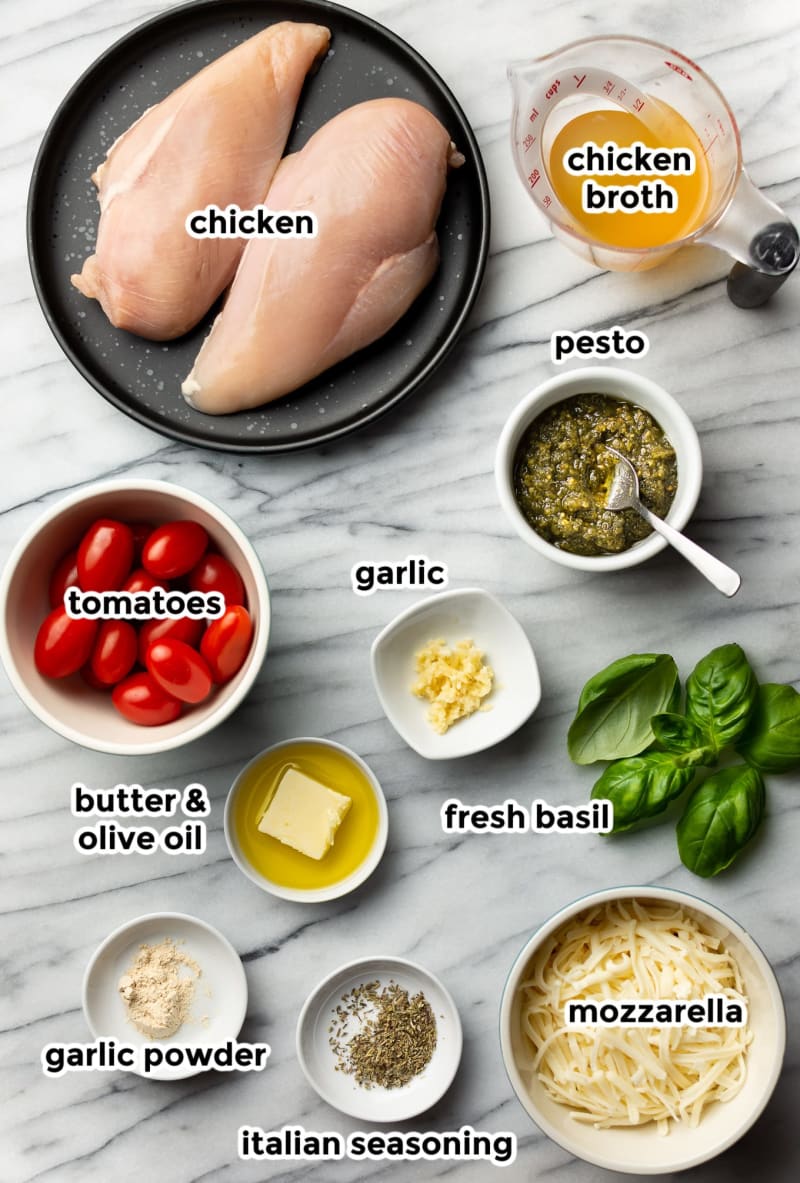
These ingredients make a quick skillet sauce and a melted cheese topping. Use the broth or wine option that best suits your meal.
- Chicken breasts: Two large breasts, sliced lengthwise into four thinner cutlets. Choose pieces that are similar in size so they finish together.
- Garlic powder: Half a teaspoon seasons the chicken evenly before searing.
- Salt and pepper: To taste, for seasoning the chicken. Go lightly if your pesto or broth is already salty.
- Olive oil: One tablespoon helps brown the cutlets in the skillet.
- Butter: One tablespoon adds richness and helps the chicken develop a golden surface.
- Garlic: Three cloves, minced, bring fresh savory flavor to the sauce. Add it with the liquids so it does not scorch.
- Chicken broth or dry white wine: Half a cup loosens the browned bits and forms the sauce base. Broth keeps the flavor mellow; wine adds brightness.
- Little tomatoes: One 10-ounce package of grape or cherry tomatoes, halved, softens and releases juice into the pan.
- Pesto: A quarter cup seasons the sauce with herbs, oil and cheese. Prepared refrigerated or jarred pesto both work.
- Italian seasoning: A quarter teaspoon adds a restrained dried-herb note alongside the pesto.
- Mozzarella cheese: One cup shredded, for a mild, melty topping. Shred a block for especially smooth melting.
- Fresh basil: Optional, to taste. Tear or slice it over the finished chicken for a fresh herbal finish.
Equipment You’ll Need
- Oven-safe skillet: Use a skillet large enough to hold the chicken and sauce in one layer; it goes from stovetop to oven.
- Baking dish: Use this instead of an oven-safe skillet for the oven portion, as needed.
- Tongs: They make it easier to turn the cutlets and transfer them without tearing the browned surface.
- Instant-read thermometer: Check the thickest part of a cutlet to confirm it reaches 165°F.
How to Make Pesto Chicken
1. Heat the oven
Set the oven to 400°F and position a rack in the top third.
Have the rack in place before cooking; the skillet will be hot when it is ready to move.
2. Cut and season chicken
Slice each breast lengthwise to make four thinner cutlets. Season both sides with garlic powder, salt and pepper.
Aim for evenly thick pieces so they cook at a similar pace.
3. Sear the cutlets
Warm the olive oil and butter in a skillet over medium-high heat. When the pan is hot, cook the chicken for 4-5 minutes per side, until golden, then move it to a plate.
The chicken will finish cooking in the oven, so avoid leaving it on the stovetop beyond the stated browning stage.
4. Build the tomato sauce
Add the minced garlic, broth or wine, halved tomatoes, pesto and Italian seasoning to the skillet. Scrape the browned bits from the pan bottom as the mixture cooks.
Cook for about 3-5 minutes, until the tomatoes begin to slump and release their juice.
5. Add chicken and cheese
Remove the skillet from the heat and return the cutlets to the sauce. Arrange the chicken in the pan and cover each piece with mozzarella.
If the skillet cannot go in the oven, transfer the chicken and sauce to a baking dish before adding the cheese.
6. Bake and brown the cheese
Put the skillet in the oven and bake for 5 minutes. Carefully broil for another few minutes to brown the cheese, watching closely; alternatively, bake for 7 minutes or until the chicken registers 165°F if you do not want to broil.
Broilers vary, and cheese can go from golden to scorched quickly. Stay nearby and remove the pan once the topping is browned.
7. Garnish and serve
Finish with fresh basil, if using, and serve immediately with a side that can soak up the sauce.
The sauce should be loose enough to spoon over the chicken and your chosen accompaniment.
How to Tell When It’s Done
Look for chicken that is opaque throughout and feels firm but not hard. The cheese should be melted, with light golden patches if you use the broiler; the tomatoes should be softened and partly collapsed.
For a dependable check, place an instant-read thermometer in the thickest part of a cutlet. Chicken is ready at 165°F. If a piece has not reached that temperature, return the skillet to the oven and check again rather than relying on color alone.
If the cheese browns before the chicken is done, move the pan away from the broiler and continue baking until the chicken reaches 165°F. For cutlets of different sizes, remove finished pieces and let larger ones cook longer.
Tips and Common Mistakes
A few small choices help the chicken brown well and keep the pesto sauce balanced.
- Cut the breasts evenly. Uneven cutlets finish at different times, leaving thinner pieces prone to drying while thicker ones catch up. Slice carefully and compare thickness before seasoning.
- Wait for the skillet to heat. Chicken is more likely to brown in a hot pan than steam. Add it once the oil and butter are shimmering, but do not let the butter darken.
- Do not overcook the first sear. The chicken has an oven finish ahead, so the stovetop stage is for browning rather than cooking it completely through.
- Scrape the pan well. The browned bits carry concentrated flavor into the sauce. Loosen them with the broth or wine while the tomatoes begin releasing their juice.
- Watch the garlic. Minced garlic can burn if left in a dry, hot skillet. Add it with the liquid ingredients and stir as the sauce cooks.
- Stay by the broiler. The cheese can brown very quickly under direct heat. Keep your attention on the skillet and stop when the surface is golden.
Substitutions and Variations
You can adjust the sauce and accompaniments while keeping the skillet method intact.
- Use either liquid: Chicken broth gives a savory, familiar sauce; dry white wine lends a brighter edge. Use the same amount whichever you choose.
- Try chicken thighs: Boneless, skinless thighs can replace the breasts, though their shape and thickness may change the cooking time. Check for 165°F at the thickest point.
- Swap the cheese: Provolone or an Italian cheese blend can stand in for mozzarella. Expect a sharper flavor or a slightly different melt.
- Choose another tomato: Halved small tomatoes are ideal for quick softening, but chopped ripe tomatoes can work. They may make the sauce looser and less uniform.
- Use homemade pesto: Homemade pesto is a good substitute for prepared pesto. Its salt and oil levels vary, so taste the sauce before adding extra seasoning.
- Add a little heat: A pinch of red pepper flakes in the sauce gives the dish gentle heat without changing its basic herb-and-tomato character.
What to Serve with Pesto Chicken
Spoon the pesto tomato sauce over the chicken and serve with rice or mashed potatoes, both useful for catching every bit. Roasted vegetables, a green salad or crusty bread make easy additions.
For another chicken dinner idea, browse our honey lime chicken stack or explore chicken recipes for more ways to plan the main course.
Make-Ahead, Storage and Reheating
Make ahead: You can slice and season the chicken and halve the tomatoes earlier in the day; keep them covered and refrigerated separately. For the best texture, sear and bake the chicken close to serving time, then add the basil at the end.
Storage: Refrigerate leftovers in a covered airtight container within 2 hours of cooking and use within 3 to 4 days. Store the chicken with its sauce so it stays moist.
Freezing: Freeze cooled portions with the sauce in an airtight freezer-safe container for up to 2 months. Thaw overnight in the refrigerator; the tomatoes and cheese may soften after freezing.
Reheating: Warm gently in a covered skillet over low heat with a splash of broth or water, just until hot, to help keep the chicken tender. You can also microwave a portion in short intervals, spooning sauce over the chicken between intervals.
Pesto Chicken FAQs
Can I make pesto chicken without an oven-safe skillet?
Yes. Sear the chicken and prepare the sauce in a regular skillet, then transfer them to a baking dish for the oven step. Add the mozzarella before baking.
Can I use pesto from a jar?
Yes. Refrigerated or shelf-stable prepared pesto works; its saltiness varies, so season the chicken carefully and taste the sauce before serving.
How do I know the chicken is cooked through?
Use an instant-read thermometer in the thickest part of a cutlet and look for 165°F. The meat should also be opaque throughout.
Can I skip broiling the mozzarella?
Yes. Bake the chicken for 7 minutes or until it registers 165°F, as directed, instead of broiling. The cheese will melt but may not brown as much.
What can I serve with pesto chicken?
Rice or mashed potatoes are especially useful for soaking up the tomato-pesto sauce. Bread, roasted vegetables or a simple salad also fit well.
Can I use chicken breasts without slicing them?
It is better to slice them into thinner cutlets as directed so they cook more evenly during the short oven finish. Whole breasts may need different timing and should be checked for 165°F.
Printable Recipe
Recipe adapted from Salt & Lavender. Photos courtesy of Salt & Lavender, used with permission.

Pesto Chicken
Ingredients
- 2 large chicken breasts cut in half lengthwise
- 1/2 teaspoon garlic powder
- Salt & pepper to taste
- 1 tablespoon olive oil
- 1 tablespoon butter
- 3 cloves garlic minced
- 1/2 cup chicken broth or dry white wine
- 1 (10 ounce) package little tomatoes (grape or cherry) cut into halves
- 1/4 cup pesto
- 1/4 teaspoon Italian seasoning
- 1 cup mozzarella cheese shredded
- Fresh basil optional, to taste
Instructions
- Preheat your oven to 400F and move the rack to the top third of the oven.
- Cut the chicken breasts in half lengthwise so you have 4 thinner cutlets. Season them with the garlic powder and some salt & pepper.
- Heat the oil and butter in a skillet over medium-high heat. Once the skillet is hot, cook the chicken for 4-5 minutes/side or until golden (but don't overcook as it will be finished in the oven). Transfer chicken to a plate.
- To the skillet, add the garlic, broth, tomatoes, pesto, and Italian seasoning.
- Scrape up and brown bits from the bottom of the pan and cook until the tomatoes start to lose their shape and release the juice (about 3-5 minutes).
- Take the pan off the heat and add the chicken back in. Top the chicken pieces with the mozzarella.
- Transfer the skillet to the oven and cook for 5 minutes and then carefully broil for another few minutes to brown the cheese (watch it carefully so it doesn't burn). If you don't want to broil, I'd cook the chicken in the oven for 7 minutes or until it registers 165F.
- Garnish with fresh basil and serve immediately. I recommend serving it with something that will absorb the rich sauce like mashed potatoes or rice.
Notes
- If you don’t own an oven-safe skillet, transfer the chicken to a baking dish for the baking portion of the recipe.


