Ranch Pork Chops


Ranch pork chops pair golden, pan-seared meat with a creamy, savory gravy. The chops finish cooking right in the skillet, where their juices mingle with broth, butter and ranch seasoning.
The gravy thickens quickly and clings to each chop without needing cream. With 10 minutes of prep and 20 minutes of cooking, this four-serving dinner is practical for a weeknight and satisfying enough to serve with mashed potatoes or rice.
Use chops about 0.75 to 1 inch thick for the most reliable timing. The method works with boneless or bone-in pork, and a thermometer helps keep the meat juicy rather than overcooked.
Why This Ranch Pork Chops Recipe Works
The skillet method builds flavor in stages, using the same pan for the pork and gravy. A few small details help the chops cook evenly and the sauce turn smooth.
- A hot pan creates a golden sear. Olive oil and butter provide enough fat to brown the pork over medium-high heat. That browned surface also leaves savory bits in the skillet to flavor the gravy.
- Flour thickens the broth. Cooking flour in melted butter for about a minute removes its raw taste and creates a base for the sauce. Whisking broth in gradually helps prevent lumps.
- Ranch seasoning supplies the seasoning blend. The seasoning adds herbs and savory flavor to the simple chicken-broth gravy. Because it can be salty, the recipe uses pepper rather than adding salt automatically.
- The thermometer protects the pork. Chops can go from tender to dry quickly, especially when their thickness varies. Checking the thickest part lets you stop cooking as soon as the pork reaches a safe temperature.
Ingredients You’ll Need
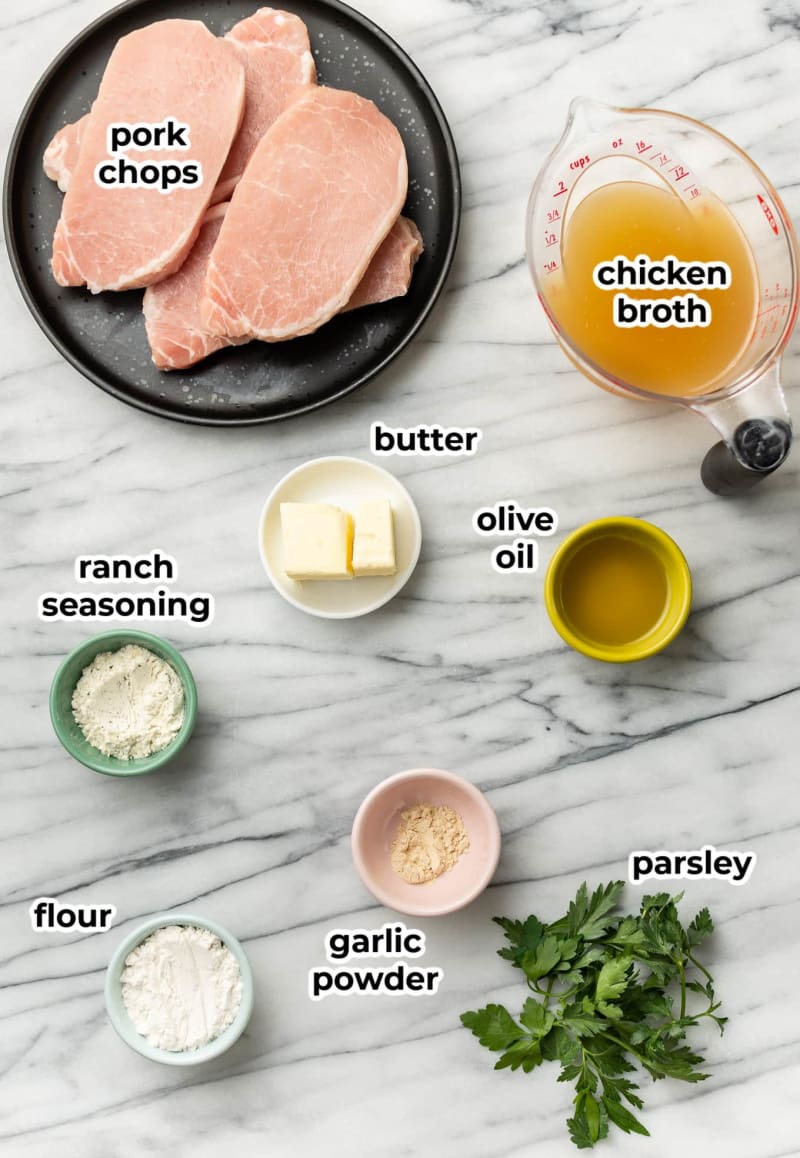
These ingredients make a quick skillet gravy and season the pork without a long marinade. Check the thickness of the chops before you start so you can follow the searing cues.
- Pork chops: Four chops, boneless or bone-in. Aim for 0.75 to 1 inch thick so they sear and finish in the stated time.
- Pepper: Season to taste. Ranch seasoning brings salt and other flavor, so additional salt may not be needed.
- Garlic powder: Half a teaspoon seasons the pork evenly and withstands the skillet heat better than minced garlic.
- Olive oil: One tablespoon helps the chops brown in the hot skillet. A neutral cooking oil is a suitable alternative.
- Butter: Three tablespoons total, divided between searing and making the gravy. Unsalted butter gives you more control over the final saltiness.
- Flour: Two tablespoons thicken the broth into a smooth, spoonable gravy. All-purpose flour works well.
- Low-sodium chicken broth: One and one-quarter cups form the gravy. Low-sodium broth leaves room for the ranch seasoning’s salt.
- Ranch seasoning: One tablespoon gives the sauce its ranch flavor. Use a dry seasoning mix, not prepared ranch dressing.
- Fresh parsley: One tablespoon, chopped, is optional but recommended. It adds a fresh note and color just before serving.
Equipment You’ll Need
- Large skillet: Use a skillet wide enough to hold the chops without crowding, so they brown rather than steam.
- Whisk: A whisk helps incorporate the broth into the butter-and-flour mixture and keeps the gravy smooth.
- Plate: Set the seared chops aside on a plate, then return them and any collected juices to the skillet.
How to Make Ranch Pork Chops
1. Season the pork
If possible, take the chops out of the refrigerator 15-30 minutes before you begin. Season each one with pepper and garlic powder.
Letting the chill ease slightly helps the centers cook more evenly. Keep the pork on a plate while it rests.
2. Heat the skillet
Set a skillet over medium-high heat and add the olive oil with 1 tablespoon of butter. Give the pan a few minutes to heat.
The butter should melt and the pan should be hot before the chops go in, but the fat should not be smoking.
3. Sear the chops
Lay the pork in the skillet and cook for 3-5 minutes per side, until golden. Use about 3 minutes for thinner chops and 5 minutes for chops up to 1 inch thick. Transfer them to a plate.
Look for a well-browned surface before turning. If the chops resist the pan, give them a little longer to release.
4. Make the butter-flour base
Turn the heat down to medium and add the remaining butter. Once it melts, stir in the flour and cook for about a minute.
Keep stirring so the flour coats the butter evenly. It should look like a smooth paste without darkening too much.
5. Whisk in the broth
Pour in the chicken broth slowly while whisking, working out any floury clumps. Continue until the flour is incorporated and the liquid looks smooth.
Adding the broth gradually gives you more control over the consistency. Scrape the skillet to loosen the browned bits into the sauce.
6. Season the gravy
Whisk the ranch seasoning into the broth mixture until evenly distributed.
The gravy should be uniformly colored with no dry pockets of seasoning before the pork goes back in.
7. Finish cooking the pork
Return the chops to the skillet and pour in any juices from the plate. Cook for another 3-5 minutes, until the pork reaches at least 145°F and the sauce thickens a little more.
Turn the chops once if needed so they are coated in gravy. Check temperature in the thickest part, away from bone.
8. Garnish and serve
Sprinkle with chopped parsley if using and serve immediately. Taste the gravy before adding salt; it is fairly salty from the ranch seasoning.
The sauce should coat the pork and a spoon without becoming pasty. Serve while the gravy is hot and fluid.
How to Tell When It’s Done
Look for a golden sear on both sides and pork that feels firm but still has a little give when pressed. The gravy should be smooth and thick enough to cling to the chops, not stiff or floury.
If the pork has not reached 145°F, keep it in the skillet and check again after a short interval. If the gravy thickens before the chops finish, loosen it with a small splash of broth while they continue cooking.
Tips and Common Mistakes
Small adjustments to heat, spacing and seasoning make this skillet dinner easier to manage.
- Avoid crowding the skillet. When chops touch closely, they release moisture and steam instead of browning. Sear in batches if your pan cannot hold them with space around each piece.
- Whisk as you add broth. A steady whisk breaks up the flour mixture before lumps set in. If a few remain, keep whisking over medium heat until the sauce smooths out.
- Keep the heat moderate for gravy. After searing, medium heat gives the flour time to cook and the broth time to thicken without scorching. Stir around the edges where sauce can catch.
- Taste before salting. Ranch seasoning can make the gravy salty enough on its own. Use low-sodium broth and adjust only after the sauce is mixed.
- Use the plate juices. The liquid released while the chops rest carries pork flavor. Tip it into the skillet when you return the meat so it becomes part of the gravy.
Substitutions and Variations
You can adapt the seasoning and the cooking fat, but keep an eye on salt and doneness when you change the ingredients.
- Boneless chops: Choose these for easy serving and a uniform shape. They can dry out quickly if thin, so start checking them early.
- Homemade ranch blend: Use a dry homemade mix if you prefer to control the herbs and salt. Keep the same amount and taste the gravy before adding any extra salt.
- Turkey broth: Turkey broth can replace chicken broth without changing the method. Choose a low-sodium version to keep the finished sauce from becoming overly salty.
- Neutral oil: Canola or another neutral cooking oil can stand in for olive oil. The flavor will be less fruity, but the chops will still sear.
- Dairy-free butter alternative: A plant-based butter substitute can be used for the searing fat and gravy base if it handles skillet heat well. The sauce may have a slightly different richness.
What to Serve with Ranch Pork Chops
Spoon the ranch gravy over mashed potatoes, rice or egg noodles so none of the sauce goes to waste. Add green beans, roasted broccoli or a crisp salad to balance the rich skillet sauce.
For another pork-free dinner idea, browse our chicken recipes or find more weeknight mains in our dinner recipes.
Make-Ahead, Storage and Reheating
Make ahead: For the best texture, cook the chops just before serving. You can measure the flour and ranch seasoning ahead and chop the parsley, then keep the prepared ingredients covered in the refrigerator; cook the gravy and pork fresh.
Storage: Refrigerate leftover pork and gravy in a covered airtight container within 2 hours of cooking. Keep for 3 to 4 days, storing the chops with some gravy to help prevent them from drying out.
Freezing: Freeze cooled pork chops with the gravy in an airtight freezer container for up to 2 to 3 months. Thaw overnight in the refrigerator; the gravy may separate slightly but can be stirred as it warms.
Reheating: Warm the chops gently in a covered skillet over low heat with the gravy, turning once, until heated through. Add a splash of broth if the sauce has become too thick; avoid high heat, which can toughen the pork.
Ranch Pork Chops FAQs
Can I use a packet of ranch dressing mix?
Yes. Use dry ranch seasoning mix, not liquid prepared dressing. Check the packet size and measure the stated tablespoon so the gravy does not become too salty or strongly seasoned.
Why is my ranch gravy lumpy?
Lumps usually form when the broth goes in too quickly or the flour mixture is not whisked. Keep the skillet over medium heat and whisk steadily; a fine-mesh strainer can catch any stubborn lumps.
Can I make these pork chops without flour?
Yes, but the gravy will be thinner because flour provides its thickening. You can serve it as a light pan sauce or use a suitable gluten-free flour blend in the same amount.
What if my pork chops are thicker than 1 inch?
They will likely need longer than the stated searing and finishing times. Keep the heat controlled and use a thermometer in the thickest section to decide when they are ready.
Can I double this recipe?
Yes, if you have a skillet large enough to brown the chops without crowding. Otherwise, sear in batches and make sure the gravy ingredients are increased in the same proportion.
How can I make the gravy less salty?
Use low-sodium broth as listed and measure the ranch seasoning rather than adding extra. If the finished gravy tastes too salty, stir in a little more unsalted broth to soften the flavor.
Printable Recipe
Recipe adapted from Salt & Lavender. Photos courtesy of Salt & Lavender, used with permission.

Ranch Pork Chops
Ingredients
- 4 pork chops see note
- Pepper to taste
- 1/2 teaspoon garlic powder
- 1 tablespoon olive oil
- 3 tablespoons butter divided
- 2 tablespoons flour
- 1 1/4 cups low sodium chicken broth
- 1 tablespoon ranch seasoning I used Hidden Valley
- 1 tablespoon chopped fresh parsley optional but recommended
Instructions
- Take the pork chops out of the fridge 15-30 minutes prior to starting the recipe if you can. Season each pork chop with pepper and the garlic powder.
- Add the olive oil and 1 tablespoon of the butter to a skillet over medium-high heat. Let the pan heat up for a few minutes.
- Add the pork to the pan and cook for 3-5 minutes/side until golden (3 minutes for thinner chops and 5 minutes for pork chops that are up to 1" thick). Transfer the pork to a plate and set aside.
- Reduce the heat to medium. Add the remaining butter to the skillet, and once it's melted, stir in the flour and cook for about a minute.
- Slowly whisk in the broth until the flour has been incorporated/dissolved.
- Whisk in the ranch seasoning.
- Add the pork back to the pan (along with any juices on the plate) and cook for another 3-5 minutes or until the pork is cooked through (145F minimum) and the sauce has thickened up a bit more.
- Sprinkle with fresh parsley if using, and serve immediately. This recipe is fairly salty, so you probably won't need to add any extra salt.
Notes
- Use boneless pork chops (like I did) or bone-in. I recommend pork chops that are 0.75-1″ thick. Anything much thicker or thinner is likely to end up under or overcooked so you may need to adjust timing.
- Pork is easy to overcook. It’s safe to eat at 145F. I recommend using an instant read meat thermometer to test doneness.
- You can also find this recipe in the Salt & Lavender: Everyday Essentials hardcover cookbook.


