Rotini Pasta

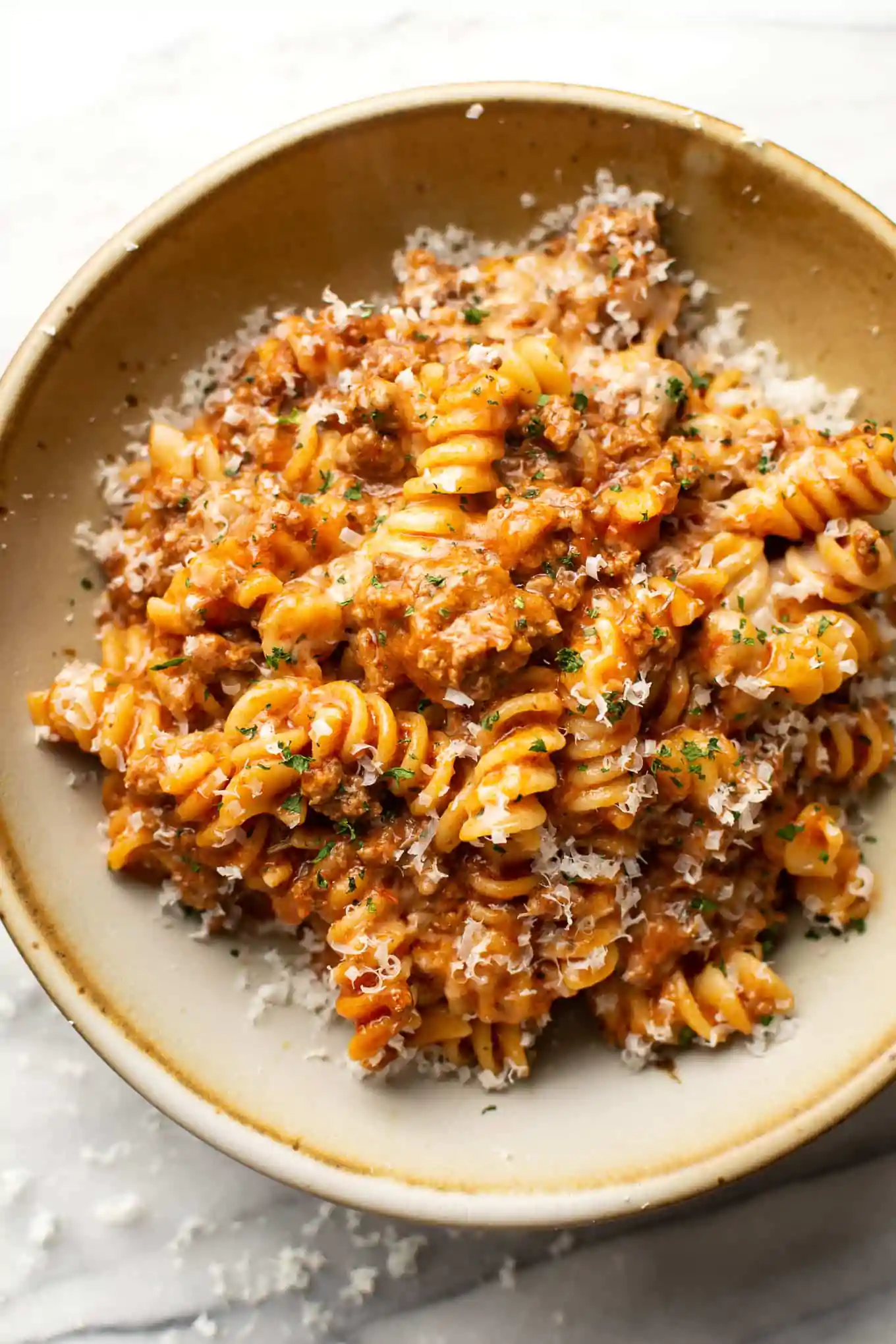
This one-pot rotini pasta cooks in a savory beef and tomato sauce, with garlic and Italian herbs tucked into every twist. Ground beef makes it hearty, and mozzarella melts into the pasta for a soft, cheesy finish without a separate baking dish.
Prep takes 10 minutes and cooking takes 20, so dinner is ready in 30 minutes. The recipe serves 4 and suits a busy weeknight, with only one pot to clean.
Why This Rotini Pasta Recipe Works
The pasta cooks directly in the sauce, where a few simple choices help build flavor and keep the meal easy.
- Tomato paste deepens the sauce. A brief cook with the garlic takes away the paste’s raw edge and concentrates its flavor. It also gives the broth and crushed tomatoes a richer starting point.
- Rotini catches the sauce. The pasta’s twists hold onto the meat and tomato mixture, so the sauce is distributed throughout the pot. Cooking it in the broth means it absorbs flavor as it softens.
- A steady simmer protects the pasta. Once the pot boils, lowering the heat keeps the liquid bubbling without reducing it too quickly. That gives the rotini time to cook before the sauce becomes too thick.
- Covered mozzarella melts gently. The pot’s retained heat softens the cheese without a separate oven step. Stirring it in after it melts makes the sauce creamy and cohesive.
Ingredients You’ll Need
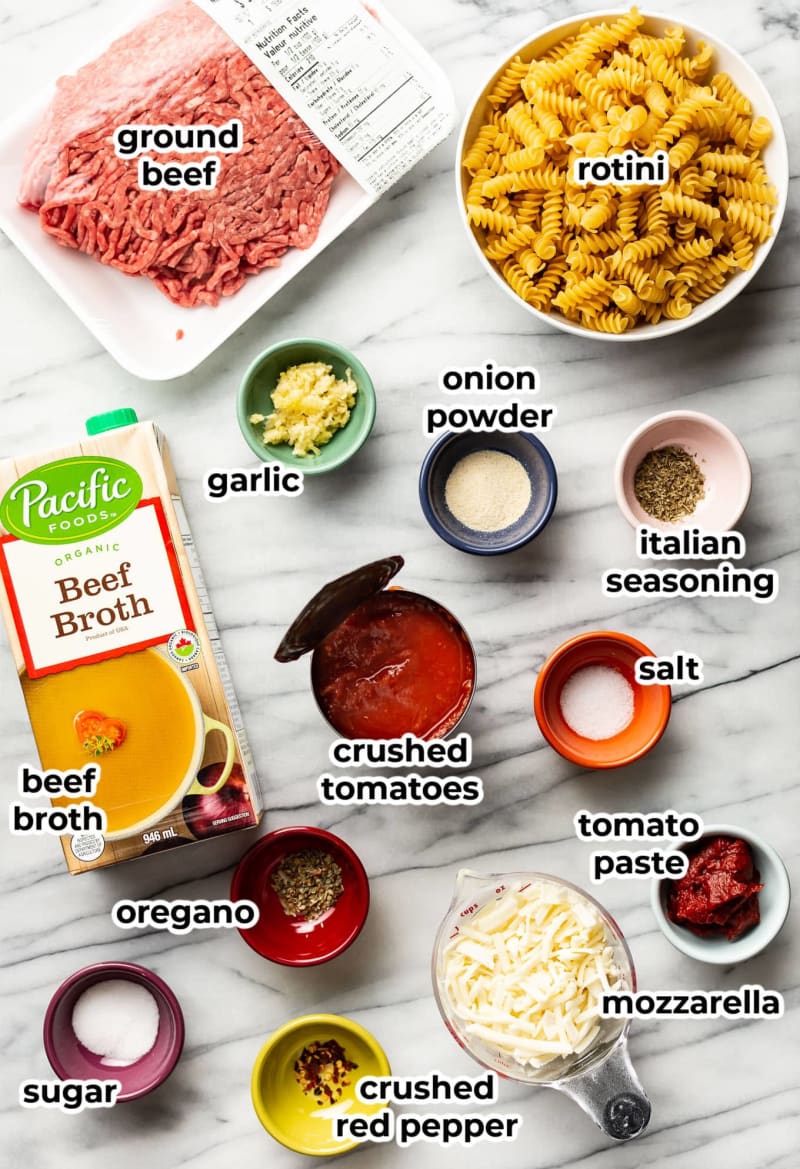
These pantry-friendly ingredients turn ground beef, tomatoes and pasta into a filling one-pot dinner.
- Lean ground beef: One pound. Lean beef keeps the pot from becoming overly greasy; drain excess fat if needed after browning.
- Tomato paste: Two tablespoons. It concentrates tomato flavor and gives the sauce a fuller, more savory taste.
- Garlic: Three to four cloves, minced. Fresh garlic brings a pungent, savory note; add it with the paste so it cooks briefly.
- Onion powder: One teaspoon. This adds mellow onion flavor without extra chopping or moisture.
- Sugar: One teaspoon. It rounds out the acidity of the tomatoes rather than making the sauce taste sweet.
- Dried oregano: Half a teaspoon. Its earthy, slightly peppery flavor complements the beef and tomato.
- Italian seasoning: Half a teaspoon. A dried herb blend adds a familiar Italian-style flavor to the sauce.
- Salt: Half a teaspoon, with the option to adjust at the end. Use less if your broth is salty or you are sensitive to salt.
- Crushed red pepper flakes: One pinch, optional. Add it for a mild background heat; leave it out for a gentler sauce.
- Beef broth: Three cups. It provides the liquid the rotini needs to cook and contributes savory depth.
- Crushed tomatoes: One 15-ounce can. These form the tomato base; choose plain crushed tomatoes so the seasonings stay balanced.
- Rotini: Three cups, uncooked. Regular dried rotini is the intended pasta and holds its shape in the simmering sauce.
- Shredded mozzarella: One cup. It melts over the finished pasta and adds a mild, stretchy, creamy finish.
- Pepper: Optional, to taste. Add it at the end so you can season the finished sauce to your preference.
- Parmesan and fresh basil: Freshly grate parmesan and tear or chop fresh basil, both optional for serving. They add salty savoriness and a fresh herbal note.
Equipment You’ll Need
- Soup pot or Dutch oven: Use a roomy, heavy pot that can hold the beef, broth, tomatoes and pasta while allowing you to stir without spilling.
- Lid: A well-fitting lid traps heat while the mozzarella melts and the sauce settles.
- Wooden spoon or sturdy spatula: Use it to break up the beef, stir the pasta during its simmer and gently fold in the melted cheese.
How to Make Rotini Pasta
1. Brown the beef
Put the ground beef in a soup pot or Dutch oven over medium-high heat. Break it into small pieces as it cooks, about 7-8 minutes, until just browned; spoon away excess fat if needed.
The beef should no longer look raw, but it does not need to become deeply crisp. Removing excess fat keeps the tomato broth from feeling greasy.
2. Cook the tomato paste
Mix in the tomato paste and minced garlic. Let them cook together for about a minute, stirring so the garlic does not stick to the bottom.
The garlic should smell fragrant, and the paste should darken slightly. Avoid letting the garlic brown.
3. Season the beef
Stir in the onion powder, sugar, oregano, Italian seasoning, salt and crushed red pepper flakes, if using.
Coat the beef evenly before adding liquid; this distributes the dried seasonings through the finished sauce.
4. Add broth and tomatoes
Pour in the beef broth and crushed tomatoes, then turn the heat up to high. Bring the mixture to a boil.
Stir along the bottom of the pot to loosen any browned bits. Wait for a steady boil before adding the pasta.
5. Simmer the rotini
Add the rotini once the sauce boils. Cook uncovered for 12 minutes, stirring occasionally; lower the heat to medium or even medium-low as needed to maintain a steady simmer rather than a vigorous boil.
Check the pasta as it cooks and stir from the bottom, where it can catch. If it is still firm and the liquid is getting low, add a splash more beef broth or turn down the heat.
6. Melt the mozzarella
Turn off the burner but leave the pot in place. Scatter the mozzarella over the top, cover the pot and let it stand for 5 minutes, or until the cheese melts and more liquid has absorbed.
Keep the lid closed while the cheese softens. The pasta will continue absorbing liquid as it rests.
7. Toss and serve
Gently stir the melted mozzarella through the rotini. Taste and add pepper and extra salt if needed, then serve immediately with freshly grated parmesan if desired.
Fold rather than beat the pasta so the rotini keeps its shape. Add basil at the table for a fresh finish.
How to Tell When It’s Done
The rotini should be tender but still hold its spiral shape, and the sauce should cling to the pasta rather than look like a thin soup. The beef should be fully browned and the mozzarella melted through after stirring.
If the pasta is not tender and the liquid is running low, add a splash of beef broth and keep it at a gentle simmer. If the pasta is cooked but the pot still looks loose, simmer it a little longer, stirring regularly.
The pasta continues absorbing liquid as it sits, so serve it promptly for a saucier texture. Taste before serving and adjust salt carefully, especially if the broth is already salty.
Tips and Common Mistakes
Keep an eye on the simmer and the liquid level; both matter more than relying on the clock alone.
- Break up the beef as it cooks. Smaller pieces distribute evenly through the pasta and brown more consistently than large clumps.
- Keep the simmer steady. A hard boil can reduce the broth before the rotini softens. Lower the heat to medium or even medium-low when the bubbling gets too vigorous.
- Stir occasionally, not constantly. Stirring helps keep pasta from sticking to the bottom, while leaving the pot alone between stirs lets it maintain an even simmer.
- Taste before adding more salt. Broth can contribute plenty of seasoning. Add extra gradually at the end, especially if you use table salt or are sensitive to salt.
- Serve soon after stirring. Rotini keeps soaking up sauce as it stands. If dinner is delayed, expect a thicker texture and loosen it with a little broth when reheating.
Substitutions and Variations
A few practical swaps can change the flavor or texture while keeping the one-pot approach.
- Ground turkey: Use it in place of the beef for a lighter-tasting pot. It is less rich, so taste the sauce before serving and adjust the seasoning.
- Ground pork: Pork works well with the tomato and herbs, though it can leave more fat behind; drain the excess after browning.
- Chicken broth: It can replace beef broth, but the sauce will have a milder, less beefy flavor. Choose a low-sodium option if you want more control over salt.
- More heat: Increase the crushed red pepper flakes for a spicier sauce. Add gradually so the heat does not overwhelm the tomato and cheese.
- Extra vegetables: Stir in a handful of spinach near the end, letting it wilt in the hot sauce. This adds color and greens but makes the pot a little fuller.
What to Serve with Rotini Pasta
Serve the pasta hot with parmesan and fresh basil, plus a crisp green salad or steamed broccoli to balance the rich beef and cheese. Garlic bread is useful for catching any sauce left in the bowl.
For more meal inspiration, browse our chicken recipes or dinner recipes.
Make-Ahead, Storage and Reheating
Make ahead: For the freshest texture, cook the pasta just before serving. You can mince the garlic and measure the seasonings ahead, then refrigerate the prepared ingredients separately until you are ready to cook.
Storage: Cool leftovers promptly and refrigerate them in a covered airtight container for 3 to 4 days. The pasta will absorb more sauce as it chills.
Freezing: Freeze cooled portions in airtight freezer-safe containers for up to 2 months. The rotini may soften and the cheese sauce may be less smooth after thawing.
Reheating: Warm portions gently in a saucepan over low heat, stirring in a splash of beef broth to loosen the sauce. You can also microwave covered portions, stirring partway through, until hot.
Rotini Pasta FAQs
Can I use a different pot for one-pot rotini?
Yes. Use a deep, sturdy pot with enough room to stir the pasta in the liquid. A wide, shallow skillet may let the sauce reduce too quickly.
Why is my rotini still firm after 12 minutes?
Pasta brands, pots and burners vary, so the stated cooking time is a guide. Keep simmering until tender, adding a splash of beef broth if the liquid is getting low.
Can I leave out the sugar?
Yes. The sauce will taste a little sharper and more acidic, but the tomatoes and seasonings will still make a flavorful base.
Can I use pre-shredded mozzarella?
Yes. It will work, though some pre-shredded cheese melts less smoothly than cheese you shred yourself. Add it after turning off the heat and keep the pot covered while it melts.
How do I make this pasta less salty?
Use less than the listed salt if you are particularly sensitive, and choose lower-sodium broth when available. Taste at the end before adding any more.
Can I double the recipe?
Yes, if your pot is large enough to hold the ingredients with room for stirring. Avoid filling it to the rim, and check the pasta and liquid as they cook because a larger batch may behave differently.
Printable Recipe
Recipe adapted from Salt & Lavender. Photos courtesy of Salt & Lavender, used with permission.

Rotini Pasta
Ingredients
- 1 pound lean ground beef
- 2 tablespoons tomato paste
- 3-4 cloves garlic minced
- 1 teaspoon onion powder
- 1 teaspoon sugar
- 1/2 teaspoon dried oregano
- 1/2 teaspoon Italian seasoning
- 1/2 teaspoon salt see note
- 1 pinch crushed red pepper flakes optional
- 3 cups beef broth
- 1 (15 ounce) can crushed tomatoes
- 3 cups uncooked rotini pasta
- 1 cup shredded mozzarella
- Pepper optional, to taste
- Freshly grated parmesan cheese and fresh basil optional, for serving
Instructions
- Add the ground beef to a soup pot/Dutch oven over medium-high heat. Cook until just browned, breaking it up with your spoon as it cooks (about 7-8 minutes). Spoon out excess fat if needed.
- Stir in the tomato paste and garlic, and cook for about a minute.
- Stir in the onion powder, sugar, oregano, Italian seasoning, salt, and crushed red pepper.
- Add the beef broth and crushed tomatoes to the pot, and increase the heat to high.
- Once it's boiling, add in the rotini and cook for 12 minutes, uncovered, stirring occasionally. You will need to turn the heat down at some point to maintain a constant simmer (medium or even medium-low) so it's bubbling steadily but not boiling like crazy.
- Turn the burner off (leave the pot on it). Sprinkle the mozzarella on top and close the lid for 5 minutes or until the cheese melts and more of the liquid absorbs.
- Gently toss it so the mozzarella is stirred in, and season with pepper and some extra salt if needed. Serve immediately with freshly grated parmesan if desired.
Notes
- Troubleshooting tip: every pot/stove varies, so cooking times are a guideline and you may need to adjust as needed. If you find the pasta isn’t quite cooked yet and the liquid is getting too low, add a splash more beef broth and/or turn the heat down. If there’s still too much liquid at the end of suggested cooking time and/or the pasta isn’t yet cooked, cook it for a little longer. The pasta will absorb more liquid the longer it sits.
- If you’re using regular table salt vs. sea salt or kosher salt, you may want to add a bit less than suggested. If you’re particularly sensitive to salt, you can add less than suggested, but be sure to add enough salt or this recipe will be bland.


