Tilapia with a Lemon Herb Butter Pan Sauce

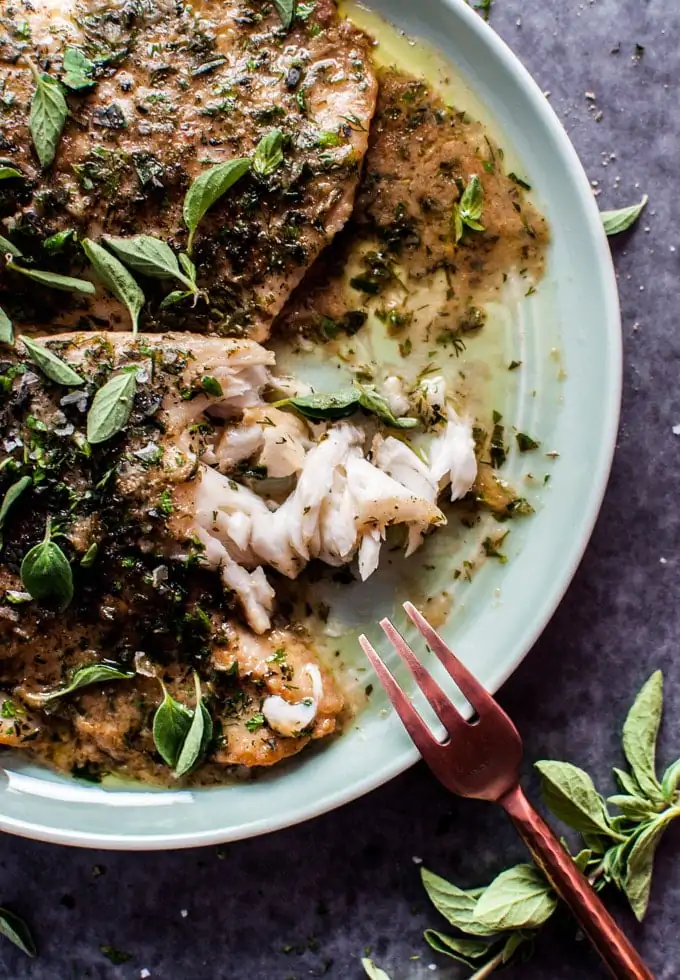
Tilapia with a lemon herb butter pan sauce pairs tender, lightly crisped fish with a bright, savory sauce. A quick flour dredge gives the fillets a delicate golden coating, while butter, lemon and fresh herbs create a glossy finish in the same skillet.
The recipe takes 17 minutes from start to finish and makes 2 servings. It is a practical choice for a quick weeknight dinner, especially when you want something fresh that feels more special than plain pan-seared fish.
Why This Tilapia with a Lemon Herb Butter Pan Sauce Recipe Works
This fast skillet method builds flavor in stages without asking you to make a separate sauce.
- A light flour coating protects the fish. The thin layer helps the fillets develop a delicate crust and gives the pan sauce a little body. Shake off excess flour so the coating stays light rather than pasty.
- Butter and oil work together. Olive oil handles the skillet’s medium-high heat, while butter brings richness and helps the fish brown. Using both gives you flavor without relying on butter alone.
- The sauce comes together in the skillet. Broth or water, lemon juice and herbs loosen the browned bits left behind by the fish. As the liquid reduces, it concentrates into a fresh, buttery sauce.
- Fresh herbs keep the sauce lively. Dill, parsley and oregano bring different notes: grassy, clean and slightly savory. Adding them to the simmering liquid spreads their flavor through the sauce.
Ingredients You’ll Need
Set out the ingredients before heating the skillet; the fish cooks quickly, and the sauce follows right after.
- Tilapia fillets: Two fillets. Choose pieces of similar thickness so they cook at roughly the same rate.
- Olive oil: One tablespoon for the skillet; it helps the fish brown at medium-high heat.
- Butter: Two tablespoons add richness to the fish and the pan sauce.
- Flour: A quarter cup or more as needed for dredging. All-purpose flour works well; shake off excess before cooking.
- Chicken broth or water: Five ounces. Broth gives the sauce more savory depth, while water keeps the lemon and herb flavors prominent.
- Lemon juice: Juice of half a lemon brightens the buttery sauce. Freshly squeezed juice has a particularly clean flavor.
- Fresh dill: One tablespoon, chopped, for a lightly grassy, classic pairing with fish.
- Fresh parsley: One tablespoon, chopped, for a fresh green note that balances the butter.
- Fresh oregano: One tablespoon, chopped, for a fragrant, savory edge.
- Salt and pepper: Use both to taste on the fillets before dredging.
Equipment You’ll Need
- Skillet: Use a skillet large enough to hold both fillets without crowding, so they brown rather than steam.
- Plate: A shallow plate makes it easy to spread the flour and coat each fillet evenly.
- Knife and cutting board: Chop the fresh herbs before cooking so they are ready when the sauce ingredients go into the hot skillet.
How to Make Tilapia with a Lemon Herb Butter Pan Sauce
1. Chop the fresh herbs
Finely chop the dill, parsley and oregano, then set them aside together.
Keep the herbs ready beside the stove; they go into the skillet with the liquids.
2. Season the fillets
Sprinkle salt and pepper over both sides of each tilapia fillet.
Season both faces evenly so the fish is flavorful beneath the flour coating.
3. Prepare the flour
Spread flour across a plate in a thin, even layer.
A shallow layer makes it easier to coat the fish without using more flour than needed.
4. Heat the skillet
Add the olive oil and butter to a skillet and warm them over medium-high heat.
The butter should be melted and the fat hot before the fish goes in, but avoid letting the butter turn dark.
5. Dredge and cook the fish
When the skillet is hot, coat each fillet in flour, shaking off the extra, and place it in the pan. Cook for three full minutes on each side.
The first side should release more easily once a light crust has formed. Turn the fillets gently to keep them intact.
6. Reduce the herb sauce
Pour in the chicken broth or water and lemon juice, then add the chopped herbs. Cook for five full minutes, allowing the liquid to reduce and thicken.
The sauce should look less watery and lightly coat a spoon. Stir or gently swirl the skillet so the browned bits blend in.
7. Serve right away
Transfer the tilapia to plates and spoon the lemon herb butter sauce over the top.
Serve immediately while the fish is hot and the sauce is still glossy.
How to Tell When It’s Done
Tilapia is ready when the flesh is opaque and separates into flakes with gentle pressure from a fork. For a food-safety check, the thickest part should reach 145°F; avoid relying on browning alone.
If the center is still translucent or resists flaking, return the fillets to the skillet and cook briefly until done. Handle them gently, since cooked tilapia can break apart easily.
Tips and Common Mistakes
A few small details help the fillets brown evenly and keep the quick sauce from becoming watery.
- Dry the fish before seasoning. Blotting away surface moisture helps the flour cling and encourages browning instead of steaming.
- Use just enough flour. Coat the fillets lightly and shake off loose flour. A thick coating can turn gummy when the broth is added.
- Let the skillet heat first. Adding fish to properly heated oil and butter helps the coating set instead of sticking to the pan.
- Avoid crowding the fillets. Give each piece room in the skillet. If they touch closely, moisture can collect between them and interfere with browning.
- Turn the fish carefully. Tilapia is delicate, so use a thin spatula and turn each fillet only after the first side has developed a crust.
- Let the sauce reduce. Give the broth or water the full five minutes to cook down. If it still looks thin, continue simmering briefly before serving.
Substitutions and Variations
You can adjust the herbs and cooking liquid while keeping the same quick skillet approach.
- Other mild white fish: Cod or haddock can stand in for tilapia. Thicker pieces may need a little longer, so use flaking and opacity to judge doneness.
- Dried herbs: Use dried dill, parsley or oregano if fresh herbs are unavailable, adding a smaller amount because dried herbs are more concentrated.
- Water instead of broth: Water works as written and lets the lemon and herbs lead. The sauce will have a lighter, less savory flavor.
- Gluten-free flour: A gluten-free all-purpose blend can replace regular flour for dredging. Choose one intended for general cooking, and keep the layer light.
- Lemon zest: Add a little lemon zest with the juice for a more fragrant citrus note without making the sauce more acidic.
- Different herb mix: Chives or tarragon can replace one of the herbs for a different fresh flavor. Keep the total amount similar so the sauce stays balanced.
What to Serve with Tilapia with a Lemon Herb Butter Pan Sauce
Serve the tilapia with rice, which catches the lemon herb butter sauce, or add a crisp side salad for a lighter plate. Steamed green beans or roasted vegetables also work well alongside the fish.
For more meal ideas, browse our dinner recipes or find another quick main in our chicken recipes.
Make-Ahead, Storage and Reheating
Make ahead: Chop the herbs and juice the lemon shortly before cooking, or prepare them earlier in the day and refrigerate them separately. For the best texture, dredge and cook the fish just before serving.
Storage: Refrigerate leftover fish and sauce in a covered container within 2 hours of cooking. Eat within 1 to 2 days, as seafood is best used promptly.
Freezing: Freezing is not recommended; the cooked tilapia can turn dry and soft when thawed, and the butter sauce may separate.
Reheating: Warm leftovers gently in a covered skillet over low heat with a small splash of water, just until heated through. Avoid high heat, which can dry the fish and break it apart.
Tilapia with a Lemon Herb Butter Pan Sauce FAQs
Can I make the sauce without butter?
Yes. Use additional olive oil for cooking, but expect a less rich sauce with a different flavor and texture.
Can I cook the fillets one at a time?
Yes. Cook them in batches if your skillet cannot hold both comfortably, then return them to the pan when you make the sauce.
What can I use if I do not have fresh herbs?
Dried herbs are a workable substitute. Use less than the listed fresh amount, since drying concentrates their flavor.
Can I use bottled lemon juice?
Yes. It will work in the sauce, though freshly squeezed lemon usually tastes brighter and more aromatic.
How do I keep the fish from breaking?
Use a thin spatula and turn the fillets gently after the first side has formed a light crust. If a piece flakes slightly, spoon the sauce over it and serve it as is.
Printable Recipe
Recipe adapted from Salt & Lavender. Photos courtesy of Salt & Lavender, used with permission.
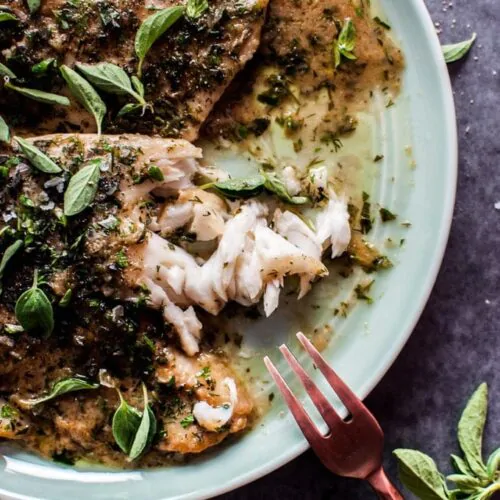
Tilapia with a Lemon Herb Butter Pan Sauce
Ingredients
- 2 tilapia fillets
- 1 tablespoon olive oil
- 2 tablespoons butter
- Flour for dredging (1/4 cup or more if needed)
- 5 ounces chicken broth or water
- Juice of 1/2 lemon
- 1 tablespoon fresh dill chopped
- 1 tablespoon fresh parsley chopped
- 1 tablespoon fresh oregano chopped
- Salt & pepper to taste
Instructions
- Chop herbs.
- Add salt and pepper to both sides of each tilapia fillet.
- Add flour to a plate.
- Heat olive oil and butter in a skillet on medium-high heat.
- When the skillet is hot, dredge each tilapia fillet in flour and add to the skillet. Cook for three minutes on each side.
- Add chicken broth, lemon juice, and herbs to the skillet. Cook for five minutes until the sauce reduces and thickens.
- Serve immediately.
Notes
- Great with rice or a side salad.


