Basil Beef

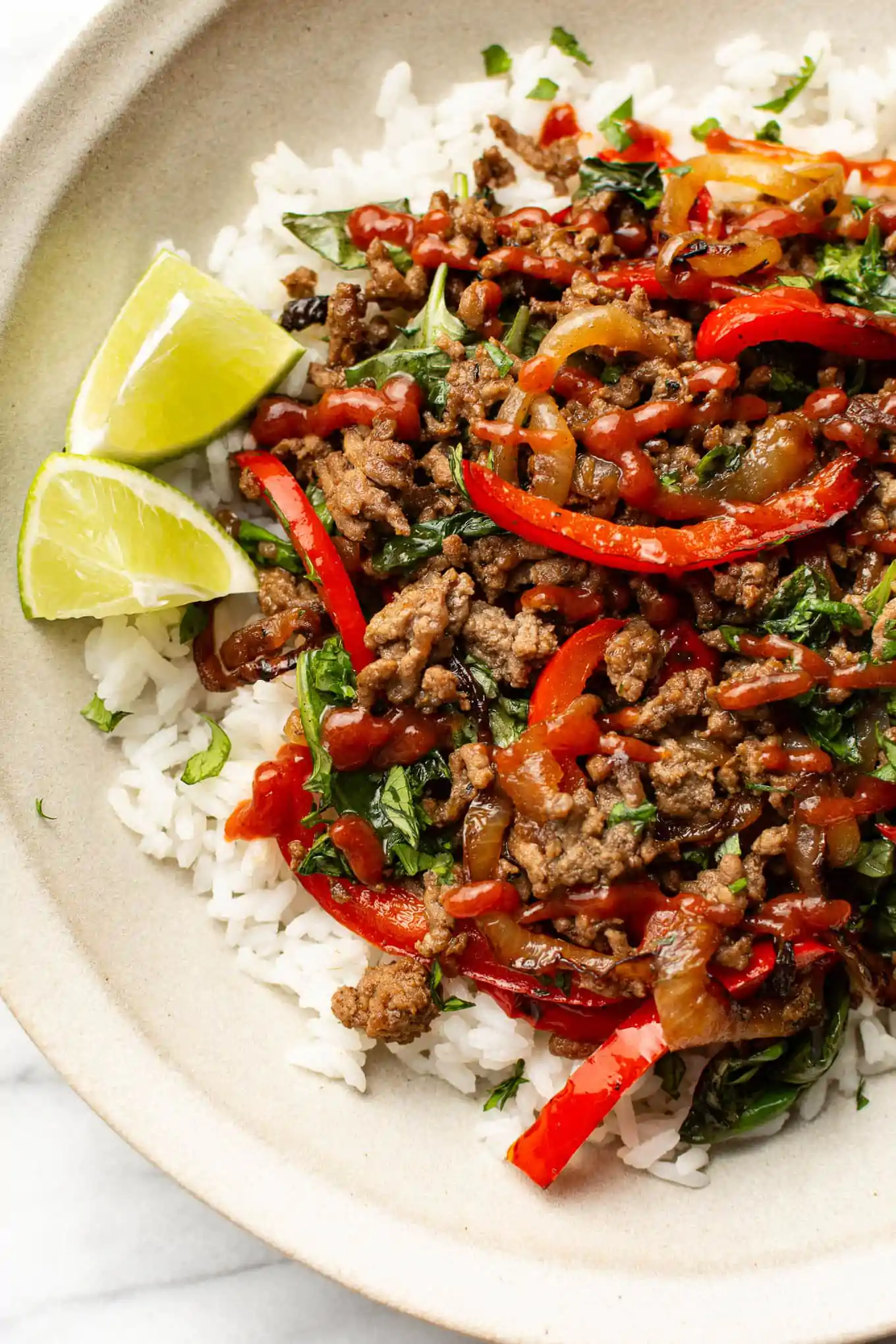
Basil beef is a Thai-inspired skillet dinner with browned ground beef, sweet onion, and red bell pepper that still has a little snap. A savory soy and fish sauce mixture coats the crumbles without drowning them, while brown sugar rounds out the salt and sriracha adds a gentle kick. Torn basil goes in at the end so its fragrance carries all the way to the table.
The recipe makes four servings in 30 minutes, with 15 minutes of prep and 15 minutes of cooking. It fits a weeknight when you want something more substantial than a quick sandwich but don’t want to juggle several pans. Start the rice first if you’re making it fresh.
Why This Basil Beef Recipe Works
The trick is to cook the beef, vegetables, and sauce in stages so each gets the kind of heat it needs.
- The beef browns on its own. Without the onion and pepper releasing moisture beside it, the meat makes better contact with the hot skillet. That gives the crumbles browned edges beneath the sauce.
- Draining keeps the sauce from turning greasy. Taking out the rendered fat before the beef goes back in keeps the finished dish from leaving an oily puddle in the bottom of the bowl.
- Thin vegetables cook quickly. Slicing rather than dicing gives the onion and pepper broad surfaces to pick up color while keeping enough bite to contrast with the soft crumbles.
- The sauce goes in off the heat. That gives you time to distribute it before the sugar and minced garlic hit sustained heat, especially if the skillet is still very hot from sautéing the vegetables.
- Basil needs only a brief wilt. Adding it at the finish softens the torn leaves just enough to fold them through the beef without cooking away their fresh aroma.
Ingredients You’ll Need
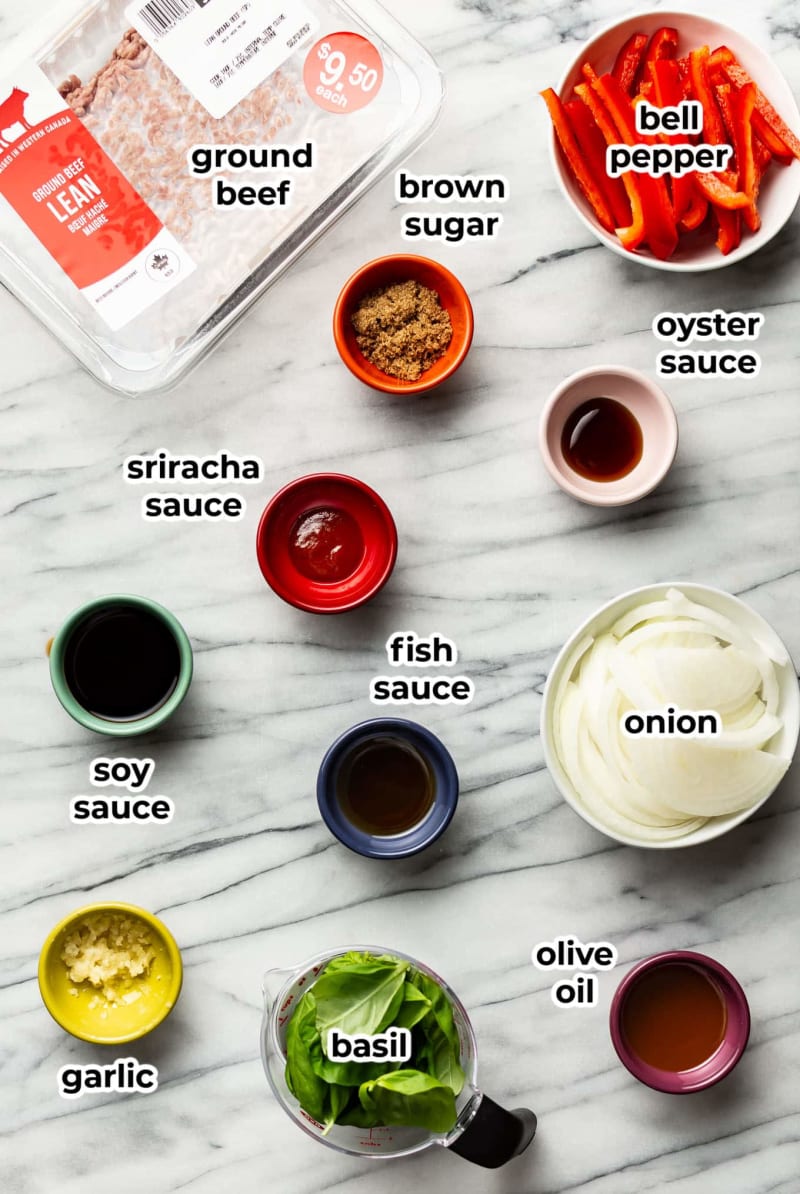
Measure the sauce ingredients before you turn on the stove. Once the vegetables are ready, the rest comes together quickly.
- Low-sodium soy sauce: Two tablespoons form the base. Use the lower-sodium kind because the fish sauce also brings salt.
- Fish sauce: One tablespoon adds savory depth. Its aroma is stronger from the bottle than in the finished dish.
- Brown sugar: Pack one tablespoon into the measure. It softens the salty edge without making the sauce taste sugary.
- Sriracha: Use one teaspoon in the sauce and keep more on hand for serving if you like.
- Oyster sauce: One teaspoon is optional. It adds body and a mellow savory sweetness.
- Garlic: Mince four to five cloves finely so the garlic spreads evenly through the crumbles.
- Lean ground beef: One pound makes four portions. Lean beef gives you less rendered fat to drain.
- Olive oil: One tablespoon goes into the drained skillet for the vegetables, not the beef.
- Onion: Slice one medium onion into fairly thin strips so it softens alongside the pepper.
- Red bell pepper: Slice one pepper fairly thin for sweet, crisp strips that mix easily into the beef.
- Fresh basil: Measure a loosely filled cup of fresh basil and tear the leaves into pieces.
- Salt and pepper: Use either to taste at the end; you may need pepper but no salt.
- Rice, cilantro, and lime: Serve with cooked rice, chopped fresh cilantro, and lime wedges as desired.
Equipment You’ll Need
- Wide skillet: Choose a skillet with enough flat cooking surface to spread the beef out and enough room to toss it with the sliced vegetables later.
- Medium mixing bowl: A medium bowl gives you room to stir the sauce and scrape up the sugar that settles at the bottom.
- Wooden spoon or sturdy spatula: Use a tool with a firm edge to break up the beef and turn the vegetables without mashing them.
- Plate and paper towels: Line the plate before cooking so you have somewhere to put the drained beef right away.
How to Make Basil Beef
1. Stir together the sauce
Combine the low-sodium soy sauce, fish sauce, brown sugar, sriracha, minced garlic, and optional oyster sauce in a medium bowl. Run your spoon along the bottom to work any packed sugar into the liquid.
Break up visible lumps of sugar; the bits of garlic will still be visible in the sauce.
2. Brown and drain the beef
Cook the ground beef in a skillet over medium-high heat, breaking it up with a spoon as it cooks, about 8 to 10 minutes. Once it’s cooked through, drain off the excess fat and move the beef to the paper towel-lined plate.
Aim for bite-size crumbles rather than chopping the beef into fine grains. If it releases water at first, let that moisture cook off so the meat can brown.
3. Sauté the sliced vegetables
Add the olive oil to the skillet, then add the sliced onion and red bell pepper. Sauté until tender-crisp, stirring occasionally so some of the strips have a chance to make contact with the skillet and pick up a little char if you like.
The onions should bend easily, and the pepper should still offer a little resistance when you bite into it.
4. Combine off the heat
Move the skillet off the burner, add the cooked beef back to the vegetables, and stir in the sauce. Scrape the bowl so the garlic and any sugar left at the bottom go in with the liquid.
Turn the mixture from the bottom until you no longer see pockets of dry beef or plain vegetables.
5. Wilt the basil
Return the skillet to medium heat, toss in the torn basil, and cook for a couple more minutes, until the leaves wilt and everything is heated through. Taste before adding salt or pepper.
Look for softened leaves and a light sheen on the beef rather than waiting for a thick glaze.
6. Build the bowls
Spoon the basil beef over cooked rice if using. Finish with chopped cilantro, extra sriracha, or lime wedges as desired.
Serve the lime on the side so everyone can add as much brightness as they want.
How to Tell When It’s Done
Check the beef before you move it to the plate. Ground beef is safe at 160°F; gather some crumbles into a mound so the thermometer probe can sit in the meat without touching the skillet. If it reads low, keep cooking and check again. Browning alone isn’t a reliable test.
After the final toss, the mixture should be hot throughout, with the basil softened but still recognizable as leaves. If the center of the skillet is warm but meat around the edges is cooler, fold it inward and keep tossing over medium heat until evenly hot.
Tips and Common Mistakes
A little attention to what goes into the skillet, and when, makes a difference here.
- Dry the vegetables after washing. Water clinging to the pepper will sputter in the oil and steam the slices before they can color.
- Keep the browned bits. Drain the fat without scrubbing the skillet clean. The bits stuck to the bottom add flavor when the sauce goes in and loosens them.
- Move the skillet to a cool spot. On an electric stove, turning off the burner isn’t the same as taking the pan off it. Move the pan so the residual heat doesn’t reduce the sauce as you stir.
- Strip away tough basil stems. Tender tips can go in with the leaves, but thick stems stay fibrous in the short finishing cook.
- Add extra heat at the table. As written, the dish is mild. Keeping the extra sriracha on the side lets you serve the same skillet to people with different heat preferences.
Substitutions and Variations
These swaps keep the same basic method, though each changes the flavor or texture a little.
- Thai basil: Use it for a more pronounced anise note, or stick with sweet basil for a softer, peppery finish.
- Ground turkey: It makes a milder skillet and may leave less fat to drain. Cook it to 165°F before setting it aside.
- Yellow or orange bell pepper: Either keeps the sweetness of the red pepper. Green bell pepper also works if you prefer a more grassy flavor.
- Gluten-free sauce: Replace the soy sauce with gluten-free tamari and verify the fish sauce, sriracha, and optional oyster sauce are gluten-free too.
- Sambal oelek: Use it in place of sriracha for a more direct chile flavor and less sweetness. Start conservatively, since heat varies.
What to Serve with Basil Beef
Jasmine rice gives the salty-sweet beef a fragrant, neutral base. For a cooler contrast, serve chilled sliced cucumber and radishes alongside, or find another crunchy side in our easy salad recipes.
For a dinner with more than one dish, set out steamed green beans or lightly salted edamame and let everyone build a bowl. If rice bowls are a regular at your table, try the honey lime chicken rice stack another night.
Make-Ahead, Storage and Reheating
Make ahead: Mix the sauce and slice the onion and pepper up to a day ahead. Refrigerate the sauce and vegetables in separate covered containers, and leave the basil whole until you’re ready to cook so the torn edges don’t darken.
Storage: Refrigerate the cooked beef mixture in an airtight container within 2 hours and use it within 3 to 4 days. Keep any leftover rice in a separate container so it doesn’t soak up the sauce in the fridge.
Freezing: Freeze cooled portions airtight for up to 3 months for best quality. Thaw overnight in the refrigerator; the peppers will lose some of their snap.
Reheating: Warm the beef in a skillet over medium heat, stirring and adding a splash of water if the sauce looks dry. Heat leftovers to 165°F.
Basil Beef FAQs
Does basil beef have a lot of sauce?
No. It has enough to season the beef and vegetables, but it’s not meant to leave much liquid for spooning over rice. If you want every bite of rice seasoned, toss it with the beef in your bowl rather than serving the two in separate piles.
Can I make basil beef without fish sauce?
Yes. For a fish-free version, use a little extra low-sodium soy sauce to taste and leave out the optional oyster sauce as well. You’ll still get a savory skillet, but without the distinct fermented flavor of fish sauce.
Can I use frozen sliced peppers and onions?
Yes, but expect a softer result. Add them straight from the freezer and let the water they release evaporate before returning the beef to the pan so the sauce doesn’t get diluted.
Can I double basil beef in one skillet?
Yes, if you cook the beef and vegetables in batches. Divide the sauce and basil between the batches for the final toss if the skillet is too full to stir comfortably.
Can I use dried basil instead of fresh?
Not for the same result. Dried basil can season the sauce, but it won’t give you the fragrant, tender pieces of leaf that make this dish taste like basil beef.
What can I do if the beef tastes too salty?
Serve it with more plain, unsalted rice or toss in some separately cooked, unseasoned vegetables. A squeeze of lime can brighten the flavor, but it won’t reduce the salt.
Printable Recipe
Recipe adapted from Salt & Lavender. Photos courtesy of Salt & Lavender, used with permission.

Basil Beef
Ingredients
- 2 tablespoons low sodium soy sauce
- 1 tablespoon fish sauce
- 1 tablespoon (packed) brown sugar
- 1 teaspoon sriracha sauce + extra for serving
- 1 teaspoon oyster sauce optional
- 4-5 cloves garlic minced
- 1 pound lean ground beef
- 1 tablespoon olive oil
- 1 medium onion sliced fairly thin
- 1 red bell pepper sliced fairly thin
- 1 cup (loosely packed) fresh basil torn
- Salt & pepper to taste
- For serving: cooked rice, chopped fresh cilantro, lime wedges optional, to taste
Instructions
- Add the sauce ingredients (soy sauce, fish sauce, brown sugar, sriracha sauce, oyster sauce, and garlic) to a medium bowl and mix together.
- Add the beef to a skillet over medium-high heat and break it up with your spoon as you go along until it's cooked (about 8-10 minutes). Drain excess fat and transfer the beef to a paper towel lined plate.
- Add the olive oil, onions, and peppers to the skillet and sauté, stirring occasionally, until they're tender-crisp. I like to get a little char on mine!
- Take the skillet off the heat. Add the cooked beef back in, and stir in the sauce.
- Return the skillet to the burner over medium heat. Toss in the basil and cook for a couple more minutes, until it's wilted and everything is heated through. Season with salt & pepper if needed (I find the sauce quite salty on its own so be sure to taste first!).
- Serve the beef over the rice if desired, and garnish with chopped cilantro, extra sriracha sauce, and serve with lime wedges (I add a generous squeeze to my bowl!) if desired.
Notes
- This dish is not particularly spicy with the ingredient quantities listed.


