Beef Stew

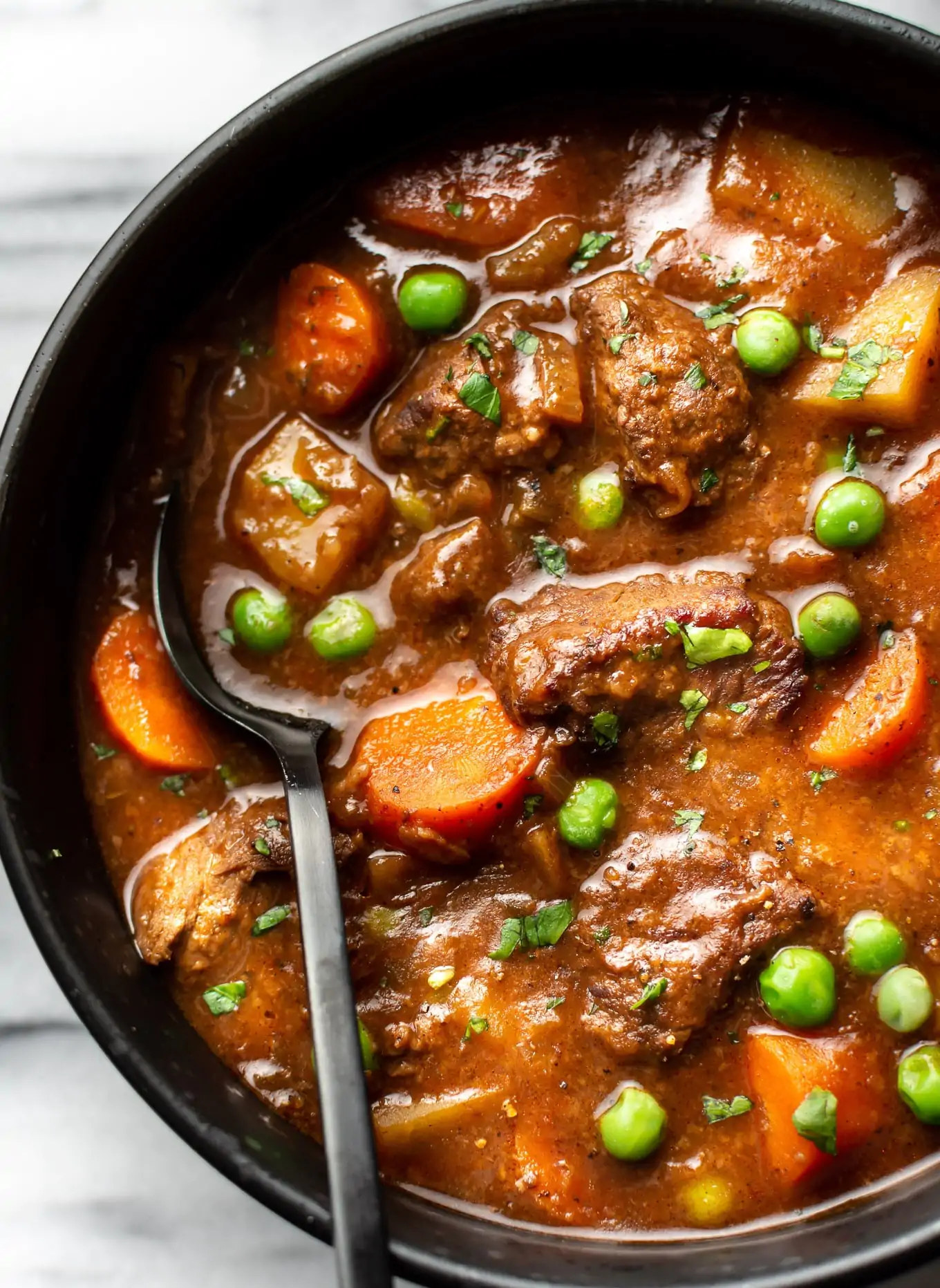
This beef stew builds deep flavor in one pot: flour-dusted beef gets a dark sear, then simmers with tomato paste, red wine and broth until tender. Yukon Gold potatoes and carrots turn soft around the edges while the sauce thickens into a savory, spoon-coating gravy.
Plan on 15 minutes of prep and 145 minutes of cooking for six servings. It is a satisfying cold-weather dinner, and it reheats well for another meal.
Why This Beef Stew Recipe Works
A few deliberate steps give this stew its rich flavor and tender texture without complicated equipment.
- Searing creates a savory base. Browning the beef in batches leaves flavorful browned bits on the pot and gives the meat a deeper taste. Crowding traps steam and prevents that crust from forming.
- Flour helps the stew thicken. A light coating clings to the beef and gradually releases starch into the cooking liquid. Shake off excess flour so it does not form a pasty layer in the pot.
- Tomato paste and wine add depth. Cooking the paste briefly removes its raw taste, while wine loosens the browned bits and contributes acidity. Beef broth rounds out the sauce as it simmers.
- The vegetables go in later. Adding potatoes and carrots after the beef has started cooking helps them hold their shape. They become tender without spending the entire simmer in the pot.
Ingredients You’ll Need
Gather everything before you start browning; the early stages move quickly. The list below follows the order you will use the ingredients.
- Beef chuck or stewing meat: Two pounds, cut into cubes. Choose well-marbled chuck for moist, tender results; avoid lean cuts.
- Flour: Use enough to lightly coat the beef before searing; shake away the excess to avoid a pasty sauce.
- Olive oil: Two tablespoons, plus more if needed, divided between the batches of beef. Use a little extra if the pot is dry.
- Onion: One medium onion, chopped, to bring sweetness and savory flavor to the stew base.
- Celery: Three sticks, chopped. It contributes a gentle aromatic flavor alongside the onion.
- Garlic: Six cloves, minced, for a fragrant, savory note. Stir it in after the vegetables soften so it does not scorch.
- Tomato paste: One 6-ounce can. Brief cooking deepens its flavor; if using double-concentrated paste from a tube, consider using half as much.
- Dry red wine: One cup loosens the browned bits and adds acidity. Choose a dry wine you would enjoy drinking.
- Beef broth: Three cups form the stew’s cooking liquid. A lower-sodium broth gives you more control when seasoning.
- Worcestershire sauce: One tablespoon adds a concentrated, tangy savoriness that supports the beef and wine.
- Italian seasoning: One-quarter teaspoon provides a restrained dried-herb note without overwhelming the stew.
- Bay leaves: Three leaves gently perfume the simmering liquid. Remove them before serving.
- Yukon Gold potatoes: One pound, peeled and diced. Their creamy texture holds up well in a long-simmered stew.
- Carrots: Four medium carrots, peeled and sliced fairly thick so they stay in substantial pieces as they cook.
- Frozen peas: One cup, optional, stirred in at the end. They add sweetness and a fresh green color.
- Salt and pepper: Season to taste at the end, after the broth and Worcestershire sauce have reduced and their saltiness is easier to judge.
Equipment You’ll Need
- Wooden spoon: Its flat edge helps scrape browned bits from the pot after you add the wine and broth.
- Cutting board and sharp knife: You will need these to cut the beef and prepare the onion, celery, potatoes and carrots.
How to Make Beef Stew
1. Coat the beef
Pat the beef dry if it looks wet, then toss the cubes in flour. Shake off any coating that does not cling.
A thin, even dusting is enough; piles of loose flour can make the sauce heavy.
2. Brown the first batch
Heat 1 tablespoon of olive oil in a Dutch oven over medium-high heat. When hot, add half the beef in a single layer and leave it undisturbed for a few minutes before turning with tongs.
Wait for a deep brown crust before turning. If the beef sticks, give it a little more time to release.
3. Finish searing the beef
Transfer the browned pieces to a plate. Add the remaining oil and sear the second batch the same way, then move it to the plate too.
Cook in two batches so the meat browns instead of releasing liquid and steaming.
4. Soften the aromatics
If the pot looks very dry, add another teaspoon or so of olive oil. Add the onion and celery, then sauté for 5 minutes.
Stir and scrape the bottom as the vegetables soften; keep the browned residue in the pot.
5. Cook the tomato paste
Stir in the garlic and tomato paste. Cook for 1-2 minutes, stirring often so the paste darkens slightly without catching.
The garlic should smell fragrant and the paste should look a little deeper in color.
6. Deglaze the pot
Pour in the wine, beef broth and Worcestershire sauce. Scrape the bottom thoroughly with a wooden spoon to release the browned bits.
Check the center and edges of the pot; loosen any stuck-on pieces before the liquid comes to a simmer.
7. Simmer the beef
Return the beef and any plate juices to the pot. Add the Italian seasoning and bay leaves, bring the stew to a gentle boil, then reduce the heat, cover and simmer for 1 hour. Stir occasionally and adjust the heat as needed to keep a gentle bubbling simmer rather than a full boil.
Check that nothing is sticking to the bottom and that the liquid is still gently bubbling. On a gas stove, alternating between medium-low and low may help maintain that simmer.
8. Add the vegetables
Stir in the potatoes and carrots, cover the pot again and simmer for another hour, or until the beef and vegetables are tender. Stir occasionally and adjust the heat if the stew begins to boil hard or stick.
Cut the vegetables just before adding them to keep the potatoes from discoloring. The carrots should yield to a fork without falling apart.
9. Finish and season
Remove the bay leaves and stir in the frozen peas, if using. Let them warm through, then taste and season with salt and pepper as needed.
The finished sauce should be rich and spoonable, with tender beef and vegetables that still hold their shape.
How to Tell When It’s Done
Check a piece of potato and a thick carrot slice as well. Both should be tender through the center but not disintegrating. If they are still firm after the second hour, continue simmering and check periodically, keeping the liquid at a gentle bubble.
A glossy, thickened sauce should cling lightly to the beef and vegetables. If it seems too thin once everything is tender, uncover the pot and simmer briefly; if it has become too thick, stir in a little broth until it reaches a spoonable consistency.
Tips and Common Mistakes
These small choices help the beef brown properly and keep the long simmer steady.
- Choose marbled chuck. Cut a chuck roast into 1.5-inch cubes for the most reliable tender texture. Lean beef tends to turn tougher and chewier during the long cook.
- Keep the batches uncrowded. Give each piece room against the hot pot surface. If the cubes overlap, they release moisture and steam before they can brown.
- Let the beef sear before turning. Moving it constantly interrupts browning. Turn each piece with tongs after it has had a few minutes to develop a crust.
- Stir during both simmering stages. Flour in the stew can settle and stick, especially as the liquid thickens. Occasional stirring helps prevent scorching.
- Skim excess fat if needed. A little fat on top is normal with chuck. Spoon off any excess before serving or when reheating leftovers.
Substitutions and Variations
You can adapt the stew, but choose swaps that can handle a long, gentle cook.
- Different stewing beef: Beef sold already cubed for stew works in place of chuck. Pieces vary, so use tenderness—not the clock alone—to judge when they are ready.
- No red wine: Replace the wine with additional beef broth. The sauce will lack some of the wine’s acidity and depth, but it will still be savory.
- More mushrooms: Add sliced mushrooms with the onion and celery. They bring earthy flavor and release moisture, so allow it to cook away before adding the garlic.
- Other waxy potatoes: Red potatoes can stand in for Yukon Golds and generally keep their shape. Avoid very starchy potatoes if you want distinct pieces in the finished stew.
- Oven simmer: After bringing the stew to a simmer on the stovetop, cover it and cook steps 7-8 in a 325°F oven. The timing is similar, but check occasionally for tenderness.
What to Serve with Beef Stew
Serve the stew in shallow bowls with crusty bread to catch the thick sauce. A crisp green salad or simple steamed green beans make a fresh contrast to the rich beef and potatoes.
For another hearty meal, browse beef dinner ideas or explore easy dinner recipes for sides and mains.
Make-Ahead, Storage and Reheating
Make ahead: You can chop the onion and celery ahead and refrigerate them in a covered container. For the freshest potato color, peel and cut the potatoes and carrots shortly before adding them to the pot.
Storage: Cool leftovers promptly and refrigerate them in a covered airtight container for 3 to 4 days. If a layer of fat forms on top, skim it away before serving.
Freezing: Freeze cooled stew in airtight, freezer-safe containers for up to 3 months. Thaw it in the refrigerator; potatoes may soften slightly after freezing.
Reheating: Warm leftovers gently in a covered saucepan over low heat, stirring occasionally and adding a splash of broth if the sauce has thickened. You can also reheat individual portions in the microwave, stirring partway through.
Beef Stew FAQs
Can I make beef stew without wine?
Yes. Use additional beef broth in place of the wine; the stew will be a little less tangy and complex but will still have plenty of savory flavor.
Can I make this stew in the oven?
Yes. Bring the stew to a simmer on the stovetop, then cover it and cook the simmering stages in a 325°F oven. The timing is similar, and you should still check occasionally that the stew is not sticking.
Why is my beef still tough?
It may need more time at a gentle simmer. Keep it covered and cook until a fork can pull the beef apart easily; a hard boil will not speed the tenderizing process.
How can I thicken beef stew?
Let it simmer uncovered briefly after the beef and vegetables are tender. The sauce will reduce; stir often so the flour-thickened liquid does not stick to the pot.
Can I add the potatoes and carrots at the beginning?
It is better to add them after the beef’s first hour of simmering. They need less time than the meat and can become too soft if cooked for the entire simmer.
What kind of red wine should I use?
Use a dry red wine with a flavor you like drinking, rather than a sweet wine. Its acidity helps balance the rich beef and tomato paste.
Printable Recipe
Recipe adapted from Salt & Lavender. Photos courtesy of Salt & Lavender, used with permission.

Beef Stew
Ingredients
- 2 pounds cubed beef chuck or beef stewing meat see note
- Flour for dredging
- 2 tablespoons olive oil + more as needed divided
- 1 medium onion chopped
- 3 sticks celery chopped
- 6 cloves garlic minced
- 1 (6 ounce) can tomato paste see note
- 1 cup dry red wine
- 3 cups beef broth
- 1 tablespoon Worcestershire sauce
- 1/4 teaspoon Italian seasoning
- 3 bay leaves
- 1 pound Yukon Gold potatoes peeled & diced
- 4 medium carrots peeled & sliced fairly thick
- 1 cup frozen peas optional
- Salt & pepper to taste
Instructions
- Prep ingredients. I recommend peeling and cutting the potatoes and carrots just prior to step 8.
- Coat the beef cubes in flour, and shake off any excess.
- Add 1 tablespoon of the oil to a pot/Dutch oven over medium-high heat. Once the oil is hot, sear the beef in two batches until nicely browned (if you crowd the pot it won't brown). Don't move the meat around the pan… turn it with tongs after it's had a few minutes to sear. Add the remaining oil to the pot for the second batch. Transfer the meat to a plate after each batch.
- If the pot seems quite dry, add another teaspoon or so of olive oil, then add in the onions and celery and sauté for 5 minutes.
- Stir in the garlic and tomato paste and cook, stirring often, for 1-2 minutes.
- Stir in the wine, broth, and Worcestershire sauce. Scrape up any brown bits from the bottom of the pot.
- Add the beef back to the pot (and any juices on the plate) as well as the Italian seasoning and bay leaves. Bring the stew to a gentle boil, then reduce the heat, cover the pot, and simmer for 1 hour. Important: I recommend stirring it occasionally during this time to ensure nothing is sticking to the bottom of the pot and that the temperature is still correct. On my gas stove I cook this stew alternating between medium-low and low (I adjust as needed so it's bubbling fairly gently vs. full-on boiling).
- Stir in the potatoes and carrots, cover the pot again, and continue simmering for another hour or until the potatoes, carrots, and meat are nice and tender. As per the previous step, give it a stir occasionally to ensure nothing is sticking/scorching, and adjust the stove's temperature as needed so it maintains a simmer.
- Take the bay leaves out of the stew and stir in the frozen peas. Let them warm through.
- Season with salt & pepper as needed and serve.
Notes
- Cut up a nicely marbled chuck roast into 1.5″ cubes for best results. Do not use a lean cut of beef or it’ll be much tougher and more chewy.
- You can do steps 7-8 in the oven. Timing will be similar for each step. Try 325F for the oven temperature.
- You may need to skim a bit of fat off the top prior to serving or when reheating leftovers (this is normal).
- If using a tube of double concentrated tomato paste, you may want to halve the amount.
- See blog post for more success tips, info on substitutions and what kind of wine to use, and step-by-step process photos.
- Other cooking methods: try my Crockpot Beef Stew or Instant Pot Beef Stew (recipes are similar to this one but not exactly the same).


