Boursin Chicken

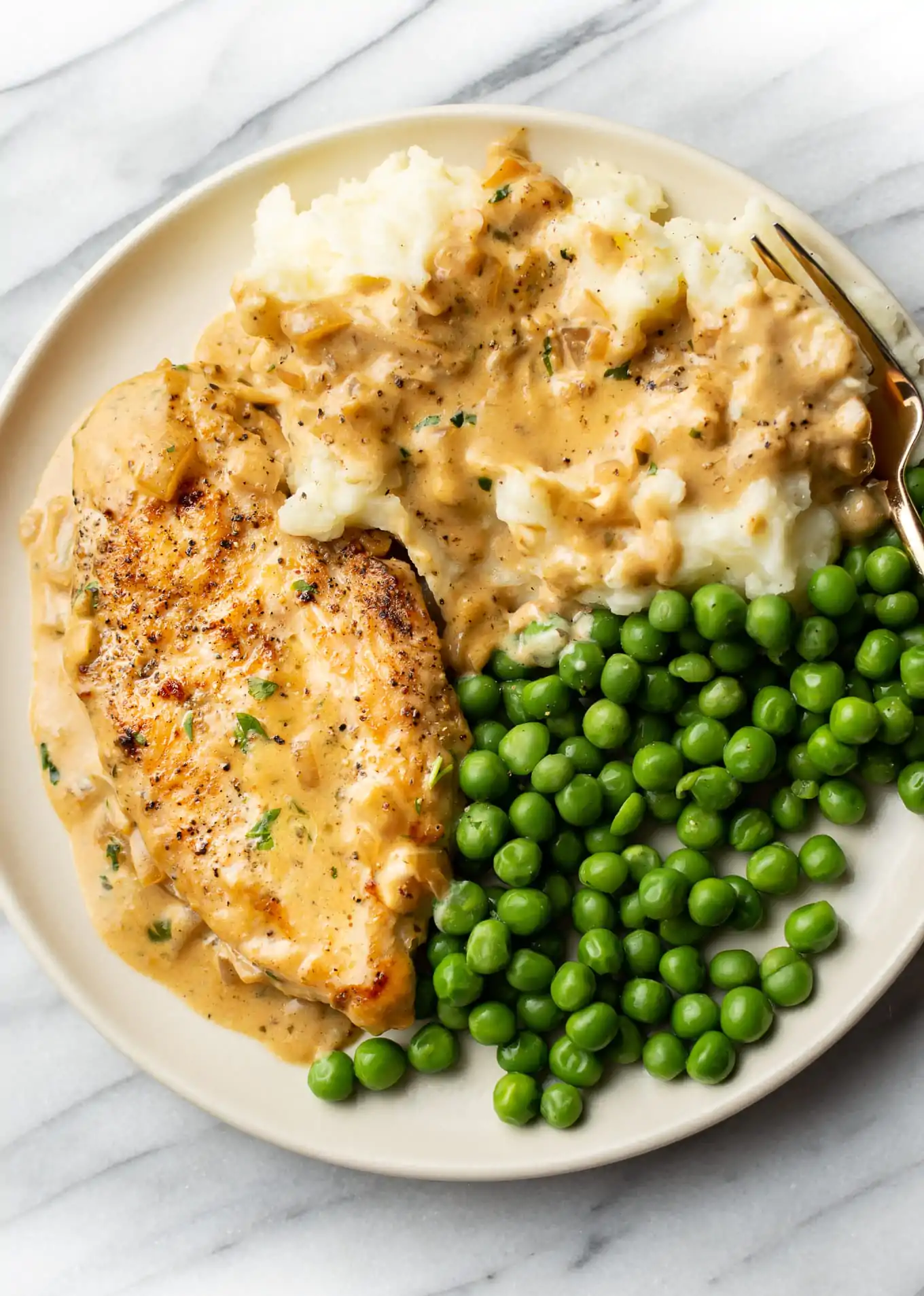
Boursin chicken pairs tender, golden chicken with a silky pan sauce flavored with garlic, herbs and soft onion. The cheese melts directly into chicken broth, making a creamy sauce without a separate roux or a long simmer.
The recipe takes 10 minutes to prep and 20 minutes to cook, and serves four. It is quick enough for a weeknight but feels special with a simple side that can catch the sauce.
Why This Boursin Chicken Recipe Works
A few practical choices make this skillet dinner quick while keeping the chicken tender and the sauce smooth.
- Thin pieces cook quickly. Halving the breasts lengthwise creates four cutlets that cook more evenly than whole breasts. That short cooking time helps keep the meat juicy.
- The skillet builds flavor. Browning the chicken leaves savory bits behind, while sautéed onion softens and picks up some of that flavor before the sauce goes in.
- Boursin does the seasoning work. The soft garlic-and-herb cheese melts into the broth and brings creaminess along with its seasoning. It creates a full-bodied sauce without needing extra cream.
- Broth loosens the cheese. Chicken broth gives the melted cheese a spoonable consistency and helps it coat the chicken. Low-sodium broth is useful if you are sensitive to salt.
- The chicken finishes in the sauce. Returning the cutlets and their plate juices to the skillet warms them gently and adds flavor back to the sauce. It also means the chicken is served hot rather than cooling while the sauce is made.
Ingredients You’ll Need
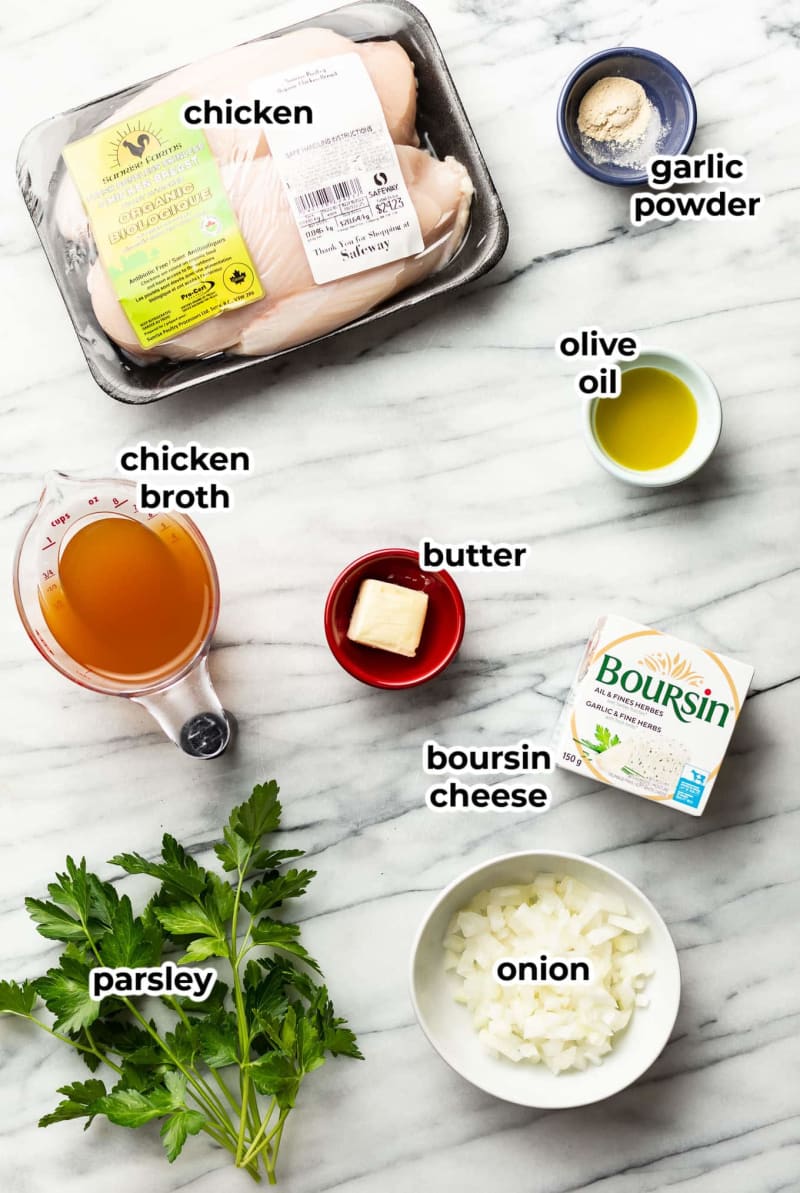
You need just a handful of ingredients for the chicken and its creamy herb sauce. The cheese brings plenty of flavor, so taste before adding extra salt.
- Chicken breasts: Two large breasts, sliced lengthwise into four thinner pieces. Similar thickness helps them cook evenly.
- Garlic powder: Half a teaspoon seasons the chicken with a savory garlic note that complements the cheese.
- Salt and pepper: Season to taste. Go lightly at first, since the cheese and regular broth can make the finished sauce salty.
- Olive oil: One tablespoon for searing the chicken and beginning the onion. Add a small splash more only if the pan looks dry.
- Butter: One tablespoon adds richness to the skillet and helps the onion turn tender and lightly browned.
- Onion: Half a medium onion, chopped, softens in the pan and gives the sauce a mellow, savory base.
- Chicken broth: Three-quarters cup forms the sauce; choose low-sodium broth if you want more control over its saltiness.
- Boursin Fine Herbs & Garlic cheese: One 5.2-ounce package, softened so it blends smoothly into the broth. Use the Fine Herbs & Garlic flavor.
- Parsley: One to two tablespoons, chopped, to taste and optional. It adds a fresh finish to the rich sauce.
Equipment You’ll Need
- Large skillet: Use a skillet roomy enough to brown the four chicken pieces without crowding, then hold the sauce and chicken together.
- Instant-read thermometer: It provides a reliable check that the thickest part of each chicken piece has reached a safe temperature.
How to Make Boursin Chicken
1. Slice and season
Cut each chicken breast lengthwise into two thinner pieces, making four pieces total. Sprinkle them with garlic powder, salt and pepper.
Try to make the pieces similar in thickness so they finish cooking at about the same time.
2. Sear the chicken
Warm the olive oil and butter in a skillet over medium-high heat for a few minutes. Cook the chicken for about 5-6 minutes per side, or until cooked through, then move it to a plate.
The pieces should be golden on the outside. Check the thickest part with an instant-read thermometer for 165°F.
3. Soften the onion
Put the chopped onion into the same skillet and sauté for about 5 minutes, until softened and lightly browned. If the pan looks dry, add a small splash more olive oil.
Stir occasionally and scrape up any browned bits; the onion should be tender rather than crisp.
4. Make the cheese sauce
Pour in the chicken broth and add the softened Boursin. Stir until the cheese has melted into a smooth sauce, then let it bubble for 5 minutes. Stir in the parsley if using.
Keep the sauce at a gentle bubble and stir until no large pieces of cheese remain.
5. Warm the chicken
Return the chicken to the skillet along with any juices on the plate. Let it warm through for a couple of minutes, allowing the sauce to thicken; cook a little longer if needed, or loosen it with another splash of broth if it is too thick.
The sauce should cling to the chicken but still be easy to spoon.
6. Taste and serve
Taste the sauce and add salt and pepper only if needed. Serve the chicken right away with the sauce spooned over it.
Regular chicken broth and the seasoned cheese may already provide enough salt.
Tips and Common Mistakes
Small adjustments to heat, seasoning and sauce consistency help this one-pan dinner come together smoothly.
- Cut the breasts evenly. Uneven pieces cook at different speeds, making it easy to overcook the thinner ones while waiting for the thickest to finish.
- Avoid crowding the skillet. Give the chicken room to brown rather than steam. If the skillet is too small, sear the pieces in batches.
- Use softened cheese. Soft Boursin incorporates more readily into the broth, so take it out of the refrigerator while you prepare the chicken.
- Keep the sauce at a gentle bubble. A steady, gentle simmer helps the cheese melt smoothly. Stir as it cooks so the sauce does not catch on the bottom of the skillet.
- Taste before salting. Boursin and regular broth can both contribute substantial salt. Add more only after the sauce has come together.
- Adjust thickness with broth. If the sauce tightens too much, stir in another splash of chicken broth. If it looks thin, give it a little longer to cook before returning to the table.
Substitutions and Variations
The sauce is flexible, but choose swaps that work with the herby cheese and short skillet cooking time.
- Chicken thighs: Boneless, skinless thighs can replace the breasts, though their shape and thickness may change the searing time. Check the thickest part for 165°F.
- Another Boursin flavor: A different savory Boursin variety can work, but it will shift the sauce’s herb and garlic profile. Keep the quantity the same.
- Low-sodium broth: This is a good choice if you are salt-sensitive or want to control the final seasoning. The sauce may need a little salt after tasting.
- More garlic: Add a little extra garlic powder to the chicken if you want a stronger garlic note. Fresh garlic can also be added with the onion, but watch it so it does not brown too much.
- Skip the parsley: The parsley is optional, so leave it out if you do not have any. The sauce will still have the herbs from the cheese.
- Add mushrooms: Sliced mushrooms can be sautéed with the onion for an earthier sauce. They release moisture, so cook until that moisture has mostly evaporated before adding the broth.
What to Serve with Boursin Chicken
Serve Boursin chicken with mashed potatoes, rice or buttered noodles to catch the creamy sauce. Green beans, roasted broccoli or a crisp salad add freshness alongside the rich skillet sauce.
For another easy chicken dinner, browse our chicken recipes or find more weeknight ideas in our dinner recipes.
Make-Ahead, Storage and Reheating
Make ahead: You can chop the onion and parsley ahead and refrigerate them in separate covered containers. For the best texture, cook the chicken and sauce shortly before serving rather than making the finished dish far in advance.
Storage: Transfer leftovers to an airtight container and refrigerate within 2 hours. Use within 3 to 4 days.
Freezing: Freezing is not recommended because the cheese sauce may separate and turn grainy when thawed.
Reheating: Warm leftovers gently in a covered skillet over low heat, stirring the sauce and adding a small splash of broth if it has thickened. Avoid high heat, which can make the sauce separate.
Boursin Chicken FAQs
Can I make Boursin chicken without cutting the breasts in half?
Yes, but whole chicken breasts are thicker and will take longer to cook. Check each breast in its thickest part and do not rely on the listed searing time alone.
What can I use if I cannot find Boursin cheese?
A soft garlic-and-herb cheese spread is the closest substitute. The flavor and salt level can vary, so taste the sauce before seasoning it.
Can I make this recipe dairy-free?
Not with the listed cheese and butter unchanged. A dairy-free garlic-and-herb spread and plant-based butter may work, but the sauce’s flavor and texture will differ.
Can I double the recipe?
Yes, provided you have a skillet large enough to avoid crowding. Otherwise, brown the chicken in batches and keep the cooked pieces on a plate while you make the sauce.
Why is my cheese sauce grainy?
It may have been heated too aggressively or the cheese may not have blended fully. Lower the heat and stir steadily; a small splash of broth can help loosen the sauce.
Printable Recipe
Recipe adapted from Salt & Lavender. Photos courtesy of Salt & Lavender, used with permission.

Boursin Chicken
Ingredients
- 2 large chicken breasts
- 1/2 teaspoon garlic powder
- Salt & pepper to taste
- 1 tablespoon olive oil
- 1 tablespoon butter
- 1/2 medium onion chopped
- 3/4 cup chicken broth use low sodium if sensitive to salt
- 1 (5.2 oz) package Boursin Fine Herbs & Garlic cheese softened
- 1-2 tablespoons chopped parsley to taste, optional
Instructions
- Cut the chicken breasts in half lengthwise to get 4 thinner pieces. Season them with the garlic powder and some salt & pepper.
- Add the oil and butter to a skillet over medium-high heat and let it heat up for a few minutes. Cook the chicken for about 5-6 minutes/side or until cooked through, then transfer it to a plate.
- To the skillet, add the onions and sauté for about 5 minutes or until softened and lightly browned. If the pan seems dry, add a small splash more olive oil.
- Add the chicken broth and the Boursin cheese to the skillet. Stir until you've got a smooth sauce. Let it bubble for 5 minutes, then stir in the chopped parsley if using.
- Add the chicken (and any plate juices) back into the skillet and let it warm through for a couple of minutes. The sauce should be thicker by now (you can always cook it a bit longer if need be). If it's too thick, you can add another splash of chicken broth.
- Season with salt & pepper if needed (I find the sauce fairly salty when using regular broth) and serve immediately.
Notes
- Chicken is cooked when an instant read thermometer reads 165F when inserted into the thickest part.
- This recipe is also on page 78 of the Salt & Lavender: Everyday Essentials cookbook.


