Boursin Salmon


Boursin salmon pairs tender, flaky fish with a creamy garlic-and-herb sauce. The salmon is browned first, then gently finished in the skillet so it stays moist while the cheese melts into the lemony pan sauce.
This dinner takes 10 minutes to prep and 20 minutes to cook, and serves four. It is quick enough for a weeknight, but the smooth, savory sauce makes it feel special enough for company.
Why This Boursin Salmon Recipe Works
A quick sear and a gentle finish give the salmon flavor without drying it out.
- A brief sear adds flavor. Browning the salmon builds a savory surface and leaves flavorful bits in the skillet for the sauce. The fish finishes cooking later, so the first round of cooking should not take it all the way through.
- Boursin makes a fast sauce. The soft garlic-and-herb cheese melts into the broth, creating a creamy sauce without a separate roux. Softening it first makes it easier to stir smooth.
- Broth balances the cheese. Chicken broth loosens the rich cheese and gives the sauce enough volume to coat the salmon. Lemon juice adds a bright note that keeps the creaminess from feeling heavy.
- The salmon cooks in stages. Searing first and returning the fish to the sauce near the end makes it easier to control doneness. Lowering the heat for the final simmer helps keep the sauce from reducing too quickly.
Ingredients You’ll Need
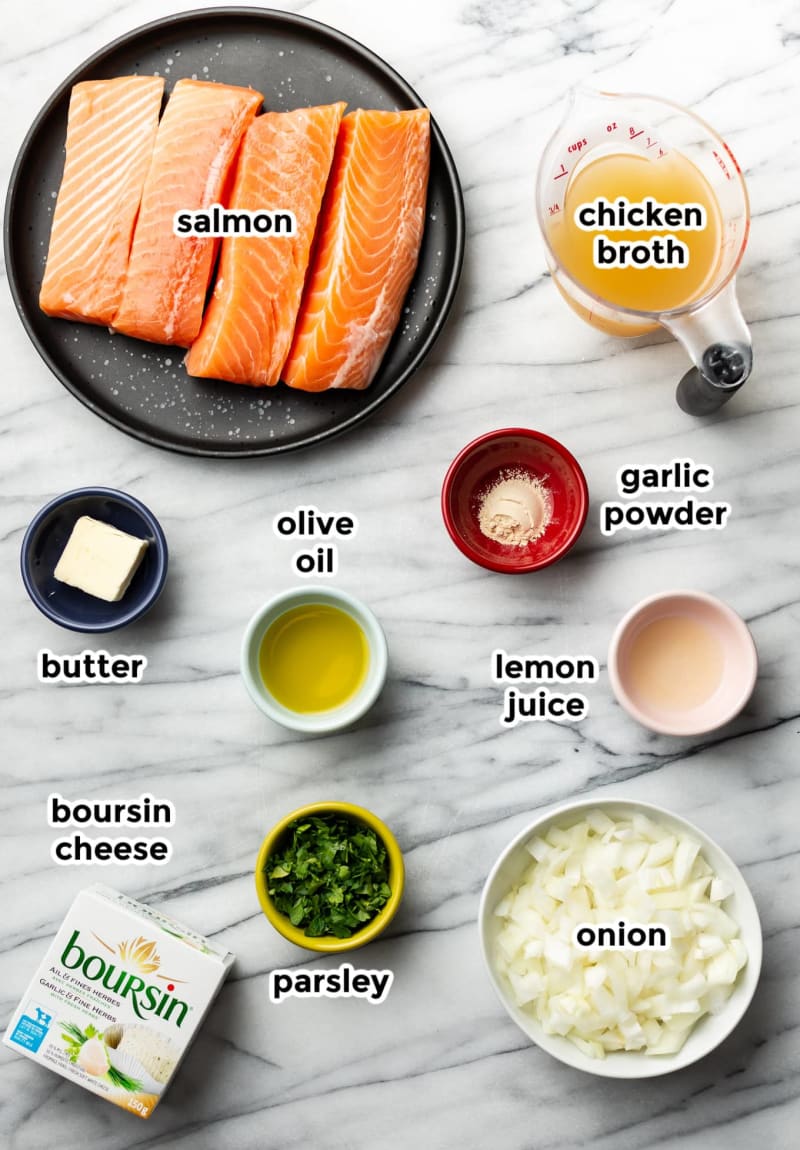
You only need a few ingredients for the salmon and its creamy skillet sauce. Use the quantities below, and season to taste where noted.
- Salmon: One pound, cut into four pieces. Choose fresh fillets of similar thickness so they cook at about the same rate.
- Garlic powder: Half a teaspoon seasons the fish without adding moisture that could interfere with browning.
- Salt and pepper: Season the salmon to taste before searing, then adjust the finished sauce if needed.
- Olive oil: One tablespoon helps the fish brown in the hot skillet.
- Butter: One tablespoon adds richness and helps the salmon develop a golden surface.
- Onion: Half a medium onion, chopped, softens in the skillet and adds sweetness to the sauce.
- Chicken broth: Three-quarters of a cup forms the sauce base. Choose low-sodium broth if you are sensitive to salt.
- Fresh lemon juice: One teaspoon brightens the creamy sauce; fresh juice gives it a clean citrus flavor.
- Boursin Fine Herbs & Garlic cheese: One 5.2-ounce package, softened, melts into a smooth, savory sauce. Let it soften before stirring it into the broth.
- Parsley: One to two tablespoons, chopped, add a fresh finish. Use more or less to suit your taste.
How to Make Boursin Salmon
1. Season the salmon
If possible, take the salmon out of the refrigerator 15 to 30 minutes before you start. Cut it into four pieces, pat each dry, then season with garlic powder, salt and pepper.
Dry fish browns more readily than fish with a damp surface.
2. Sear the fish
Heat the butter and olive oil in a skillet over medium-high heat. Once hot, add the salmon and cook for 3 to 4 minutes per side, just until lightly browned. Move it to a plate before it cooks fully through.
The salmon should release from the skillet fairly easily when its surface has browned. It will finish cooking in the sauce.
3. Soften the onion
Add the chopped onion to the same skillet and sauté for about 5 minutes, until softened and lightly golden.
Stir occasionally and scrape up browned bits left from searing; they add flavor to the sauce.
4. Make the cheese sauce
Pour in the chicken broth and lemon juice, then add the softened Boursin. Stir until the cheese has melted into a smooth sauce. Let it bubble for about 4 to 5 minutes, then mix in the parsley.
If small pieces of cheese remain, keep stirring over the heat until the sauce looks cohesive.
5. Finish cooking the salmon
Return the salmon to the skillet and cook for another 3 to 5 minutes or so, turning the heat down as needed. Continue until the fish is cooked through and separates into flakes with gentle pressure; the sauce should thicken further.
The recipe is designed for salmon about 1 inch thick. Thicker pieces may need a longer sear, while thinner ones may need less.
6. Season and serve
Taste the sauce and add salt and pepper if needed. Serve the salmon immediately with the sauce spooned over the top.
If the sauce has become too thick, loosen it with a splash of chicken broth.
How to Tell When It’s Done
Look for salmon that is opaque through the center and separates into moist flakes when gently pressed with a fork. The thickest piece is the best one to check, since fillets can vary in thickness.
If the center still looks translucent, keep the fish in the sauce over lower heat and check again after a short interval. If the sauce thickens before the fish is ready, stir in a splash of chicken broth to loosen it.
Tips and Common Mistakes
A few small choices help the fish brown well and keep the sauce smooth.
- Dry the salmon well. Blotting the pieces before seasoning reduces surface moisture, helping them brown instead of steam.
- Use similar-sized pieces. Fillets with roughly matching thickness finish at a similar time. Check thinner pieces first so they do not overcook while thicker ones finish.
- Soften the cheese first. Room-temperature Boursin stirs into the broth more easily than a cold block straight from the refrigerator.
- Keep the initial sear brief. The salmon cooks again in the sauce, so browning it fully through at the start can leave it dry by serving time.
- Lower the heat for the finish. A gentler simmer gives the centers time to cook while limiting how quickly the sauce reduces.
- Adjust sauce consistency as needed. A splash of broth loosens sauce that has reduced too far. Let it bubble a little longer if it seems thinner than you want.
Substitutions and Variations
The sauce and cooking method can handle a few practical variations.
- Skin-on salmon: Use skin-on fillets if that is what you have. If you do not want to eat the skin, peel it away after the searing step.
- Another Boursin flavor: A different savory Boursin variety can work, though it will change the herb and garlic notes in the sauce.
- Vegetable broth: Use vegetable broth instead of chicken broth for a meat-free sauce base. Choose a low-sodium version if you want more control over seasoning.
- Shallot: Chopped shallot can stand in for the onion. It softens quickly and gives the sauce a milder, slightly sweeter flavor.
- Chives: Use chopped chives in place of parsley for a mild onion flavor and a fresh finish.
- More lemon: Add a little extra lemon juice at the end if you prefer a brighter sauce. Taste as you go so the citrus does not overwhelm the herbs.
What to Serve with Boursin Salmon
Serve the salmon with rice, mashed potatoes or crusty bread to catch the creamy sauce. Green beans, roasted asparagus or a simple green salad add freshness alongside the rich fish.
For more dinner inspiration, browse our chicken recipes or dinner recipes.
Make-Ahead, Storage and Reheating
Make ahead: Chop the onion and parsley ahead and keep them covered in the refrigerator. For the best texture, cook the salmon and sauce just before serving rather than searing the fish in advance.
Storage: Refrigerate leftover salmon and sauce in a covered container within 2 hours of cooking. Keep for 1 to 2 days, since cooked seafood is best used promptly.
Freezing: Freezing is not recommended; the cooked salmon can turn dry and the cheese sauce may separate when thawed.
Reheating: Warm leftovers gently in a covered skillet over low heat, adding a splash of broth if the sauce has thickened. Avoid high heat, which can toughen the salmon and cause the sauce to separate.
Boursin Salmon FAQs
Can I use frozen salmon?
Yes. Thaw it completely in the refrigerator first, then pat it dry before seasoning so excess moisture does not prevent browning.
Can I make this without a nonstick skillet?
Yes. A well-heated stainless-steel skillet works; give the salmon time to brown before turning it so it releases more easily.
What can I use instead of Boursin?
A soft garlic-and-herb cheese spread is the closest substitute. The exact flavor and thickness may differ, so adjust the broth to get a spoonable sauce.
Can I double the recipe?
Yes, but brown the salmon in batches rather than crowding the skillet. Use a wide skillet for the sauce so all four pieces can sit in it comfortably.
How do I keep the salmon from sticking?
Make sure the butter and oil are hot before the fish goes in, and avoid trying to turn it too soon. Once a browned surface forms, the salmon should release more readily.
Printable Recipe
Recipe adapted from Salt & Lavender. Photos courtesy of Salt & Lavender, used with permission.

Boursin Salmon
Ingredients
- 1 pound fresh salmon cut into 4 pieces
- 1/2 teaspoon garlic powder
- Salt & pepper to taste
- 1 tablespoon olive oil
- 1 tablespoon butter
- 1/2 medium onion chopped
- 3/4 cup chicken broth use low sodium if sensitive to salt
- 1 teaspoon fresh lemon juice
- 1 (5.2 oz/150g) package Boursin Fine Herbs & Garlic cheese softened
- 1-2 tablespoons chopped parsley
Instructions
- Take the salmon out of the fridge 15-30 minutes prior to starting the recipe if possible. Cut it into 4 pieces. Pat each piece dry and season with the garlic powder and some salt & pepper.
- Add the butter and olive oil to a skillet over medium-high heat. When it's hot, add the salmon. Cook for 3-4 minutes/side or until lightly browned. Do not overcook the fish; it shouldn't be cooked fully yet. Transfer the salmon to a plate.
- To the skillet, add the onions and sauté for about 5 minutes or until softened and lightly golden.
- Add the chicken broth, lemon juice, and the Boursin to the skillet. Stir until you've got a smooth sauce. Let it bubble for about 4-5 minutes, then stir in the chopped parsley.
- And the salmon back into the skillet. Cook for another 3-5 minutes or so (I recommend turning the heat down) or until it's cooked through and it flakes easily with a fork and the sauce has thickened up some more.
- Season with salt & pepper if needed and serve immediately.
Notes
- This recipe is designed for a piece of salmon that’s approx. 1″ thick. Do the searing step a bit longer for a thicker piece of salmon or a little less for a thinner piece.
- If your salmon has skin on it and you don’t want to eat it, simply peel it off after the searing step.
- If the sauce becomes too thick, add a splash more chicken broth.


