Carnitas


These carnitas start with pork shoulder braised until it pulls apart easily, then finish with crisp, browned edges. Orange and lime brighten the rich pork while cumin, oregano, chili powder, onion and garlic build a savory, gently spiced cooking liquid.
Plan for 15 minutes of prep and 210 minutes of cooking; the recipe makes 12 servings. The oven method is mostly hands-off, and the pork works well for taco night, a casual gathering or meals you can portion for later.
You can serve the shredded meat tender and juicy or crisp it just before eating. Warm tortillas and a few fresh toppings turn it into a flexible main dish.
Why This Carnitas Recipe Works
The combination of a covered braise and a crisping finish gives the pork both tenderness and texture.
- Smaller pieces cook more evenly. Cutting the roast into four pieces gives the heat more ways to reach the center than leaving it whole. The pieces also pick up seasoning across more surface area.
- Citrus balances the rich pork. Orange juice brings sweetness while lime adds a sharper note. Together they keep the braising liquid from tasting heavy.
- The two-stage cook builds texture. Covered cooking softens the pork before the uncovered finish concentrates the juices. A quick broil or skillet sear then creates browned, crisp edges.
- Cooking liquid protects the shredded meat. Tossing the pork with some of its flavorful juices keeps it moist, especially if you crisp it in batches or save portions for later.
Ingredients You’ll Need
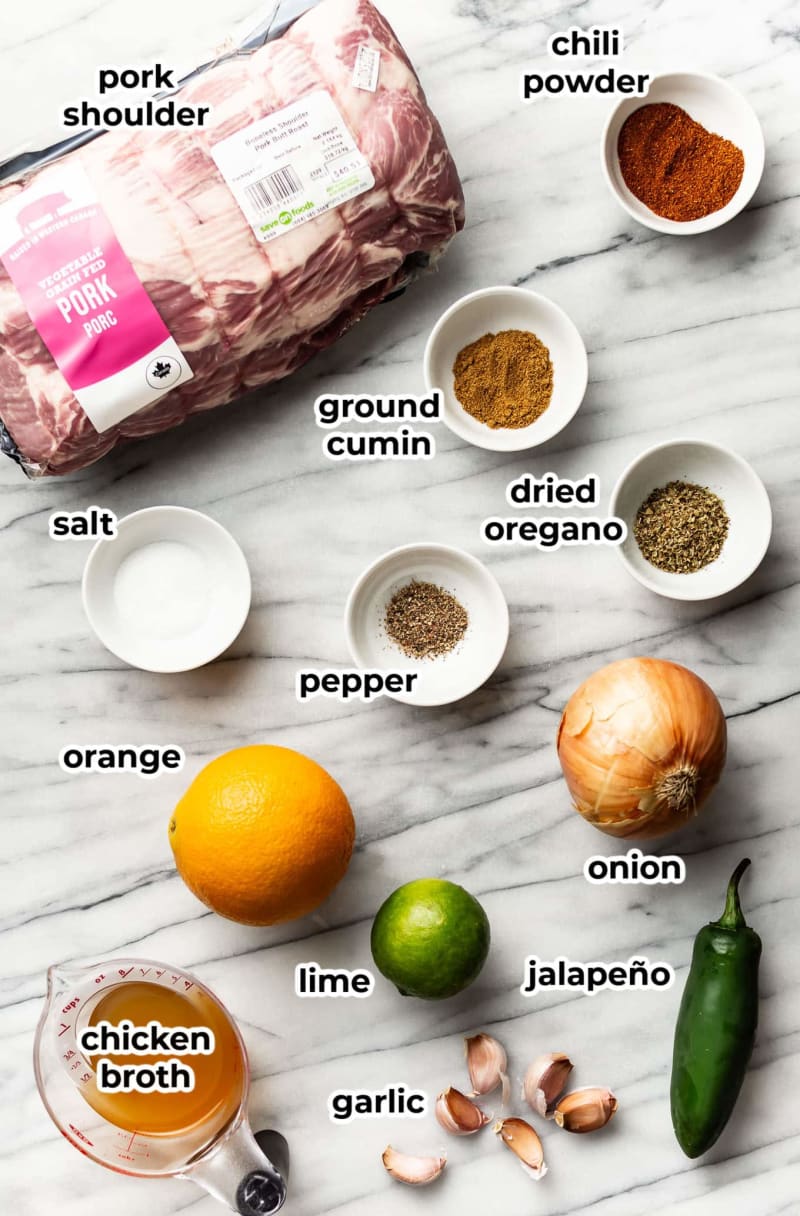
The ingredients are straightforward, but the pork and seasoning do important work. Use the listed amounts as a guide, adjusting only the salt and heat to suit your ingredients.
- Boneless pork shoulder: Four to five pounds, cut into four pieces. Keep the fat attached for moisture and flavor as the meat braises.
- Chili powder: One tablespoon adds mild warmth and color; blends vary, so check the heat level if serving a sensitive crowd.
- Dried oregano: Two teaspoons bring a woodsy herbal note that stands up to the long cook.
- Ground cumin: Two teaspoons add earthy, savory depth to the pork and its cooking liquid.
- Salt: Two teaspoons season the meat. If using table salt, begin with one teaspoon and adjust at serving.
- Pepper: Half a teaspoon, or to taste, rounds out the spice blend without making the pork hot.
- Onion: One medium onion, chopped, softens into the braising liquid and adds savory sweetness.
- Jalapeno peppers: One to two, finely chopped, provide fresh pepper flavor; remove seeds for less heat.
- Garlic: Six cloves, minced, make the cooking liquid fragrant and savory.
- Chicken broth: Half a cup helps create the braising liquid. Skip it if using the slow cooker method.
- Orange juice: Juice from one large orange adds sweetness and citrus flavor; a navel orange works well.
- Lime juice: Juice from one lime, about two tablespoons, adds bright acidity to balance the pork.
- Serving toppings: Warm corn tortillas, lime wedges, red onion, avocado and cilantro are optional ways to serve the pork.
Equipment You’ll Need
- Dutch oven: Use a covered Dutch oven large enough to hold the pork pieces and braising liquid; a deep roasting pan with a lid also works.
- Baking sheet: A rimmed sheet holds the shredded pork for broiling and catches cooking juices.
- Two forks: Use them to pull the tender pork into shreds without needing to transfer it to a cutting board.
- Skillet: A wide skillet is needed only for the alternate crisping method, which works best in batches.
How to Make Carnitas
1. Heat the oven
Set the oven to 300°F. If you plan to use a slow cooker instead, follow the same preparation and use its low or high setting as described in the notes.
Let the oven heat while you prepare the pork so it is ready when the pot goes in.
2. Cut the pork
Divide the shoulder into four smaller pieces and remove any string around the roast. Leave the fat attached.
Keep the pieces roughly similar in size so they become tender at about the same time.
3. Season the meat
Combine the chili powder, oregano, cumin, salt and pepper in a small bowl. Coat the pork all over with the mixture and arrange it in a Dutch oven.
Press the spices onto the surfaces so they do not all fall to the bottom of the pot.
4. Add the aromatics
Scatter the onion, jalapeno and garlic around the pork. Pour in the chicken broth, orange juice and lime juice over and around the pieces.
The liquid does not need to cover the meat; the covered pot traps moisture as it cooks.
5. Braise until tender
Cover the pot and cook for 2 hours. Remove the lid and continue cooking for another 1.5 hours, or until the pork is tender enough to fall apart.
A fork should slide into the meat easily, and the pieces should pull apart with little effort.
6. Shred and moisten
Move the pork to a baking sheet and shred it with two forks. Ladle about a cup of the cooking liquid over the meat and toss to coat.
Keep the remaining liquid; it is useful for adjusting moisture and for storing or reheating leftovers.
7. Crisp the pork
For the oven method, move the rack to the top third, set the oven to broil and broil the pork until browned and crisp in spots. Check after 5 minutes, then return it for more time as needed. Alternatively, cook pork with some juices in a skillet over medium-high heat until one side is crisp, working in batches. Add oil or lard if the juices do not provide enough fat.
Watch closely under the broiler: the goal is browned edges, not a uniformly dry or dark batch.
8. Serve the carnitas
Serve the pork in tacos or as desired, with warmed corn tortillas and optional toppings. Keep extra cooking liquid alongside the meat for anyone who wants it juicier.
Add crisped pork to tortillas just before serving so the browned edges stay distinct.
How to Tell When It’s Done
The pork is ready to shred when it looks relaxed and pulls apart easily with two forks. If it still feels firm or resists shredding, cover the pot and continue cooking until the connective tissue softens.
If the shredded meat seems dry, toss in more reserved cooking liquid before serving. If it is too wet to brown, spread it out and crisp it in batches rather than crowding the pan.
Tips and Common Mistakes
A few details help the pork stay juicy while still developing crisp edges.
- Check your chili powder. Some blends are much hotter than others. Use a mild blend when serving a range of heat preferences, and let people add heat at the table.
- Adjust salt for the type you use. If you are using table salt rather than sea or kosher salt, start with one teaspoon. Taste the finished pork before adding more.
- Keep the cooking liquid. Mix some into the shredded meat now and save the rest for leftovers. It restores moisture and carries the citrus and spice flavor.
- Crisp in uncrowded batches. A crowded skillet releases moisture and steams the pork instead of browning it. Give the pieces room and repeat with the remaining meat.
- Stay near the broiler. The top of the oven can brown the pork quickly. Check after 5 minutes, then use short additional checks until the edges are crisp.
Substitutions and Variations
The pork is adaptable to different equipment and serving styles, with a few changes to keep in mind.
- Slow cooker: Use the same ingredients except leave out the chicken broth. Cook on low for 8-10 hours or high for 4-5 hours, until the meat shreds easily.
- Less spicy: Use one jalapeno or omit it, and choose a mild chili powder. The finished pork will keep its seasoning without as much heat.
- More heat: Keep the jalapeno seeds or serve sliced fresh jalapeno on the side. This lets diners control the heat without changing the whole batch.
- Skillet crisping: Use a skillet over medium-high heat and cook the pork in batches. Add a little oil or lard if the cooking juices do not contain enough fat.
- Taco toppings: Corn tortillas are a natural fit, but the pork also works in bowls with avocado, red onion, cilantro and lime.
What to Serve with Carnitas
Set out warm corn tortillas with lime wedges, chopped red onion, avocado and cilantro so everyone can build tacos. Rice, beans or a crisp cabbage slaw make the meal more substantial.
For another chicken dinner or an easy meal-planning idea, browse our chicken recipes and dinner recipes.
Make-Ahead, Storage and Reheating
Make ahead: Cook and shred the pork ahead, then store it with some of its cooking liquid so it stays moist. Crisp only the amount you need just before serving; the rest can stay tender for later meals.
Storage: Refrigerate the pork and reserved cooking liquid in a covered container within 2 hours of cooking. Keep for 3 to 4 days; the fat in the juices may solidify as it chills.
Freezing: Freeze cooled pork with some cooking liquid in airtight freezer containers for up to 3 months. Thaw overnight in the refrigerator before reheating, then crisp it if desired.
Reheating: Warm the pork in a covered skillet over medium-low heat with a splash of reserved juices, stirring until hot. For crisp edges, uncover and let the liquid cook off, or crisp portions in a hot skillet; avoid drying out the whole batch.
Carnitas FAQs
Can I make carnitas without a Dutch oven?
Yes. Use a large, deep roasting pan with a lid for the oven method, or use a slow cooker and omit the chicken broth.
How do I know when pork shoulder is ready to shred?
It should pull apart easily with two forks and feel very tender. If it resists, keep cooking until the connective tissue softens.
Can I skip crisping the carnitas?
Yes. The pork is ready to serve after shredding and tossing with cooking liquid. Crisping adds browned edges but is optional.
Can I use the slow cooker instead of the oven?
Yes. Use the same ingredients but leave out the chicken broth, then cook on low for 8-10 hours or high for 4-5 hours.
Why are my carnitas not getting crispy?
Too much moisture or an overcrowded pan can keep the meat from browning. Spread it out or work in batches, and add more cooking liquid only after crisping.
How much orange and lime juice should I use?
Use the juice from one large orange and one lime. That is about 1/3 to 1/2 cup of orange juice and about 2 tablespoons of lime juice.
Printable Recipe
Recipe adapted from Salt & Lavender. Photos courtesy of Salt & Lavender, used with permission.
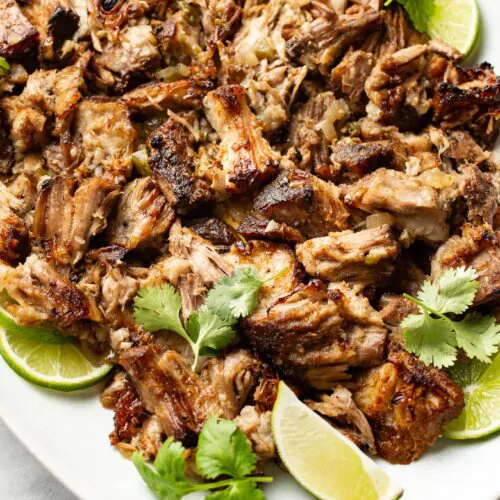
Carnitas
Ingredients
- 4-5 pounds boneless pork shoulder
- 1 tablespoon chili powder see note
- 2 teaspoons dried oregano
- 2 teaspoons ground cumin
- 2 teaspoons salt see note
- 1/2 teaspoon pepper or to taste
- 1 medium onion chopped
- 1-2 jalapeno peppers chopped finely
- 6 cloves garlic minced
- 1/2 cup chicken broth
- Juice from 1 large orange
- Juice from 1 lime
- For serving: warmed corn tortillas, lime wedges, red onions, avocado, cilantro, etc. optional, to taste
Instructions
- Preheat your oven to 300F. For slow cooker method, see notes below.
- Cut the pork shoulder into 4 smaller pieces. If there's any string around the roast, remove it. Don't cut any of the fat off.
- In a small bowl, stir together the chili powder, oregano, cumin, salt, and pepper. Coat the pork pieces in the spice mixture, and add them to a Dutch oven.
- Add the onions, jalapeno peppers, garlic, chicken broth, orange juice, and lime juice on/around the pork.
- Cover and cook for 2 hours, then uncover and cook for another 1.5 hours or until it's fall-apart tender.
- Take the meat out of the Dutch oven and place it on a baking sheet. Shred it with two forks. Ladle about a cup of the leftover cooking liquid over top and toss to coat. You can either serve it as-is or proceed to the next step to crisp up the meat (recommended!), using one of two methods.
- Method 1 (Oven): Move the rack to the top third of the oven and set your oven to broil. Transfer the baking sheet to the oven and broil until you've got some nice crispy bits. I typically check after 5 minutes and then pop it back in for more time as needed.Method 2 (Skillet): Add the meat and some cooking juices to a skillet and cook over medium-high heat until one side is crispy. The juices should have enough fat, but if needed, add some oil or lard (I reserve bacon grease when I cook it and keep it in a jar in the fridge). Do the skillet method in batches.
- Serve in tacos or as desired.
- For leftovers, I don't discard the remaining cooking juices. I just mix them in with the rest of the shredded pork as it helps to keep it moist. The juices will congeal when cooled (creating lard), which is great for when you want to reheat leftovers. See blog post above for more leftovers/storage/reheating tips.
Notes
- Chili powder is a blend of spices that’s typically fairly mild, but it can vary from brand to brand, so be sure to double check yours if heat is a concern!
- For the lime juice, aim for about 2 tablespoons, and the large orange about 1/3 – 1/2 cup of juice. I tested the recipe with a navel orange. I didn’t list precise measurements since I wanted to make it easier for readers to be able to just squeeze the juice right into the pot vs. having to measure it out, and with these items it doesn’t matter too much if it’s not exact.
- If you’re not using sea salt or kosher salt, start with 1 teaspoon and add more salt when serving if needed.
- If you don’t own a Dutch oven, use a large, deep roasting pan that has a lid.


