Chicken Francese


Chicken Francese pairs thin, tender cutlets with a light egg coating and a buttery lemon sauce. The chicken browns quickly in a skillet, while broth, lemon juice and browned bits become a bright, savory pan sauce.
Prep takes 10 minutes and cooking takes 20 minutes, making this a 30-minute dinner for four. Serve it fresh from the pan for a weeknight meal or an easy dinner with guests; the coating is at its crispest right after cooking.
Why This Chicken Francese Recipe Works
A few details make the difference between crisp cutlets and a heavy coating, and between a lively lemon sauce and one that tastes flat.
- Thin cutlets cook quickly. Pounding the chicken to an even thickness helps it cook through during a short skillet fry. It also gives each bite a tender texture.
- Two batches protect the crust. Crowding the skillet lowers its heat and can make the coating soggy. Frying two cutlets at a time leaves room for even browning.
- The sauce uses the pan fond. Broth and lemon juice loosen the browned bits left by the chicken. Those savory bits give the buttery sauce more depth than broth alone.
- A little flour thickens the sauce. Cooking flour briefly in the melted butter helps the broth form a smooth, lightly thickened sauce. It should coat the chicken without feeling heavy.
Ingredients You’ll Need
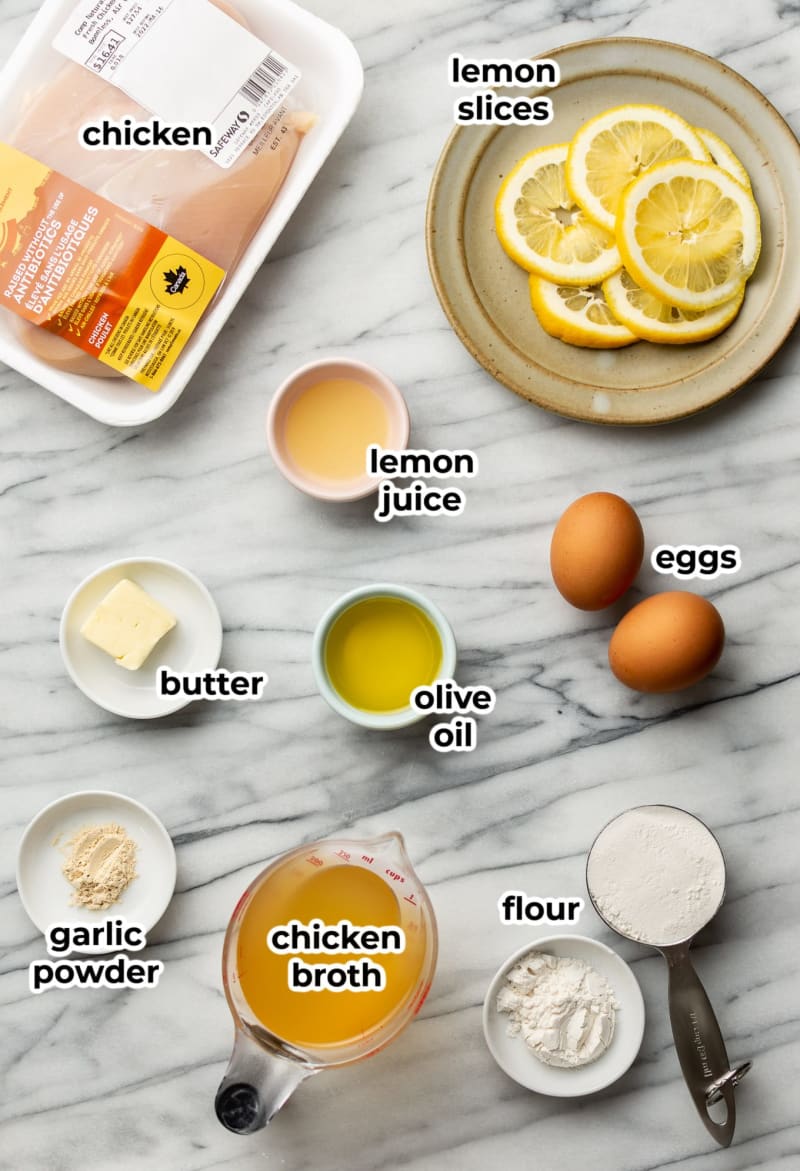
This short ingredient list builds the cutlets and sauce in the same skillet. Use fresh lemon for the juice and slices so the citrus flavor stays clear.
- Chicken breasts: Two large breasts, sliced lengthwise into four cutlets and pounded thin. Look for pieces that are similar in size for even cooking.
- Salt and pepper: Season to taste on both sides of the chicken before dredging; adjust the finished sauce as needed.
- Garlic powder: Half a teaspoon adds savory flavor to the cutlets without putting fresh garlic in the hot pan.
- Flour: A quarter cup coats the chicken, and one tablespoon thickens the sauce. Keep the two portions separate.
- Eggs: Two, lightly beaten, create the thin coating that turns golden in the skillet.
- Olive oil: Two tablespoons for frying; keep a little extra nearby in case the skillet looks dry between batches.
- Butter: One tablespoon enriches the lemon sauce and gives the flour a base to cook in.
- Chicken broth: One cup forms the sauce. Dry white wine can replace half the broth for a more complex, less rounded flavor.
- Lemon juice: One tablespoon brings sharp citrus flavor to the sauce. For a milder result, use half the listed amount.
- Lemon: Half a lemon, cut into thin rings, simmers in the sauce and adds fresh aroma. The cooked slices are edible or can be discarded.
- Parsley and parmesan: Chopped parsley and freshly grated parmesan are optional finishing touches; add either to taste just before serving.
How to Make Chicken Francese
1. Pound and season the chicken
Cut each breast in half lengthwise to make four thinner pieces. Place them between two sheets of plastic wrap and pound with the flat side of a meat mallet to about 1/4 inch thick. Season both sides with salt, pepper and garlic powder.
Aim for an even thickness rather than pounding one spot very thin; uniform cutlets cook at the same pace.
2. Set up the coating
Put the 1/4 cup flour on a plate or in a shallow bowl. Beat the eggs in a second bowl with a fork.
Keep the bowls close to the skillet so you can move each coated piece directly to the pan.
3. Fry the first batch
Heat the olive oil in a large skillet over medium-high heat for a few minutes. Coat two cutlets in flour, then egg, letting excess egg drip away before placing them in the skillet. Cook for about 3 minutes per side, until golden and cooked through to 165°F. Transfer them out of the pan.
The coating should be golden, not dark brown. If it is browning too quickly, lower the heat slightly.
4. Cook the remaining cutlets
Repeat the flour-and-egg coating with the other two pieces and fry them in the same skillet. Add a little more olive oil if the pan looks dry.
The second batch may cook faster because the skillet is already hot, so watch the color closely.
5. Start the lemon sauce
Lower the heat to medium and add the butter. Once melted, stir in the remaining 1 tablespoon flour and cook for about 30 seconds.
Keep stirring so the flour blends into the butter rather than forming dry lumps or browning too much.
6. Simmer until thickened
Whisk in the broth and lemon juice, scraping the browned bits from the skillet. Add the lemon rings and cook for 5 minutes, or until the sauce has reduced and thickened a bit.
The sauce should look lightly glossy and cling to a spoon. Whisk steadily as you add the liquid for a smoother finish.
7. Sauce and serve
Return the chicken to the skillet and spoon sauce over it, or plate the cutlets and pour the sauce on top. Season with more salt and pepper if needed, then finish with parsley and parmesan if desired.
Serve promptly so the coating does not soften too much in the sauce.
Tips and Common Mistakes
A few small choices help the chicken brown evenly and keep the sauce smooth.
- Pound to an even thickness. Uneven cutlets can brown outside before the thickest areas cook through. Work gently and check that each piece is similarly thin.
- Let excess egg drip off. A light coating fries into a delicate crust; excess egg can pool around the chicken and make the coating thicker than intended.
- Leave room in the skillet. Fry only two pieces at a time as directed. If the pan is crowded, the chicken releases moisture and is less likely to brown well.
- Watch the second batch. The skillet is already hot, so the later cutlets may color more quickly. Check them often to avoid scorching the egg coating.
- Scrape up the browned bits. Those bits dissolve into the broth and lemon juice, adding savory flavor to the sauce. Use a whisk or wooden spoon to loosen them.
- Adjust the lemon to taste. The sauce is distinctly lemony. If you prefer a gentler citrus flavor, use half the listed lemon juice.
- Sauce just before serving. The cutlets are best while their coating is freshly crisp. Letting them sit in the sauce softens the outside.
Substitutions and Variations
The basic method is flexible, though changes to the coating or citrus will shift the classic balance.
- Use broth and wine: Replace half the chicken broth with dry white wine, as suggested, for a more aromatic sauce. Keep the total liquid at one cup.
- Make it less lemony: Use half the tablespoon of lemon juice for a milder sauce. Keep the lemon rings for fragrance, or leave them out if you want less citrus.
- Try chicken cutlets: Thin, ready-cut chicken cutlets can save prep time. Check their thickness and adjust skillet time as needed, making sure the center reaches 165°F.
- Use a neutral oil: A neutral cooking oil can stand in for the olive oil. The flavor will be less fruity, but the cutlets will still fry properly.
- Skip the garnish: Parsley and parmesan are optional, so leave them off for a simpler finish. The lemon-butter sauce already provides plenty of flavor.
What to Serve with Chicken Francese
Serve Chicken Francese with angel hair pasta, rice or mashed potatoes to catch the lemon-butter sauce. Steamed green beans, asparagus or a simple green salad add a fresh contrast.
For a fuller Italian-American dinner, pair it with a side salad or a vegetable soup. Browse more chicken dinner ideas or weeknight dinners for other meal pairings.
Make-Ahead, Storage and Reheating
Make ahead: You can slice and pound the chicken ahead, then cover and refrigerate it until cooking. For the crispest coating, dredge and fry the cutlets just before serving rather than making them well in advance.
Storage: Refrigerate leftover chicken and sauce in an airtight container within 2 hours of cooking. Keep for 3 to 4 days.
Freezing: Freezing is possible, but the egg coating softens after thawing and reheating. If you freeze leftovers, seal the chicken and sauce separately and thaw them in the refrigerator.
Reheating: Warm the chicken gently in a covered skillet with the sauce over low heat, just until hot. The coating will soften, but keeping the heat gentle helps prevent the cutlets from drying out.
Chicken Francese FAQs
Can I make Chicken Francese without wine?
Yes. Use chicken broth for the full cup of liquid; the sauce will still be savory and lemony.
How do I keep the coating from falling off?
Pat the chicken dry before seasoning, coat it first in flour, then egg, and let excess egg drip away. Handle the cutlets gently as they go into the skillet.
Can I use bottled lemon juice?
Yes, but fresh lemon juice generally tastes brighter in this sauce. The lemon rings also contribute aroma, so use a fresh lemon if you want that garnish.
What does Chicken Francese mean?
It refers to chicken coated in flour and egg, then cooked and served with a lemony sauce. Despite its name, this style is associated with Italian-American cooking.
Can I double this recipe?
Yes. Cook the cutlets in batches rather than filling the skillet, then make the sauce after frying. Serve promptly so the coating stays as crisp as possible.
Printable Recipe
Recipe adapted from Salt & Lavender. Photos courtesy of Salt & Lavender, used with permission.

Chicken Francese
Ingredients
- 2 large chicken breasts cut in half lengthwise
- Salt & pepper to taste
- 1/2 teaspoon garlic powder
- 1/4 cup flour + 1 tablespoon flour divided use
- 2 eggs lightly beaten
- 2 tablespoons olive oil
- 1 tablespoon butter
- 1 cup chicken broth or 50/50 chicken broth and dry white wine
- 1 tablespoon lemon juice
- 1/2 lemon sliced into thin rings
- For serving: chopped parsley, freshly grated parmesan cheese optional, to taste
Instructions
- Slice the chicken breasts in half lengthwise so you have four thinner cutlets. Place them between 2 sheets of plastic wrap and then pound thin (to about 1/4") using the flat end of a meat mallet. Sprinkle both sides of the chicken with the salt & pepper and garlic powder.
- Add the 1/4 cup of flour to a bowl or plate (you will dredge the chicken in it), then add the eggs to a second bowl and whisk with a fork.
- Add the olive oil to a large skillet over medium-high heat (let the pan heat up for a few minutes). You will be frying two pieces of chicken at a time. One by one, coat the first two pieces of chicken with the flour, then the egg, and then add each piece to the skillet after letting the excess drip off. Cook for about 3 minutes/side or until the crust is golden and the chicken is cooked through (165F). Remove the chicken from the pan and set it aside. Repeat for the second batch (add a little more olive oil if the pan is looking dry). The second batch tends to go faster, so keep an eye on it so it doesn't burn.
- Reduce the heat to medium. Add the butter to the skillet. Once it melts, stir in the 1 tablespoon of flour and let it cook for about 30 seconds or so.
- Whisk in the broth and lemon juice (scrape any brown bits off the bottom of the pan), and then add in the lemon slices. Cook for 5 minutes or until the sauce has reduced/thickened a bit.
- Add the chicken back to the skillet and then serve immediately with some sauce spooned over, or simply plate the chicken and then pour the sauce over. It's best to serve it quite quickly before the chicken's coating softens up too much. Season with extra salt & pepper as needed. Top with some chopped parsley and freshly grated parmesan cheese if desired. Yes, you can eat those cooked lemon slices if you like, or discard them if you prefer.
Notes
- This recipe has been majorly overhauled from its original version that was published back in 2016. If you loved the original version, here’s a PDF of it that you can save.
- Between the lemon juice and lemon slices, this sauce is quite lemony! If you’re not as much of a lemon lover, halve the lemon juice quantity.


