Chicken Patties


These chicken patties have a crisp panko coating and a tender, savory center flavored with Parmesan, Dijon, lemon and Worcestershire. Ground chicken makes them delicate, so a gentle mix and steady skillet heat are the keys to keeping them juicy without scorching the outside.
Plan on 20 minutes of prep and 20 minutes of cooking for four servings. They make a satisfying weeknight dinner with rice and salad, and the patties are easy to pair with sauces and simple sides.
Why This Chicken Patties Recipe Works
A few details keep these tender patties together and help them brown without drying out.
- Panko goes inside and out. Some breadcrumbs absorb moisture in the mixture, while the remaining panko forms a light, crisp coating. Dividing it this way gives the patties structure without a heavy crust.
- The mixture stays tender. Egg and mayonnaise add moisture and help bind the ground chicken, while Parmesan contributes savory flavor. Gentle mixing avoids compressing the meat into a dense texture.
- A little acidity balances the richness. Lemon juice, Dijon and Worcestershire bring brightness and depth to the mild chicken. Their flavors are spread through the mixture, so the patties need little extra dressing.
- Moderate heat gives the center time. Ground chicken must cook through, but a hot skillet can darken the coating first. Medium heat and a thermometer help you avoid a browned exterior with an underdone middle.
Ingredients You’ll Need
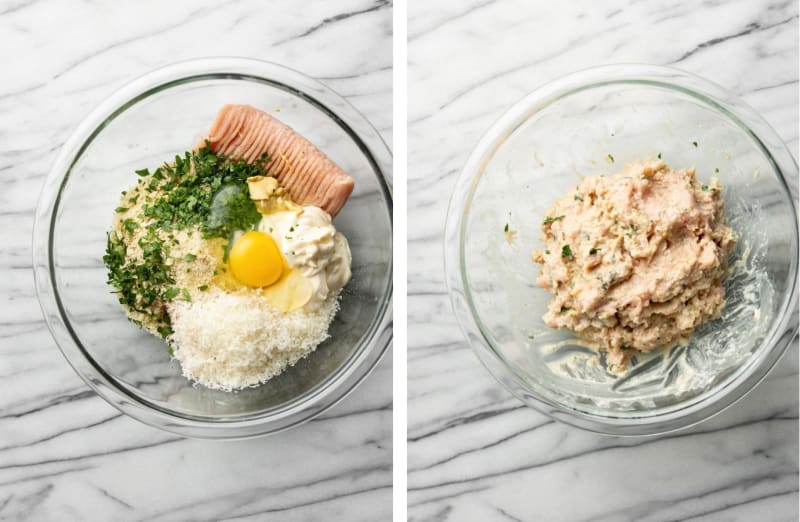
The ingredients make a moist, well-seasoned mixture and a crisp coating. Measure the panko before dividing it between the bowl and the breading plate.
- Ground chicken: One pound. Choose fresh ground chicken; its mild flavor takes well to the herbs, mustard and cheese.
- Panko breadcrumbs: One cup, divided between the mixture and coating. Panko gives the outside a lighter crunch than fine crumbs.
- Egg: One egg helps bind the soft mixture so the patties hold their shape in the skillet.
- Worcestershire sauce: One teaspoon adds a savory, gently tangy note that deepens the chicken’s flavor.
- Dijon mustard: One teaspoon brings mild sharpness and complements the lemon without making the patties taste strongly of mustard.
- Lemon juice: One tablespoon brightens the rich mayonnaise and Parmesan. Use fresh juice for a clean citrus flavor.
- Garlic powder: Half a teaspoon seasons the chicken evenly without adding moisture to the delicate mixture.
- Onion powder: Half a teaspoon adds a mellow savory note and blends smoothly into the ground chicken.
- Salt and pepper: Half a teaspoon of salt, plus pepper to taste, seasons the mixture. Add pepper to your preference.
- Mayonnaise: One-third cup keeps the chicken moist and contributes richness; regular mayonnaise works well.
- Parmesan cheese: Half a cup, freshly grated, adds salty, nutty flavor. Grating it finely helps it distribute through the patties.
- Italian parsley: One tablespoon, chopped, brings a fresh herbal note. Chop it finely so it mixes evenly.
- Olive oil: Two tablespoons for frying. Keep a little extra nearby in case the second batch needs more.
Equipment You’ll Need
- Large mixing bowl: A roomy bowl makes it easier to combine the sticky chicken mixture gently.
- Two plates: Use one for the coating panko and one to hold the formed patties before frying.
- Large skillet: A skillet gives the patties room to brown in batches; cast iron works, but watch its heat closely.
- Instant-read thermometer: Check the center of each patty for 165°F, the reliable endpoint for ground poultry.
How to Make Chicken Patties
1. Mix the patty ingredients
Put half of the panko in a large bowl with the egg, Worcestershire, Dijon, lemon juice, garlic powder, onion powder, salt, pepper, mayonnaise, Parmesan and parsley. Add the ground chicken.
The mixture will be quite wet and slightly sticky. That is expected; avoid adding extra crumbs to the bowl.
2. Set up the coating
Spread the remaining panko over one plate and leave a second plate ready for the formed patties.
Keep the plates close to the bowl so you can move each delicate patty without carrying it far.
3. Combine gently
Use your hands to bring the chicken mixture together, stopping as soon as the ingredients are evenly distributed.
Overmixing can make ground chicken compact and tough. The mixture should remain soft rather than paste-like.
4. Shape and coat the patties
Divide the mixture into 4 portions in the bowl. Shape each into an oval, roll it gently in the panko until coated, then transfer it to the clean plate. Repeat with the remaining portions, adding a little more panko to the coating plate if needed.
Keep all 4 patties roughly the same size and thickness, and don’t make them too tall; thick centers are harder to cook through.
5. Heat the skillet
Pour the olive oil into a skillet and warm it over medium heat for a couple of minutes.
The pan should be hot enough for frying but not smoking. If the oil smokes or the coating darkens immediately, reduce the heat.
6. Cook in two batches
Fry the patties in two batches for 5-6 minutes per side, or until cooked through. Add more oil for the second batch if the pan is dry, and lower the heat if needed, especially with cast iron.
The second batch may cook faster because the skillet is already hot. Turn the heat down if the crust is browning too quickly.
7. Check and serve
Use an instant-read thermometer to check that the patties reach 165°F. Remove them from the skillet and serve immediately.
They continue cooking a little after leaving the pan, but don’t rely on carryover cooking to bring an under-temperature patty to a safe temperature.
How to Tell When It’s Done
The panko coating should be evenly browned and crisp, while the patty feels set rather than soft in the middle. Because the mixture is moist, color alone cannot confirm that the chicken is cooked through.
Insert an instant-read thermometer into the center of a patty; ground chicken should reach 165°F. Check each one, since small differences in thickness can change how quickly they finish.
If the outside is browning before the center reaches temperature, lower the heat and continue cooking more gently. If a patty is still underdone after turning, give it more time rather than increasing the heat.
Tips and Common Mistakes
These patties are delicate, so gentle handling and controlled skillet heat matter most.
- Mix only until combined. Ground chicken becomes dense if worked too much. Stop once the egg, seasonings and other ingredients are distributed.
- Expect a sticky mixture. The mayonnaise and egg make the mixture soft. Shape each portion carefully and use the panko coating to make handling easier.
- Keep the patties similar in size. Uniform ovals cook at a similar pace, which makes it easier to avoid dry edges while waiting for a thick center.
- Don’t make them too tall. A thick patty can brown on the outside before the ground chicken cooks through. Shape broad, even ovals instead.
- Fry in two batches. Crowding makes it harder to turn the patties gently and can slow browning. Leave room to move a spatula around each one.
- Watch the skillet temperature. The second batch may brown faster, and cast iron holds heat particularly well. Turn the burner down if the coating is darkening too soon.
- Use the thermometer. Ground chicken can go from undercooked to overcooked quickly. Check the center for 165°F instead of relying only on the crust or cooking time.
Substitutions and Variations
Keep the mixture moist and the texture gentle when changing ingredients.
- Ground turkey: Ground turkey can stand in for the chicken. Its fat level varies, so watch the skillet and use the same 165°F safety target.
- Gluten-free panko: Use gluten-free panko in both parts of the recipe for a similar crisp coating. Check the Worcestershire label if avoiding gluten.
- Dried parsley: A smaller amount of dried parsley can replace fresh, though the patties will have less of a fresh herbal flavor.
- Fresh garlic: Finely minced garlic can replace garlic powder, but it adds moisture and a more pronounced flavor. Keep the pieces small for even distribution.
- Whole-grain mustard: Whole-grain mustard can replace Dijon for a slightly more textured bite. The flavor will be milder and less smooth.
- Neutral frying oil: A neutral oil suitable for skillet frying can replace olive oil. It will have a less fruity flavor but still browns the panko.
What to Serve with Chicken Patties
Serve the patties hot with rice and salad, as in the suggested meal, or add roasted vegetables, mashed potatoes or buttered noodles. A homemade remoulade-style sauce is a natural match for the crisp coating.
For more ways to use poultry at dinner, browse our chicken recipes or find ideas in our dinner recipes.
Make-Ahead, Storage and Reheating
Make ahead: You can chop the parsley and measure the dry seasonings ahead, then refrigerate them separately until cooking. For the best coating, shape and bread the patties shortly before frying rather than leaving the wet mixture assembled for a long period.
Storage: Refrigerate cooked patties in a covered, airtight container within 2 hours of cooking and use within 3 to 4 days.
Freezing: Freeze cooked, cooled patties in a single layer until firm, then transfer them to a freezer-safe container with parchment between layers. Thaw in the refrigerator; the crumb coating may be less crisp after freezing.
Reheating: Warm patties in a skillet over moderate heat or in an oven until heated through, turning gently so the coating can crisp again. Avoid prolonged high heat, which can dry out the chicken.
Chicken Patties FAQs
Can I make chicken patties without mayonnaise?
Yes. Plain Greek yogurt can replace the mayonnaise, though the mixture may taste tangier and feel slightly less rich.
Why are my chicken patties falling apart?
The mixture is naturally soft, so shape one portion at a time and coat it thoroughly with panko. Turn the patties gently after the first side has browned and set.
Can I bake these chicken patties instead of frying them?
Yes, but the crust will not brown in quite the same way as it does in a skillet. Bake until the centers reach 165°F, checking with an instant-read thermometer rather than relying on appearance.
Can I prepare the chicken mixture in advance?
Yes. Keep the covered mixture refrigerated and shape and coat the patties just before cooking so the panko stays dry and crisp.
How do I keep the patties from burning?
Use medium heat and lower it if the coating darkens before the center cooks. Cast iron retains heat, so it may need a lower setting for the second batch.
How many chicken patties does this recipe make?
It makes 4 oval patties, enough for 4 servings.
Printable Recipe
Recipe adapted from Salt & Lavender. Photos courtesy of Salt & Lavender, used with permission.

Chicken Patties
Ingredients
- 1 pound ground chicken
- 1 cup panko breadcrumbs divided
- 1 egg
- 1 teaspoon Worcestershire sauce
- 1 teaspoon Dijon mustard
- 1 tablespoon lemon juice
- 1/2 teaspoon garlic powder
- 1/2 teaspoon onion powder
- 1/2 teaspoon salt
- Pepper to taste
- 1/3 cup mayo
- 1/2 cup freshly grated parmesan cheese
- 1 tablespoon Italian parsley chopped
- 2 tablespoons olive oil for frying
Instructions
- Add half the panko breadcrumbs and all remaining ingredients except for the olive oil to a fairly large bowl.
- Prepare 2 plates: one with the remaining panko breadcrumbs, and the other will be used to place the formed chicken patties on before you fry them.
- Using your hands, gently mix the patty ingredients together (mixture will be quite wet and a bit sticky).
- Divide the mixture into 4 parts (just do this within the same bowl). You'll be making 4 oval patties, one at a time, since they're quite delicate. Form the patty, gently roll it in the panko breadcrumbs until evenly coated, then place it on the second plate. Repeat until all 4 patties are made. If needed, add a little bit more panko to the plate if you're running out by the time you get to the last patty. Aim to make the patties roughly the same size/thickness and try not to make them too tall or they won't cook through properly.
- Add the olive oil to a skillet over medium heat. Let the pan heat up for a couple of minutes.
- In two batches, cook the patties for 5-6 minutes/side or until they're cooked through. You may need to add more oil to the pan for the second batch. The second batch tends to cook faster, so you may need to turn the heat down a bit, especially if using cast iron so they don't burn on the outside before cooking through. Patties will continue to cook a little bit after you take them off the heat. Use an instant read thermometer to ensure they're 165F and safe to eat.
- Serve chicken patties immediately. I served them with homemade remoulade sauce, rice, and salad. The blog post includes more serving suggestions and tips.
Notes
- This recipe can go from undercooked to overcooked in a hurry, so I highly recommend using an instant read thermometer. They’re very affordable and only take a few seconds to use!
- Troubleshooting tip: Don’t let the skillet get too hot. Err on the side of a lower heat and cooking them slower vs. having the outside burn before the inside has cooked.


