Coconut Lime Shrimp

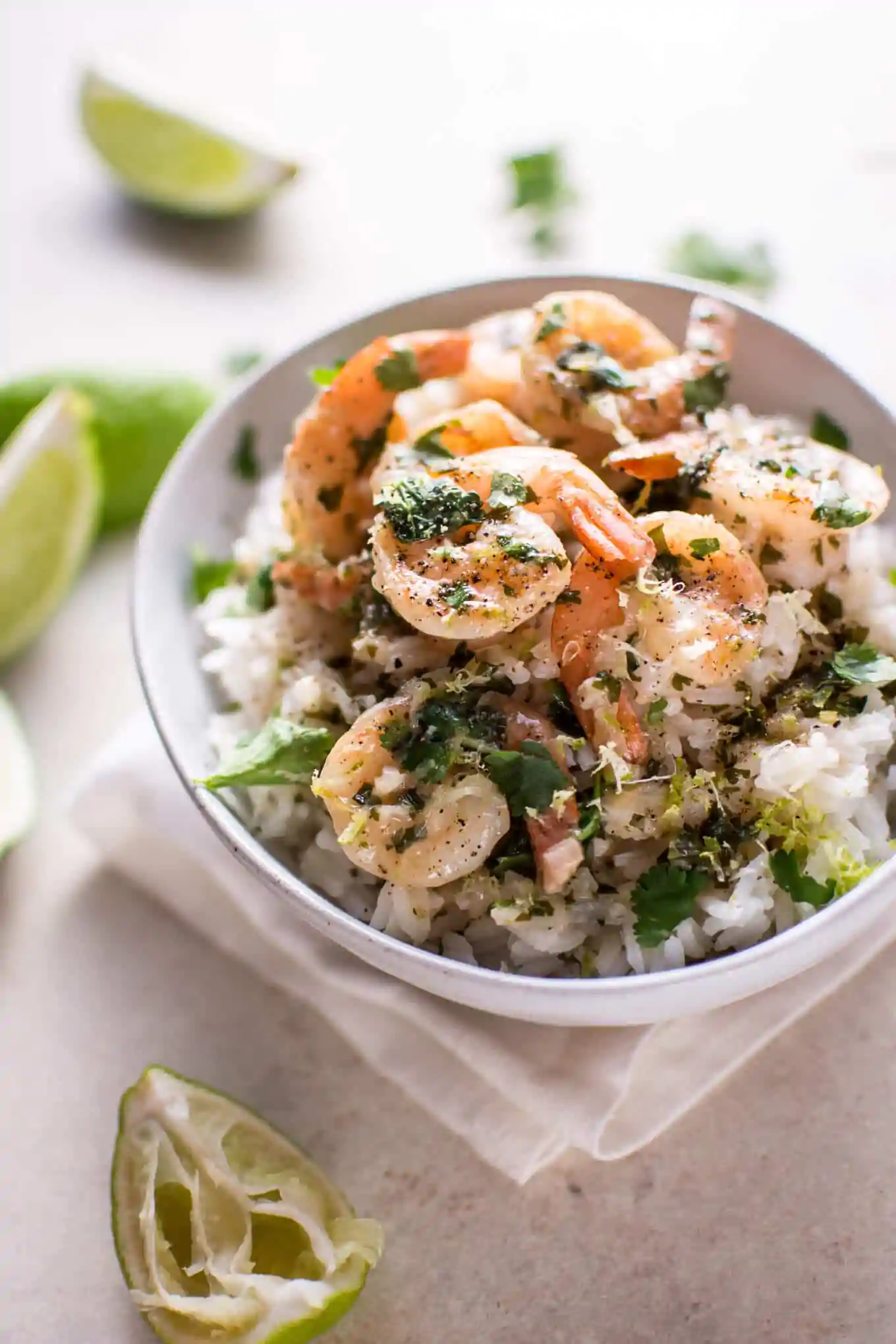
Coconut lime shrimp combines tender shrimp with a silky coconut milk sauce brightened by lime, garlic, ginger, and fresh herbs. The shrimp cook directly in the simmering sauce, so they pick up its citrusy, gently sweet flavor without a separate marinade.
This recipe takes 30 minutes from start to finish and serves four. It is an easy fit for a weeknight, especially when served over rice to catch every bit of sauce.
The sauce is easy to adjust before the shrimp go in, making it simple to balance the lime, sweetness, and seasoning to suit your taste.
Why This Coconut Lime Shrimp Recipe Works
The cooking order keeps the shrimp tender and gives the quick sauce a rounded, fresh flavor.
- Aromatics build flavor first. Cooking the shallot until lightly browned brings out its sweetness. Garlic and ginger go in later so they become fragrant without burning.
- Coconut milk makes a silky sauce. Full-fat coconut milk gives the broth a richer texture and carries the lime and aromatics around each shrimp.
- Lime balances the richness. Both zest and juice contribute citrus flavor: the zest is fragrant, while the juice adds a sharper, refreshing note.
- The shrimp cook in the sauce. Adding them near the end gives them time to cook through while preserving their delicate texture. They also absorb the seasoned coconut sauce as they simmer.
- Fresh herbs finish the dish. Cilantro and basil add a bright, leafy contrast to the rich sauce. Stirring them in with the shrimp lets them release aroma without a long cook.
Ingredients You’ll Need
Gather the ingredients before heating the skillet; the shrimp cook quickly once they are added.
- Olive oil: One tablespoon for sautéing the shallot and starting the sauce.
- Shallot: Two tablespoons, finely chopped, provide a mild, savory-sweet base.
- Shrimp: One pound of medium shrimp, peeled and deveined; thaw frozen shrimp and pat them dry before cooking.
- Garlic: Three cloves, minced, add savory depth to the coconut and lime.
- Ginger: One teaspoon, grated, lends a warm, fresh bite.
- Broth: A quarter cup of chicken or vegetable broth loosens the sauce; choose either according to your preference.
- Lime: Juice and zest from one lime bring brightness; zest it before squeezing.
- Coconut milk: One 13.5-ounce can of full-fat coconut milk makes the sauce creamy and substantial.
- Brown sugar: One teaspoon rounds out the lime’s tartness without making the sauce overtly sweet.
- Cilantro: Half a cup, chopped, adds a fresh herbal finish.
- Basil: Six large fresh leaves, torn, add a sweet, peppery aroma.
- Salt and pepper: Season to taste after the sauce simmers, since the broth can already contain salt.
- Cooked rice: Optional, for serving; it is a useful base for soaking up the coconut lime sauce.
Equipment You’ll Need
- Large skillet: A roomy skillet gives the sauce space to simmer and the shrimp room to cook evenly.
- Citrus zester or fine grater: Use it to remove the lime’s fragrant outer zest without grating into the bitter white pith.
- Measuring cups and spoons: These help portion the broth, coconut milk, seasonings, and herbs accurately.
- Instant-read thermometer: It can confirm that the thickest shrimp have reached a safe internal temperature.
How to Make Coconut Lime Shrimp
1. Prepare the rice
If you plan to serve rice, cook it according to the package directions while you prepare the shrimp.
Keep the rice covered when it is ready so it stays warm while the sauce finishes.
2. Brown the shallot
Warm the olive oil in a skillet over medium-high heat. Add the finely chopped shallot and cook for about 5 minutes, stirring occasionally, until lightly browned.
The shallot should look softened with golden edges, not dark or crisp.
3. Add garlic and ginger
Stir the minced garlic and grated ginger into the skillet. Cook for about a minute, just until their aroma rises.
Keep the aromatics moving; garlic can turn bitter if it begins to brown too much.
4. Simmer the coconut sauce
Pour in the broth, lime juice and zest, coconut milk, and brown sugar. Stir to combine, then simmer for 10 minutes.
A gentle simmer is enough. Stir occasionally so the sauce heats evenly and does not stick around the skillet’s edges.
5. Taste and adjust
Before adding the shrimp, taste the sauce and adjust with extra lime juice, sugar, or salt and pepper as needed.
Make small adjustments and taste again; the aim is a balance of creamy, tangy, and lightly sweet.
6. Cook the shrimp and herbs
Add the shrimp, chopped cilantro, and torn basil. Cook for another 5 minutes or until the shrimp are cooked through, taking care not to overcook them.
The shrimp should turn opaque and curl into a loose C shape. Check the thickest ones, since size can affect how quickly they cook.
7. Serve right away
Taste once more for seasoning, then serve immediately, with cooked rice if desired.
Spoon plenty of sauce over the shrimp and rice while the sauce is warm and fluid.
How to Tell When It’s Done
Cooked shrimp turn opaque through the center and feel firm but still springy. They usually curl into a loose C; tightly curled shrimp can be a sign they have cooked too long and may be chewy.
For a temperature check, insert an instant-read thermometer into the thickest shrimp and look for 145°F. If the centers still look translucent, continue cooking briefly and check again rather than relying only on the total time.
If the shrimp are ready before the sauce seems thick enough, transfer them to a plate and let the sauce simmer a little longer, then return them to the skillet. This helps prevent the shrimp from becoming rubbery.
Tips and Common Mistakes
A few small choices help keep the sauce balanced and the shrimp tender.
- Use full-fat coconut milk. It gives the sauce a creamy body. A thinner product can leave the sauce more watery, so check the can before adding it.
- Taste before adding shrimp. The sauce is easiest to adjust before the shrimp cook. Add lime for more tang, a little sugar to soften sharpness, or salt and pepper for balance.
- Keep the heat at a simmer. A hard boil can make the sauce splatter and cook the shrimp unevenly. Once the shrimp go in, maintain a gentle simmer.
- Avoid overcooking the shrimp. Shrimp turn from tender to chewy quickly. Watch their color and shape as they cook, especially if some are smaller than others.
- Add the herbs near the end. The brief cook preserves their fresh aroma and color. If cooked for too long, the herbs can lose their brightness.
- Prep the lime before juicing. The whole lime is easier to zest than a squeezed half. Avoid grating the white pith, which can add bitterness.
- Serve as soon as it is ready. Shrimp continue to cook in the hot sauce after the skillet comes off the heat. Move the dish to the table promptly for the most tender texture.
Substitutions and Variations
You can make a few practical swaps while keeping the same creamy, citrus-forward profile.
- Chicken broth: Use chicken broth for a savory, fuller flavor, or vegetable broth for a lighter option; either works in the same quantity.
- No fresh basil: Leave it out or use more cilantro. The finished dish will still be fresh, though it will lose basil’s sweet, peppery aroma.
- Cilantro alternative: Use additional torn basil if cilantro is not to your taste. The flavor will be less citrusy and more softly herbal.
- Frozen shrimp: Thaw them fully in the refrigerator or under cold running water, then drain and pat dry. Excess water can dilute the sauce.
- Less sweetness: Reduce or omit the brown sugar if you prefer a sharper lime flavor. Taste the sauce first so the change does not make it too tart.
- Add gentle heat: Stir in a small pinch of red pepper flakes with the garlic and ginger. This adds warmth without changing the creamy texture.
- Serve without rice: The shrimp and sauce can be served on their own or alongside vegetables. Rice is optional, but it helps catch the extra sauce.
What to Serve with Coconut Lime Shrimp
Serve the shrimp over cooked rice so the coconut lime sauce coats each bite. Steamed jasmine rice, brown rice, or a simple rice pilaf all work well; add a crisp green salad or sautéed vegetables for contrast.
For another easy seafood dinner, browse our dinner recipes and soup recipes.
Make-Ahead, Storage and Reheating
Make ahead: Chop the shallot, garlic, ginger, and herbs ahead and refrigerate them separately in covered containers. You can also zest and juice the lime in advance; cook the sauce and shrimp just before serving for the best texture.
Storage: Refrigerate leftover shrimp and sauce in a covered airtight container within 2 hours. Keep for 1 to 2 days, since shrimp are seafood; store rice separately if possible.
Freezing: Freezing is not recommended. The shrimp can become tough after thawing, and coconut milk sauce may separate or turn grainy.
Reheating: Warm leftovers gently in a skillet over low heat, stirring just until hot; avoid a prolonged simmer so the shrimp do not toughen. Add a splash of broth if the sauce has thickened. You can also serve leftovers chilled over a salad.
Coconut Lime Shrimp FAQs
Can I use shrimp that are already cooked?
Yes, but add them only at the end and warm them briefly in the sauce. Simmering cooked shrimp for the full time can make them tough.
Can I make coconut lime shrimp without rice?
Yes. Serve it as a saucy main dish with vegetables or a crisp salad instead; rice is optional.
Can I make the sauce ahead of time?
Yes. Prepare the coconut sauce without shrimp and refrigerate it in a covered container, then reheat it gently and cook the shrimp just before serving.
How can I tell if frozen shrimp are thawed?
They should be pliable throughout with no hard, icy centers. Drain and pat them dry before adding them so they do not water down the sauce.
Why is my coconut sauce thin?
Some coconut milk is naturally thinner, and excess water clinging to shrimp can also loosen the sauce. Let the sauce simmer briefly before adding the shrimp, or simmer it longer after moving cooked shrimp to a plate.
Can I use light coconut milk?
Yes, but expect a less rich, thinner sauce. Taste and adjust the seasoning before adding the shrimp, since the lighter milk may make the lime stand out more.
Printable Recipe
Recipe adapted from Salt & Lavender. Photos courtesy of Salt & Lavender, used with permission.
Coconut Lime Shrimp
Ingredients
- 1 tablespoon olive oil
- 2 tablespoons shallot chopped finely
- 1 pound medium shrimp peeled & deveined
- 3 cloves garlic minced
- 1 teaspoon grated ginger
- 1/4 cup chicken or vegetable broth
- Juice & zest of 1 lime
- 1 (13.5 ounce) can full fat coconut milk
- 1 teaspoon brown sugar
- 1/2 cup fresh cilantro chopped
- 6 large leaves fresh basil torn
- Salt & pepper to taste
- Cooked rice (optional)
Instructions
- If you're making rice with this, cook it according to package directions.
- Add olive oil to a skillet on medium-high heat. Sauté the shallot for about 5 minutes, stirring occasionally, until it's lightly browned.
- Add the garlic and ginger to the pan and cook for about a minute, until fragrant.
- Add the broth, lime juice and zest, coconut milk, and brown sugar. Simmer for 10 minutes.
- Add the shrimp, cilantro, and basil, and cook for another 5 minutes or until the shrimp are cooked through (don't overcook). Season with salt & pepper as needed.
- Serve immediately.
Notes
- I encourage you to adjust this recipe to your personal tastes. Give the sauce a try before you add the shrimp and add more lime juice, sugar, or salt & pepper if needed.
- I recommend Thai Kitchen coconut milk. It's less watery than some other brands I've tried.
- Nutritional information is provided as a courtesy only and should be construed as an estimate rather than a guarantee. Ingredients can vary and Salt & Lavender makes no guarantees to the accuracy of this information.


