Creamy Chicken Florentine


Creamy Chicken Florentine pairs golden pan-fried cutlets with a silky garlic cream sauce, tender baby spinach, and a finish of freshly grated Parmesan. The sauce starts with dry white wine and the browned bits left in the skillet, so it tastes savory and bright rather than just rich.
Dinner takes 30 minutes and serves four, with a cutlet for each plate. It’s quick enough for a weeknight but also a good choice for guests when you want a main dish you can cook entirely on the stovetop.
Put the side dish on first so it’s ready when the chicken is. The sauce is at its smoothest straight from the skillet.
Why This Creamy Chicken Florentine Recipe Works
The chicken and sauce share a skillet, but they don’t spend the whole time cooking together. That gives you control over both the browning and the reduction.
- Thin cutlets cook evenly. Slicing each breast horizontally shortens the distance heat has to travel to the center. A whole breast would take longer to cook through, especially at its thick end.
- Flour gives the chicken a delicate crust. A light dusting browns in the butter and oil without the bulk of a breadcrumb coating. It also gives the finished sauce something to cling to.
- The skillet carries the flavor forward. Wine and broth loosen the browned bits from the sear. Those bits add a roasted, savory flavor you wouldn’t get by making the sauce in a clean saucepan.
- Reduction makes the sauce taste balanced. Simmering the wine and broth before adding cream concentrates their flavor and removes excess water. The cream can then thicken without a long simmer that would overcook the chicken.
Ingredients You’ll Need
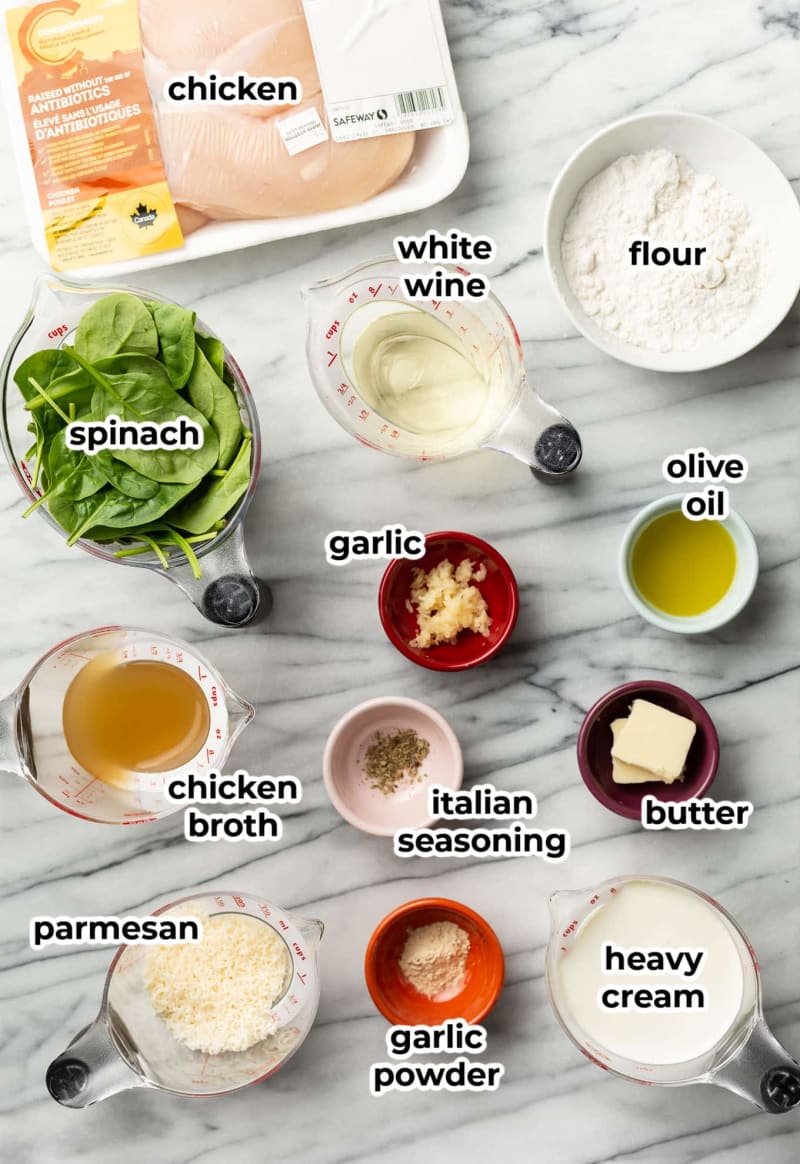
Have everything measured before the chicken goes into the skillet. Once the fresh garlic hits the butter, the wine and broth need to be close at hand.
- Chicken breasts: Two large boneless, skinless breasts yield four cutlets. Look for breasts that are similar in size.
- Garlic powder: Half a teaspoon seasons the chicken itself without leaving bits of fresh garlic on the surface to scorch during the sear.
- Salt and pepper: Use both to taste on the cutlets, then adjust the finished sauce after adding the cheese.
- Flour: Use enough all-purpose flour to dust both sides of each piece. You don’t need a thick coating.
- Olive oil: One tablespoon helps coat the skillet for an even sear.
- Butter: Two tablespoons total, split between browning the chicken and cooking the fresh garlic.
- Garlic: Mince three cloves finely so the garlic spreads through the sauce without leaving big bites.
- Dry white wine: Half a cup adds acidity. Choose a dry Pinot Grigio or Sauvignon Blanc rather than a sweet wine.
- Chicken broth: A quarter cup adds savory depth. Low-sodium broth lets you better control the salt.
- Italian seasoning: A quarter teaspoon gives the sauce a quiet herbal note.
- Heavy cream: One cup of heavy cream or whipping cream gives the sauce enough body to coat the cutlets.
- Baby spinach: Measure two cups without pressing the fresh leaves into the cup.
- Parmesan cheese: Half a cup, freshly grated from a wedge, adds a nutty, salty finish.
Equipment You’ll Need
- Large skillet: Choose a skillet with enough flat cooking surface to hold the four cutlets without overlap and sides that comfortably contain the bubbling sauce.
- Sharp chef’s knife and cutting board: A sharp blade makes it easier to slice horizontally through the breasts without tearing them or leaving one half much thicker than the other.
- Tongs: Tongs give you enough control to turn the cutlets and transfer them without scraping their coating against the pan.
- Instant-read thermometer: A slim probe can reach the center of a thin cutlet from the side.
How to Make Creamy Chicken Florentine
1. Slice and dredge the chicken
Cut the two breasts in half lengthwise to get four thinner pieces. Season both sides with the half teaspoon of garlic powder and salt and pepper to taste, then coat the pieces in flour.
Hold your knife parallel to the board for an even cut. Tap off the loose flour so the surface looks lightly dusted rather than chalky.
2. Brown the cutlets
Heat the tablespoon of olive oil and one tablespoon of butter in a skillet over medium-high heat. Cook the cutlets for 4 to 5 minutes per side, until golden, then take the skillet off the heat and transfer the chicken to a plate.
The chicken should sizzle on contact. Look for a golden underside before turning; the cutlets will finish cooking in the sauce.
3. Cook the fresh garlic
Return the skillet to the heat, then add the remaining tablespoon of butter and the minced garlic. Cook for about 30 seconds.
The garlic should smell fragrant but still look pale. Have the liquids ready to pour so the garlic doesn’t sit in the hot fat and darken.
4. Reduce the wine and broth
Add the half cup of dry white wine, quarter cup of chicken broth, and quarter teaspoon of Italian seasoning. Scrape the skillet bottom as the liquid bubbles, then cook for 3 to 5 minutes, until the liquid is noticeably reduced.
Tilt the skillet slightly to see how much liquid remains. You want a shallower pool, not a dry pan.
5. Add cream and spinach
Pour in the cup of cream and let it bubble for 2 minutes. Stir in the two loosely packed cups of baby spinach.
Fold the leaves through the liquid so they wilt evenly. They’ll look bulky at first but quickly settle into the sauce.
6. Finish the chicken in sauce
Return the cutlets to the skillet and cook over medium heat for 4 to 5 minutes more, until the chicken is cooked through and the sauce thickens slightly. Sprinkle the half cup of Parmesan over the chicken and sauce just before serving, then add more salt and pepper if needed.
Taste a spoonful of sauce with some of the Parmesan before adding salt; the cheese may supply all the extra seasoning you need.
How to Tell When It’s Done
Check each cutlet by inserting an instant-read thermometer sideways into the thickest part. Chicken is done at 165°F. If a thinner piece is ready first, move it to a clean plate and let the thicker pieces finish at a gentle simmer.
The sauce should look smooth and lightly coat the back of a spoon, but still flow easily when spooned over the chicken. If the chicken is done and the sauce still looks watery, pull the cutlets out and simmer the sauce on its own until it coats the spoon.
Tips and Common Mistakes
The texture of the sauce depends as much on what goes into the skillet as on how hard it bubbles.
- Dry the spinach well. If you rinse the leaves, spin or pat them dry. Water clinging to the spinach can loosen the sauce after you’ve already reduced it.
- Leave space around the cutlets. If the pieces touch, trapped steam slows browning. Sear in batches if your skillet won’t hold them in a single layer with room between.
- Check the browned bits. Keep the deep brown bits for the sauce, but wipe out any patches of flour that have turned black. Burnt flour will make the whole skillet taste bitter.
- Keep the cream at a gentle bubble. A rolling boil can reduce the sauce too quickly around the edges. Lower the heat if it starts sputtering instead of bubbling steadily.
- Add the spinach later for more bite. For leaves that keep more of their shape, wait until the last couple of minutes of cooking to stir them into the sauce.
Substitutions and Variations
Keep the sear-and-simmer method and adjust the ingredients to suit what you have.
- No wine: Replace the wine with the same amount of chicken broth. The sauce will be less bright, so taste it before adding a small squeeze of lemon off the heat.
- Store-bought cutlets: Use four thin chicken cutlets and skip the slicing. Start checking them early if they’re especially thin.
- Gluten-free dredge: Use a gluten-free all-purpose flour blend for the light coating and check that your broth is labeled gluten-free.
- Frozen spinach: Thaw chopped spinach and squeeze it thoroughly before stirring it into the cream. Expect smaller flecks rather than whole leaves.
- Pecorino Romano: Use it in place of Parmesan for a sharper, saltier finish. Sprinkle it on gradually and taste before adding more.
What to Serve with Creamy Chicken Florentine
Spoon the chicken and spinach sauce over buttered egg noodles, mashed potatoes, or soft polenta. If you’d rather serve it with bread, warm a crusty loaf and use it to mop up the sauce.
A lemony arugula salad or crisp roasted green beans gives the plate a fresh contrast. Find more side ideas in our easy salad recipes, or browse our weeknight chicken recipes for another skillet dinner.
Make-Ahead, Storage and Reheating
Make ahead: Slice the chicken, wash and dry the spinach, and grate the cheese up to a day ahead; refrigerate them in separate covered containers, with the raw chicken on the bottom shelf. Wait to flour the cutlets until you’re ready to sear them so the coating doesn’t turn pasty.
Storage: Refrigerate the chicken and sauce together in a shallow airtight container within 2 hours of cooking and use within 3 to 4 days.
Freezing: Freezing the finished dish isn’t recommended. The cream sauce can separate after thawing, and the spinach can turn soft and release water.
Reheating: Warm leftovers gently in a covered skillet with a splash of broth if the sauce has tightened. Turn the cutlets once so they heat evenly and check that they reach 165°F.
Creamy Chicken Florentine FAQs
What does Florentine mean in Chicken Florentine?
Florentine points to the spinach in this dish. On menus the term often describes a preparation featuring spinach, but it doesn’t dictate one specific sauce; here, the spinach wilts in a white wine cream sauce.
Can I use half-and-half instead of heavy cream?
Heavy cream is the better choice. Half-and-half makes a thinner sauce and is more prone to curdling when simmered with the acidic wine reduction.
Does all the alcohol cook out of the wine?
No. The simmer reduces the liquid and mellows the wine’s flavor, but the short cooking time doesn’t guarantee that all the alcohol evaporates.
Can I double Chicken Florentine in the same skillet?
Yes, if you sear the cutlets in batches and the skillet is wide enough to finish them without stacking. Otherwise, divide the sauce and chicken between two skillets so the cutlets heat evenly and the liquid can reduce.
Can I add mushrooms to Chicken Florentine?
Yes. Brown sliced mushrooms in the skillet after removing the chicken and before adding the garlic. Let the moisture they release cook away first so it doesn’t dilute the sauce.
Can I use a cast-iron skillet for the wine sauce?
Yes, though enameled cast iron or stainless steel is a better fit. The acidic wine can pick up a metallic taste from bare cast iron, especially if the pan’s seasoning is worn.
Printable Recipe
Recipe adapted from Salt & Lavender. Photos courtesy of Salt & Lavender, used with permission.
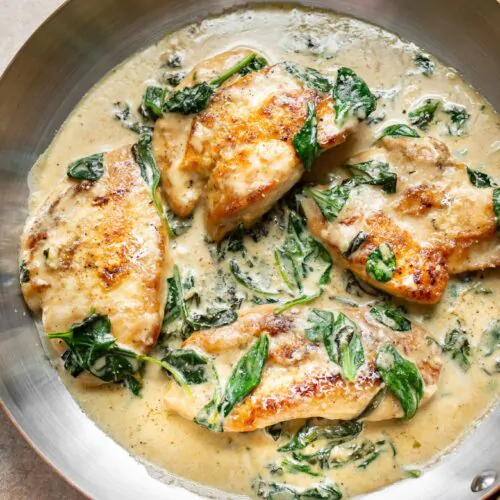
Creamy Chicken Florentine
Ingredients
- 2 large chicken breasts
- 1/2 teaspoon garlic powder
- Salt & pepper to taste
- Flour for dredging
- 1 tablespoon olive oil
- 2 tablespoons butter divided
- 3 cloves garlic minced
- 1/2 cup dry white wine
- 1/4 cup chicken broth
- 1/4 teaspoon Italian seasoning
- 1 cup heavy/whipping cream
- 2 cups (loosely packed) fresh baby spinach
- 1/2 cup freshly grated parmesan cheese
Instructions
- Cut the chicken breasts in half lengthwise so you have 4 thinner pieces. Season on both sides with the garlic powder and salt & pepper. Coat the chicken in flour.
- Add the oil and 1 tablespoon of the butter to a skillet over medium-high heat. Cook the chicken for 4-5 minutes/side until golden. Take the pan off the heat and remove the chicken to a plate.
- Return the pan to the heat and add the rest of the butter and the minced garlic. Let it cook for about 30 seconds or so.
- Add the wine, chicken broth, and Italian seasoning to the skillet. Let it cook for 3-5 minutes or until it's noticeably reduced.
- Add in the cream and let it bubble for 2 minutes, then stir in the spinach.
- Add the chicken back to the pan and cook, over medium heat, for another 4-5 minutes or until the chicken is cooked through and the sauce thickens up a bit. Sprinkle the parmesan cheese over top of the chicken and sauce prior to serving, and season it with extra salt & pepper if needed.
Notes
- If you prefer the spinach to be a bit less wilted/cooked, add it to the skillet during the last couple minutes of cooking.


