Creamy Lemon Parmesan Cod


Creamy lemon parmesan cod pairs tender white flakes with a buttery pan sauce that tastes as much of lemon as it does of cheese. A light flour coating gives the fish a pale golden surface, and the cod finishes in the sauce so you can spoon the garlic, cream and browned bits over each piece.
Dinner takes 30 minutes and serves four, with no oven to preheat. It’s an easy weeknight choice when you want fish but don’t want to make a separate sauce. Put the side dish on first so you can serve the cod straight from the skillet.
Why This Creamy Lemon Parmesan Cod Recipe Works
The fish and sauce share a skillet, but they don’t spend the whole cook time together. That gives each one the heat it needs.
- A light dredge helps the cod brown. A fine dusting of flour takes up surface moisture and browns in the butter. It adds color without the thick crust you’d get from a full breading.
- The fish comes out early. A short sear colors the outside without cooking the cod all the way through. Taking it out gives you time to build the sauce without drying out the fish.
- Flour gives the sauce body. Stirring a little flour into melted butter disperses it before the cream goes in. As the sauce simmers, the flour helps it thicken enough to cling to the fish.
- Lemon cuts through the richness. The juice brings enough acidity to balance the butter, cream and cheese without making the sauce taste sharply sour.
Ingredients You’ll Need
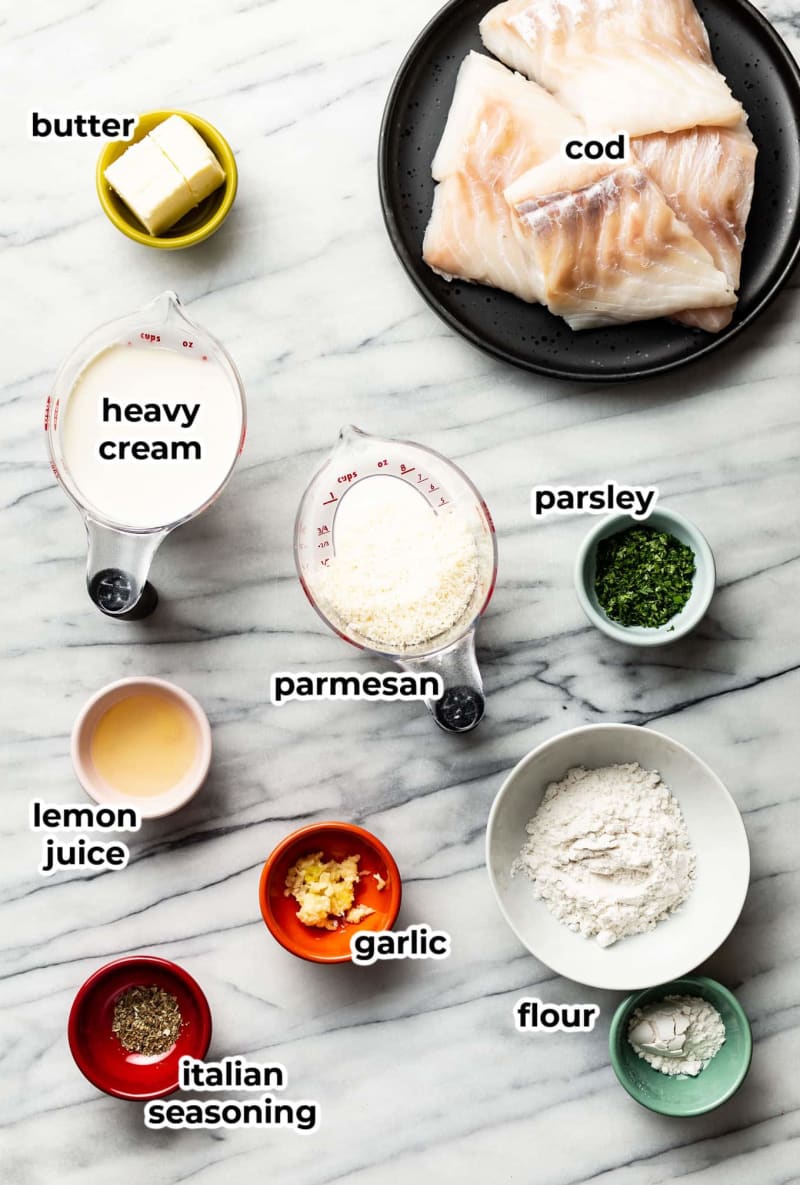
Have the sauce ingredients measured before you start searing. Once the fish comes out, the garlic and flour go in quickly.
- Cod: One pound of cod, divided into four portions. Look for fillets with a fairly even thickness so the pieces finish at about the same time.
- Salt and pepper: Use both to taste on the fish before dredging. Save the final seasoning adjustment for after the cheese goes in.
- Flour: Measure half a tablespoon for the sauce and set aside additional flour for dusting the fish. All-purpose flour works for both.
- Butter: Three tablespoons total. Most goes into the skillet for searing, and the rest coats the garlic and flour before you add the cream.
- Garlic: Mince two cloves finely so the garlic spreads evenly through the sauce rather than leaving big bites.
- Heavy cream: One cup of heavy cream or heavy whipping cream makes a smooth sauce that can handle the lemon juice.
- Lemon juice: One tablespoon gives the sauce its tang. Freshly squeezed juice keeps the lemon flavor bright.
- Italian seasoning: A quarter teaspoon brings a little dried-herb flavor without taking over the lemon and Parmesan.
- Parmesan: Half a cup, freshly grated from a wedge. Fine shreds melt readily into the warm cream.
- Fresh parsley: One tablespoon, chopped. It adds a fresh, grassy note just before the fish goes back in.
How to Make Creamy Lemon Parmesan Cod
1. Season and dredge
If possible, give the cod about 15 minutes on the counter before you start. Cut it into four equal pieces, season each with salt and pepper, then coat with flour and shake off the excess.
Aim for a thin, even dusting. If you see little ridges of flour along the sides, tap them off before the fish hits the pan.
2. Sear the cod
Heat 2 tablespoons of butter in a skillet over medium-high heat for a few minutes. Once the skillet is hot, sear the cod for 2 minutes per side, then lift the portions onto a plate with a spatula.
The fish should sizzle on contact and pick up a little color. It doesn’t need to be cooked through yet.
3. Cool the skillet briefly
Move the skillet off the burner for about a minute before starting the sauce.
This pause takes the edge off the searing heat so the garlic won’t scorch as soon as it hits the pan.
4. Cook the garlic and flour
Return the skillet to medium heat and melt the remaining butter. Stir in the garlic and the reserved half tablespoon of flour and cook for about a minute.
Look for a loose, bubbling paste and a fragrant smell. The garlic should not turn dark brown.
5. Simmer the cream sauce
Stir in the cream, lemon juice and Italian seasoning. Scrape up the browned bits from the skillet and cook for 2 to 3 minutes.
Look for gentle bubbles and a sauce that’s starting to coat the spoon, not a hard boil.
6. Melt in the Parmesan
Stir the freshly grated Parmesan and chopped parsley into the cream sauce.
Keep stirring until the cheese disappears into the sauce and there are no visible shreds.
7. Finish the cod
Slide the cod back into the skillet and let it finish cooking for a few minutes, watching thin portions closely. When it flakes easily with a fork, spoon the sauce over the top and adjust the salt and pepper as needed.
If a thin piece finishes before the others, lift it onto a serving plate instead of leaving it to simmer.
How to Tell When It’s Done
Check the center of the thickest piece: the flesh should be opaque and separate easily when nudged with a fork. For a temperature check, aim for 145°F in the center. If the middle is still translucent, let it simmer gently and check again.
Tips and Common Mistakes
A few small decisions at the stove keep the cod intact and the sauce smooth.
- Blot away surface moisture. Press a paper towel against the fish before seasoning. On damp cod, the flour can turn pasty and peel away when you flip it.
- Leave space between portions. A little over a pound of cod works fine as long as the pieces aren’t crowded. You want the moisture to escape rather than collect between the fillets.
- Support the whole piece. Slide a wide spatula well under the cod before lifting it. If a piece is especially fragile, steady the top with a second spatula as you turn it.
- Keep the heavy cream. Milk and half-and-half don’t thicken the same way, and the lemon makes lower-fat dairy more likely to curdle.
- Keep used dredging flour separate. Measure the sauce flour before coating the fish, then discard any flour that touched the raw cod.
Substitutions and Variations
Keep the cream base as written and change the fish, herbs or finishing flavors to suit what you have.
- Haddock: Haddock has a similarly mild flavor and delicate flakes. Its fillets can be thinner, so check them as soon as they return to the skillet.
- Grana Padano: Grate it finely and use it in place of Parmesan for a slightly milder, less sharp sauce.
- Dried oregano: Use it in place of Italian seasoning if you don’t have the blend. The sauce will have a more pronounced oregano flavor.
- Fresh chives: Snip chives into the sauce instead of parsley for a mild onion note that goes well with the garlic.
- More lemon aroma: Grate a little lemon zest over the finished cod for a stronger citrus scent without adding more acidity to the sauce.
What to Serve with Creamy Lemon Parmesan Cod
Spoon the cod over mashed potatoes, buttered egg noodles or plain rice so the sauce has somewhere to go. If you’d rather serve bread, a crusty loaf works well with roasted asparagus or steamed green beans.
For a crisp contrast, serve a cucumber and radish salad with a light vinaigrette, or browse our salad recipes for dinner. If you’re planning a fish night around a larger menu, find more ideas in our weeknight dinner recipes.
Make-Ahead, Storage and Reheating
Make ahead: Grate the Parmesan and mince the garlic up to a day ahead, then refrigerate them in separate covered containers. Wait to flour the cod until the skillet is nearly ready so the coating doesn’t get gummy.
Storage: Refrigerate the cod and sauce together in an airtight container within 2 hours of cooking. Eat leftovers within 1 to 2 days.
Freezing: Skip freezing the finished dish. The sauce can separate after thawing, and the cooked cod tends to lose its tender texture when reheated.
Reheating: Warm the cod in its sauce in a covered skillet over low heat until it reaches 165°F. If the sauce has tightened in the fridge, loosen it with a splash of water and avoid boiling it.
Creamy Lemon Parmesan Cod FAQs
Can I use frozen cod?
Yes. Thaw it in the refrigerator before cooking so the center isn’t still icy when the outside starts to brown. If it’s vacuum-packed, follow the package directions for safe thawing.
Should I remove the skin from the cod?
Yes, skinless fillets work better here. Since the cod finishes in sauce, the skin would soften rather than stay crisp. Ask the fish counter to remove it if you’re buying fresh fillets.
Why does my sauce taste bitter?
Burned butter solids or garlic are the most likely cause. Golden pan bits are worth scraping up, but if the residue is black and smells acrid, wipe out the skillet before making the sauce.
Can I double this recipe in one skillet?
Yes, if the skillet is large enough to hold all the fish in a single layer for the final simmer. Otherwise, use two skillets so every piece has contact with the sauce.
Can I use a nonstick skillet?
Yes. It makes the delicate cod easier to release, though you may get fewer browned bits for the sauce than you would in stainless steel.
Printable Recipe
Recipe adapted from Salt & Lavender. Photos courtesy of Salt & Lavender, used with permission.

Creamy Lemon Parmesan Cod
Ingredients
- 1 pound cod see note
- Salt & pepper to taste
- 1/2 tablespoon flour + extra for dredging
- 3 tablespoons butter divided
- 2 cloves garlic minced
- 1 cup heavy/whipping cream
- 1 tablespoon lemon juice
- 1/4 teaspoon Italian seasoning
- 1/2 cup freshly grated parmesan cheese
- 1 tablespoon chopped fresh parsley
Instructions
- Let the cod sit on the counter for 15 minutes or so prior to starting the recipe if possible. Cut it into 4 equal pieces. Season each piece with salt & pepper then coat in flour, shaking off any excess.
- Add 2 tablespoons of the butter to a skillet over medium-high heat. Let the pan heat up for a few minutes. Once the pan is hot, add the cod and cook for 2 minutes/side. Transfer the cod to a plate (use a spatula as it falls apart easily).
- Take the skillet off the burner for a minute or so to let it cool a bit.
- Add the remaining butter to the skillet over medium heat. Once it's melted, stir in the garlic and 1/2 tablespoon flour and cook for about a minute.
- Stir in the cream, lemon juice, and Italian seasoning. Scrape up any browned bits from the bottom of the pan and cook for 2-3 minutes.
- Stir in the parmesan cheese and chopped parsley.
- Add the cod back into the pan and let it finish cooking for a few minutes (be careful not to overcook especially if you've got very thin pieces). It should flake easily with a fork. Spoon some sauce over top and season with extra salt & pepper as needed.
Notes
- A bit over a pound of cod will work fine.
- Don’t recommend subbing the cream as the lemon juice is likely to curdle it and the sauce won’t thicken as well.


