Creamy Pesto Ravioli


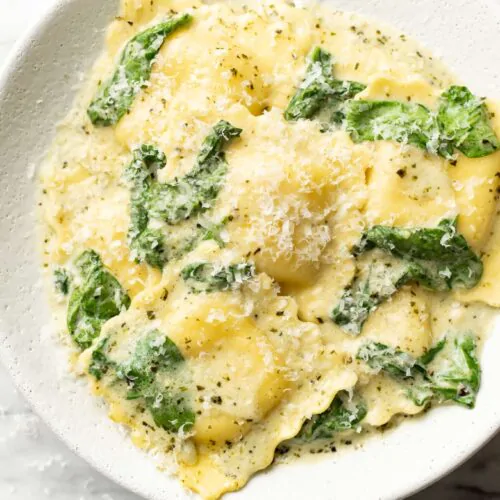
Creamy pesto ravioli has tender pockets of cheese, silky basil sauce, and just-wilted spinach. The ravioli simmer right in the skillet with the pesto and cream, so the sauce clings to the pasta instead of pooling underneath it. A little lemon keeps the sauce tasting bright without making it sour.
Dinner takes 15 minutes from start to finish and serves four. It’s a good choice for a weeknight when you want something richer than pasta with jarred sauce but don’t want to wait for a pot of water to boil. A crisp salad is all you need on the side.
Why This Creamy Pesto Ravioli Recipe Works
The one-pan method does more than save dishes. Cooking the ravioli in the sauce changes how the sauce comes together.
- The pasta thickens the sauce. As the ravioli cook, their wrappers release starch into the skillet. That starch gives the cream sauce enough body to coat the pasta without flour or a separate thickener.
- Broth keeps the sauce fluid. Cream provides the rich finish, but broth loosens it enough for the pasta to simmer. The sauce can thicken as the wrappers soften instead of starting out too thick to circulate.
- The lid traps steam. Steam helps cook the tops of the ravioli that sit above the sauce. Lowering the heat once the pan is covered keeps the pasta from tumbling around in a hard boil.
- Spinach goes in last. Baby spinach needs only a brief turn in the hot sauce. Adding it after the pasta has cooked keeps the leaves green and tender rather than limp and dark.
Ingredients You’ll Need
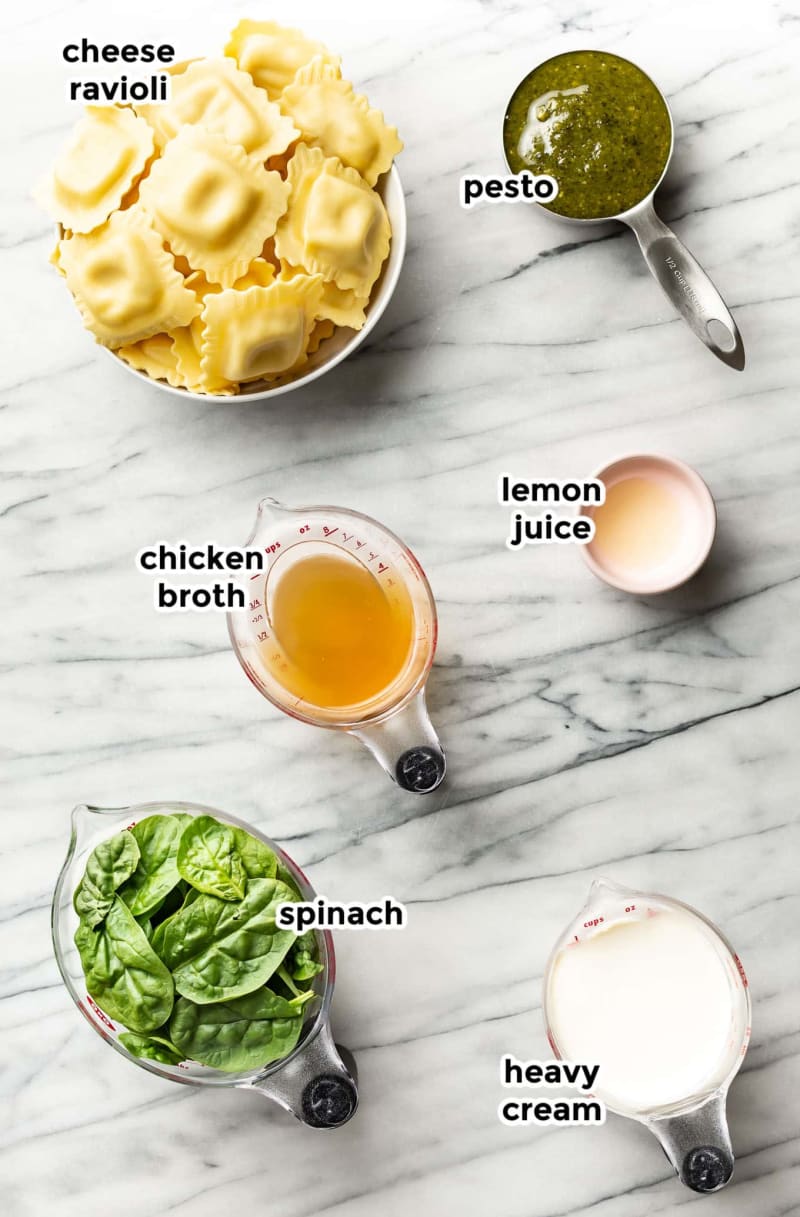
Refrigerated ravioli and prepared pesto do most of the work here. The main thing to check before you start is how salty and lemony your pesto tastes.
- Chicken or vegetable broth: Half a cup gives the ravioli room to simmer. Chicken broth adds a savory note, while vegetable broth lets the basil flavor stay front and center.
- Pesto: Half a cup of basil pesto brings the herbs, garlic, and savory depth in one scoop. Prepared pesto from a jar or the refrigerated case works.
- Heavy cream: One cup of heavy cream or whipping cream gives the sauce its smooth texture and softens the pesto’s sharper garlic notes.
- Lemon juice: One teaspoon brightens the cream sauce. Freshly squeezed juice works well here; you only need a small squeeze.
- Refrigerated cheese ravioli: One pound of fresh cheese ravioli from the refrigerated section. Look for a package with intact seams and pieces that aren’t pressed into a solid block.
- Fresh baby spinach: Two packed cups might look generous going into the skillet, but the leaves collapse quickly. Baby spinach is tender enough to use whole.
- Salt and pepper: Add both to taste at the end, when you can judge the seasoning of the finished sauce.
- Parmesan cheese: Freshly grate as much as you like over the finished pasta, or skip it. A light dusting adds a nutty, salty finish.
How to Make Creamy Pesto Ravioli
1. Start the pesto sauce
Set a skillet over medium-high heat and add the broth, pesto, cream, and lemon juice. Stir thoroughly as the mixture warms to disperse the pesto through the cream.
Look for an evenly pale green sauce flecked with basil rather than thick streaks of pesto.
2. Add the ravioli
As soon as the sauce begins to bubble, slide in the refrigerated ravioli. Stir gently to coat the pasta and spread the pieces across the skillet.
You don’t need a rolling boil. The first visible bubbles tell you the sauce is hot enough to start cooking the pasta.
3. Cover and simmer
Put the lid on the skillet, turn the heat down to medium-low, and cook the ravioli covered for 5 minutes. Leave the lid in place so the steam can do its job.
You should hear quiet bubbling, not a vigorous boil rattling the lid.
4. Check the sauce
Lift the lid and give the ravioli a gentle stir. If the sauce still looks too watery for your liking, cook it a couple more minutes with the lid off.
The sauce should look slightly thicker than when the ravioli went in. Stop reducing once it leaves a light coating on the back of a spoon.
5. Wilt the spinach
Fold the spinach through the ravioli so the leaves make contact with the hot sauce. Cover the skillet again and let the spinach wilt for a minute or two.
The leaves should turn soft and settle into the sauce, with no mound of raw spinach left on top.
6. Season and serve
Taste the sauce and add salt and pepper if it needs them. Divide the ravioli among bowls and finish with freshly grated Parmesan, if you like.
Spoon a little of the sauce left in the skillet over each portion so the top layer gets coated too.
How to Tell When It’s Done
Cut into one of the larger ravioli if you’re unsure. The filling should be hot in the center, and the wrapper should be tender even along its thicker sealed edge. If the seam is still firm or the center is cool, cover and keep simmering gently before adding the spinach.
Tips and Common Mistakes
Pay attention to the seasoning and handle the pasta gently, especially once the wrappers start to soften.
- Start with low-sodium broth. Some pestos are already quite salty, and the salt becomes more noticeable as the sauce reduces. Lower-sodium broth leaves you room to season at the end.
- Taste before adding lemon. If the pesto already has a pronounced lemon flavor, skip the juice. It’s there to balance the cream, not to make lemon the dominant flavor.
- Keep the ravioli unboiled. Add them straight from the package. Boiling them first sends the useful starch down the drain and makes the wrappers more likely to overcook in the skillet.
- Use a broad spoon. Slide it under the pasta and turn the pieces over rather than stirring in tight circles. The soft seams can split if you drag them against the pan.
- Dry the spinach well. If you wash the leaves just before cooking, shake or spin off the water so it doesn’t thin the finished sauce.
Substitutions and Variations
You can change the filling, pesto, or greens without changing the basic method.
- Mushroom ravioli: Use refrigerated mushroom ravioli for an earthier filling that stands up to the basil. Check the thickest pieces before adding the greens.
- Sun-dried tomato pesto: Swap it for basil pesto for a tangier, reddish sauce. Taste it first, since some versions are already quite sharp.
- Baby arugula: Use it in place of spinach for a peppery bite. Fold it in off the heat if you want the leaves to retain some texture.
- Pecorino Romano: Grate it over the bowls instead of Parmesan for a sharper finish. Use a light hand because it tends to taste saltier.
- Homemade basil pesto: Use it in place of prepared pesto. Stir it well before measuring so you don’t scoop mostly oil off the top.
What to Serve with Creamy Pesto Ravioli
Pair the ravioli with a cucumber and radish salad in a sharp vinaigrette, or browse our fresh salad ideas for something crunchy. Warm garlic bread is handy for scooping up the sauce left in your bowl.
If you’re serving a smaller pasta portion as a first course, follow it with lemony grilled chicken and green beans. Find more options among our easy chicken dinners.
Make-Ahead, Storage and Reheating
Make ahead: Wash and dry the spinach and grate the Parmesan up to a day ahead, then refrigerate them separately in covered containers. Wait until dinner to cook the pasta so the wrappers don’t sit in the sauce and soften.
Storage: Refrigerate leftovers within 2 hours in a shallow airtight container and eat them within 3 to 4 days.
Freezing: Skip freezing the finished ravioli. The cream sauce can separate when thawed, and the pasta wrappers are more likely to tear when reheated.
Reheating: Warm leftovers gently in a covered skillet with a splash of broth to loosen the sauce. Turn the ravioli carefully and heat through without letting the sauce come to a hard boil.
Creamy Pesto Ravioli FAQs
Can I use frozen ravioli?
Yes, but don’t rely on the same cooking time. Frozen ravioli take longer to heat through, so follow the package directions for cooking them from frozen and fold the drained pasta into the sauce. The sauce may need extra reduction without the starch from the wrappers.
Can I use half-and-half instead of heavy cream?
Yes, but the sauce will be thinner and more prone to separating. Keep it at a gentle simmer rather than trying to boil it down quickly.
Can I make creamy pesto ravioli vegetarian?
Yes. Choose vegetable broth and check the ravioli filling, pesto, and any finishing cheese for animal rennet. Look for cheeses made with microbial or vegetable enzymes.
Why are my ravioli sticking together?
They probably went into the sauce in a clump. If they’re stuck when you open the package, let the sauce soften the cluster before nudging the pieces apart so you don’t pull the wrappers open.
Can I double the recipe in one skillet?
Only if the skillet is wide enough for the pasta to spread out and has room for the spinach. Otherwise, cook in two pans so the ravioli don’t stack up and cook unevenly.
Printable Recipe
Recipe adapted from Salt & Lavender. Photos courtesy of Salt & Lavender, used with permission.
Creamy Pesto Ravioli
Ingredients
- 1/2 cup chicken or vegetable broth see note
- 1/2 cup pesto
- 1 cup heavy/whipping cream
- 1 teaspoon lemon juice see note
- 1 pound refrigerated cheese ravioli
- 2 cups (packed) fresh baby spinach
- Salt & pepper to taste
- Freshly grated parmesan cheese optional, to taste
Instructions
- Add the chicken broth, pesto, cream, and lemon juice to a skillet over medium-high heat. Give it a good stir so the pesto melts in.
- Once it starts to bubble, stir in the ravioli.
- Cover the pan and reduce the heat to medium-low. Cook it for 5 minutes with the lid on.
- Give the ravioli a stir. The sauce should be a bit thicker by now. If it's still too watery for your liking, continue cooking it for another couple of minutes.
- Stir in the spinach, cover the pan again, and let it wilt for a minute or two.
- Season the dish with salt & pepper if needed and sprinkle parmesan cheese on top if desired.
Notes
- You do not need to boil the ravioli ahead of time. The starch released while the pasta is cooking thickens the sauce.
- A few notes on the pesto:
- Use low sodium broth if you don’t like your food too salty. Some brands of pesto can be quite salty.
- Some brands of pesto can be quite lemony, so if that’s the case with yours, you may want to skip the lemon juice.
- DeLallo is my favorite brand of pesto.


